
In Greek mythology, the term "ichor" (ἰχώρ) refers to the life-fluid flowing through the veins of the gods—a kind of divine, ethereal “blood,” fundamentally different in nature from human blood. Homer, in the Iliad, describes how, when Diomedes wounds the goddess Aphrodite on the battlefield, red blood does not flow from her wound as one might expect. Instead (Book V, lines 341–345), he writes: “Immortal blood, ichor, flowed from her, as flows in the blessed gods; for they eat no bread, nor do they drink gleaming wine; therefore they are bloodless and are called immortal”. The reason for this non-human blood is their divine nourishment: they feed on nectar and ambrosia. Their life-fluid—and what makes them immortal—is a distillation of those two substances, which I personally suspect to be psychoactive in nature. But I’m getting ahead of myself.
Although the color of ichor is not explicitly stated, some later commentators claim it to be golden or clear. It is said that ichor grants immortality but, surprisingly, is also toxic to humans. When ichor falls to the earth, living entities may grow from it. For instance, when it dripped from Prometheus’s wounds, a magical herb sprouted from the drops, which Medea picked and used to concoct a potion that she gave to Jason.
What was this plant? In "Argonautica" by Apollonius of Rhodes (Book III, 844–853), it is described as having “saffron-colored flowers and a root red as fresh flesh,” and from it she prepares a salve that numbs pain, allowing the one who applies it to resist even burning fire and to be filled with courage and strength. The ritual of uprooting the plant is vividly described: “the black earth trembled, and from the depths it roared, as the Titan’s root was severed”. According to Raymond J. Clark in his 1968 article “A Note on Medea’s Plant and the Mandrake”, this groaning is a sign that the plant in question is the mandrake, just as in European folklore the mandrake was believed to grow from bodily fluids (semen, urine, sweat, etc.) of an innocent man who had been punished. As for the colors, the connection holds: crocus flowers are purple—like the mandrake’s. The mandrake’s root is typically yellowish-brown, the color of flesh or skin, and its shape resembles that of a human figure stripped of its skin. It is indeed poisonous, yet it also has both antiseptic and anesthetic properties. Accordingly, it was used both for disinfection and for pain relief.
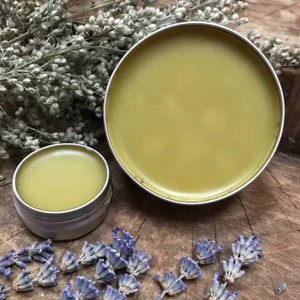
No less important: the backstory of Medea preparing this love potion for Jason begins with Aphrodite being asked to cast a spell on Medea so that she would help the Argonauts retrieve the Golden Fleece. Aphrodite sends Eros to shoot an arrow at Medea, making her fall in love with Jason and prepare the potion for him. Since Aphrodite’s blood is ichor, we must conclude that this very “flying ointment” made from the mandrake, golden in color, is none other than the blood flowing through Aphrodite’s veins—therefore granting it aphrodisiac and magical love-inducing properties.
The next step—one I haven’t yet explored deeply—is the presence of certain poetic expressions that appear both in the Argonautica and in the Song of Songs, which also speaks of the magic of the mandrakes, and the attempt to investigate the reason for that. We encounter a number of suspicious key phrases, such as a virgin praised for her perfect breasts and delicate lips, described as being madly in love, opening the latch of the door while wiping her tears with hands dripping in oil and perfume. As she goes out to search for her beloved, light-footed female gazelles accompany her. And so on, and so forth.
הצטרפו לרשימת התפוצה שלנו
כתיבת תגובה