
תגית: human sacrifice
-
Neolithic Hunger Games
Başur Höyük is an archaeological site in southeastern Turkey, near the city of Siirt, situated on the banks of the Upper Tigris River. The site dates back to the Early Bronze Age, approximately between 3100–2800 BCE, and was part of the broader cultural sphere of northern Mesopotamia. Excavations conducted at the site since 2008 have…
-
Iron Age remains found in bog may have been sacrificial
A body was found in a bog in 2023. Initially, it was thought to be a contemporary murder, but it turned out to be a murder over 2,000 years old. The body was in poor condition, and it appeared she had been sacrificed and buried in the mud. The killing involved great violence and decapitation,…
-
Mass Violence or Ritual Cannibalism? Unraveling the Mystery of Bronze Age Atrocities in Somerset
The following text includes facts and hypotheses based on interpretations, which themselves rely on a paradigm involving prior assumptions. Therefore, multiple interpretations can be presented depending on what you are seeking. First, the facts. Researchers have uncovered evidence of a mass killing that occurred approximately 4,000 years ago in a 15-meter-deep natural shaft at Charterhouse Warren,…
-
Burned Bones and Rituals: Unraveling the Mysteries of Trypillia Culture in Neolithic Ukraine
A research team led by Johannes Müller from the Institute of Prehistoric and Protohistoric Archaeology at Kiel University, Germany, has uncovered new details about the lives of people who lived over 5,600 years ago near Kosenivka, Ukraine. The Neolithic Cucuteni-Trypillia culture thrived in Eastern Europe between 5500 and 2750 BCE. Their large settlements, housing up…
-
The Molekh as an explanation to the Zeus and co myths
Sacrificing human offerings in Canaanite religion, especially offerings to deities like Baal, was a custom intended to ensure divine favor (article). The Carthaginians, descendants of the Canaanites, practiced child sacrifice. Classical sources describe the ritual sacrifices to Baal Hammon, where children were offered during crises to avert disasters or ensure victories. This practice is archaeologically…
-
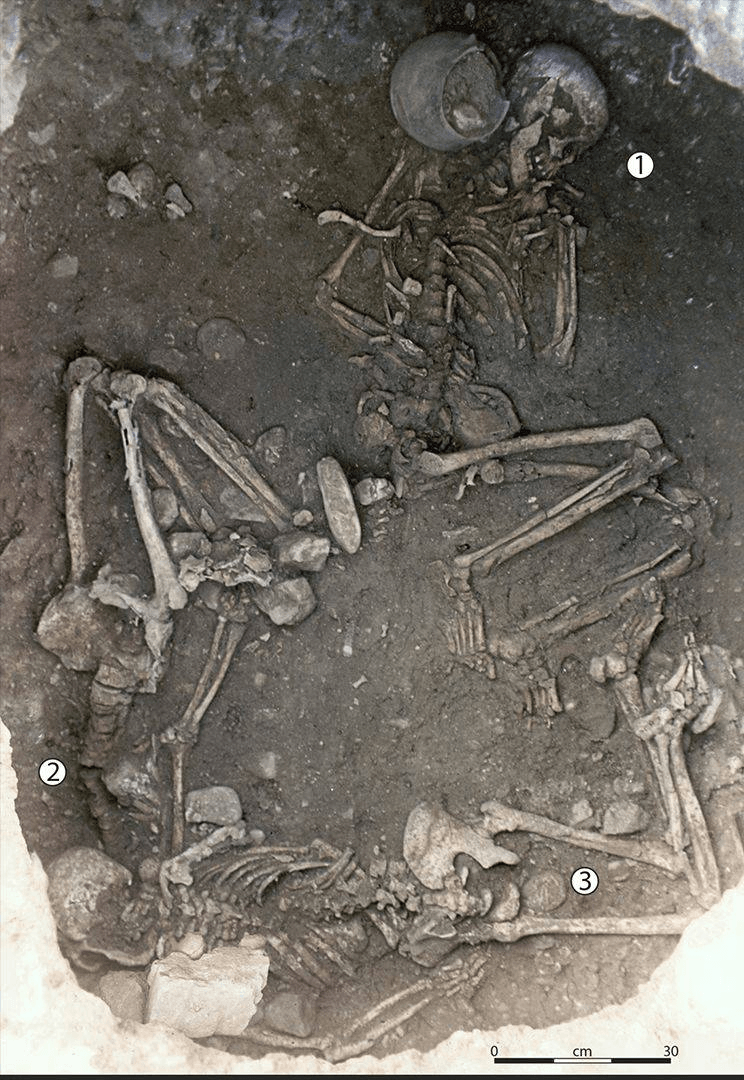
mafia uses execution methods that were used in religious ceremonies in the past
In Avignon in France, the remains of three women from the Neolithic period (5,500 years ago) were found, one of them died naturally and two of them were younger, executed as human sacrifices in a way that is currently used by the mafia. The method is called "Incaprettamento" and in which victims are placed on…
-
Vittrup Man, a human sacrifice in Denmark
A preserved body of a human sacrifice from the Neolithic period from 5300 years ago was found in a bog in Denmark. According to dna analysis and according to the analysis of the enamel in his teeth, it seems that the man was an immigrant from a fishing community from northern Scandinavia who joined the…
-
Who were the Druids and what was their cult?
Who were the Druids and what was their cult? The Greek and Roman sources describe them as super barbarians in a disregarding and biased way. Archeology reveals something about them in a more objective way. Among the findings: remains that allude to their ways of divination, in wooden sticks and the way they fell on…