
תגית: Anthropology
-
Death cult as psychadelic ritual
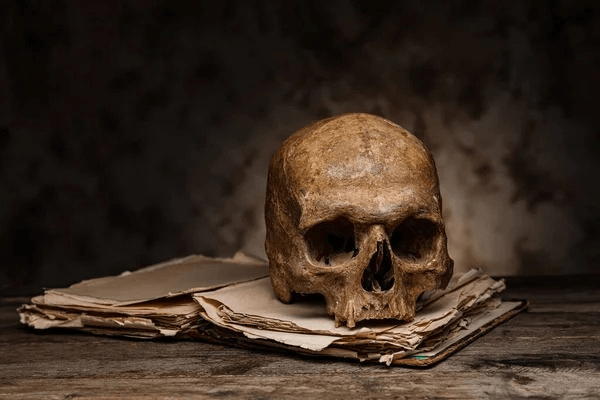
Religion is, first and foremost, a human mechanism for coping with anomalies—irregularities that reason and daily experience cannot fully explain. The primary anomaly is death. Death disrupts the “order of things” by removing a person from the community and destabilizing both social and personal identity. If the deceased was wise, the community is left without…
-

Entheogens as "key plants" and "threshold plants"
Religious ritual actually developed out of the admiration for technology. Humanity discovered that it was capable of controlling the forces of nature, and what was missing was only the ability to do so on demand. Through trial and error came successes, and these actions turned into something like magic shows. Originally, magic was perceived almost as…
-
A very comprehensive article on entheogens
The Encyclopedia of Life Support Systems (EOLSS), initiated by UNESCO, is a comprehensive international academic endeavor aimed at collecting, preserving, and disseminating interdisciplinary knowledge related to sustaining human life and Earth's ecosystems. It comprises thousands of peer-reviewed scientific articles written by experts from around the world, offering an integrative overview of diverse fields of knowledge.…
-
Psychedelic party pooping
An Earthquake? Anthropologist Bernd Brabec de Mori, who lived among Western Amazonian tribes, challenges the common assumption: the use of ayahuasca in the region is not an ancient tradition spanning thousands of years, but rather a phenomenon that spread mainly over the past 300 years. According to him, the Shipibo people altered their stories to…
-
Psychedelic beer for peace
The Wari civilization, a pre-Columbian culture that preceded the Inca, ruled the Andean highlands of Peru approximately between 500 and 1000 CE. At the site of Quilcapampa, which was active during the height of Wari culture, archaeologists discovered remains of chicha—a traditional fermented beer—and 16 seeds of vilca. Vilca is a psychoactive plant from the…
-
Culturally Modified Trees
“Culturally Modified Trees” (CMTs) are trees that bear clear signs of historical human use, particularly by Indigenous communities. These signs may include: bark stripping for making baskets, clothing, and ropes; cutting parts of the tree to create planks, bows, and cradles; collecting resin (tree pitch) for medicinal, waterproofing, and gum-making purposes; and trail marking by…
-
The Role of Disability in Shamanism: Claude Lévi-Strauss’s Perspective
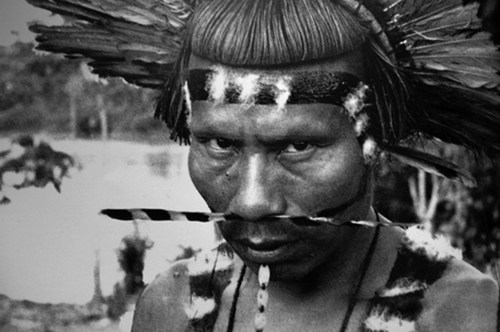
In The Effectiveness of Symbols, Claude Lévi-Strauss discusses the "deviation" or physical disability associated with shamans, presenting it as a social function that plays a crucial role within the community. According to Lévi-Strauss, ritual interactions with the shaman provide individuals and the community a means to confront anxiety, frustration, and suffering. Through these rituals, the…
-
How Horses Shaped Human Civilization and Consciousness
William T. Taylor is an anthropologist at the University of Colorado Boulder and curator at the university’s Museum of Natural History. He studies the relationship between humans and horses from various perspectives, including historical, archaeological, and anthropological angles. Coming from a family of cowboys, Taylor connected to his heritage through his research on horses. This…
-
Ancient Aesthetic: The 4,800-Year Tradition of Tooth Extraction in Taiwan's Austronesian Culture
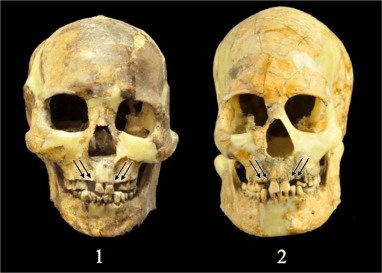
A very unique body modification practice in Taiwan, among the ancient population, involved the deliberate extraction of healthy front teeth for aesthetic reasons, as it was considered beautiful, or as a sign of bravery, or because removing them now would prevent them from decaying later. This practice has existed for at least 4,800 years and…