
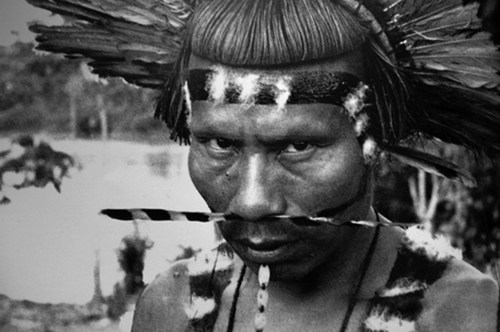
In The Effectiveness of Symbols, Claude Lévi-Strauss discusses the "deviation" or physical disability associated with shamans, presenting it as a social function that plays a crucial role within the community. According to Lévi-Strauss, ritual interactions with the shaman provide individuals and the community a means to confront anxiety, frustration, and suffering. Through these rituals, the shaman creates symbolic context for states of psychological or physical disorder, turning them into manageable, understandable experiences that strengthen social cohesion and cultural order.
The shaman is often depicted as physically or socially distinct, embodying the “Other” within society—whether through disability, physical impairment, or unusual behavior. This difference is frequently interpreted as a sign of closeness to the spiritual realm. Lévi-Strauss argues that this very deviation allows shamans to be perceived as possessing unique qualities, enabling them to mediate between the material and spiritual worlds and thus bridge experiences of pain and illness with symbolic meanings. In the eyes of the community, the shaman serves not only as a healer but as a stabilizer of social order, transforming his personal state into a tool that supports and reinforces the social structure.
Lévi-Strauss describes the shaman as embodying a “controlled deviation,” using elements of pathology to create balance and social cohesion. Through ritual symbolism, the shaman’s role meets the psychological and social needs of the community, turning his “outsider” status into an essential function within traditional societies.
As Lévi-Strauss notes: “In tribal cultures, witch doctors were recruited from the disabled, ecstatic, nervous types, outsiders… Yet, no shaman is in daily life an abnormal individual, a neurotic or paranoiac; if he were, he would be classed as a lunatic, not respected as a priest. Shamans exploit psychopathology but also channel and stabilize it. More shamans mean less psychopathology in society”.
In some cultures, it is likely that shamans intentionally self-mutilated to serve this purpose. Their physical difference or unusual appearance thus serves a social function, reinforcing their role as a bridge between worlds.
הצטרפו לרשימת התפוצה שלנו
כתיבת תגובה