
תגית: ancient history
-

Early history of the poppy
The opium poppy (Papaver somniferum) is a domesticated species. It has no wild counterpart. In other words, it was created by humans—whether through hybridization, selection, or encouraging mutations. It is considered one of the earliest agricultural species to undergo a process of “primitive genetic engineering,” alongside wheat, barley, and coca. Most botanists agree that its…
-
Psychedelic beer for peace
The Wari civilization, a pre-Columbian culture that preceded the Inca, ruled the Andean highlands of Peru approximately between 500 and 1000 CE. At the site of Quilcapampa, which was active during the height of Wari culture, archaeologists discovered remains of chicha—a traditional fermented beer—and 16 seeds of vilca. Vilca is a psychoactive plant from the…
-
Romano-British dog sacrifice
The practice of dog sacrifice appears throughout the history of the ancient world across various regions, time periods, and cultural, religious, and social contexts. Although dogs were often regarded as companion animals, in many cultures they also served as sacred beings, intermediaries between worlds, and at times, as ritual sacrifices. For our purposes, the following…
-
scent of ancient mummified bodies
The scents of nine mummies from the Egyptian Museum in Cairo were analyzed using sensory-sensitive approaches and advanced chemical techniques (GC-MS-O), meaning non-invasive methods, to explore how the odors of the mummies reflect the embalming process, the preservation materials, and their conservation state, as well as the chemical sources that produce the various odors. Additionally,…
-
Biblical and mesopotamian divination
I have acquired the book Mari Discoveries and the Biblical World, currently available for 25 NIS on the publisher’s website. Originally published 12 years ago, the book explores numerous parallels between the Mari archives and the Bible. Below, I present several examples related to divination and rituals of war and peace: 1. Sacrifice Before War: Shamshi-Addu,…
-
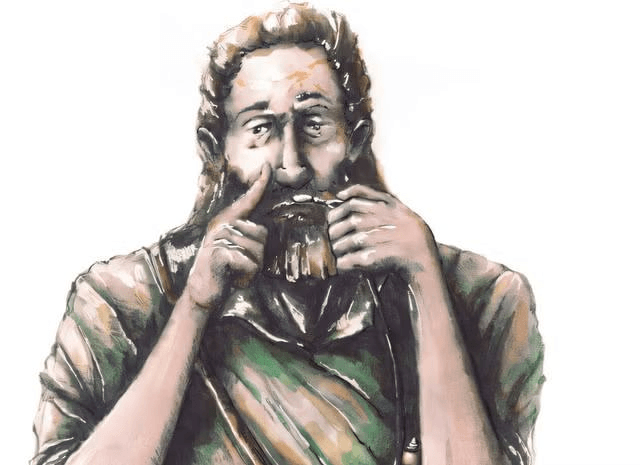
Germanic communities of the Roman period used stimulants at the battlefield
Researchers from Maria Curie-Skłodowska University in Poland have discovered small spoon-shaped tools attached to the belts of warriors in Northern Europe. They sought to identify available plant-based raw materials that stimulated the body and assessed their effectiveness. They concluded that these plants included various stimulants and mind-altering substances, and thus inferred that these tools were…
-
Oldest bread is even earlier than oldest beer, both of the Natufians
Next week, we are going to hear about the world’s oldest beer, discovered around 12,000 years ago at a Natufian site (Raqefet Cave in the Carmel). But it's worth noting another Natufian site where a grain-based product was found, shedding light on Natufian grain usage that predates the domestication of grains. Once we understand this,…
-
New Study of 'Passover Letter' May Change What We Know About the Birth of Judaism
Haaretz English published an article on Dr. Gad Barnea's research from Haifa University, which explores the potential Zoroastrian origins of the Passover holiday as suggested by the "Passover Letter" from the island of Elephantine. Barnea points out several parallels between the customs described in the Passover Letter and Zoroastrian rituals, especially the "Yasna" sacrifices, the…
-
5,000-year-old settlement shows evidence of early urbanization in Israel
In archaeological excavations at Khirbet Husham near Beit Shemesh, conducted by the Israel Antiquities Authority, a settlement from the Early Bronze Age, approximately 5,000 years old, was uncovered. The site includes a public ritual structure containing around 40 artifacts preserved in their original condition as they were placed before the site was abandoned. These items,…
-
Child slave for the Alcohol industry of late bronze age
In the Early Bronze Age, there was high demand for goblets and pottery in the Kingdom of Ebla, mainly due to feasts where alcohol was consumed. To meet the need for increased production of these vessels, the kingdom began employing children from the age of seven in workshops as a cheap and easily controlled labor…