
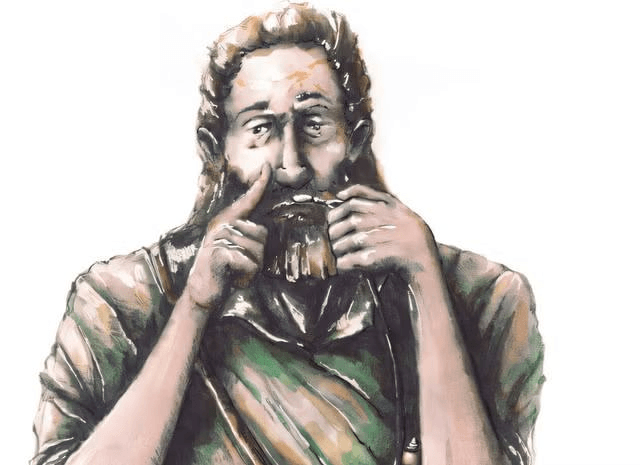
Researchers from Maria Curie-Skłodowska University in Poland have discovered small spoon-shaped tools attached to the belts of warriors in Northern Europe. They sought to identify available plant-based raw materials that stimulated the body and assessed their effectiveness. They concluded that these plants included various stimulants and mind-altering substances, and thus inferred that these tools were used to store and to use them before battles. Consequently, they estimated that the use of stimulants to enhance physical exertion was far more common than previously assumed. Specifically, the researchers collected 241 such objects, which they classified typologically. They found that all these objects were discovered alongside items related to war equipment. This discovery serves as the basis for their conclusion. What we are seeing here is essentially scientific evidence of the Berserker ritual! Until now, evidence for such practices only existed in later Norse texts from the 8th to 11th centuries. Now, there is evidence even from the early centuries CE!
What were these plants used for, and why would warriors carry them into battle? In the military context, these substances helped warriors reduce fear, cope with stress, and enhance their physical and mental endurance. Medically, they were used as painkillers, to alleviate stress, and to treat inflammations. Additionally, sites examined included ritual locations used either before heading into battle or afterward, during burial ceremonies. In ritual contexts, drugs were used to communicate with spirits, intensify religious experiences, and accompany funerary rites.
The warriors belonged to Germanic tribes such as the Goths, Vandals, and Franks, who were active primarily during the Roman period (1st to 5th centuries CE). They fought against the Romans as well as among themselves, across Central and Northern Europe and in the Scandinavian regions.
Among the identified plants were opium poppy (Papaver somniferum), hops (Humulus lupulus), cannabis (Cannabis sativa), henbane (Hyoscyamus niger), belladonna (Atropa belladonna), and datura (Datura stramonium). The researchers noted that datura appeared in Central Asia and the Iberian Peninsula between the 4th and 12th centuries BCE, although some believe it only arrived from North America after the continent’s discovery. Additionally, traces of mushrooms like Amanita muscaria and ergot (Claviceps purpurea) were identified. While cannabis was likely domesticated, most of the plants were wild species. The use of these plants as medicines and ritual preparations required specific knowledge: where to find them, when to harvest them, how to prepare them to maximize their effects, and how to store them. The researchers inferred that mushrooms were dried to preserve their potent compounds without losing their effectiveness, enabling long-distance transport.
Although no direct remains were found, the researchers hypothesized that local populations, based on the abundance of specific mushrooms in the area, likely recognized and gathered species such as Clitocybe, Inocybe, Psilocybe, and Russula.
Active substances were dissolved in liquids, primarily alcohol, or prepared as powders to be inhaled through the respiratory tract. A researcher named Katarzyna Czarnecka hypothesized that small metal containers found in women’s graves were used to store such substances. The researchers also speculated that small wooden boxes found in wealthy graves served a similar purpose. The dosing of these substances was done using small spoons that were part of the belt’s construction. The size of the spoons helped measure a safe amount of stimulant to enhance physical effort or relieve stress. Exceeding these doses could lead to tragic consequences, such as severe side effects or poisoning.
הצטרפו לרשימת התפוצה שלנו
כתיבת תגובה