
The dog was an animal with religious significance, as we saw in the previous post. However, it was probably not domesticated for its cultic role or for the qualities it was thought to possess in guiding souls to the underworld. It is, of course, tempting to think that everything humans did was the result of plans connected to altered states of consciousness—but no.
Dogs were, in all likelihood, domesticated for guarding. But precisely because they guard, their role developed into guarding in many senses. In the previous post we saw one such sense, but it was probably the secondary one.
A god—or more precisely, a goddess—long before being a fertility deity, was a guardian deity. The primary function of the fertility goddess was to guard. Fertility itself was something obvious, expected, natural, and normal. By contrast, disease and harm were not normal. The main task of the gods was to maintain balance and proper order in the world. In the case of fertility, the goddess’s role was to prevent women from dying in childbirth, to prevent stillbirth, to prevent crib death, and so on. These things, it was believed, were caused by evil spirits—daimons. The goddess guarded against these spirits.
In the East, spirits evolved into demons, and the way to deal with demons was usually through amulets. Amulets, contrary to what we might think, were not necessarily curses written on paper, but more like prescriptions for preventive medicine. Except, of course, in cases where they were given after the fact, in which case, as “protective” magic, they were a form of first aid. Still, guarding is a form of healing.
One plus one: with guard dogs and guardian goddesses, there is a connection between them. When goddesses guard through amulets, they are healing goddesses—usually in women’s medicine, since their immediate patients were women in childbirth. And what could be more fitting for a guard dog than to be a companion to these goddesses, providing amulets and remedies on their behalf?
Indeed, it turns out that in ancient Mesopotamia, the goddess of healing was called Gula, and in her iconography, she is depicted accompanied by dogs. Figurines of dogs have been found at the entrances of her temples, serving… as amulets. This is according to the Assyriologist Barbara Böck (Böck, 2013).
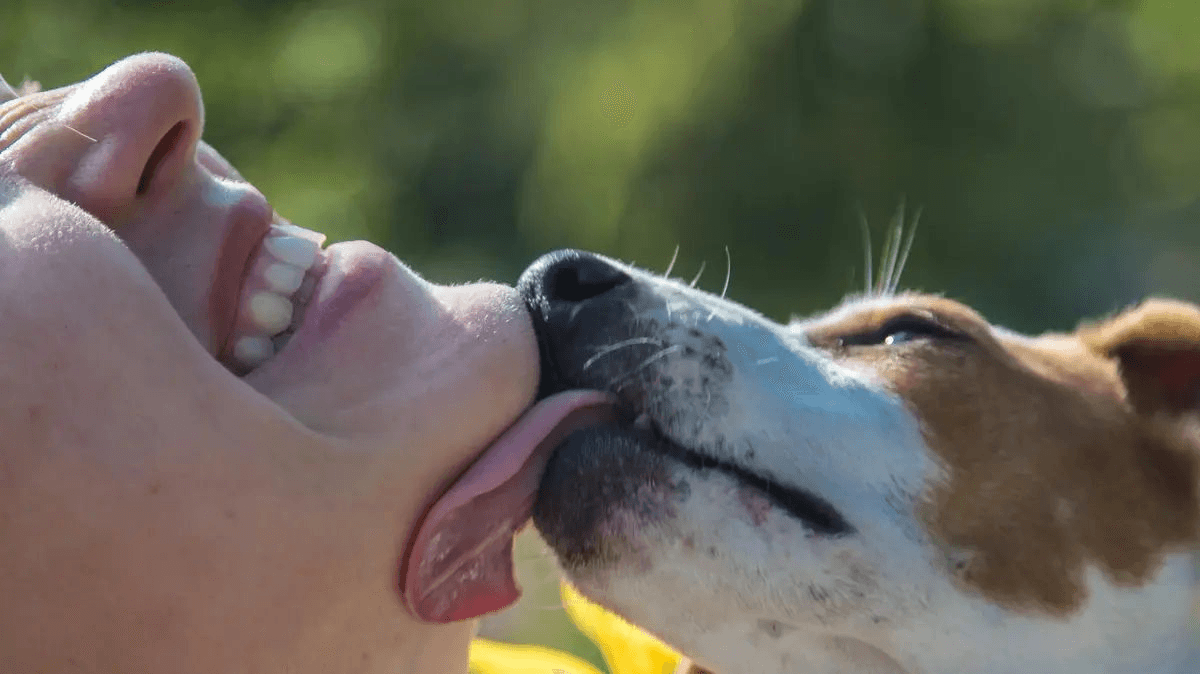
And how else did the dog protect women in childbirth, aside from amulets? It turns out that, according to observations of wounded dogs, when bleeding they tend to lick their wounds. Modern studies have found that dog saliva contains components with partial antibacterial activity. However, due to the risk of transmitting infections, dog saliva cannot be relied upon today. But in the ancient world, without hygiene protocols, this was not considered important, and dog saliva was used for healing purposes. For this reason, dogs were welcome guests during childbirth. Some even present evidence from ancient Greece, where in the temples of Asclepius (god of healing) and Eileithyia (goddess of childbirth), dogs appeared as cult animals that could lick body parts to bring healing—both in easing labor pains and, apparently, in treating vision problems. Incidentally, dog feces were also considered medicinal, mixed with oils, barley flour, and various medicinal plants to create ointments or therapeutic compounds, as Böck notes in her research.
When it comes to poop and saliva, I start to enjoy talking about it.
Böck, B. (2013). The Healing Goddess Gula. Brill
הצטרפו לרשימת התפוצה שלנו
כתיבת תגובה