
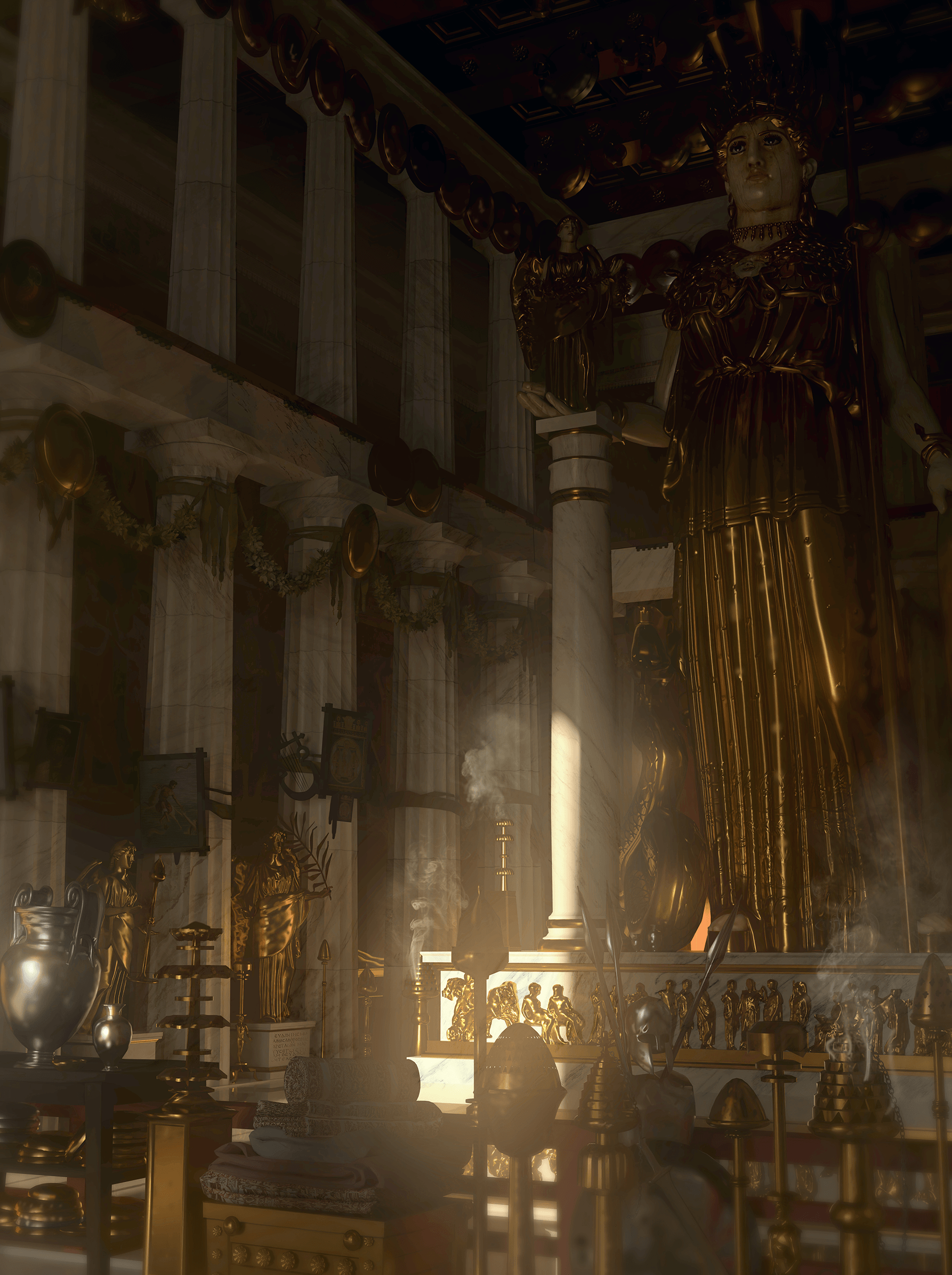
A new study offers a profound understanding of how the Parthenon, the crowning achievement of Athenian architecture, was not merely a temple dedicated to the goddess Athena, but also a technological marvel designed to produce an epiphany — a dramatic divine manifestation through light and shadow.
The research, published in The Annual of the British School at Athens by archaeologist Juan de Lara of the University of Oxford, reveals that the ancient architects did not simply place a magnificent statue at the heart of the temple. They meticulously planned the building's orientation, the positioning of its gateways, and the selection of its materials so that at key ritual moments, sunlight would strike through the openings and illuminate the statue of Athena Parthenos in a radiant, majestic glow. De Lara emphasizes that this phenomenon was intended to evoke a sense of divine revelation among the faithful, echoing ancient traditions of epiphany — which, notably, was the very core of pagan ritual: the moment the god appears marks the sacred transition from "before" to "after."
The precise use of light and shadow constituted a form of ritual technology, which itself became an object of religious reverence. The ability to "summon" the goddess’s appearance through manipulation of natural forces was not seen merely as an engineering feat, but as a living demonstration of divine will and presence. In other words, Athena’s dazzling appearance was not merely religious aesthetics — it was a supernatural phenomenon that demanded the flawless functioning of the temple’s sacred order. At the heart of the worship stood not only the statue itself but also the visual phenomenon of its illumination. Should the light-shadow effect have failed, it would likely have been interpreted as a sign of rupture between the city of Athens and its patron goddess. Thus, the Parthenon, like other ancient ritual traditions, combined space, matter, and light to create a sensory epiphany experience that represented the pinnacle of ancient religious life.
Among the lighting strategies employed were: gleaming, light-reflecting materials such as ivory and gold; semi-translucent marble roofs that diffused soft light through the tiles; interior water basins that served as mirrors to reflect light; side windows illuminating specific areas; small rooftop apertures (opaia) channeling concentrated beams of light; and some degree of artificial lighting by torches and lamps. All of these elements were designed to create Thauma — a visual marvel, an overwhelming sensory wonder, a carefully orchestrated religious-sensory experience.
הצטרפו לרשימת התפוצה שלנו
כתיבת תגובה