
In Hebrew, "president" is "the most exalted of all", according to I Kings 1:5 and also according to the Nachmanides in his interpretation of the verse "You shall not curse God, and you shall not curse a president among your people" (Exodus 22:27). In Proverbs 25:13, it seems that the clouds are also called that because they stand above everyone. It seems that this is a word of Egyptian origin, because this hieroglyph 𓀯 (nsw) means "king". However, when Moses is asked to make the copper snake (in Numbers 2:10), he is asked to "put it on a pole", in hebrew "Nes", means a flag or just something high". What is that "Nes"? A snake standing in a high place reminds us of the Ouraeus (Οὐραῖος), the royal snake placed on the Pharaoh's crown.
We also see the sign of the letter 𐤍 in ancient Hebrew influenced by the shape of the ancient Egyptian hieroglyph for snake. In Egyptian, this hieroglyph is called nʕw (nachu), and in the Proto-Sinai script it is called "snake" naḥš, although as a water snake, so it is later called simply "fish" or "noon", but we see that the bend in the middle of the letter also rolled in the end In Greek (𝜈, where the letter is called "nu") and in Latin N – after this curve the water monster is called "Akalthon" (tortuous serpent) or "Leviathan". By the way, we notice that the difference between Akalthon and Leviathan is in the letters "ak". Well: "akh" in Egyptian, ꜣḫ, or the hieroglyph 𓅜 symbolized the supreme wisdom, the glow of the sun and the Ouraeus on the king's crown, according to the dictionary of Egyptian hieroglyphs by E.A Wallis (1920).
It should be noted that the glow of the sun means the aura of fire around the sun. In Egyptian there are two words to describe this flame: both "nsr" and "ḫt". Regarding "nsr", it is important to note the n and the s, and by the way also to mention that the combination of the two "ns" in Egyptian is "tongue", which comes to symbolize the form in which the snake sticks out its tongue all the time. But the word "ḫt" is more important. According to William Ayers Ward from the American University in Beirut, there is an etymological connection between this word and the word Hỉw and the word Hwy. The word Hỉw describes the animal of Seth, which it turns out was at one time considered a snake. Not because a snake is necessarily an evil animal, but because a snake, like any other animal, makes battle sounds designed to frighten its enemy. These exhalations are what was called in ancient Egyptian, and what in Aramaic they would later call "hwya" (חויא), the word for snake. Any frightening sound or the roar of an animal will be called that, so the snake is named after its frightening voice.
In Akkadian, awātum, another derivation of the egyptian Hwy, means "a word". or "a thing" (or just… logos, λόγος). I am relying on Elad Aharon who at the time opened the Facebook page "Awātum – Akkadian word of the day", the Hebrew equivalent of this concept is "a sign" (hebrew: "ot" or "owt") or as it is written in Genesis 9, "the sign of the covenant", the rainbow. He probably means the sound of thunder that sounds like the roar of an animal. But I will content myself with the fact that "Hawa" expresses a wise opinion, such as "Day after day they pour forth speech; night after night they reveal knowledge" (Psalms 19) or "Therefore I say: Listen to me; I too will tell you what I know" (Job 32). In other words, "Hawa" means "knowledge" or "intelligence" or in fact exactly as we called the Egyptian "Akh", which was symbolized by the same "Nes". And in Greek… Gnosis, γνῶσις.
We do see that the Gnostics worshiped the serpent. And we do see that there was even such a sect called accordingly the "Naasseni" or Ophites. I don't know if it has anything to do with the fact that president is from the hebrew words "Nes" or the snake "Nahash", but the equivalent word for president in the Bible is usually "head" (Rosh), and the same word is the word that usually generically describes poison or venom.
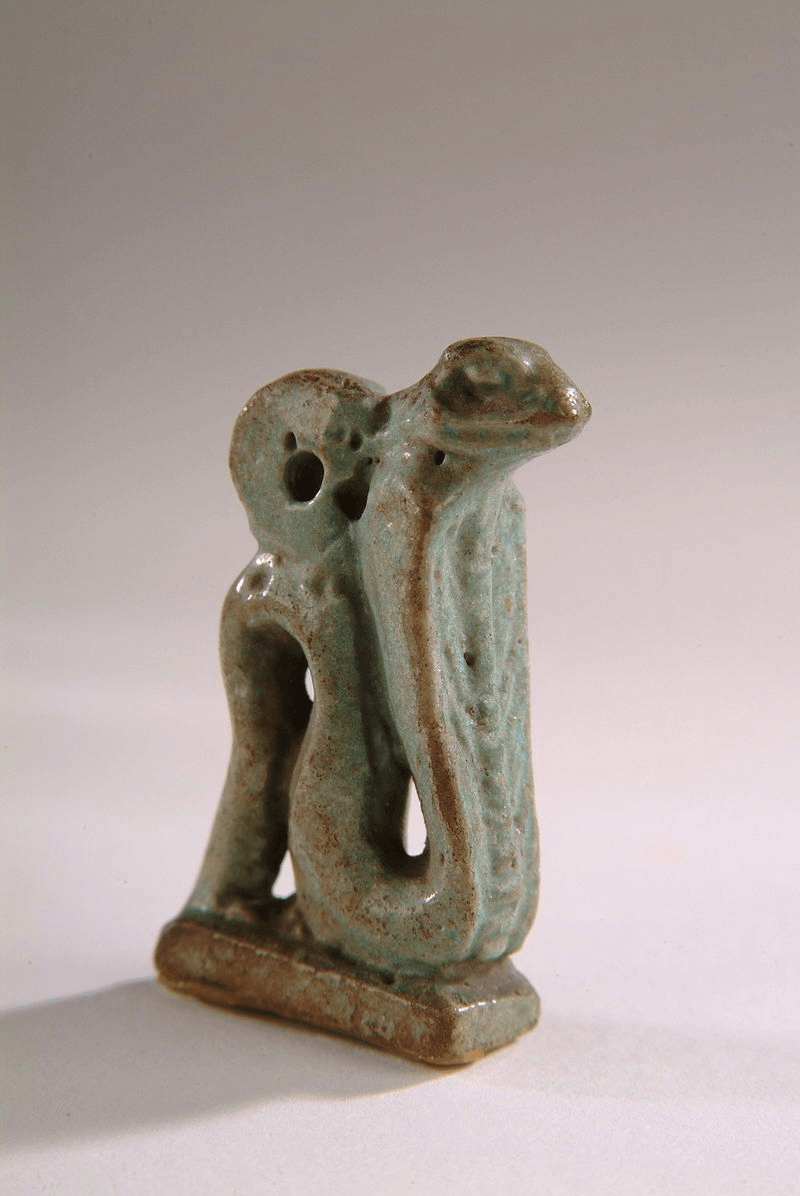
Attached: a picture of a snake in the shape of the letter N.
הצטרפו לרשימת התפוצה שלנו
כתיבת תגובה