
Is wearing tefillin a kind of ancient osteopathy ritual?
The origin of the word "pe'ah" is Akkadian (pâtu- side, corner) and is also suitable as 'forehead'. therefore when it is written in the book of numbers (24:17) "A star will come out of Jacob; a scepter will rise out of Israel. He will crush the foreheads ("paatei") of Moab, the skulls of all the people ("karkar") of Sheth" it's literally means some Israeli who uses a baseball bat and smashes the skulls of his enemies with it . when they write "a star", since it is "kochav", it may be "kavkav" perhaps referring to a wooden bat, or even a clog with which he steps on the enemies and crush them. however, we must remember that the Septuagint translates the original hebrew word as "karkar" and not "kodkod" as the Samaritan text does. the Septuagint translates it to "leaders" ἀρχηγοὺς.
This Israeli batter is likened to a lion that eats his enemies, and breaks their skulls, then lies down to rest ("Like a lion he crouches and lies down, like a lioness—who dares to rouse him?", Genesis 49:9). To break skull and tear arms is the role of a lion anyway, "lives there like a lion, tearing at arm or head" (Deutronomy, 33:20). lion is the mascot of the Messiah.
The idea with the forehead is obviously that behind the forehead is the brain. If you hit someone in the head, you shock their brain. And if you crush his head or cut him off, you are just refutes his words.
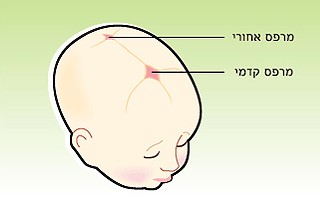
. In the Jewish exegesis, this verse of "tearing at arm or head" is a reference to the tefillin, something that is placed on both the arm and the head. It is said that the place to touch the head is the Fonticuli cranii where the bones of his skull are not yet fully connected when infant, so the bone can't protect the brain from shock. If you hit someone with their forehead open, it's even easier to shock their brain, so it's easier to refute his words of falsehood, influence him and finally convert him or teach him the truth.
. In the New Testament it is mentioned many times that people "put a mark on their foreheads" – whether they are worshipers of the beast or the righteous at the moment of revelation. What they are trying to say there is that what is on the forehead is actually the same thought that is beyond the bone of the forehead. The one who puts a mark on his forehead on his own initiative, is the one who declares that he thinks something specific.
According to this analogy, it can be understood that placing a tefillin and setting the mark on the forehead are actually intended for the purpose of exerting moderate pressure on the forehead and "splitting" it, or alternatively, "crushing" the head for the purpose of assimilating something. In the case of the Jews the word of God. The tefillin is a kind of massage on the brain, intended to be part of a setting and a set of tools for use in some kind of meditative ceremony.
Is ancient times there was a medical-religious custom of drilling into the skull, trepanation. There were those who believed that mental illnesses could be cured through this, even today medicine claims that this is a way to release intracranial pressure and therefore helps prevent migraines, for example. The drilling of the skull was done in order to reopen the same opening that closed when the infant matured, meaning that his skull was open and the drilling was intended to open it back up. Amanda Fielding, a consciousness researcher who supports such a skull drilling and also performed a drilling on herself, is quoted in an interview with the Guardian that this operation "improves the level of blood flow around the brain, and brings it to the same state as it was in childhood."
"When a baby is born, the top of the skull is very soft and flexible. The closure of the skull inhibits the effect of the heartbeat and causes a change in the ratio between the two fluids in the brain: blood and spinal fluid. It is the blood that feeds the brain cells with what they need, such as glucose and oxygen. The spinal fluid removes some of the toxic molecules. When blood flow becomes slow, fluids may accumulate and this can contribute to the onset of diseases such as dementia and Alzheimer's. As soon as you drill into the skull, you get more blood to the brain with each heartbeat, and this also washes away the toxins. There are probably other ways to achieve this, such as yogic breathing or cranial osteopathy, but the trepanation (drilling) is permanent."
Fielding believes that the tonsure of the Christian monks is supposed to be a remnant of the custom of drilling a skull for the same spiritual practice, and that it is essentially the same mark on the forehead. Is wearing tefillin also intended for the same need?
הצטרפו לרשימת התפוצה שלנו
כתיבת תגובה