
-
Exodus in Wadi Feiran
The lecture series by Dr. Uzi Avner, which has just concluded, “The Desert, the Origins of the People of Israel” (on the website meteg.co.il), in addition to defending the maximalist approach [which argues that the biblical narrative contains a historical core, even if it is not accurate and often fuses several historical kernels into one], also examines the various theories concerning the location of the biblical Mount Sinai. There are many approaches, most of them full of gaps. One approach, however, has fewer gaps, and therefore Avner tends to support it: Wadi Feiran, near Jebel Musa, the place where St. Catherine’s Monastery now stands.
The identification of the site is, admittedly, a Christian tradition, according to which Helena, the mother of Constantine the Great—the Roman emperor who made Christianity a state religion—made the identification. Some doubt her identifications, arguing they were accepted mainly due to hype and that they contain many legendary elements, such as the identification of the “True Cross.” And yet, Avner’s analysis makes a strong case for identifying this location specifically with Mount Sinai.
Israel’s Government Naming Committee in the 1950s identified the Wilderness of Paran with a location somewhere in the Arava, but in truth there is reason to believe it refers to Wadi Feiran in southern Sinai. According to surveys, Musa is a local hero of the dominant tribe in the region, and the tribes of the area still preserve traditions associated with him, even if they have undergone certain manipulations (to Christianity or to Islam).
Archaeological evidence from Nabataean churches that preserved pre-Nabataean traditions indicates that the name of God, “Ehyo” (i.e., Yahu/Yahweh), survived there at least until the third century CE. It appears in inscriptions at the site, and indeed across Sinai. It seems he was a regional god of desert tribes, especially the patron of metalworkers who were scattered at various sites in the area. Among these tribes were the “Shasu,” considered desert dwellers similar to today’s Bedouin. The Shasu were not Jews—in the sense of being descendants of the tribe of Judah, if such a tribe even existed—but nomads who, under various circumstances, wandered from place to place, sometimes far from settlements and sometimes near them. In the course of their wanderings, they formed covenants with farming communities on the desert margins, and their political standing brought them influence. This influence was mainly cultic, expressed most significantly in the notion that the deity should not have a figurative representation.
Avner showed in his lecture at “Temple of Consciousness” that representations of the deity were a later, urban development. In general, temples in populated areas that became pilgrimage sites were a late development. At first, they were located in the desert fringes, and people from the settled land would descend (or perhaps ascend) to the desert seasonally. The temples were monuments where fertility rituals were performed—perhaps monuments shaped like “feet” (i.e Regel) which Adam Zertal called “circles” (gilgalim), because they were arranged in the shape of a half-threshing floor or a complete threshing floor. Perhaps because these structures, which symbolized houses, were rounded, people would circle them ritually, perhaps in dances, and thus there is the connection between “feet” (raglayim) and "steps" (pe‘amim. also "times"). They would go up cyclically, from time to time, to perform the “dance of steps”, and each such pilgrimage was called a “pa'am”. Much speculation indeed.
Anyway, the standing stones at these early sanctuaries were non-figurative representations: unhewn stones, reflecting the desert perception that carved statues and images were inauthentic representations of the transcendent God. This conception was embedded in Judahite worship, which turned out to be a hybrid cult of “peasant” tribes on the desert fringe together with nomadic tribes who attached themselves to them. The Bible itself testifies that such tribes lived alongside the Israelites: the Kenites, the Kenizzites, and the Kadmonites.
Why were these treaties formed? Avner did not address this directly. Presumably, it was the result of a long process of desertification in the inner desert zones, which at an earlier stage had allowed habitation, but later forced tribes deeper into the land, leading to inevitable friction with the inhabitants of semi-arid zones where agriculture was possible. This friction sometimes manifested as conflicts between shepherds and farmers—reflected also in the Bible—but ultimately produced a hybrid culture. The nomadic tribes of southern Hebron became an ethnic entity identical with the farming tribes of the Judean hills. Other tribes that did not join this confederation were considered enemies, even if they lived in the same area: the Amalekites, Moabites, Ammonites, Edomites, and so on. Continuous conflicts with these tribes are also described in the Bible.
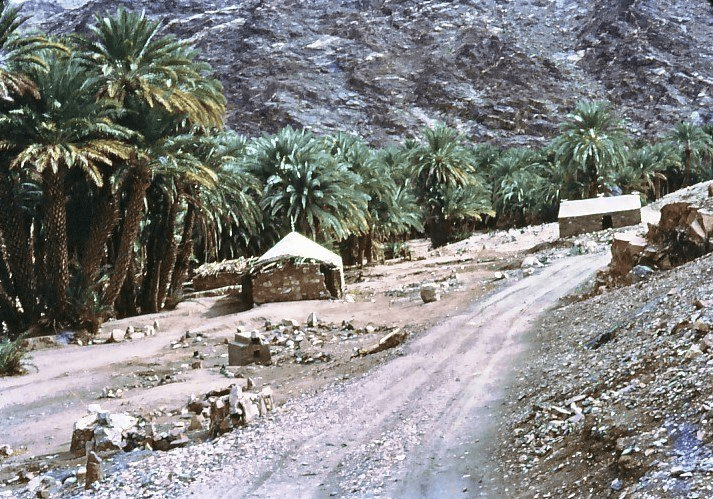
Wadi Feiran itself is an oasis lined with thousands of date palms. The area has numerous water springs, which allowed the existence of the palms, though today, due to over-pumping, little water remains. The course of the wadi leads to Jebel Musa, draining the high mountains of southern Sinai. Part of the local flora includes acacia trees, which were undoubtedly used for building (and also for the Tabernacle). Diodorus Siculus describes the ancient cult practiced there, which was already old in his day, and mentions “inscriptions in an unknown language” (probably Proto-Sinaitic script). The site is often identified with Rephidim, though many Israelite desert stations are described as places of springs and date groves—for example, the Waters of Marah, where they arrived after crossing the Sea of Reeds and not finding water for three days. Immediately after Moses made the bitter water drinkable (however it happened), they came to Elim: a place with twelve springs and seventy palms.
What happened next? Let us skip for a moment the station in the “Wilderness of Sin” where the manna began to fall, and move directly to Rephidim. There too the people lacked water, and there too, as at Marah, Moses performed magic and suddenly water appeared. And then: the Amalekites came to fight them. Why, and for what reason?
To this day, the tribe that lives in the Wadi Feiran region insists on its exclusive right to serve as guides in the area. The region cannot be crossed without a guide, and even if it could, they, as the only ones who know the terrain, demand that whoever passes pay them “protection” in the form of guidance fees. Anyone who tries to challenge this order finds himself fighting them. We know these groups today as the Islamist tribes engaged in drug trafficking, supporting the Sinai branch of ISIS. In reality, these tribes are less interested in Salafi Islam than in money and livelihoods. And in the desert, livelihood means mainly water and pasture—agriculture when possible, but often it is not. Any place where there is some greenery becomes a place to seize, and in the past century, when people speak of “green”, you know exactly what that means (drugs). In any case, the takeover of this oasis by these tribes is part of the story. The place became sacred precisely because it has water sources. The tribe that prevailed would control them and preserve the local traditions—not because those traditions benefited them greatly, but because ownership of a place also implies ownership of its myths. Throughout history we see many examples of this: Greeks who appropriated Indian or Egyptian myths, and so on.
This, then, is the reason the Amalekites fought the Israelites. The Amalekites were a kind of raiding group, and desert wars were primarily about the right to serve as guides for those who needed guidance. The fugitives from Egypt needed guides, and the Amalekites demanded that the payment they carried (recall, they left with much silver, gold, and garments) should go to them. In practice, it was the Kenites, the people of Jethro, who received this payment. The Amalekites did not like it. And in truth, even without the Kenites, the Amalekites regarded the Israelites as trespassers and claimed the right to plunder the property of anyone passing through, unless he paid them protection fees. This practice was called "racket": forcing someone to accept services for payment.
-
Early history of the poppy
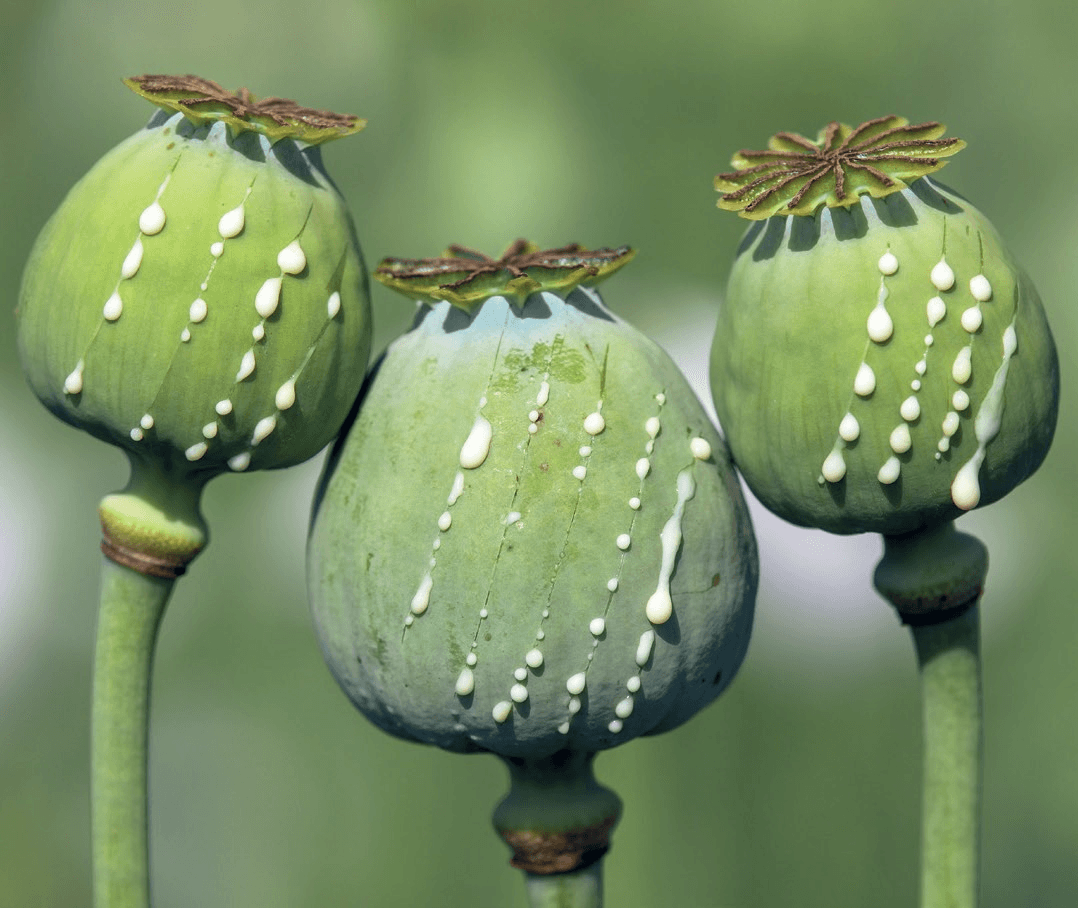
The opium poppy (Papaver somniferum) is a domesticated species. It has no wild counterpart. In other words, it was created by humans—whether through hybridization, selection, or encouraging mutations. It is considered one of the earliest agricultural species to undergo a process of “primitive genetic engineering,” alongside wheat, barley, and coca.
Most botanists agree that its closest relative is the Mediterranean dwarf poppy, Papaver setigerum, common in the western Mediterranean (Spain, southern France, North Africa). This species also contains some alkaloids, but in quantities too negligible for medical or psychoactive use. Hence the assumption that systematic cultivation and prolonged domestication are what caused the sharp increase in morphine content and the creation of P. somniferum.
The two main opinions on the place of domestication are the western Mediterranean and the Near East, more precisely Anatolia. The view that locates domestication in the western Mediterranean is based on the distribution of Papaver setigerum in that area for thousands of years. Archaeological finds have been uncovered in Britain (Raunds), in Spain (Murciélagos Cave), and in Italy (La Marmotta). Some argue that the poppy was initially domesticated as an oil and food plant (seeds, oil), and only later were its opiate qualities discovered “by accident.”
The opinion that locates domestication in Anatolia is based on the fact that this area contained the earliest conditions for agriculture. Early trade routes from Mesopotamia and Egypt suggest that already around 3400 BCE the Sumerians knew the “plant of joy,” identified with opium. In addition, the climatic conditions in Egypt and Anatolia were especially suited to Papaver somniferum, and later evidence (Thebes, Egypt) points to a very potent strain (Thebaicum).
Since there is still no scholarly consensus, it may well have been a case of dual domestication—independent experimentation in two centers, as happened with wheat and rice. Archaeobotany shows that already in the late Neolithic (c. 5000–4000 BCE), poppies were cultivated both in the western Mediterranean basin and around Anatolia.
The earliest history of opium begins in the early Neolithic period. The first relevant find is the horned poppy (Glacium flavum), not yet a psychoactive substance. Its active compound is glaucine. It was found in the southern Jordan Valley and dated to 8,000–10,000 years ago. It is assumed that it was used for early experiments in relieving pain and cough, despite severe side effects.
At the same time, Neolithic expansion reached Europe. In Spain (Gavà, the Can Tintorer site), in burials inside ancient jade mines, a skeleton was found with a poppy capsule inserted into a decayed tooth and evidence of chronic consumption in the bones. This is the earliest evidence of opiate analgesic-narcotic use.
Between 5700 and 4900 BCE appears the Linearbandkeramik (LBK) culture in northwestern Europe (Switzerland). Clear evidence of poppy cultivation was found in their settlements, where opium was apparently used both for medical purposes (toothaches, childbirth pain, joint disease) and as a nutritional source (seeds and oil). The settlements appeared peaceful, but archaeology reveals severe rates of violence and massacres (Talheim, Herxheim). It is possible that opium was also used for ritual purposes, to forget pain and trauma, or perhaps as part of preparations for internal battles.
At La Marmotta, a Neolithic village under Lake Bracciano near Rome (5700–5200 BCE), long wooden boats and artifacts indicating Mediterranean trade were found, as well as opium poppy seeds. The settlement represents an advanced community that brought seeds and animals with them, showing that the spread of the poppy was part of the cultural-agricultural expansion wave from the Levant through the Mediterranean.
In Britain, the Raunds finds (3800–3600 BCE) are the earliest evidence of the poppy—a non-native species that must have been imported via trade routes. Later, at the Wilsford Shaft site near Stonehenge, poppy seeds were found alongside henbane (Hyoscyamus niger), which was usually taken together with opium, with opium soothing headaches and nausea. It is tempting to think this was for psychoactive use, but it seems to have been medical, and in that case, it is sufficient evidence for pre-scientific pharmacological knowledge in this region, even in places where these plants were not native.
In Spain, at Murciélagos Cave (“Cave of the Bats”), burials dating from 4000 BCE were found with poppy capsules in woven grass bags, alongside flowers, shells, and gemstones. The elaborate burial indicates high status and ceremonial-spiritual use of the poppy—both to ease the pains of dying and to prepare for the journey after death. Later, in the Rhine and Rhône valleys, pottery vessels with poppy residue were found, suggesting similar use.
Around 3000 BCE, the Sumerians referred to the “plant of joy,” generally identified with opium. However, modern scholarship questions this, arguing it may have meant “joy cucumber.” There is no unequivocal Sumerian term for opium. Thus, while the Neolithic and early Bronze Age West were actively cultivating it, in the Near East the evidence is less certain.
In the Minoan culture (2000–1400 BCE), lekythoi vessels were found with depictions resembling scarified poppy capsules. The famous figurine of the “Poppy Goddess” (1300–1250 BCE) was discovered—with closed eyes, an ecstatic expression, and hairpins shaped like poppy capsules—clear evidence of ecstatic-ritual use. Alongside it were clay pipes for heating opium gum—possibly for collective use in ceremonies.
In Mycenaean Greece, bronze pins with poppy-shaped heads were discovered, as well as a gold ring depicting a fertility goddess holding three poppy capsules—symbols of wealth, health, and fertility. In Cyprus, in the city of Kition, an ivory pipe (1300 BCE) was found with an image of the Egyptian god Bes—household deity of childbirth, humor, and music—indicating a link between fertility cults and opium smoking.
In Egypt’s New Kingdom (1600–1100 BCE), climatic conditions enabled the cultivation of a local strain of Papaver somniferum—“Theban opium” (Thebaicum). Finds include earrings and necklaces with capsule-shaped pendants in royal tombs, faience vessels in the shape of poppy capsules, and of course the Ebers Papyrus (1550 BCE), recommending the administration of opium to infants to quiet their crying. There is also evidence that sometimes children died of overdoses, as indicated by capsule-shaped jars in children’s tombs. The Ebers Papyrus testifies to opium’s use as a wonder drug treating ailments from headaches to constipation. For headaches, poppy was ground together with coriander and other plants. For constipation, stalks of poppy were mixed with castor oil, dates, and beer. Opium also served as a tonic to fortify the body (met), much like today’s dietary supplements.
In Egypt it had a dual role—both medical and religious. Opium was used in sacred oil anointing, ritual baths, amulets, and mystical inscriptions on the body. This use likely spread to Greece. Homer, in the Odyssey, speaks of “nepenthe,” the drug of forgetfulness or of dulling grief, given to Helen of Troy by an Egyptian queen named Polydamna. Later, Greek and Roman coins bore poppy imagery. In Roman mythology, Somnus (god of sleep) was depicted with poppies, and Ceres (goddess of fertility) used it as a pain reliever.
At the same time, scientific medicine emerged, emphasizing that these plants possessed therapeutic properties not necessarily tied to religion. Hippocrates, Dioscorides, and Pliny all wrote about opium and its analgesic—and sometimes addictive—qualities. Galen is said to have prescribed opium to the emperor, which led to symptoms of dependency, necessitating its continued administration over time.
Bibliography
- Thomas M. Santella – Opium (2006)
- John H. Halpern – Opium (2019)
- Lucy Inglis – Milk of Paradise (2018)
-

Entheogens as "key plants" and "threshold plants"
Religious ritual actually developed out of the admiration for technology. Humanity discovered that it was capable of controlling the forces of nature, and what was missing was only the ability to do so on demand. Through trial and error came successes, and these actions turned into something like magic shows. Originally, magic was perceived almost as a circus: members of the tribe watched it as an audience, and the priest – the “performer” – involved them in the show. He called for volunteers, performed the “magic” before them and sometimes on them, and the crowd experienced wonder. Thus, ritual became the central attraction of the community.
Over time, other tribes also sought to participate in these shows, and once the attraction was exhausted, they looked for new spectacles. From this emerged intertribal alliances built around shared ritual. The “magicians” – namely, the priests – kept searching for new tricks, which became the driving force of further research and discovery. The more they managed to dazzle their audience, the higher their status rose. Naturally, each tribe preferred its own priest and kept the professional secrets “within the family”. This also led to intertribal espionage and even plunder: in wars, the victorious tribe would “steal” the god of its rival – a phenomenon that can be called Godnapping.
But life was not just a show. These “magics” had practical applications: magic served to improve living conditions. The distinction was simple – whatever contributed to life was considered good, and whatever harmed life was considered bad. Therefore, a means that proved useful in many areas became more central – and thus more sacred. Three domains were regarded as forming a “holistic triangle of health”: body, mind, and earth. Any means that contributed to all three was considered especially sacred, and in anthropology it is called a Key Means.
If the subject was a plant, then such a Multi-Purpose Plant was called a Key Plant. Of course, it did not have to be a plant – animals could also play this role. In previous discussions we saw how the wolf and its domesticated form, the dog – in short, the Canidae family – became such Key Means: as symbols of fertility, as chthonic figures, and as agents with both apotropaic and medicinal functions. Technologically, canids assisted in hunting, guarding, herding, hauling and transport – and, as described earlier, also in medicine and “technologies of consciousness”.
Plants, thanks to their active alkaloids, became especially popular Key Means. They served as food, building material, textile, energy, transport, trade, and of course medicine and tools for altered states of consciousness. Plants of this kind became sacred when they bridged the three corners of the triangle: fertility of the soil, women’s medicine, and visionary experience. Their dual nature – medicine in one dose, poison in another – turned them into Threshold Means, and that was the element that made them sacred.
Examples of plants that embodied this intersection of biological fertility, mental/spiritual fertility, and botanical fertility include the mandrake and other solanaceous plants, opium, sage, cannabis, ephedra, and the ergot fungus. All of them served both women’s medicine and visionary practices. And all of them, incidentally, share one more feature: the color purple.
-
Myth-Ritual theory and the religion as a primitive science
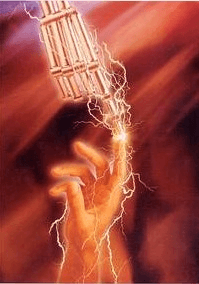
Throughout history, human beings have sought to understand their world and to control it – from comprehending the cycles of nature, to coping with anxiety and death, to preserving social order. Before the advent of modern science, the central tools of human culture were myth and ritual. The question, of course, is which came first – the myth or the ritual. To answer this, various approaches developed. We will focus on one particular theory, called the “Myth–Ritual Theory,” which holds that ancient religion was, in essence, a primitive science – an attempt to “bring order to things”, to understand the world and act upon it through symbolic and dramatic means.
This theory is broad and long-standing, and its formulation is not entirely unambiguous, but its underlying message regarding the evolution of religion is shared: first magic, then ritual, then myth explaining the ritual. The myth generally appears at a stage when the meaning of the ritual is no longer clear, when the ritual itself has already lost much of the original intent for which it was founded, surviving mainly by force of tradition. Still, as part of tradition, the ritual becomes the more important element, and as part of its rationalization, a narrative technique is developed to explain it – its meaning, its purpose, and of course its origin.
The myth also serves an educational role. Narrative and dramatic techniques tend to leave a deeper impression and are better retained in memory; stories are transmitted more effectively than illogical imitations. Stories also have the ability to become “memes” and to create new realities, even when separated from the need for which they were originally formed. In this way, works arise that are influenced by myths, or pay them homage, consciously or not. Cultures emerge that adopt a certain mode of thought and pass it on to realms beyond religious ritual – into daily life. Values are born from myths, and in turn create new myths. Thus we can see culture as a whole as a structure whose foundations lie in the original existence of magic – and that magic, in its essence, is an attempt to control reality and to resemble the gods. And if not to become gods ourselves, then at least to awaken and “program” the gods to maintain the world in accordance with our desires.
In the beginning, humans observed reality, noticed anomalies, and asked themselves what they meant. They gathered information, formulated a hypothesis, and tried to reproduce it through an experiment – much like a scientific method. Once they reached a scientific theory, they formulated a protocol. The function of this protocol was, on the one hand, to reproduce the discovered phenomenon, and on the other, to glorify the mechanism that brings it about (the personification of this mechanism is, of course, the “god”). The problem for this ancient scientist was that his information was incomplete, and even more so, he lacked an orderly scientific method. Thus: (a) he did not always succeed in reproducing his experiment and attributed its success to some higher power that would “help him” (in other words, this is the essence of prayer – the text that accompanies the ritual, which can be either a request or an ancient code intended to “program” or “bind” the god), and (b) as a novice, he made mistakes in gathering information, formulating the theory, and confronting it with existing bodies of knowledge. Communication between such groups of “scientists” was also limited, if it existed at all, so each was expected to work with a protocol devised by himself or by his tribe. The situation was grim, but common sense led different experimenters to reach generally similar conclusions – even if their scientific theories did not match their rivals’ from A to Z.
Exactly for this reason, despite the differences between cultures, we can still see similarities among them, because ultimately there is some form of common sense within us – or, if we speak in materialist terms, in our genetics there exists a mechanism that causes us to think in similar ways. The human brain and psychology developed along paths leading to the creation of shared structures (what anthropology calls the “biogenetic model”), which sometimes manifested in similar myths and, of course, similar rituals.
A short summary, or perhaps a fast-forward, because there is not enough space to continue this entire line of thought, so we will simply arrive at the conclusion: religion is the veneration of technology. When humans encounter a new technology, they experience a shock that causes them to “recalculate the route,” to understand whether the technology helps or harms them. Once they understand that the technology is beneficial, they attempt to reverse-engineer it. Once they see that it is harmful, they try to find protections against it – usually also through reverse engineering. Sometimes it is unclear whether the technology harms or benefits them, and so over time their behavior toward it changes, in a chronicle of cognitive dissonance whose end is an “Eureka” moment. As the pace of discovery of such technologies increases, and the mental load of determining whether each new technology is beneficial or harmful likewise increases, humans enter greater and greater anxiety, which manifests in changes in their behavior and in their way of coping with these innovations.
As a side note: the connection between this theory and the study of entheogens becomes more apparent when we look at the timeline. Both theories were born around the same period – at the turn of the 19th and 20th centuries – declined around the same time in the 1960s, and flourished again under similar circumstances: the revival of ideas that trace the development of religion through the prism of myths about death and rebirth, which, as we recall, are analogous to the psychedelic experience.
-
Cannabis, Sacred and Profane
Christopher Partridge is a professor at Lancaster University specializing in the intersection between religious studies and popular culture—naturally, with a focus on New Age spirituality and renewed expressions of ancient ideas, especially religious ones that have undergone secularization, or religious ideas that, according to some, were unjustly secularized and should now be restored to their foundations (aka fundementals). In short, as I see it, he’s a sort of Israeli scholar Tomer Persico–type figure.
I heard about his new book, "Cannabis, Sacred and Profane", from Chris Bennett, who published a sharp critique of it two days ago. I haven’t yet read the book myself—so I can’t agree or disagree—and given the e-book’s price, I don’t plan to spend my money on it, at least not for now. A shame. But I have read other reviews of it in parallel, and I have a general sense of what it’s about. I’ll first outline my understanding, then turn to Bennett’s critique, with a short summary.
First, the book’s title alludes to the title of a work by Mircea Eliade—as if to signal an intention: to analyze the historical attitudes toward cannabis along two parallel tracks. On the one hand, a religious attitude, in which cannabis connects to a mystical and ritual quality; on the other hand, a secular attitude, in which cannabis becomes an instrument for utilitarian purposes such as medicine, bureaucracy, economy, and, of course, leisure.
The fact that cannabis was unknown in Europe before the Crusaders’ encounter with the East made attitudes toward it inherently Orientalist: it was mysterious and might serve as a tool to deepen spiritual experience when used by Muslims—but, hey, these are Muslims, and they are “the other”, not us. As such, they symbolize everything that is not us—Eastern temperament, Eastern thinking, Eastern worldview—which in European eyes meant excitable, irrational, and therefore wrong and mad. Anyone who used these substances, even if they sought what Muslims found in them, would fail; and if they succeeded, they would “become Muslim”, meaning an enemy of Christianity.
This hostile stance toward cannabis persisted—even after being secularized—into hostility toward the plant as merely a “drug”. It was emptied of meaning, and even if it had meaning, that meaning was linked to alien spirituality.
From here, Partridge moves toward the twentieth century: anything perceived as foreign was associated with cannabis, and attitudes toward it and toward those who used it, traded it, or favored it were dictated by this negative view. This became a self-fulfilling prophecy: because the establishment distanced itself from the substance, it left meeting the demand for it in the hands of the anti-establishment. Naturally, then, cannabis became associated with whatever the establishment deemed negative—organized crime, political dissidents, and, of course, rival powers. Those groups also used it as a means to “poison” establishment supporters.
This, in turn, became a reason to use it: disappointment with the establishment and a search for alternatives—not necessarily the ones already “on the shelf”, but also those we seek and invent ourselves, what today is called "New Age". This is the root of cannabis’ adoption today by new spiritual seekers—a way to fill an anemic spiritual experience with non-institutional content. Being outside the institution, it is “virgin” and untainted. It’s an opportunity to reconnect with this substance in the very way the establishment once sought to delegitimize, and perhaps to regain what the establishment stripped away—the religious experience.
In other words, Partridge gives a primarily sociological explanation for popular culture’s attitude toward cannabis. That’s fine, but here lies the critique: first, it’s a superficial explanation that flattens the religious experience into a quasi-political excuse within an imagined struggle. In Partridge’s view, a spiritual experience has no inherent authenticity; behind it lies mainly a political reaction.
Second—and this is the main criticism—Partridge misses the point. Cannabis was not rejected merely because it symbolized the absolute other, the foreign and threatening, but because it preserved a religious practice the Church sought to erase. Its ongoing marginalization is not simply cultural bias, but anti-entheogenic indoctrination.
Partridge presents modern spirituality as “epistemic resistance” to ideas promoted by colonialism, instead of seeing it as an attempt to reconstruct the original entheogenic religious experience—one not mediated by layers of hierarchy and bureaucracy. In such an experience, the only barriers between a person and direct contact with the numinous are failure to follow a ritual protocol, not failure to obey authority. That was the original religious experience, and this is the “sin” that new spirituality seeks to atone for.
The sin of colonialism was not only the injustices committed in the name of Christianity, but the doctrine that the religious experience must be mediated by the Church, and that the masses are not permitted to use it, only to witness it. Advocates of cannabis are not “sacralizing a plant they fetishize,” but rather “profaning a worldview that emptied the religious experience of its content and turned submission to authority into the real fetish.”
-

Dog's saliva and feces in women medicine
The dog was an animal with religious significance, as we saw in the previous post. However, it was probably not domesticated for its cultic role or for the qualities it was thought to possess in guiding souls to the underworld. It is, of course, tempting to think that everything humans did was the result of plans connected to altered states of consciousness—but no.
Dogs were, in all likelihood, domesticated for guarding. But precisely because they guard, their role developed into guarding in many senses. In the previous post we saw one such sense, but it was probably the secondary one.
A god—or more precisely, a goddess—long before being a fertility deity, was a guardian deity. The primary function of the fertility goddess was to guard. Fertility itself was something obvious, expected, natural, and normal. By contrast, disease and harm were not normal. The main task of the gods was to maintain balance and proper order in the world. In the case of fertility, the goddess’s role was to prevent women from dying in childbirth, to prevent stillbirth, to prevent crib death, and so on. These things, it was believed, were caused by evil spirits—daimons. The goddess guarded against these spirits.
In the East, spirits evolved into demons, and the way to deal with demons was usually through amulets. Amulets, contrary to what we might think, were not necessarily curses written on paper, but more like prescriptions for preventive medicine. Except, of course, in cases where they were given after the fact, in which case, as “protective” magic, they were a form of first aid. Still, guarding is a form of healing.
One plus one: with guard dogs and guardian goddesses, there is a connection between them. When goddesses guard through amulets, they are healing goddesses—usually in women’s medicine, since their immediate patients were women in childbirth. And what could be more fitting for a guard dog than to be a companion to these goddesses, providing amulets and remedies on their behalf?
Indeed, it turns out that in ancient Mesopotamia, the goddess of healing was called Gula, and in her iconography, she is depicted accompanied by dogs. Figurines of dogs have been found at the entrances of her temples, serving… as amulets. This is according to the Assyriologist Barbara Böck (Böck, 2013).
And how else did the dog protect women in childbirth, aside from amulets? It turns out that, according to observations of wounded dogs, when bleeding they tend to lick their wounds. Modern studies have found that dog saliva contains components with partial antibacterial activity. However, due to the risk of transmitting infections, dog saliva cannot be relied upon today. But in the ancient world, without hygiene protocols, this was not considered important, and dog saliva was used for healing purposes. For this reason, dogs were welcome guests during childbirth. Some even present evidence from ancient Greece, where in the temples of Asclepius (god of healing) and Eileithyia (goddess of childbirth), dogs appeared as cult animals that could lick body parts to bring healing—both in easing labor pains and, apparently, in treating vision problems. Incidentally, dog feces were also considered medicinal, mixed with oils, barley flour, and various medicinal plants to create ointments or therapeutic compounds, as Böck notes in her research.
When it comes to poop and saliva, I start to enjoy talking about it.
Böck, B. (2013). The Healing Goddess Gula. Brill
-

The dog as a psychopomp
The term "psychopomp" is derived from the Greek words "psyche" (soul) and "pompos" (guide). It refers to a being that guides souls to the afterlife, whether through death or reincarnation. Psychopomps can be human figures, animals, or gods. In many cultures, their role was to prepare souls for meeting the gods or to lead them to the realm of the dead. As we all understand, talk of encounters with death is essentially a metaphor for the use of substances that might bring death, which is code for poisons, which is itself a code for substances that induce consciousness-altering reactions. When you reach that liminal consciousness, where you are hanging by a thread between life and death, the "psychopomp" is there—like Don Juan of Castaneda —to guide you back from that place. And then, you come back to life, born anew.
Throughout the ages, when humans searched for someone who was, on the one hand, present beside corpses and decay, yet, on the other, also a protector, they found it in the dog. In ancient Egypt, the god of death, Anubis, who had the head of a dog, served as the guide for souls. Anubis was responsible for the mummification process, preparation for the afterlife, and guarding tombs. The dog in Egypt represented the connection between the living and the dead, serving as a linking entity. In Greek mythology, Hades, the ruler of the underworld, had a fearsome guard dog that protected the gates of the underworld, preventing the dead from escaping. Only Orpheus was able to trick him, by charming him, thus returning from the dead.
Orpheus was not the only one to return from the underworld—Persephone did as well, after being abducted by Hades. The one who helped her rise from the underworld was Hecate, who is also said to have helped Demeter, her mother, search for her with the aid of torches. Hecate was considered a sort of psychopomp, a goddess of fertility who was associated with poisons and witchcraft, and thus guided souls to the underworld and, presumably, back from it for those who "returned from the dead." In her cult, dogs were sacrificed, as evidenced by the finds in the Mas Castellar de Pontos, where, according to the book The Immortality Key, a beer cup with ergot remnants was found—suggesting that as part of Hecate's cult, people drank fortified beer, and here's the evidence that the cult of the dead included the use of psychedelics, and that this practice existed from the dawn of civilization and even before it (see Merzach).
I have written in the past extensively on the cult of the wolf and its domesticated version, the dog, in Germanic religions. Odin himself, described as a drunk living solely on a diet of mead, had two wolf servants: Geri and Freki. There was also a segment of the Greek cult involving wolves. Apollo was said to be born to a she-wolf, and in Lycaeon there existed a mystery in which it was claimed that rebirth ceremonies were conducted where participants would turn into werewolves, i.e., people in the form of the god, a code for those who imbibe the divine fluid—the intoxicating drink.
Since no one really knows what happened there, the rumors spoke of human sacrifice, and the ceremony there was compared to the cult of Moloch. What really happened was that, like in the mass ritual, when one eats the flesh of the god and drinks his blood… you get it, the god is the psychedelic substance, and if the god is human, eating him is cannibalism. All this convoluted discussion is to say that archaeologists recently uncovered 12 ritual pits from the Salzmünde culture, 5,000 years old, which hint at such ritual ceremonies. In the pits, human skulls, complete dog skeletons used as sacrifices, unique pottery, and the ashes of burned structures were found. This suggests that there was a cult there that included, in addition to the sacrifice of dogs and the burial of ancestor skulls, also deliberate burning, which during the Neolithic was considered itself a liminal ritual.
-
On the Origins of Western Psychedelia: Exploring Allegro’s The Sacred Mushroom and the Cross
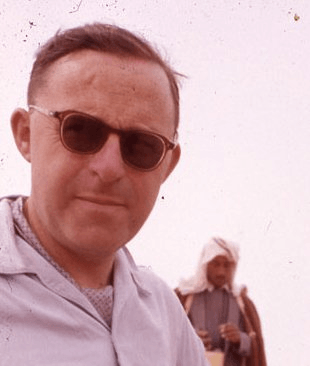
The journal "Religions" by MDPI is releasing a special issue titled "On the Origins of Western Psychedelia: Exploring Allegro’s The Sacred Mushroom and the Cross". The issue includes two articles that discuss Allegro's 1970 book "The Sacred Mushroom and the Cross", its rejection by academia, and its adoption by other movements, on the fringes of New Age and conspiracy enthusiasts. This led to the point where the book was reprinted and became a hit among entheogenic literature lovers, despite its scientific validity being questioned.
The first article "tells the story", outlining what Allegro claimed and why he faced criticism. It describes his methodological flaws and the enduring impact of his thesis, which, although considered scientifically invalid, opened the door to various parallel theories about the psychedelic origins of religion and the influence of pagan rituals on monotheistic worship. Starting in the 1990s, when Terence McKenna sought to integrate Allegro's research into the rightful framework for discussing the influence of psychoactive plants on religious experiences, to the reprint of the book with a 30-page introduction by Carl Ruck, who does not fully embrace Allegro's radical philological analyses but still highlights the revolutionary nature of his work and bold approach in religious studies, and up to recent years, when parallel studies like Brian Murarescu's work have topped the bestseller lists.
The second article focuses on Allegro’s role as a hero of alternative and conspiratorial movements, which view his academic ostracism as a response by the establishment to his approach, which initially led him to abandon his original research on the Dead Sea Scrolls. Allegro claimed that he did not connect with the research approach of the rest of the team, who, in his view, were religiously biased and under pressure from the Catholic Church. He argued that they were not interested in revealing the truth behind the Dead Sea Scrolls, which led him to "bypass" the guidelines and publish excerpts from the scrolls without coordination. Allegro also led teams that attempted to interpret the Copper Scroll as a secret treasure map. As the 1960s passed, he became increasingly labeled as eccentric and anti-establishment. Thus, when he published his bold theory that the origins of Christianity were rooted in the worship of a psychedelic mushroom, he was met with ridicule, which fulfilled his prophecy: the church did not want this truth to reach the masses and would try to paint those claiming it as illegitimate. This also explains his growing popularity in recent years, as conspiracy ideas against "institutions hiding the truth" are proliferating and no longer considered fringe.
-
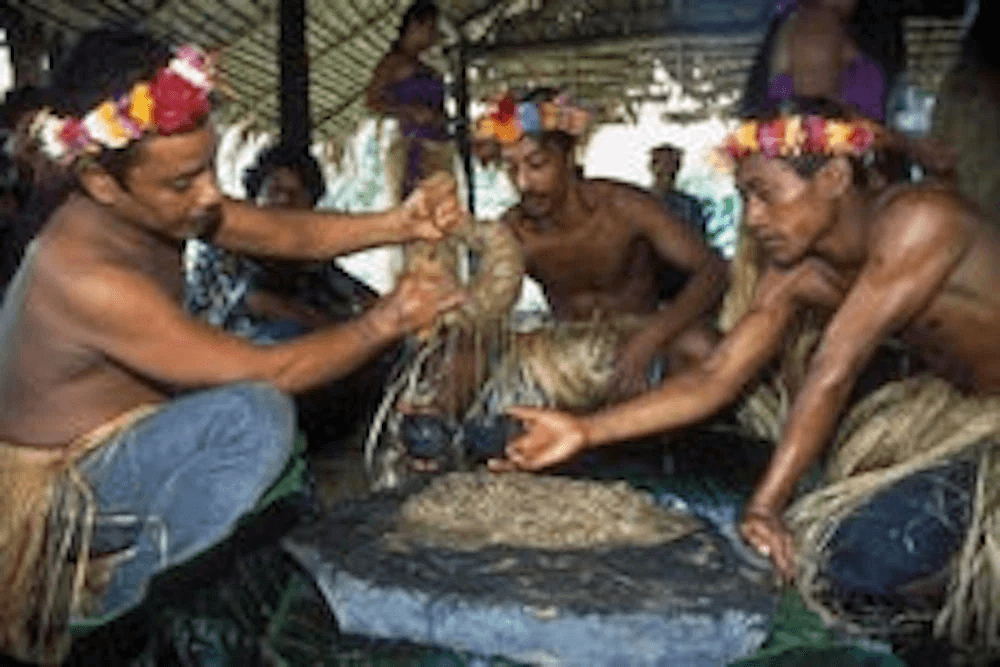
The place of “sakau” in the culture of the islanders of Pohnpei in Micronesia
Before I write about what I want to write, about kava/sakau, it is worth noting a confusion we are already aware of but continue to be confused by. In Hebrew, as well as in English, Spanish, and all the Western colonial languages and those that developed by borrowing from them, there is a constant confusion between pepper (Piper) and chili pepper (Capsicum). The reason is that before the discovery of America, Europeans only knew pepper, but once they encountered the chili pepper and saw that it too is pungent and somewhat reminiscent of pepper, and also much easier to import to Europe and market as “pepper,” it simply made sense to call it by the same name. The reason it was easier to import to Europe was of course because there were already working hands expert in cultivating it—the inhabitants of the Americas—and exploiting them was much cheaper than importing pepper the traditional way from Asia. Thus Capsicum, the “pepper” shaped like a box, from the nightshade family and cousin to the tomato and potato, took over European cuisine and replaced the Asian pepper, what we call “black pepper.”
And the story has yet another twist, because as chili peppers became widespread in “Latin” colonial territories, and as the Portuguese later controlled trade routes to India, when the English wanted pepper, they had no way, or it was very expensive. So what did they do? They marketed another pungent spice as “pepper” and called it “allspice” or “English pepper,” even though botanically it is neither one nor the other. In fact, its entire “pepperiness” is in its round shape. Its pungency comes from it being a blend of other spices. So there are three types of “peppers”: pepper (Piper), chili pepper (Capsicum), and a spice mix called allspice. But here we will deal with the true pepper, Piper. And in this case, a specific mutation widespread in the Pacific islands called Piper methysticum—that is, the intoxicating pepper.
One of these islands is called Pohnpei, and there this pepper is called sakau. But it’s important to note that this pepper is also called by other names and also revered in other places or at least used popularly. In Tonga it is called kava, in Fiji yaqona, in Samoa ʻava, and in Hawaii ʻawa. In Kosrae it is called seka, and in Vanuatu it is called malok. It all depends on which geographic area we are dealing with. In Polynesia it is called “kava,” and that is therefore the familiar name, but we will deal with Micronesia—this is the focus of the research I rely on, the sixth chapter in the book Ethnobotany of Pohnpei, edited by Michael Balick, published by the University of Hawaii Press in 2009—a chapter written by Balick himself together with Roberta Lee. The reason the island of Pohnpei is considered a place where the attitude toward sakau is more special than in other islands is, according to them, because on this island it functions as a “cultural keystone species,” a term borrowed from Nancy Turner’s research, taking a concept from ecology and transferring it into the cultural sphere. Instead of a plant having ecological value in a certain place, it has cultural value. That is, plants that are cultural keystones play a role in defining the identity and values of a particular culture. Turner built a “cultural significance index” that examines such plants’ roles: level of use, linguistic richness around them, presence in myths and rituals, stubborn persistence despite cultural changes, role in trade, etc. The plant meets all these criteria.
Speaking of cultural changes, the chapter itself, as well as other studies mentioning the plant, seek to trace how it underwent secularization—or more precisely, how exposure to the West eroded its religious significance. Thus it transformed from a plant used by kings and priests into a consumer item sold in plastic bottles and makeshift bars. Whereas once only men consumed it, now women also drink it, and of course people who do not belong to the traditional structure of the locals, meaning also members of ethnic groups who never traditionally drank sakau. Statistics show that the more urbanized a society is, the more secular the use of sakau becomes—to the point where, in the island’s capital Kolonia, 71% of people have consumed such a drink at least once. This is clearly a severe blow to the traditional fabric, and without entering into the question of whether this is good or not, the fact remains that they took the ritual and reshaped it, thereby proving its centrality in their culture.
Sakau is prepared as a drink by pounding the roots and squeezing them together with the inner bark of the hibiscus tree (Hibiscus tiliaceus). The drink has a slimy texture and a bitter taste. Incidentally, this is why it is called “kava,” since in Polynesian languages this word means “bitter.” In Pacific cultures generally, the plant is considered “a gift from the gods” or from the ancestors, and its consumption is a social ritual. It appears in countless anthropologically significant ceremonies, including weddings, reconciliations, coronations, etc. Its effects are psychotropic in the sense that it contains relaxing substances and is therefore common at events where tension is present, serving to dissipate it. The preparation of the drink itself is a ritual act, with clear rules and a hierarchy of serving, and at some point (along with the drinking) it became a central part of the political and religious life of Pacific culture.
The plant contains active compounds called kavalactones, which have calming, anxiolytic, anticonvulsant, and sedative effects. Its action begins with a tingling sensation in the tongue and lips, then comes general relaxation, inhibition release, good mood, and sociability. Later there is a feeling of deep fatigue, muscle weakness, and sometimes sleep. After locals were exposed to Western drinking culture, they had the option of using alcohol in the “social rituals” of sitting in bars. Yet they still prefer sakau, as it is considered cleaner and also non-intoxicating—at least not in the sense of alcoholic drunkenness, which is perceived as accompanied by a “hangover.” Those who wake up after drinking sakau rise refreshed.
I do not understand enough biochemistry and pharmacology to write knowledgeably about the action of the kavalactones. But generally, there are several actions that cause relaxation: inhibition of norepinephrine reuptake in the nervous system, some action on GABA A receptors reducing anxiety, and effects on sodium and calcium channels causing muscle relaxation. In any case, in traditional societies these mechanisms are meaningless since everything is perceived spiritually—they saw these properties as the transmission of “mana,” the spiritual power residing in the plant.
Sakau grows in the mountainous forests of the island, so harvesting the plant also involved the element of “going to the place of the gods.” Overharvesting caused depletion, and deforestation also damaged it, so today they grow it even outside the mountains, but traditional use was much more ritualistic. They would go to the mountains, harvest the plant mainly for its roots. It is an impressive plant reaching 5 meters tall, with stems up to 10 cm in diameter, and thus also highly developed roots, brown on the outside and yellowish inside. Sakau was not harvested before two or three years of age, and older plants were sometimes preserved for important events such as the coronation of a leader or reconciliation between clans.
When uprooting the plant, care is taken not to damage the roots—the sacred part. Clods of soil are removed using coconut husks, and sometimes the roots are washed in a nearby stream. All stems except one are removed, and the entire plant is brought intact to the ritual house, the nahs. The nahs is a traditional community structure, long and open, built of wood, on stilts, with a high thatched roof and a raised floor. It is located in the village center or at the home of the chief, the Nahnmwarki.
When carrying the plant, no one kneels or bows to the leaders, because sakau is “higher” than them in status. After cleaning, the roots are pounded on a flat basalt stone (peitehl) handed down from generation to generation, considered a being in itself—by the unique sound it produces during pounding, its qualities can be recognized. The basalt is covered with broad leaves of Alocasia macrorrhizos and placed on a base of coconut husks (today tires are sometimes used for this). This is the mortar; the pestle is a smaller stone called ketia or moahl. Striking it creates a distinctive sound, and all who hear it are invited to come participate in the ritual. The work is accompanied by the calls of the menindei (the ritual leader), who dictates the pounding rhythm and the order of serving cups. The end of the pounding is marked by the cry “Sokamah!”
After crushing, the mixture is squeezed using strips of inner hibiscus bark (Hibiscus tiliaceus) called keleu, adding a unique slimy texture to the drink. The squeezing is done with bare hands, in forward and backward twisting motions, over a coconut shell serving as a cup. The thick, dark brown, slimy liquid drips slowly—each drop considered sacred. Speaking of “mana”: not only the plant and its roots contain it, but all objects used in the ritual, including the hibiscus, the pounding stone, and of course the coconut shell cup from which the drink is sipped.
The first cup is offered to the Nahnmwarki or the highest-ranking figure in the nahs. The offering is made with the right hand, the other hand supporting underneath and the eyes lowered; the recipient holds the cup with both hands, closes their eyes, and sips slowly. Gradually, the noise around quiets, both ritually and because all are already becoming drowsy. Those who fall asleep remain to sleep inside the nahs.
In Pohnpei folklore there are several versions of the sakau’s origin, all emphasizing it as a gift from the heavens or a divine invention. The myths were passed down orally for generations and only recorded in writing in the 20th century, including in The Book of Luelen by Luelen Bernart, the first Micronesian native to write such accounts.
One version tells of an old blind man named Wideningahr. Wideningahr devoted his life to prayers to Loh, the tribal god Loh. When the old man became too weak to walk, the god descended from the heavens and extended his hand. At his touch, Wideningahr regained his strength and sight. The god took him on a journey across the island: they paddled in a canoe made from a banana leaf, stopped at various places, and at one, the god gave a piece of skin from Wideningahr’s heel to a local woman and instructed her to plant it in the earth. From that skin grew sakau. The woman learned that the drink made from it caused a floating sensation and altered state of consciousness. Later, other gods from the heavens stole a part of the plant and planted it in the “heavenly paradise,” but a root node fell to the earth in Pohnpei and the plant began to spread there. In another version, the journey was by means of a storm that carried Wideningahr (Loh is a thunder god), not before cleansing him from the mud that covered him.
Another story describes how the people of Pohnpei celebrated the “harvest festival” with sakau, adorned with traditional decorations, offering the divine fruit to their ancestors. The gods in the heavens, seeing the joy of the people, envied their right to use sakau and punished them: they caused sakau roots to fly into the air and scatter to other islands—Hawaii, Fiji, Vanuatu—thus explaining the plant’s spread throughout the Pacific. Later, a woman from Pohnpei visiting Kosrae managed to smuggle the plant back. While pounding sakau root, a small piece fell onto her body, and she concealed it on her return to the island. After planting the root in Pohnpei, it grew again, but retained a “scar” in the form of spots on the stems—a trait distinguishing the local variety.
As noted, all these practices were widespread before Christian colonialism. Since then, they have been adapted and changed, and it is worth viewing them within the framework of different expressions of intercultural encounter, including cargo cults. The encounter between the Micronesians’ religion and Christianity is also connected to sakau. In confession rituals and ceremonies where the community reconciles with God at Christmas and Easter, they use sakau, thus expressing local syncretism with the new form of their culture—another proof of the plant’s centrality and its being a “cultural keystone.” Its place was so central and strong that because the Church failed to prohibit sakau use, it synchronized it with its own rituals, just as pagan rituals were incorporated into Celtic and Germanic Christianity.
-
Religious Ecstasy as part of the structure of the human soul
The goal of the book "The Bloomsbury Handbook of Religious Ecstasy" is to argue that ecstasy is not a deviation from the norm and not a marginal phenomenon, but the opposite: it is part of the structure of the human soul. The human soul seeks it and finds it even today, when religion has changed its form and become secularized. The structure of the human soul is built in such a way that it is in constant search of the transcendent. But it is not always able to do this on its own, so it seeks shortcuts. The main shortcut is called “authority.” That is, if I cannot connect directly to the transcendent, then at least I will adhere to someone who has done so and accept them as a spiritual authority. The trait that turns a person into someone who has authority is called charisma.
In the soul there is a charisma sonar, and when it detects it, it tries to use it as a medium for connection with the transcendent. The goal is to reach a state of “spiritual possession,” or more precisely, the reason we seek the transcendent is to be passive toward it and allow it to control us and merge with it. The merging is experienced as the dissolution of the boundaries of the self. The self is essentially a barrier in which the soul is imprisoned, and breaking through this barrier is ecstasy.
It sounds very mystical, but what this book tries to prove is that each manifestation of modern spirituality—and of course ancient spirituality—is nothing but a variation of this human experience, which is, as stated, universal. The chapter I am most likely to enjoy, because I have not yet managed to get my hands on the book, is the one describing how popular culture rituals create a reality called Distributive Effervescence—that is, the fermentation of that same energy among individuals who come there precisely for this purpose. Rock concerts, football games, parties, civic holidays, etc., are a kind of collective Petri dish where people try to culture ecstasy bacteria.
Once you arrive and participate in these rituals, you are essentially performing a “mediative act.” And here is the place to discuss a concept called mediation, a concept in the philosophy of technology that describes the way technologies mediate the relationship between human beings and the world. That is, our attraction to technology is mainly because we are seeking a means that will allow us to experience the world in a way that enables us to fulfill our religious experience. Popular culture is nothing more than the form in which the modern generation copes with technological innovations in order to search for and find the path to religious ecstasy.
By the way, not everyone would agree with this definition. Don Ihde’s original claim is that mediation means the way technology serves as a “medium” for perceiving reality, and in fact defines our reality. That is, technology is an intermediary tool between humans and the world, and therefore it is a medium. Ihde argued that technology stands between us and “reality”—that is, between the subject and the “object.” He did not claim that technology stands between us and other persons—that is, between subject and subject. And even if he did, he did not claim that the recognition of subjects by other subjects is the human praxis, the “religious ecstasy.”