
The worship of Artiodactyls animals among the ancient societies probably came about because they shit a lot, and there are fungi that treat the animal dung to reproduce. These fungi are called "coprophilous" because they wait for their hosts to excrete them in the feces (which becomes fertilizer) and thus spread their spores. The mushrooms are called Panaeolus, some of them contain psychoactive alkaloids such as psilocybin.
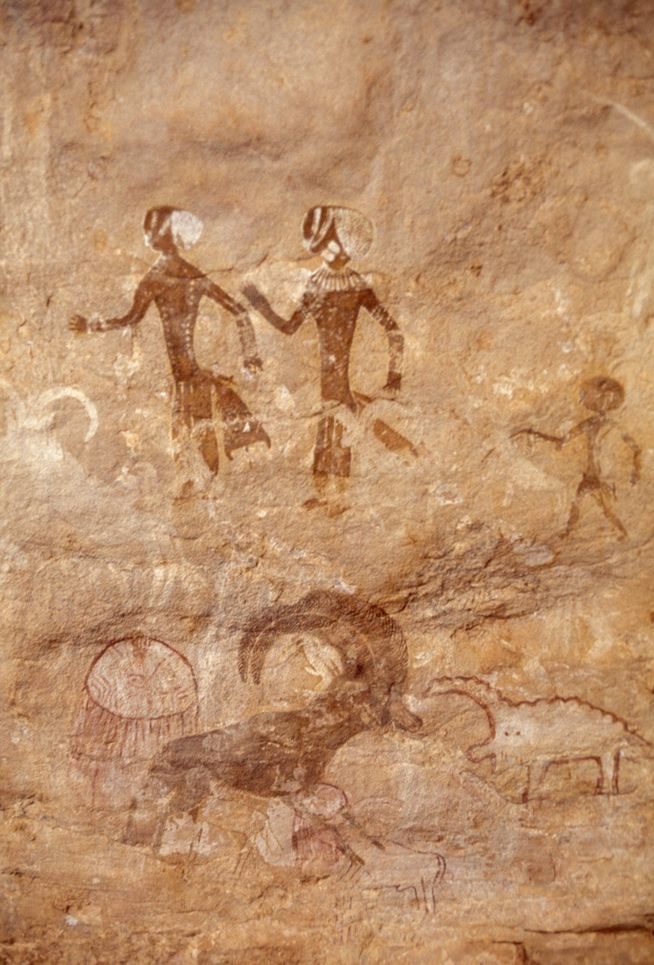
Before the Sahara Desert became a desert in the 8th millennium BC, while it was a fertile savannah rich in vegetation, it was inhabited by groups of hunters who, inspired by these mushrooms, drew paintings on rocks in a style that gave this period the nickname "the period of the round head". This name was given because the figures of the people were like dancers with mushroom-shaped heads, who supposedly perform a ritual ceremony before going hunting.
The claim is that this ceremony was a worship of the sacred animals, precisely because they shit sacred mushrooms. Henri Lotte, the ethnographer who studied these paintings, also suggested that they were figures of aliens, an idea that gave Erich von Daniken the idea for "Chariots of the Gods". But because it is a weak arguement, the psychedelic hypothesis is also sufficient. The credit for the psychedelic hypothesis can be given to the Italian researcher Giorgio Samorini.
I already wrote about the mushrooms in poop here a few months ago. The more interesting thing is that one of the more famous paintings is of a shaman with a bee head. In Tassili n Ajjer in the Sahara, paintings with red ochre were found that were drawn with a stick of acacia wood (btw, the pigment produced by the acacia is also red)
Hymenoptera family (bees, ants) especially love the acacia tree, and acacia honey is considered premium honey. In general, the Hymenoptera have a symbiosis with the acacia trees, they protect the acacia from pests and the acacia provides them with food.
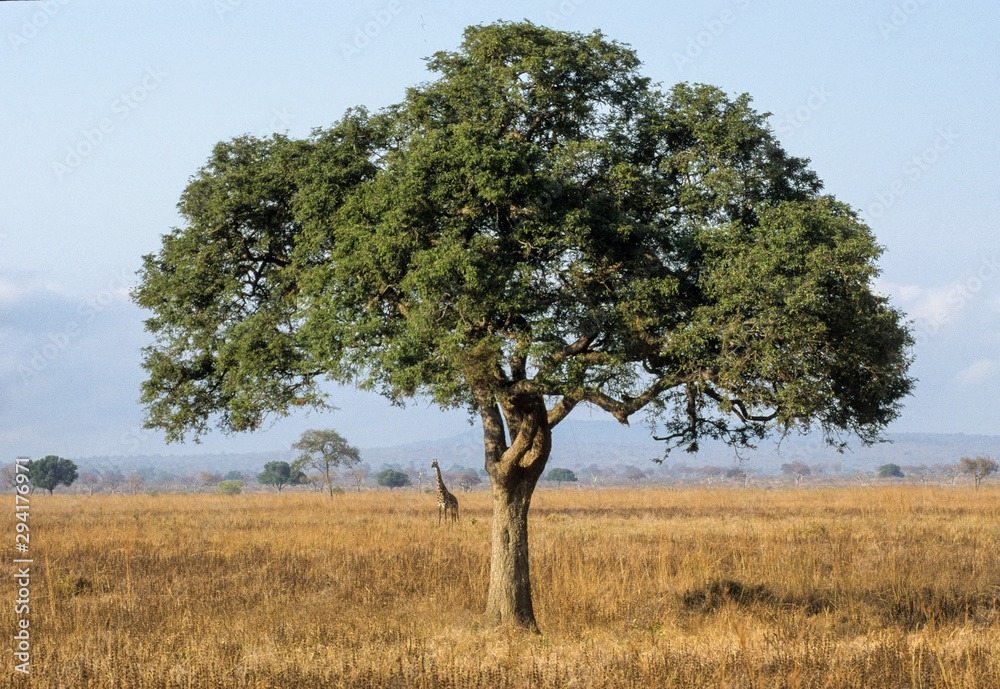
The acacia itself is present today in a relatively small population in the Sahara, but there is evidence that during the time of the Sahara as a savannah, the acacia was so widespread that it was quite dominant in the local flora. And accordingly, the local fauna had wild animals that are not found in the desert today, but then there is evidence from the rock paintings themselves that they were present. One of them is the deer.
It turns out that the deer still exists in the deserts to this day – the Arabian deer (Gazella arabica), and especially the acacia deer (Gazella acaciae) of which a very few population remains today in the Yotvata area, which its diet is based on acacia leaves. What is also special about acacia trees, is that its seeds are infected with the larvae of beetles called Bruchidius spadiceus. If these seeds are eaten by deer, the parasitic larvae die in the deer's stomach and when they are excreted the seeds are ready to germinate. Meaning, deer also have a symbiosis with the acacia.
The deer, and in general the Antilopinae family, became a symbol. Whether for fertility, or whether in their affection, it turns out, for psychoactive plants. Now, the question is, according to the findings: if in the Sahara, and consequently in ancient Egypt, a psychedelic cult took place. If there was a population of deer and acacia trees. If there was a direct connection between these two things – doesn't that say something about the nature of worship there? Does the round head actually symbolize the shape of the acacia tree?
הצטרפו לרשימת התפוצה שלנו
כתיבת תגובה