
In antiquity, at the beginning of Christianity, Christians were accused of being cannibals, haters of the human race (odium generis humani) and having incest. The accusations were probably due to a misinterpretation of the essence of the Eucharist ceremony, in which they eat the flesh of Jesus and drink his blood. At least that's what we're taught at university, and this without referring to Euripides' play "The Bacchae" which attributes the same acts to the worshipers of Dionysus, in which they murdered a man and ate him. One of them is the mother of that person. The accusation was because of the identity between the Eucharist, the drinking of the wine, and the Dionysian rites. Dionysus is the god of wine.
This claim comes up again and again in Brian C. Muraresku book, "The Immortality Key". He claims that the ancient Christian religion was nothing less than a monotheistic variation of the Mysteries of Dionysus – not necessarily in the ceremonial pagan sense but more in the idea of "eating the god in order to unite with the god". The women in Euripides' tragedy are described as those who by drinking the wine got drunk and did the will of Dionysus, the murderous will. Through the assimilation of Dionysus in their body they united with him and his will. Just as the Gospel according to John claims about the Eucharist. He claims that the Gospel according to John was written for a target audience in the city of Ephesus, where Dionysus worship was popular (and in Ionia in general).
The Romans looked at the Dionysian rituals with a bad eye and even in 186 BC banned it and executed its participants due to its masses. They only enabled it in a controlled way by the authorities and not in a pirated way. The reason was because they could not tolerate a situation where the classes are mixed and even more so not a situation where the women are the ones who brilliantly manage the ceremony. The persecutions against the Christians were therefore not only because the Christians did not participate in the worship of the kingdom and offered a sacrifice in honor of the emperor, but because traditionally the Mysteries of Dionysus pushed the envelope, and were sometimes persecuted, because they undermined the social order. The Romans tended to get confused between these mysteries, which in Rome were called "Bacchanalia". Christianity, for its part, tried to imitate the worship of Dionysus in order to convert people who were thirsty for an ecstatic spiritual experience. Undermining the social order, as the Christians would be accused, was blasphemous in the eyes of a society in which there are castes such as patricians, plebes, mobs and barbarians. If the Mysteries of Apollo were open only to Greek-speaking Hellenists, the Mysteries of Dionysus were open to all. The Romans gave them only to the patricians and nobles, and called him Bacchus, while the masses of the people called him Liber, a worship that was less and did not count. Before Christianity, the piratical bacchanals were done in remote places, the Christians took the rituals underground but allowed them to be more available, inside the houses. The availability and temptation to obtain such a spiritual experience was a magnet for people in a land where it was the religious praxis. Ionia
The chauvinism smell or misogyny tone that excluded women from the religious space, on the grounds that they are tend to be unrestrained and frivolous, was reeked from the play of Euripides but also from the established church that expelled them from the ranks of the clergy, and refined the Eucharist from the bath of the blood of the grapes, a state in which people lose their image to Christ, to a state in which people drink a weakened placebo in a technical way, if at all is drunk. Because in the Middle Ages the practice began where only the priests drank, and sometimes not in front of the audience but behind a cover. In fact, as Norman Cohen recounts, most of the popular rebellions against the Catholic establishment, including the Protestant Reformation, stemmed from a protest against the way the Eucharist was administered, which is considered the beating heart of Christianity.
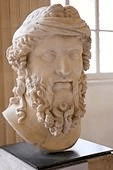
Muraresku goes even further and shows that the concept of "lamb of god" is also taken from the Dionysian lexicon. The practice of tearing the meat into pieces and eating it roughly, especially goat meat, was part of the ecstasy that accompanied the rituals. The god Pan was a satyr, a goat-man who lived in the desolate places where the rites of Dionysus took place, and the word panic symbolized the panic that gripped people who visited these remote places, or in contrast of frightened flocks of sheep. In addition, Dionysus was born to the father of the gods in a virgin birth, according to the Orphic myth. Date of birth: December 25. Later he was murdered by the Titans and only his heart was crushed, Zeus swallowed him and gave birth to him again. The date: March 25, the Feast of the Annunciation. Christ's suffering is explained by the suffering of another satyr, Marsyas, who was punished by Apollo after he had a contest with him and won. Marsyas is depicted in art in the same position as Christ on the cross. The portrait of Jesus as Jim Morrison, bearded and full of hair, is also based on portraits of Dionysus like this one. see attached image.
Dionysus in his Orphic edition, Zagreus, was the son of Persephone. Persephone is th one who stood at the center of the mysteries of Demeter, her mother. She is considered to be resurrected once a year, when she rises from the underworld. In the Orphic myth, Orpheus is the one who ascends from the underworld, to which he descended after intoxicating Cerberus, the guardian of Hades, with his music. Intoxication is also the effect of those who drank the kykeon in the mysteries of Demeter. Both the kykeon and the wine were seasoned at that time with flavoring agents such as henbane, mandrake and various morning glories. This is what made the wine so strong at that time, many times more than normal wine based on the fermentation of vines. According to Muraresku, the identity of the intoxicating drink was not important, and the worship of Dionysus became a wine worship just because the Greeks saw that the beer was used by other peoples. Beer was indeed used ritually in the Eastern, Mesopotamian and Egyptian cultures (and it turns out also among the barbarians in Europe). The Dionysia and Bacchanalia were Hellenistic versions of rites that were popular in the East such as the Canaanite Marzeach, which itself was a Semitic variation of an Osiris worship ritual recorded in ancient Egypt. Osiris is also considered to have descended into the underworld and risen from it. Drunkenness is traditionally considered the way to communicate with the world of the dead, drinking is the descent into it and sobriety is the ascent from there. Drunkenness is the experience of the near death, a state in which you experience death while living, and in fact upon your return to sobriety you are reborn, just as Ra defeats Apophis every morning anew, when the sun rises and comes from the underworld.
הצטרפו לרשימת התפוצה שלנו
כתיבת תגובה