
Nitzan Hamburg writes: One of the subjects that fascinates me the most is the goddess Asherah – the goddess of fertility, mother earth, the tree of life – in the ancient world, and her reflections in the Jewish tradition.
Sacred trees were a common cult in antiquity. The trees, which live for hundreds of years, symbolized eternity and were a place of pilgrimage to perform "ritual sex" ceremonies for the needs of fertility and reproduction.
The goddess who stood behind those trees was the same Asherah. Another goddess, Ashtoreth, also represented sexuality and femininity. Thousands of figurines of the fertility deity have been found in archaeological sites in Israel and Judea.
At some point in history, these two deities – Asherah and Ashtoreth – were probably merged into one female deity. Their names are also similar in sound and they were known throughout the ancient Middle East in different versions: Ishtar (for her name Esther is called) or Afrodet or Astarte for Ashtoreth in Greece (Aphrodite).
—
In the Bible we have a tree of life – in heaven. But we also have another sacred tree – the burning bush and the menorah. The menorah, as well as the cherubim, is part of the sacred arrangement of the Ark of the Covenant, but it is much more important in relation to the cherubim.
The menorah itself is described as consisting of vegetation and its shape as a branchy and branched tree, and it also incorporates fire (candles) within it. There is a great similarity between the burning bush and the menorah, since both represent divine supernaturalism – fire and vegetation together, which do not harm each other.
To remind you, at the burning bush Moses meets God "face to face". The connection between the bush, which is identified with God himself, and the menorah appears in the verse: "This is how the lampstand was made: It was made of hammered gold—from its base to its blossoms. The lampstand was made exactly like the sight Yahweh had shown Moses." (Numbers, 8:4).
But what is the "sight that Yahweh showed Moses", according to which the menorah must be built? The same sight of the burning bush: "This great sight: why the bush will not burn" (Exodus, 3:3).
And what is the point of building the menorah? For God to dwell in it: "Have them make me a sanctuary, and I will dwell in them. As I show you the structure of the tabernacle and the structure of all its vessels" (Exodus 25:8-9).
—
It may surprise many, but the seven branched lamp we are familiar with is actually the face of the biblical God himself. Chapter 4 in the book of Zechariah, in the dialogue between Zechariah and an angel, identifies the menorah as the image of God himself.
The angel: "What do you see?"
Zechariah: "I see a solid gold lampstand with a bowl at the top and seven lamps on it, with seven channels to the lamps. 3 Also there are two olive trees by it, one on the right of the bowl and the other on its left. What are these, my lord?"
The angel: "Do you know what these are?"
Zechariah: "No, my lord."
The angel: "… these seven are the eyes of the Lord that wander throughout the land."
Zechariah: "What are these two olive trees on the right of the lampstand and on the left? What are the two olive branches that are in the hands of the two golden pipes that shine gold from above them?"
The angel: "Do you know what these are?"
Zechariah: "No, my lord."
The angel: "These are the two who are anointed to serve the Lord of all the earth"
—
After I argued that the menorah represents the face of Yahweh, we can argue to what extent this works out: "And then Hezekiah went to the house of Yahweh, and spread it out before Yahweh. And Hezekiah prayed before Yahweh, and Yahweh said, 'Yahweh, the God of Israel, sits among the cherubim, you are the only god for all the kingdoms of the earth, you made the heavens and the earth'" (2 Kings 19:15).
Yahweh, who is represented as a menorah in the Ark of the Covenant and in the temple, is sitting among the cherubim, that is, the menorah in the center and the cherubim on the sides. In the book of Ezekiel, who lived in Babylon and was familiar with Mesopotamian culture, he describes the sight of the cherubim in the temple, which evokes the memory of Heaven: "While I watched, the cherubim spread their wings and rose from the ground, and as they went, the wheels of the chariots went with them. They stopped at the entrance of the east gate of the LORD’s house, and the glory of the God of Israel was above them" (Ezekiel, 10, 19).
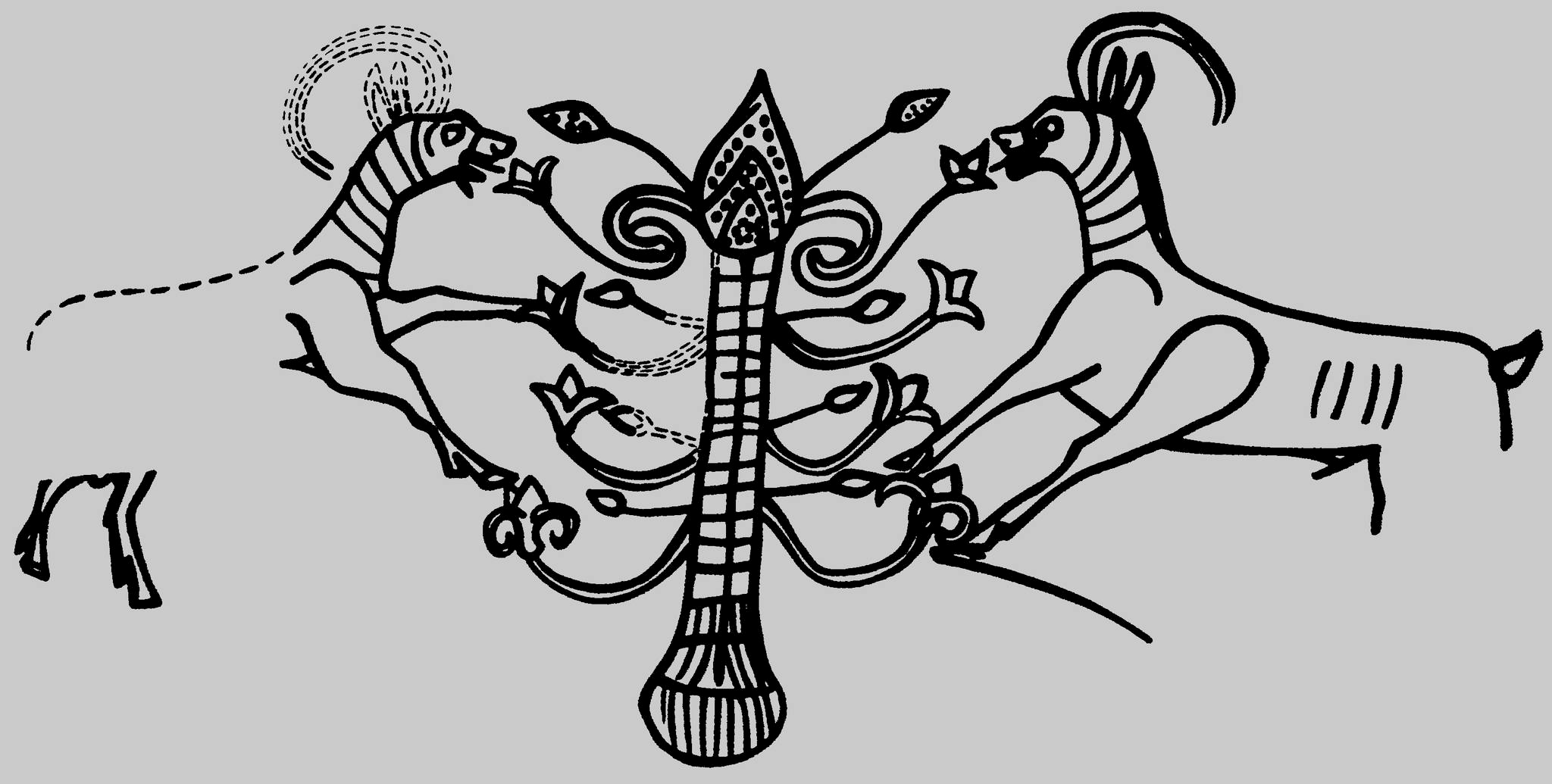
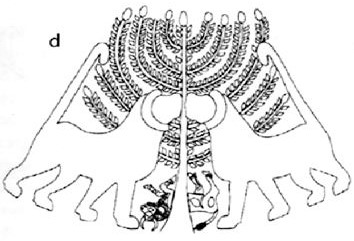
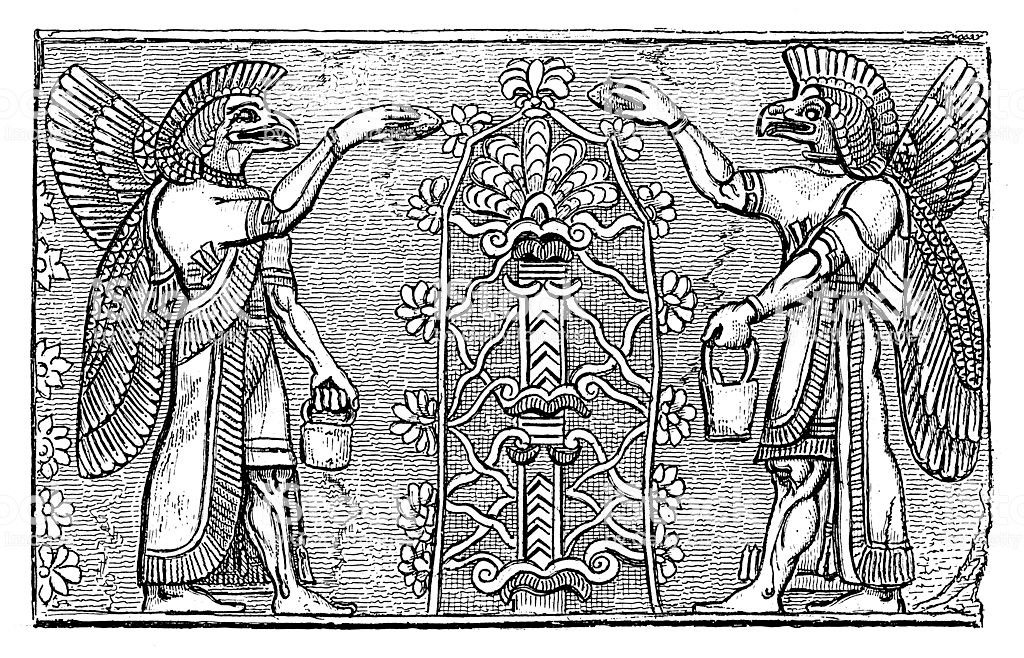
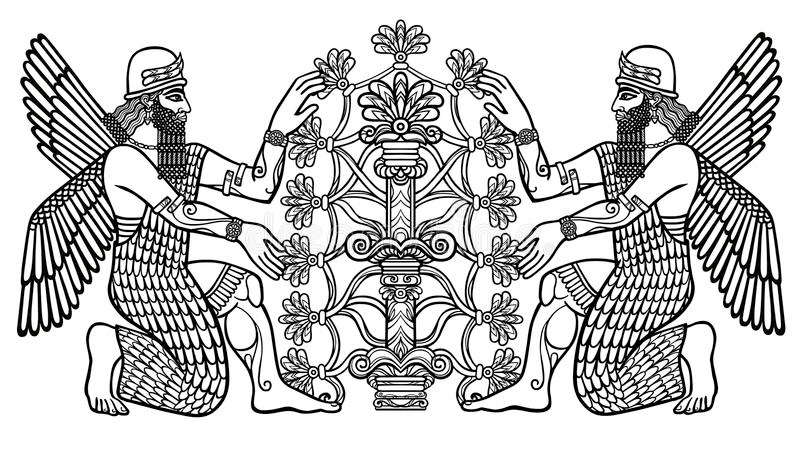
In another passage, he describes the cherubim as having a timorah (a legendary decorated tree) between them: "And he brought me to the temple and measured the rams six cubits wide from here and six cubits wide from there, the width of the tabernacle […] and made of cherubim and timorahs and a timorah between cherub and cherub and the face of a cherub is two. And a man's face is toward the timorah from here, and a lion face toward the timorah from there, made round about the house" (Ezekiel, 41:18-19).
As you can see, the idea according to which a sacred tree (in our case in the form of a menorah) with winged figures next to it is not at all original and exclusive to the Israeli-Jewish culture. Fortunately, we have authentic Mesopotamian images of timorah (probably a palm tree) and cherubim around (winged figures)
הצטרפו לרשימת התפוצה שלנו
כתיבת תגובה