
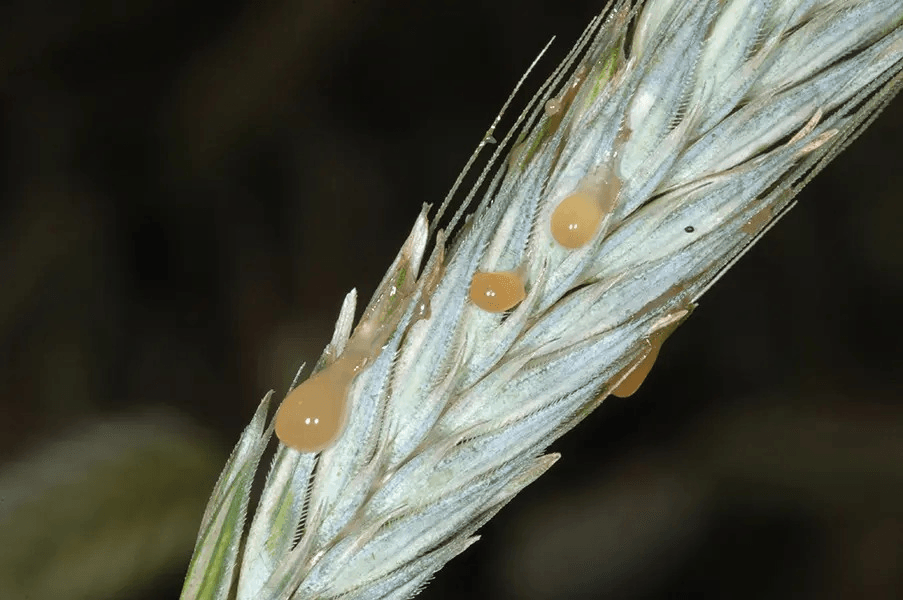
Among the sacrifices in the temple there is one sacrifice that is generally considered an appendage, in part because it usually comes next to another animal sacrifice. Usually when we write about a sacrifice we also talk about an its "grain gifts and pourings" (Numbers 28-29), as if it were a part of the sacrifice itself. But in practice it is about another sacrifice, a sacrifice that is not at all from the animal but rather from the plant. We tend to forget about it, but it was probably the most central sacrifice in the worship, i.e. the blood sacrifices were not the center of the worship in the temple, but rather the "gift offering" (hebrew: Mincha").
It is common to translate the word Mincha as a "Gift". But we see that in a consistent manner in the Bible the Mincha is associated precisely with fragrance. Oil is poured on the offering and frankincense is put on it, when it is incensed "Isheh" ("incense burning"), it turns into a fragrant smell. We see that when Jacob ordered to bring down to Egypt the gifts of the land, he described it as a Mincha and specified to bring myrrh and honey, that is, something sweet, fragrant and oily. The manna was also like this, sweet and oily, although it is not described as fragrant, but it is written that if it is not used immediately, it is smelly. Also, in Yoma 75a, it is emphasized that "it is taught that women's jewelry came down to Israel with manna" meaning that the manna was perfumed and had a scent that women put on themselves to adorn themselves in honor of their husbands. The dose written in the Torah for making manna is an "Omer". Omer is also the name of the grain portion that is harvested in the period between Passover and the Pentecost holiday, a period in which there is a special issue with the way of processing that grain.
The manna is considered by Dan Merkur in his book "The Mystery of Manna" to be the center of the Jewish worship which is basically based on that "holy dose", meaning that what is written in the Manna passage is a kind of recipe for a special sacrament that is at the heart of the worship and everything that is done in the temple is a reproduction of its preparation. The manna is identified at Merkur's, as spikes that are infected with the ergot fungus, the initial stage of the fungus's development is in something that looks like honeydew and is sweet. The ergot would be ground and made into beer or bread, and as part of the processing process they would "purify" the fungus of its toxic components and leave the psychoactive component, which in the future will become what LSD was developed from. Those who ate the manna received visions and prophesied, and in fact what is done in the Jewish ritual is an attempt to reproduce these visions using a secret recipe kept among the priesthood. At first those who were allowed to participate in this ceremony were all Israelites, but later the ceremony became a mystery that only the priests were allowed to participate in. This ceremony would take place once a week on Sabbath during the eating of the showbread, and on a host of other ritual occasions such as for example in these incense burnings, including those during the gift offerings.
Variations of this ritual simulation, or "sympathetic magic" were also common among wider circles than the priesthood, such as the Passover celebrations. In fact, the commandment not to eat Chametz (leaven bread) on Passover is because leavening the bread was considered among the mystery guides to be a chemical process that impairs the psychedelic ingredient as found in the sacred recipe. Regarding the Mincha it is said that you must make it unleavened, as it is said in chapter 2 of the Book of Leviticus "You shall not make any Mincha offering that you offer to the Lord unleavened, for you shall not distill any leaven or any honey from it into the incense offering of the Lord". Some of the gift offerings are completely burnt, but there are cases where there are leftovers and they are eaten, as for example in the showbread. And these remains are defined in the Torah as "Holy of Holies", it is emphasized that precisely because they are part of the incense offering ("Isheh"), and for that reason they are also forbidden to bake leaven. This simulation of the recipe, and the only event in which the Israelites actually simulate the priests in this role play, are the reason why Passover has a special issue with the chametz.
There are two special Mincha sacrifices in which it is actually commanded to make them intentionally with leaven: two loaves of bread of the Pentecost and the breads of the "Thank offering". The reason is because these two offerings are actually offerings that symbolize the participation of the masses in the Holy, and the commandment to eat leaven actually comes to symbolize this buffer between the Holy and the Profane and is actually an intentional desecration of the Holy. The thank offering is the equivalent of what we demonstrated in a previous post here, "Thysia" (θυσία), that is, a sacrifice brought by an ordinary person, partly sacrificed as an equivalent of the jewish "Shelamim" and the rest is eaten. Along with the Shelamim, he also brings "thank bread", which, as mentioned above, symbolizes his very permission to participate in the "Holy Communion". The two breads of the pentecost are a kind of equivalent to the ritual that in the Eleusis mystery was called "Pelanos" (πέλανος), and were in fact special breads made from the harvest harvested in the "Rharian" fields, fields that were sacred to Demeter and considered to be the place where she conceived Plutus, the god of wealth. The mystery of Eleusis included a drink called kykeon which was an ergot beer seasoned with fragrant herbs (which closes the corner of smell for us, if we want to equate it to manna). Pelanos in Greek is called from the word for clay (πηλός), and the meaning is that it is a fried mash, or what is called in our language: pancake.
I mention the pancake because, in fact, the "counting of the Omer" is a period marked in the temple between two offerings of pancakes: the two pieces of bread on one side that seal it, and the offering of the Mincha of "Havitin" (pancakes) of the perpetual ("Tamid") evening sacrifice of Passover eve that opens it. Usually the Havitin offering is divided in two, with half of it offered in the morning offering and the other half in the evening offering. The "working hours" in the temple, that is, when sacrifices are made, are between these two offerings, which delimit the sacred time. So also in this case the two bread offerings demarcate another sacred time dedicated to the Omer. Immediately after the Havitin offering on Passover Eve, the Passover sacrifice is offered, in fact the Passover sacrifice is the only sacrifice that is allowed to be offered outside of "working hours", and is the exception. The reason is probably because he is the first to be sacrificed at that time of a consecrated the "Omer". As long as we are within that sacred time interval, the Omer is sacred. From the moment the offering of the two breads on the pentecost was offered, the Omer was removed from the sacred status and allowed to be eaten by the masses.
הצטרפו לרשימת התפוצה שלנו
כתיבת תגובה