
The first chapter of “Shamanism and the Drug Propaganda” by Dan Russell delves into shamanism from the Paleolithic period through the Bronze Age. It includes numerous accounts of ancient rituals preserved in modern indigenous societies and many references to anthropological studies and archaeological findings. However, what caught my attention was the focus on techniques for transmitting knowledge—specifically, memorization through rhythm, song, and drumming.
The book explains that Paleolithic shamans possessed encyclopedic knowledge across various fields, including astronomy, mythology, medicine, and science. This knowledge was transmitted over thousands of years using various memorization techniques, such as singing. To illustrate the capacity for memorization through song, Russell references a much later historical example: the Iron Age. For instance, he notes that Homer was reportedly capable of reciting The Iliad and The Odyssey by heart—knowledge passed down through generations, which lends credibility to the accuracy of his versions. Similar traditions of recitation spanning centuries or even millennia are also documented in Indian culture.
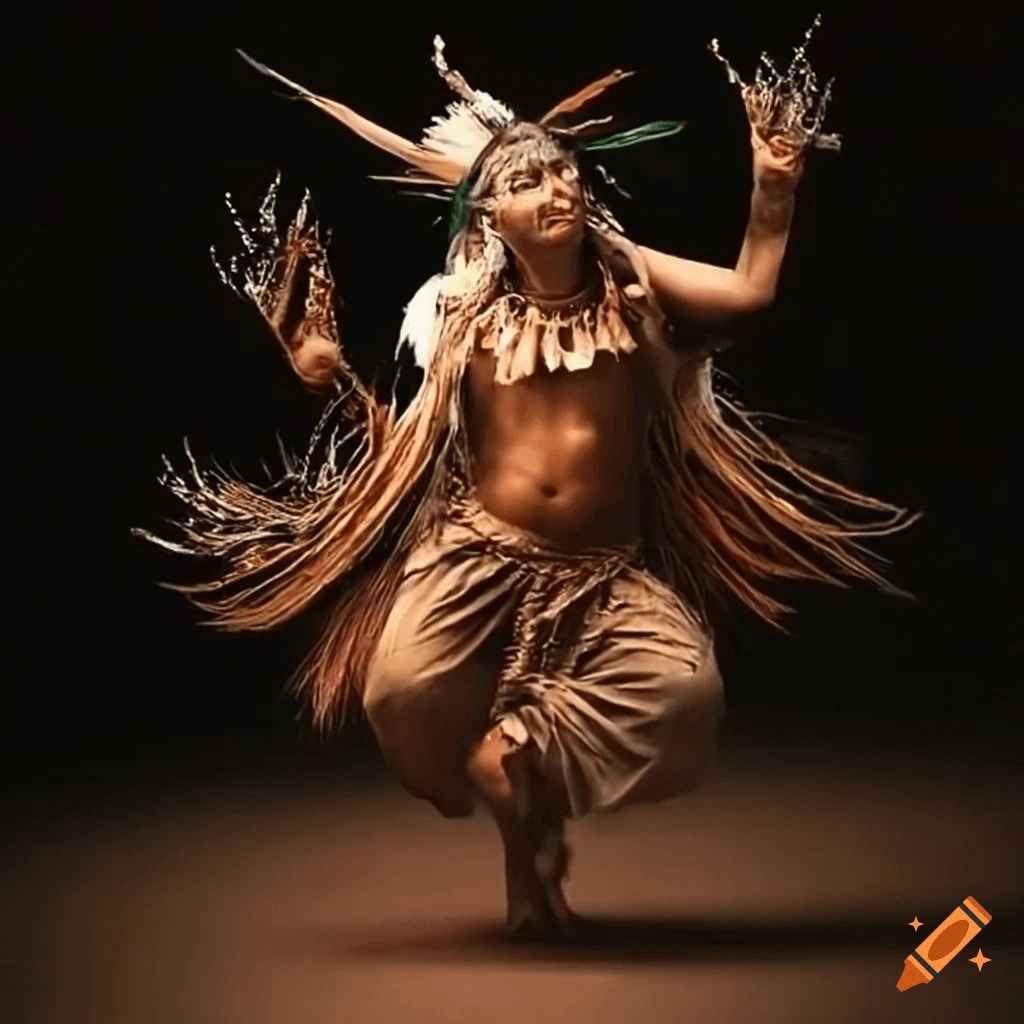
Shamans are renowned in anthropological literature for their ability to continue rhyming or chanting for up to 100 consecutive hours—an achievement beyond the capacity of most modern humans. They accomplish this through singing, a tool often credited to them as an invention that utilizes rhythmic structures. For instance, the word strophe, meaning “verse” in poetry, literally translates to “a turn,” while the word ballare, from which the word “ballad” is derived, means “to dance.” The connection between song, dance, and movement is a clear expression of shamanic ecstasy. By spinning or dancing in circles while chanting, shamans enter an “automatic” state.
Shamans also relied on drumming as a “rhythm regulator.” In fact, the word for shaman in the Eastern Algonquian Penobscot language translates to “drum sound person.” Scholars compare shamanic drumming to the rhythm of a heartbeat, noting that the frequencies of shamanic drumming match the brain’s theta rhythms—EEG waves associated with creativity, extraordinary problem-solving, vivid imagery, and lucid dreaming. Shamans themselves say, “The drum is our horse.” The term shaman, meaning “spirit person,” reflects this process, as the shaman in an automatic state “invites the spirits to enter their body” or “merge with their own spirit.” Mircea Eliade defined shamanism as “an archaic technique of ecstasy,” precisely because shamans discovered practices that allow them to “ride the wave.”
So, if you’ve been looking for theoretical background to support a post I once wrote about the singing techniques of ancient blacksmiths—based on Dr. Nissim Amzallag’s idea in his book “Zamru Maskil”—here it is. This technique was not invented in Canaan but has been used since ancient times for preserving and transmitting knowledge.
הצטרפו לרשימת התפוצה שלנו
כתיבת תגובה