
This week, the Jewish holiday of the "New Year of the Tree", the 15th of Shevat, was celebrated. On the occasion of the holiday, the popular hebrew podcast "Big History, in Brief" is dedicating its recent episode to the book "The Kabbalistic Tree" by Prof. J. H. Yossi Chajes from the Department of History of Israel at the University of Haifa. Chajes specializes in the study of the interface between Kabbalah, magic and science, and his new book indeed deals with that specific interface of the "tree diagrams", a field that began in science, or rather in "natural philosophy" and was borrowed by mystics to draw diagrams of a religious nature – starting with genealogical trees (including the genealogy of Jesus), go through the diagrams of the tree of life and end up with the divine structure in the form of a tree. The Kabbalistic genre was later called "Ilanot" after those Kabbalistic Trees ("Ilan" = tree in hebrew), and Chajes himself is also a participant in an international digital academic project called "The Ilanot Project", which deals with the study of those Ilanots. One of Chajes' previous books "Between Worlds: Dybbuks, Exorcists and Early Modern Judaism" from 2003, was considered one of the most important books in its field in a list published by the Wall Street Journal at the time. The new book "The Kabbalistic Tree" was called in one of the reviews "monumental achievement that will be valuable to scholars and general readers interested in Judaism, religion, and art history"
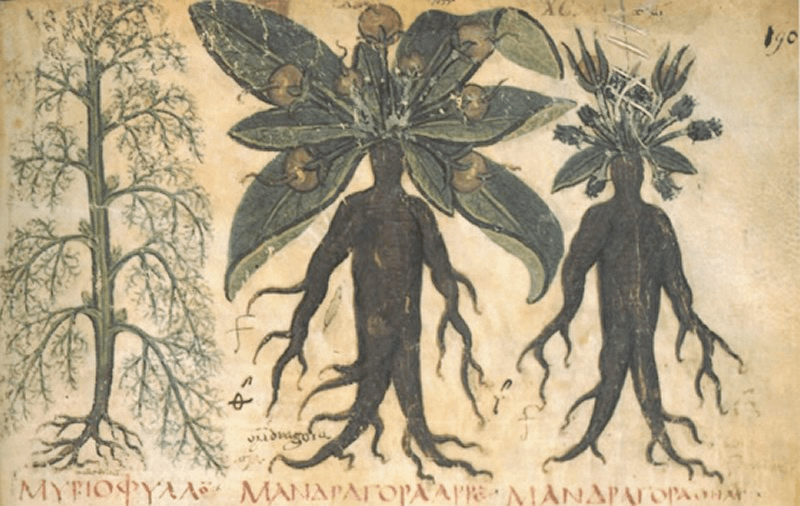
It should be noted that I have not read the book. I guess that it also deals with the Gnostic or Neoplatonic conception of the devine structure, as a complete system of delegations and emanations. But in Gnosis this tree develops downwards and not upwards. In Neoplatonism such trees were known that were drawn by students of Plotinus who tried to visually demonstrate his teachings, such as Porphyry's tree. We talk a lot here about the "kaneh" and the "branch of jesse", I think that these images of a fallen tree that grows and blooms as part of its resurrection have a connection to the divine structure, or at least to the analogy or symmetry between the history of the world and the entity called the "Knesset of Israel", and God himself. Likewise, on the similarity of "Humans are like trees", in the Gnosis, and also in the ancient juwish mysticism "Shiur Koma", descriptions of the divine structure as a body with organs of enormous dimensions were known. It is likely that part of this human-tree analogy developed into drawings of trees with a human-like appearance (such links that made plants sacred are known of course, as for example in the root of the Mandrake)
הצטרפו לרשימת התפוצה שלנו
כתיבת תגובה