
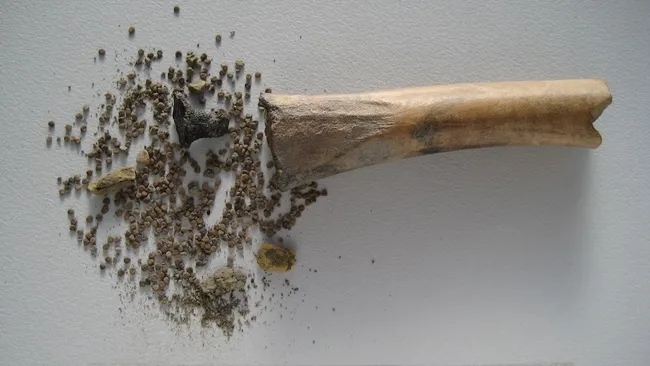
Archaeologists have discovered the first conclusive evidence that the henbane was used in the Roman world (Hyoscyamus niger). Before this discovery in 2017, there was no physical evidence of this plant being used by people in the Roman Empire. Hundreds of the plant's seeds were found in a 7 cm long hollow bone of a sheep or goat in a rural Roman settlement called Houten-Castellum in present-day Holland. The henbane grows in Europe like a wild plant, but why put it inside a hollow bone? At first it was thought that the hollow bone might have been used for smoking, but then it was discovered that it was clogged with a cork made from the blackened bark of a birch tree, so the researchers came to the conclusion that the seeds were used deliberately, for the purpose of carrying them – the question is for what, was it really for narcotic purposes, and if so, for medical purposes? religiosity? recreational? Researchers have dated the find to between 70 and 100 AD, based on the styles of pottery and wire brooch found nearby.
הצטרפו לרשימת התפוצה שלנו
כתיבת תגובה