
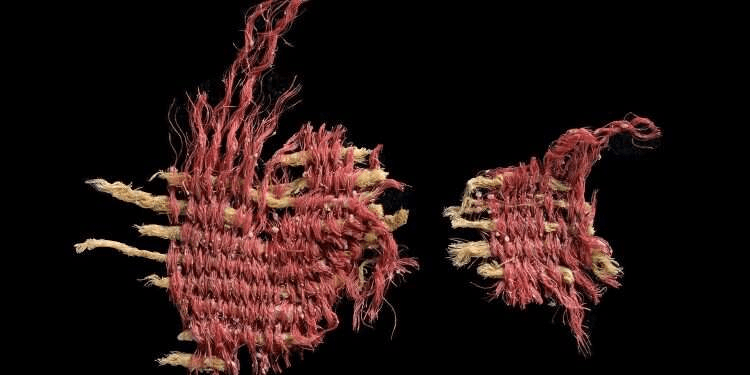
A fabric discovered in a cave in the Judean Desert was dyed purple using dye derived from the kermes insect, which researchers identify with the biblical "scarlet worm". In the new study, published in the Journal of Archaeological Science: Reports, researchers from the Israel Antiquities Authority, Bar-Ilan University, and the Hebrew University participated. According to the researchers, this is the earliest evidence of fabric dyed red using kermes insects.
The find is dated to the Middle Bronze Age, a period during which evidence of the use of cochineal dyes began to appear in the Levantine region. The discovery bridges the gap between archaic literary evidence and archaeological finds, indicating the use of these dyes as early as this period. The findings mentioned in the article provide solid evidence for the early use of cochineal dyes for textile dyeing, linking the textual evidence in the Bible with archaeological findings, highlighting the importance of colors in religious rituals and social status in the ancient Levant.
In 2005, Zohar Amar and David Iluz from Bar-Ilan University published an article identifying the scarlet mentioned in ancient texts as the Kermes dye and argued that the source of the scarlet dye was in Israel. Therefore, the insect and this dye are referred to as "Biblical Kermes" (Kermes palestinensis).
The website "Daf Yomi" writes: "For years, researchers failed to locate an insect suitable for producing dye in Israel. Due to the failure of their research, most researchers concluded that the scarlet dye was imported from abroad. However, in the year 2000, Professor Z. Amar identified a large concentration of insects in Nahal Hazor in the Upper Galilee, which, upon contact, stained the hands red. This insect was defined as a species of Kermes (Kermes echinatus) that is common in Israel. Further research revealed that this species is indeed suitable for dyeing, and the color obtained from it in textile dyeing is a bright orange".
My approach is that our ancestors were ancient scientists, and every color used in sacred rituals was considered holy due to some association with an unexplained phenomenon or because it could reliably imitate something linked to such a phenomenon. In the context of Kermes of the Oak, it seems obvious that it became sacred due to its connection with the oak tree and the fact that it produces a color close to purple. The oak was sacred in various shamanistic religions, and in the Bible, we also see reverence for it, sometimes under the name "Elah" (Pistacia. Another tree that Scale insect or aphids cling to and the galls that form are red in color). Both names come from the same root as the word "God" (El), implying strength due to their thick trunks. The prophet Hosea (4:13) mentions that the worship of Asherah took place under the oak tree's shadow. Sometimes, oaths were also sworn under these trees, which is why the Hebrew word for oath (and also for curse) is "Alah". There are parallels to such practices among both the Greeks and the Celts.
הצטרפו לרשימת התפוצה שלנו
כתיבת תגובה