
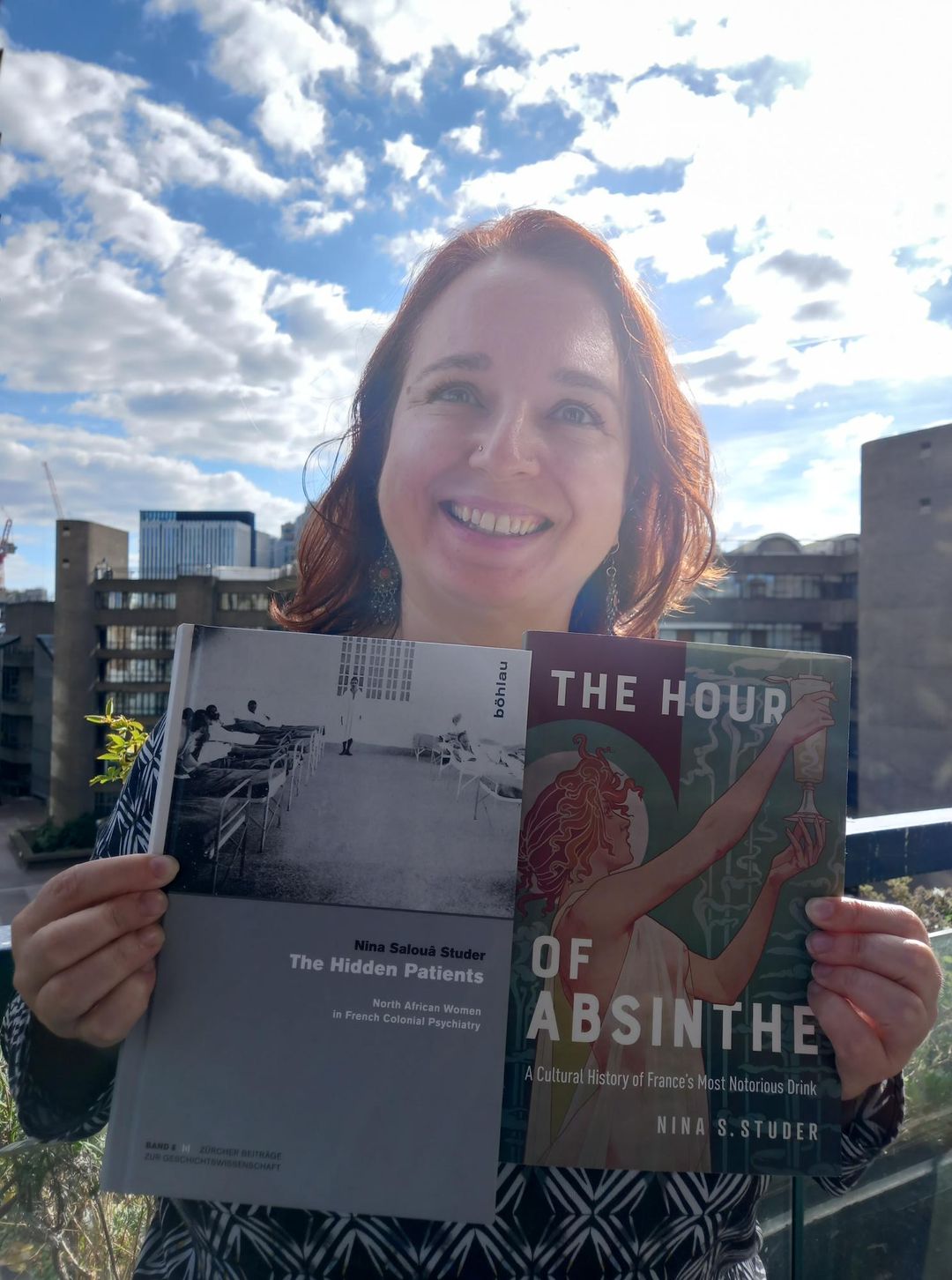
The "Intoxicating Histories" series from McGill-Queen's University Press explores the global history of psychoactive substances, such as drugs and alcohol. The series investigates how societies across different periods and locations consumed, regulated, and perceived these substances. It covers a wide range of historical fields, including medicine, commerce, social policy, law, and popular culture. The eleventh book in the series, released this week, focuses on absinthe, its rise, and fall due to its perceived threat to France's colonial ambitions. In an instant, absinthe, once known as "the opium of the West", was transformed into a dangerous substance that supposedly turned its drinkers into mad, murderous zombies who lost their ability to reproduce. Absinthe serves as an excellent example of "medicalization", the way in which the medical establishment intervenes in social issues, becoming an extension of political power in defining behaviors that deviate from social norms as mental or physical illnesses.
On a side note, the active ingredient in wormwood (used in absinthe) is called thujone, which is a GABA receptor antagonist in the brain. However, the question remains whether the psychoactive component of absinthe is thujone or simply its high alcohol content—or perhaps both. The propaganda against absinthe was focused on thujone, though absinthe contains a relatively low concentration of it. To experience hallucinations from thujone, one would need to consume an unrealistic amount of absinthe, which would likely lead to alcohol poisoning first. Regardless, thujone is indeed psychoactive, but the question is what the effects of "thujone poisoning" are and whether the accusations against absinthe were justified. Naturally, they are relevant to the alcohol debate, but the establishment tends to blame the substance rather than the drinkers themselves, and this is the essence of medicalization.
הצטרפו לרשימת התפוצה שלנו
כתיבת תגובה