
In this week's portion "Ki Tisa" it is said 3 times that when Moses came down from the mountain with the Tablets of the Covenant, after being there for forty days and forty nights, during which he came to some kind of revelation, which also included great spiritual preparation such as fasting – the skin of his face went to be "horny". This startled the Israelites and Aaron, and so that they would not be startled when he spoke to them, he put a disguise. Many good people have tried to explain what startled them so much and what is actually "the horn of his face" – did he have horns? Did his face glow?
"Keren" is a Hebrew term for a solid thing. Usually the horn in the ram's forehead. In the book of Joshua it is called the "horn of the Jubilee", when Jubilee according to Jonathan's Targum" is a ram. Shofar is the other name for the same horn, where sappāru in Akkadian is a mountain goat or stag. Meaning: the musical instrument is named after the ram, and maybe not after the ram but after the horns on his forehead. But a horn is used in the Bible for something else: in Zadok and Samuel it is said that they took the horn of oil to anoint Kings Solomon and David accordingly. That is, the horn was the container in which the anointing oil was placed.
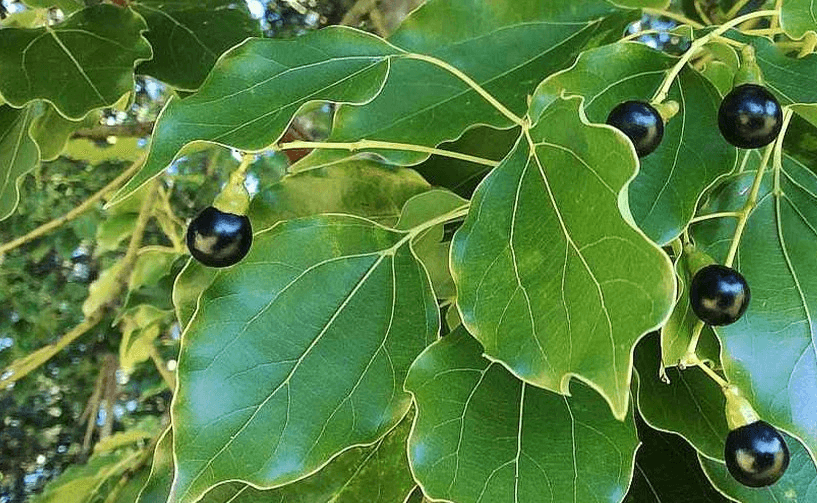
I ignore for a moment the assumption that the anointing oil is psychoactive. This is surprisingly irrelevant. The pine tree is known in the bible as an "oil" tree, after the name of its resin, which in Aramaic is called "mashcha". Rosin and turpentine are made from the resin. These substances, like many other strong terpene substances, cause sensitivity and redness in the skin. Strong terpenes were used in religious worship, such as camphor, which is still used in Hinduism as an ingredient in puja incense and symbolizes purification and pleasing the gods. Also in the temple they sacrificed such sacrifices with incense, and this is what is called "Isheh", which causes God to have comfort of smelling "perfumed smell" (Leviticus 1:9, for example). In the Koran it is said that the righteous will drink from cups mixed with "kafur", which is the Persian name for camphor. It is likely that this is also the source of the "Kofer" plant in the Song of Solomon, which is mentioned alongside the nard and myrrh – and hence the camphor was also used in the incense offering. Doesn't that mean Moses took some kind of overdose of this stuff and his skin turned red and burned? (In medicine this is called Allergic contact dermatitis)
It should be noted an opinion that was rejected by Ibn Ezra in his commentary on the Torah, by Hiwi al-Balkhi who claims that Moses's face became ugly because of the process that happened on mount Sinai. Is this true or not? Ibn Ezra says no. I do not pretend to disagree with the hebrew sages, but if I am right it certainly seems that what startled Aaron and the Israelites was the red-skinned and wounded appearance of Moses.
הצטרפו לרשימת התפוצה שלנו
כתיבת תגובה