
A short introduction to Celtic Christianity to explain what makes it so sensational. As early as the fourth century, under Roman rule, Christianity began to spread in Britain. The Romans brought Christianity to their British provinces. However, as the Roman Empire began to decline and Roman legions left Britain in the early fifth century, Christianity lost its influence in many areas, especially as the Saxon and Anglian invaders, who were pagans, took control of vast territories.
Unlike Britain, Ireland had no Roman rule, so the Christianization process relied primarily on missionary activity. Ireland was Christianized by St. Patrick and other missionaries in the fifth century. The spread of Christianity in Ireland occurred through networks of monasteries established across the island, which became important religious, cultural, and social centers. The Christianity that developed in Ireland differed from Roman Christianity because it was infused with local Celtic traditions, and the missionaries were relatively tolerant of these traditions as long as they could "Christianize" them. Thus, elements of natural healing, pastoralism, and rich symbolism were preserved. There is no evidence that Druids used mind-altering substances, but it seems that if they did, the monks would have been tolerant of it as well. And if so, perhaps they, too, used such substances to unlock the keys to the Kingdom of Heaven.
In any case, Christianity returned to Britain when Irish missionaries set out to Christianize the pagans who had re-conquered Britain. One of these missionaries was St. Columba, who established a monastery in Ireland, which became one of those educational and cultural centers. This monastery was called Kells. When he Christianized Britain, or rather one of its kingdoms, Northumbria, he founded the Iona Monastery, which became one of the most important centers of Christianity in Britain until it was destroyed in the ninth century by the Vikings.
One of the traditions that developed in the monasteries was the illustrated copying of scriptures. This became a standard later in monasteries throughout Europe. In fact, one of the "victories" of Celtic Christianity was the transmission of monastic traditions to Europe, likely because the Saxons in Germany were Christianized by Celtic monks via French intermediaries.
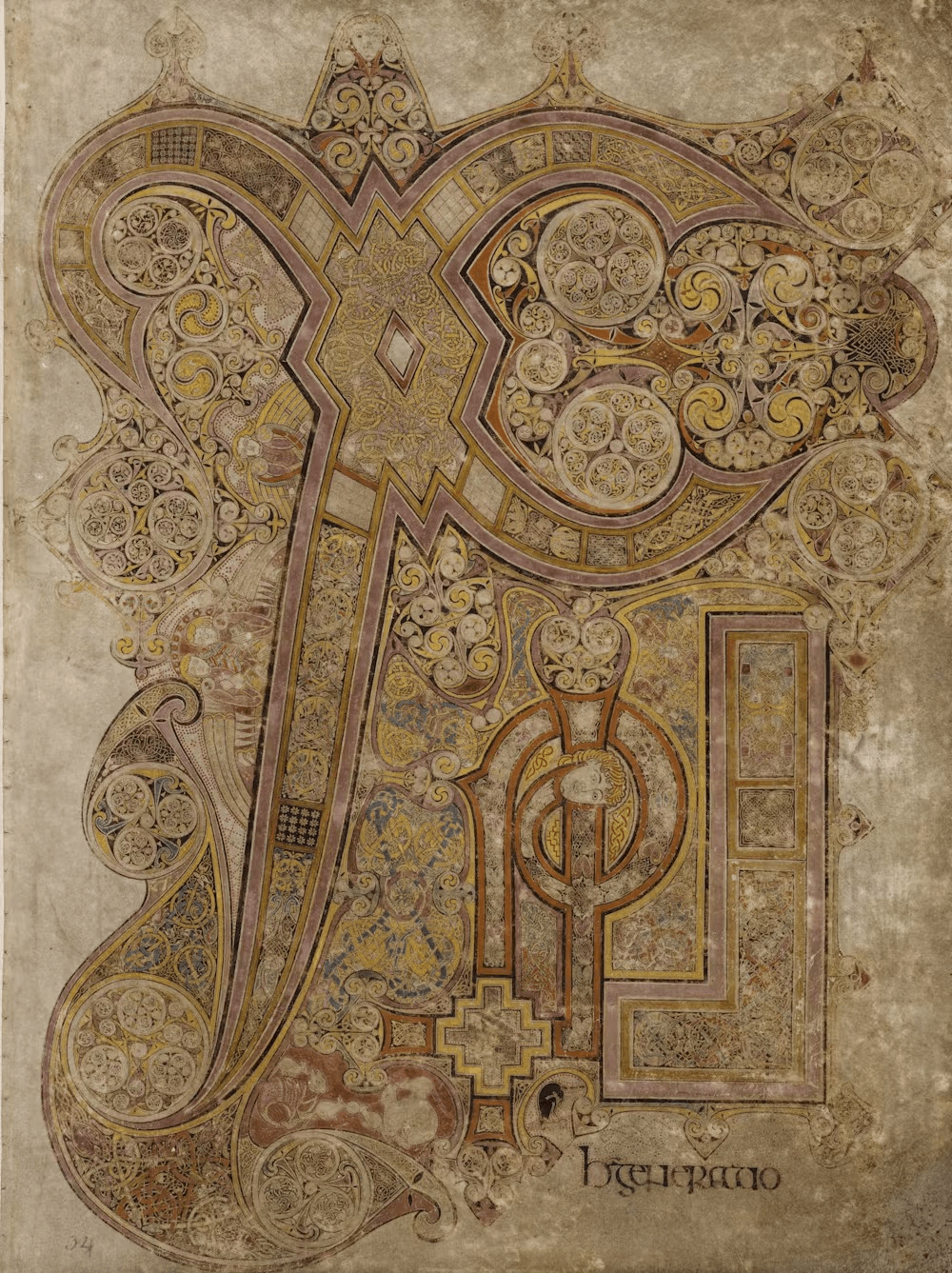
A famous manuscript originally written in the Iona Monastery is the "Book of Kells". It is believed to have been illuminated in the eighth or ninth century by Irish monks. It was transferred to Kells to protect it from the destruction wrought by the Vikings when they invaded Britain and destroyed Iona (and killed all the monks there). Today, it is displayed at Trinity College in Dublin and is considered a masterpiece of medieval illuminated manuscripts.
The manuscript is filled with abstract decorations, repetitive patterns, distorted figures, and vibrant colors like yellow and purple. The spirals and intricate shapes on many of the pages create a visual experience that is difficult to explain rationally, and this is one of the reasons for suggesting the possible use of mind-altering substances. For example, the Chi-Rho page, marking the appearance of Jesus' name in Greek, bears a resemblance to forms of art associated with psychedelic drug use in the 19th and 20th centuries. Scientists have also found that the colors used by the creators of the book were made from toxic substances like arsenic and red lead, raising the possibility that the monks were exposed to materials that may have affected their health and consciousness during their work.
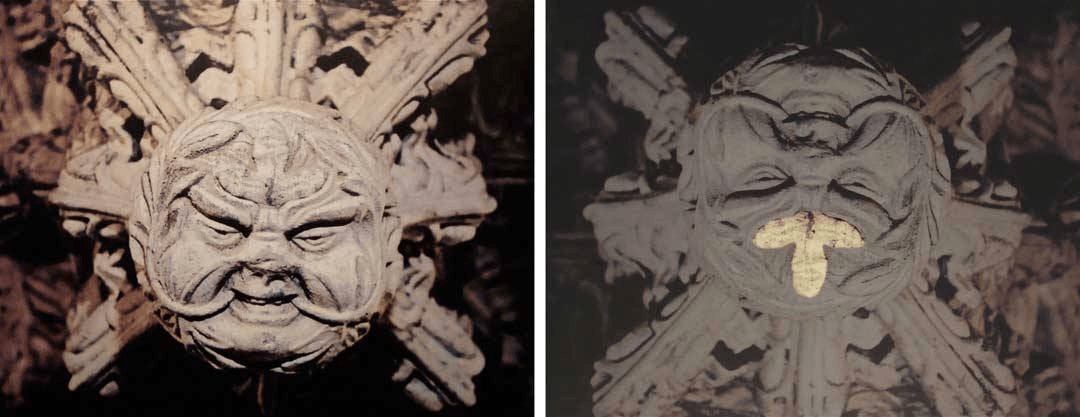
So, did the Christian monks actually use drugs? I can only note that one of Jerry Brown's main arguments in his book ״The Psychedelic Gospels״ is that at Rosslyn Chapel, the monastery that appeared in ״The Da Vinci Code״, there are wall decorations of "Green Men" that, when viewed upside down, resemble a mushroom similar to Amanita. This was his trigger to investigate psychedelic representations in Christianity, and the claim is that as long as the Roman patriarch, i.e., the pope, did not have absolute authority over churches converted to Christianity by the Celts, the use of mind-altering substances was still recognized in these places and represented in the art of the time. In other words, there are remnants of psychedelia in Christianity at least until the peak of the Catholic Church's power at the turn of the millennium, or perhaps even a little later. Only with the establishment of the Inquisition was this completely forbidden and associated with witchcraft.
הצטרפו לרשימת התפוצה שלנו
כתיבת תגובה