
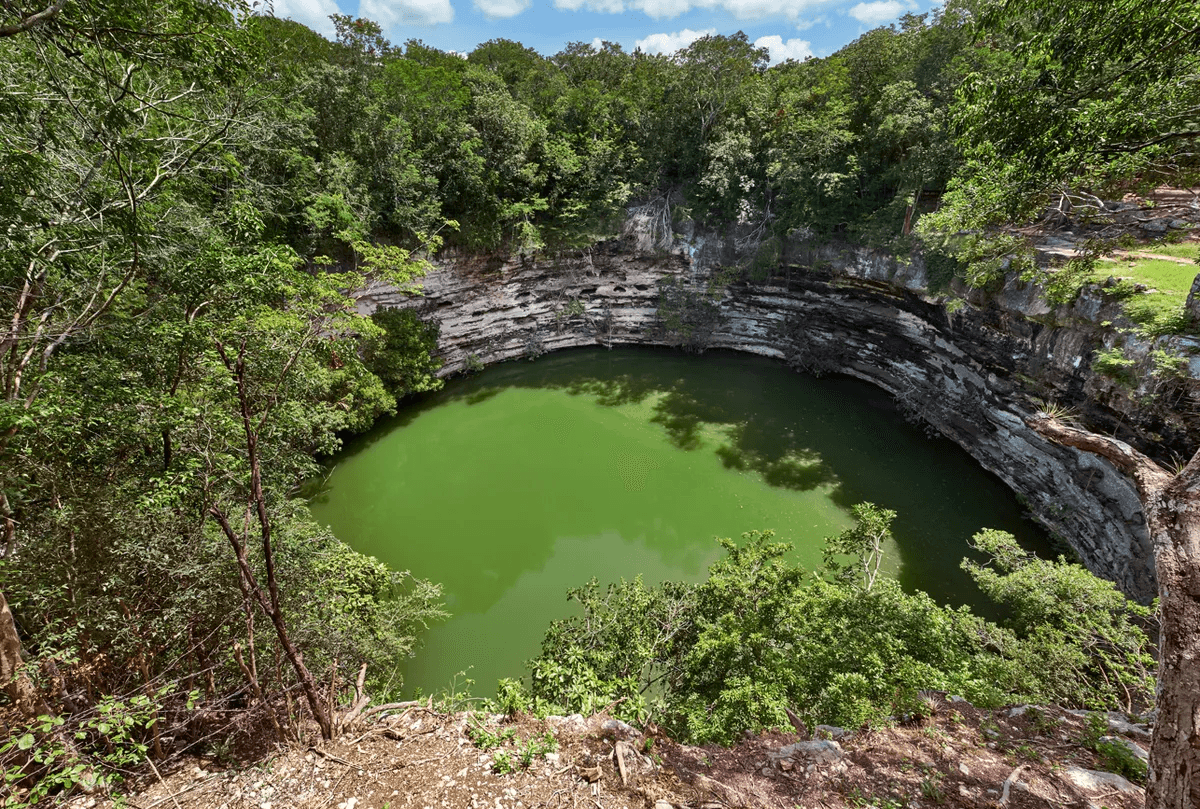
The “Sacred Cenote” is a water-filled sinkhole and a unique archaeological treasure. Its depths have revealed approximately 30,000 valuable artifacts, including gold, copper, and precious stones, as well as the skeletal remains of at least 200 individuals. Many of the victims were children, highlighting the site’s ritual significance. The artifacts and remains were deposited as ceremonial offerings, based on the belief that the cenote was a “gateway to the gods.” Previously, it was thought that the sacrifices involved primarily young women, but archaeological findings present a more diverse picture, including men and children. Isotopic analysis of bones and teeth from the cenote indicates that the victims originated from various parts of Mexico and even beyond, emphasizing the site’s importance as a pilgrimage destination. The artifacts found there suggest extensive trade networks that reached far beyond traditional Maya regions. The presence of gold, which is typically rare in Maya findings, points to broad cultural connections.
As I have previously written, the sanctification of the cenote and its perception as a connector between worlds are linked to its unique geological formation, characteristic of karst regions like the Yucatán Peninsula. Subterranean acidic waters dissolve limestone over time, creating massive caves that eventually collapse. These sinkholes fill with rainwater and groundwater, often becoming the sole water source for local populations. Beyond their practical importance, the idea of an opening to the underworld was highly compelling to societies with pre-scientific and primitive worldviews. previously.
הצטרפו לרשימת התפוצה שלנו
כתיבת תגובה