
-
Syrian rue as an apotropaic agent
A new study published in Communications Biology presents the earliest known evidence of the use of the plant Peganum harmala (Syrian rue) to produce incense and smoke—most likely for medical, sanitary, and perhaps consciousness-altering purposes. The findings, uncovered at the ancient oasis settlement of Qurayyah in northwestern Saudi Arabia, date back approximately 2,700 years and represent the first clear material evidence for the use of this plant in such a manner during the Iron Age.
The research was led by Dr. Barbara Huber of the Max Planck Institute for Geoanthropology and Prof. Marta Luciani of the University of Vienna, in collaboration with the Heritage Commission of the Saudi Ministry of Culture. The researchers analyzed organic residues preserved in ceramic incense burners excavated at the site, which is also known for its decorated pottery—referred to in scholarship as "Midianite ware"—also identified at other locations such as the Timna copper mines and throughout the Sinai.
The archaeological findings clearly indicate that the use of Peganum harmala occurred exclusively in domestic contexts—courtyards, cellars, and cooking areas—rather than in burial or cultic structures. This suggests that the plant was employed for everyday purposes: possibly as self-administered medicine, space purification, or pest control, rather than as part of formal public religious rituals. In contrast, other plants identified in nearby burial sites—such as aromatic resins from the Commiphora family (i.e., biblical myrrh)—point to a clear distinction between ritualistic plant use and household applications. Although in later traditions, such as in Iran, Peganum harmala was known to be used for warding off the evil eye or for spiritual purification, no archaeological evidence supports such cultic use in Qurayyah’s context.
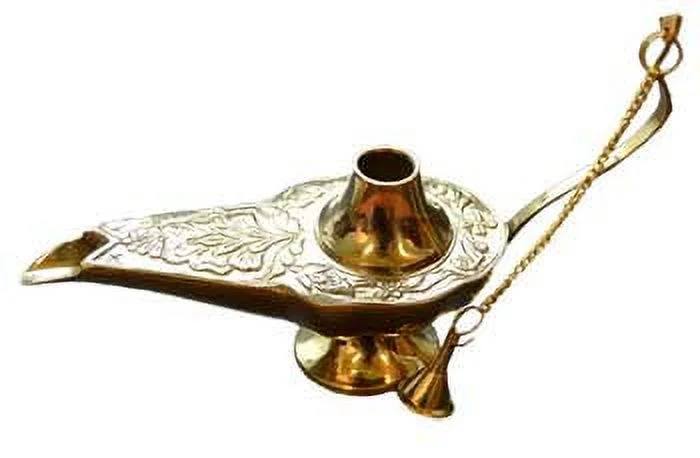
The plant was used specifically by burning its seeds in ceramic incense burners—thus producing smoke. No evidence was found for oral consumption (e.g., infusions) or external application. This incense method allows for moderate inhalation of active compounds while reducing the risk of toxicity associated with high-dose ingestion. This is particularly relevant given that some of the plant’s active alkaloids—such as harmine and harmane—are known MAO-A inhibitors that affect serotonin and norepinephrine levels in the brain. As a result, controlled exposure may have affected mood or induced a sense of calm.
It is important to emphasize that the dosage achievable through this method (inhalation of smoke) would not have been sufficient to cause hallucinogenic effects. Therefore, while mild psychotropic effects are possible, the primary use was likely for relief from chronic ailments such as toothaches, headaches, or joint pain; for treating psychological conditions like depression or irritability; for maintaining household hygiene—including air disinfection and reduction of pathogens—and for pest control. That is, pest deterrence, which, in the mindset of that time, was often indistinguishable from repelling "evil spirits."
An aside in the study notes the connection between Qurayyah and certain temple sites in the Arabah and Sinai that lack divine iconography—what some scholars regard as the original cult of Yahweh. Now, with evidence that Peganum harmala was also used within a domestic ritual context, one might ask whether this too constitutes a form of cult. If we borrow the Roman concept of genius and apply it to the ancient Near East, we might indeed consider this to be a true cultic practice. That would help explain the plant’s use in "sympathetic magic"—the belief that the plant possesses inherent power: purifying, repellent odors that drive out illness, pests, or possibly spirits.
In ancient Rome, household cult was a formal and structured part of religion. It involved the placement of small altars (lararia), offerings of food, incense, and wine, and the lighting of candles or smoke as gestures of reverence and requests for domestic protection. Specific deities were considered the guardians of the home and family, including gods associated with the household’s generative power—known as the genius (etymologically related to birth, clan, generation, etc.).
This was paralleled in Mesopotamia, where household spirits called lamassu or shedû—hybrid beings combining human, bird, bull, or lion traits—were often depicted in a manner strikingly similar to Yahweh's appearance in the visions of Ezekiel and Isaiah. Alongside the lamassu were threatening demons like Lilû (Lilith), whose banishment required spells, incense, and amulets—essentially magical-medical texts prescribing herbs or "roots" (i.e., plant-based prescriptions) delivered by specialists known as ašipu (i.e., sorcerer-priests).
Household deities existed in Greece as well, such as Hermes (guardian of thresholds) and Hestia (goddess of the hearth), both functioning as protective daimons—intermediary beings that guarded against malevolent forces. In later Arab culture, these daimons were known as jinn, and to "keep peace with them," people would offer incense.
We know little about domestic culture in early Arabia (prior to the Classical and Hellenistic periods, for which textual records begin), but the Qurayyah findings offer a glimpse into it. After all, 2,700 years ago coincides with the time of the biblical Kingdom of Israel and Homer—this is not prehistory.
In that light, one might speculate whether Peganum harmala played a role in Moses’ burning bush vision. Moses, as we know, fled to Midian (possibly Qurayyah?), and if this was a plant typically burned as incense, perhaps there’s a case to be made that Yahweh first appeared as a jinn or daimon—a fiery desert entity—who later evolved into something more akin to Hermes or even "Zeus Soter."
In Rome, the family was structured as a patriarchal hierarchy led by the pater familias, who held full authority over the household and its members. Each household had its genius, sometimes equated with the father’s soul, other times with an invisible spirit residing in him that symbolized his vital force. This is strikingly similar to the Egyptian concept of the ka—a divine life force transmitted through kingship. Just as the ka was transferred from one pharaoh to his successor, the genius carried the authority and divine continuity of the Roman household. The human family thus mirrored the divine family, with Jupiter (or Zeus) as head, embodying cosmic order. Jupiter was the patron of the genius, just as Yahweh may have been the patron deity of Israel’s ancestral house.
-
The original meaning of salvation: of passersby
Crossroads in Ancient Greece were considered dangerous and unstable spaces, where boundaries became blurred and humans were exposed to supernatural forces. These were liminal spaces, and the Greeks believed that daimons — elusive, local spirits, sometimes hostile — dwelled there. The fear and sense of danger associated with them are evident in rituals performed at crossroads, especially in the form of secretive or apotropaic offerings, made at night, with averted faces, as was done for the goddess Hecate.
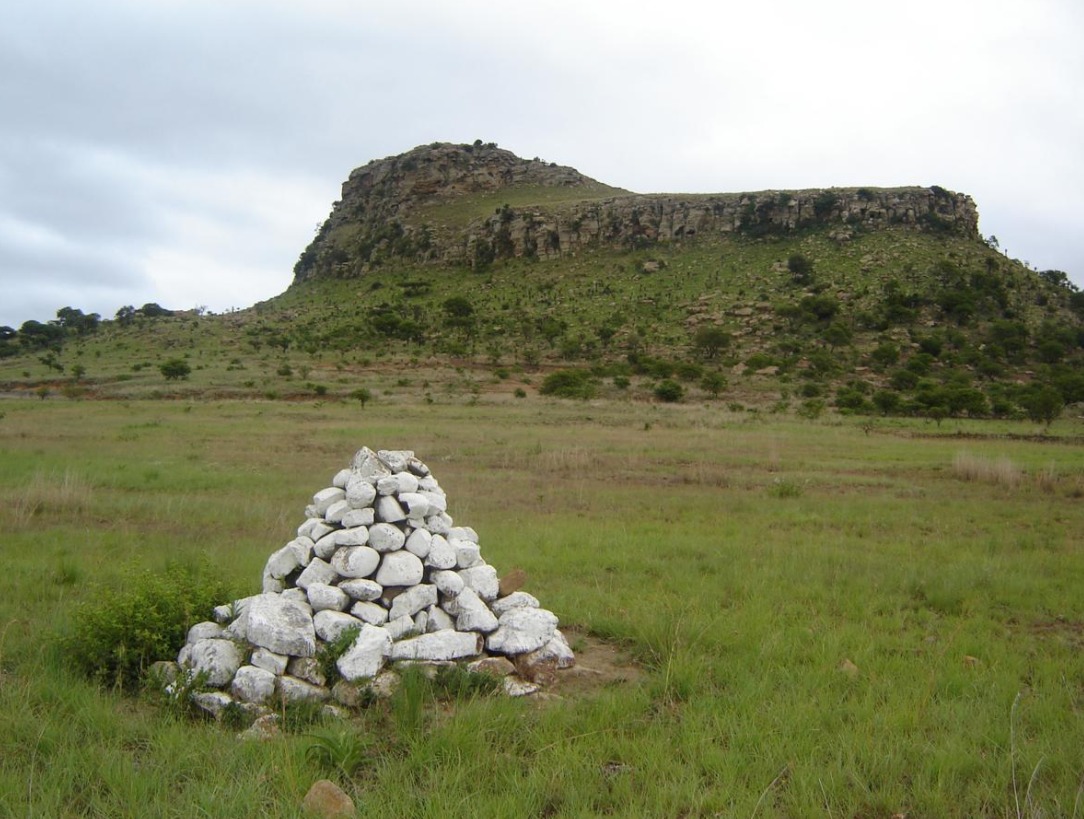
To ward off the danger posed by the daimons of the crossroads, stone cairns were often erected, sometimes featuring a tall central stone pillar. These stones also served as way markers, especially in areas lacking paved roads, but primarily as ritual sites, since it was believed that the daimon resided within the stone itself. Initially seen as the dwelling of the daimon, the stone eventually became its representation — gradually a human head was added, though it never fully transformed into a human figure. This gave rise to the figure of the herm — a protective boundary stone originating from apotropaic magic.
Hermes developed from a roadside daimon associated with a stone heap. His name derives from the Greek term for “stone cairn” (hermaion). Thus, he became a guardian of the roads and a guide through liminal places, and was indeed referred to as “Soter”, the savior god who protects people from dangers along the way.
As noted, Hekate was also such a guardian of paths, sometimes identified with Artemis, who was known as the “Lady of Animals” (Potnia Theron), and thus the patron of wilderness and untamed places — zones of danger inhabited by daimons. This is according to Martin Nilsson in his book A History of Greek Religion.
Both Hekate and Artemis were considered saving deities. According to Theodora Suk Fong Jim, they, along with Hermes, were called “Propylaios” (“Before the Gate”) — a title denoting the god’s physical location, as a protective agent at the entrance, in the transition between outer and inner spaces. Their statues were placed at the entrances to settlements: thus Artemis Propylaios in Eleusis, Hermes Propylaios at the entrance to the Acropolis in Athens, Hecate in an inscription from Miletus, and so on.
There are two stages in the association of these deities with altered states of consciousness:
These stone cairns were often used as graves, and it was also believed that daimons were buried there. For this reason, Hermes became a guide of souls to the afterlife, which is itself a liminal realm. Hecate, too, was a connector between worlds in this way.
Intellectually, when one reaches the land of the unknown, one becomes lost and needs breadcrumbs to mark the way back home—or to the witch’s house. Thus, Hermes and Hecate both became guides for the perplexed.
In both cases, from the image of being lost on a physical path, the two became mentors on the journey toward spiritual salvation.
-
Indo-European initiation ceremonies
How could a prehistoric language, never written down, spread across continents, undergo countless transformations, and become the foundation of the most widely spoken language family in the world today? Science journalist Laura Spinney explores this in her new book "Proto," which focuses on the Proto-Indo-European language. Spinney recounts the story of the Yamnaya culture—nomadic shepherds from the steppes north of the Black Sea—likely the first speakers of the language, and traces their migration routes across Eurasia, from India, Iran, and China on one end, to Western Europe on the other.
Although findings show that the spread of the language was sometimes remarkably fast—evidenced by genetic ties between family members buried thousands of kilometers apart—and that this spread rode a wave of technological innovations like the wheel, wagons, and metallurgy, the driving force wasn't necessarily conquest. Spinney argues that the spread occurred through cultural fusion, much like today when people and languages move due to trade, war, and climate change. The diffusion of language and culture occurred via marriages, trade, and kinship networks. It was facilitated by the spiritual, cultural, and technological advantages of the Yamnaya, which led other, unrelated peoples to adopt their culture and religion, or at least marry into their kin.
They possessed advanced technologies, especially in mobility, which gave them a commercial advantage. Their use of metal tools and weapons was another major edge. Socially, they had flexible structures, including polygamous marriages and an openness to people of different ethnic origins. Tribes often married into the Yamnaya. Even in the absence of direct genetic ties, cultural and linguistic influence spread through familial proximity, including not just marriage, but also adoption and particularly initiation. Initiation is key.
Ancient Indo-European societies practiced male initiation rites in which teenage boys were temporarily separated from their families and entered male warrior brotherhoods. These groups formed a shared cultural identity, often marked by symbols engraved on weapons—like fraternity symbols on sword hilts. Many Indo-European peoples are named after their weapons. In later Europe, we see this clearly with the Saxons, Franks, and Dacians—named after their characteristic weapons. Others named themselves "our people," not out of an obsession with blood ties but to emphasize a kind of unit pride—like the Aryans, Slavs, and Suebi.
This drive for cohesion existed even earlier. The Corded Ware culture is defined by distinct weapons found in male burials. The Bell Beaker culture as well. Interestingly, these cultures are named for the design of their cups, suggesting that initiation rituals included communal drinking. Drinking culture was highly developed in these societies, and its remnants persist to this day.
Drinking was not leisure but a ritual and communal experience. It symbolized acceptance into the community: not just drinking, but drinking together, often while making vows and oaths. This was how alliances were sealed, kings were anointed, and all rites of passage conducted—signifying both personal and communal status changes. To be considered one of "our people," one had to do what everyone did: be fluent in sacred poetry that recounted shared myths, and "imitate the gods" by eating what they ate, drinking what they drank, and doing what they did.
The gods ate horsemeat. They drank fermented mare's milk mixed with honey. The result was intoxication and battle. Horsemeat (or sometimes venison or livestock) was central to sacrifice. But it wasn’t just the meat—it was the hard fat (suet), the clarified butter (ghee), herbs (often psychoactive like wormwood or cannabis), all blended into a ritual drink. This psychoactive drink unleashed repressed drives and revealed hidden truths. To them, this was immortality, or divinity—usually manifesting as fury and courage. It allowed them to imitate the gods, who were typically war gods.
Part of initiation was participating in rituals of communion with the god, or joint raids. There is no better equivalent than a modern warrior's first mission. Their ability to extract such a drink from raw materials was seen as a magical trick (a "cheat"). Thus, many myths describe stealing divine liquid. This “stealing” may reflect not crime but survival—raiding, gathering, and acquiring resources from the edges of known land.
Drinking the god's drink meant becoming the god and taking what belonged to the god—tamed animals and their divine fluids. All prepared via the "cheaty" recipe.
This logic culminates in the myth of the first warrior hero: Trito. The gods gift him a herd of cattle. A terrifying serpent steals it. Trito is initially defeated but is fortified by a divine liquid given by the storm god. He goes into battle, defeats the serpent, and returns the cattle to the priest to be properly sacrificed. Thus the cosmic cycle is maintained: sacrifice → gift → cosmic order.
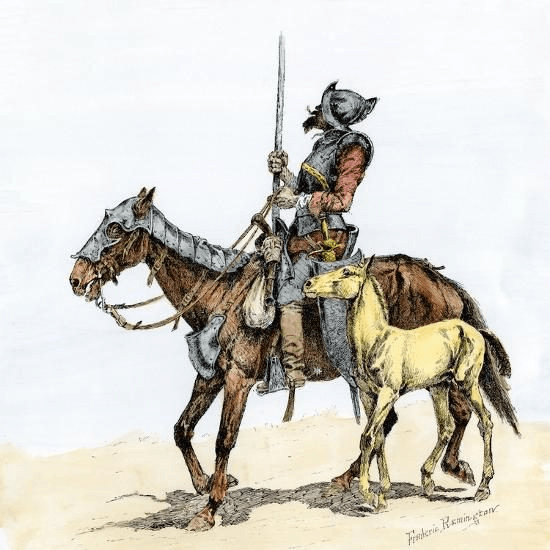
Trito is an archetype—a primordial Indo-European warrior: guardian of balance between heaven and earth, protector of divine/social property, and restorer of stolen order. This myth later became the ideological foundation of colonial society: the cattle became sacred land, the world as God's gift, and only the noble are worthy to reclaim it. "Theft" became salvation; missions and conquests became redemptive acts. The Indo-European mythology gave rise to this ethos, passed down through the intoxicating holy drink: the grail. The grail is the reclamation of the promised land of the mind. The true conquistador is the psychedelic experimenter.
-
The importance of the Wow effect
Thomas Frost and Henry Ridgely Evans were two of the key figures behind the formation of the earliest historical conception of conjuring in its modern sense. Frost, a 19th-century British journalist and author, published Lives of the Conjurers in 1876, one of the first attempts to document the history of magic as an art form. Evans, an American enthusiast of conjuring and a writer active in the early 20th century, expanded on Frost’s work in The Old and the New Magic (1906). Both sought to trace the roots of illusionist performance from a modernist, critical—often even dismissive—perspective towards the cultures and societies that preceded the age of rationalism.
According to Frost and Evans, magic in antiquity and the Middle Ages was not perceived as a form of entertainment, but rather as a manifestation of genuine supernatural power. They claimed that early audiences—“the ignorant masses,” in their words—could not distinguish between a trick and reality, between illusion and miracle. They presented ancient conjurers, and often religious figures, as manipulators who exploited the naivety of their audiences to consolidate power. For them, magic was a tool of control, not a vehicle for wonder or aesthetic expression. Accordingly, they depicted ancient religious settings as stages for organized deceit, where “miracles” were produced using mechanical techniques—smoke, mirrors, pulleys, and acoustic tricks—designed to convince viewers they were witnessing divine phenomena.
In their view, ancient magic was not innocent or aesthetic entertainment but a deliberate mechanism of deception aimed at manipulating a naive public and subordinating it to religious authority. Priests and early magicians, they argued, used technological ruses to fabricate miracles and thereby gain spiritual authority. Magic, then, became a means of domination, not of wonder.
One of their main examples was the ancient Greek temples and what they interpreted as stage-managed illusions performed for captive audiences. They described how gods were made to appear to worshippers through the use of smoke and mirrors, and how temple doors opened suddenly accompanied by the sound of thunder, appearing to be caused by supernatural forces but in fact engineered through mechanical means. They exposed how ancient “wonders” were created using optical illusions, hydrostatics, and acoustics, claiming that in antiquity, trickery served to simulate miracles.
Today, their position is no longer dominant and has been largely rejected as a modern myth—an “historical illusion not created by magicians, but by historians of magic.” It rests on the assumption that the past was naive and that we, the moderns, are rational and superior. Their method was flawed because they did not examine the broader context of the examples they cited. They relied heavily on chronicles, folklore, and miracle stories found in uncritical religious texts, assuming that any performer of tricks was necessarily perceived as a sorcerer—and thus persecuted. Most notably, they failed to distinguish between theatrical magic (where the magician declares the illusion) and ritual or religious magic (which aims to convince the audience of its truth). As a result, they portrayed a simple juggler as potentially burned at the stake—if only there were proof he had been.
A telling example is the case of the girl from Cologne, recorded in Johannes Nider’s 15th-century Formicarius. She was said to have performed a magic trick—tearing a handkerchief and then restoring it. In reality, she was a woman who claimed to be Joan of Arc resurrected. She spoke out against the church and monarchy, carried weapons, drank excessively, and dressed as a man—behaviors considered scandalous, especially so soon after Joan of Arc’s execution for similar “crimes.” The illusions mentioned in her case were described merely as frivolous diversions and were not the grounds for her arrest.
This example, and many others like it, are analyzed in The Secret History of Magic: The True Story of the Deceptive Art by Peter Lamont and Jim Steinmeyer, which systematically dismantles the classic narrative of the history of magic.
So, if ancient performers were not actually trying to deceive credulous believers using temple-engineered technology, why did they stage such spectacles? The answer lies in what we previously described as Thauma—the moment of astonishment, the epiphany. That is, part of the game of “theophany” (the appearance of the god) is constructing the setting within the framework of “set and setting.” The goal was to give the initiate undergoing the mystery rite a total sensory experience, an amplified, even exaggerated scenario in which the encounter with the divine would not remain a mere idea but become a palpable, embodied reality. In a secular world, we may describe such an encounter differently—not as nirvana, catharsis, or groove—but the underlying intention remains the same: to create a felt, transformative experience.
-
Epiphany in stone and light
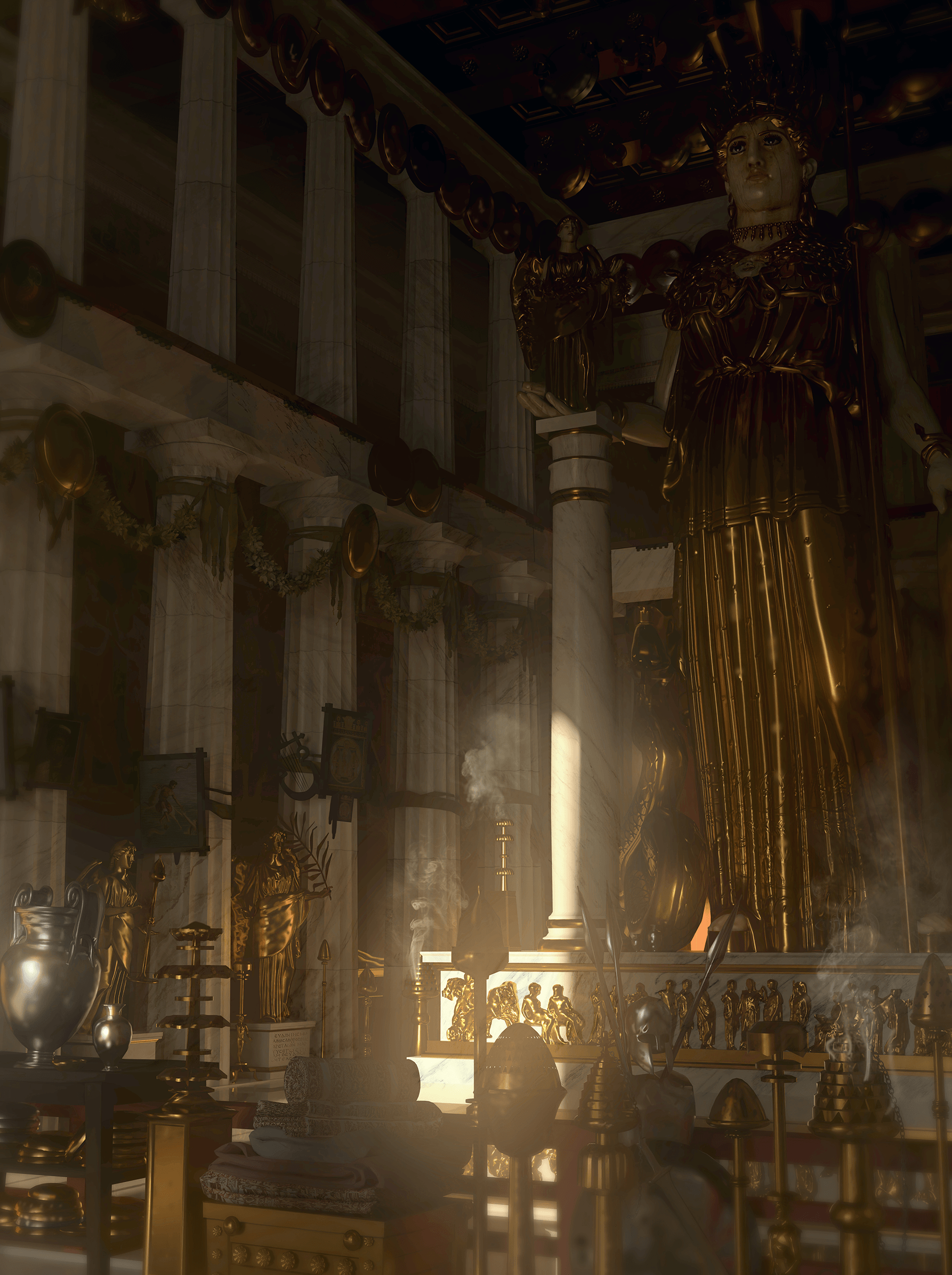
A new study offers a profound understanding of how the Parthenon, the crowning achievement of Athenian architecture, was not merely a temple dedicated to the goddess Athena, but also a technological marvel designed to produce an epiphany — a dramatic divine manifestation through light and shadow.
The research, published in The Annual of the British School at Athens by archaeologist Juan de Lara of the University of Oxford, reveals that the ancient architects did not simply place a magnificent statue at the heart of the temple. They meticulously planned the building's orientation, the positioning of its gateways, and the selection of its materials so that at key ritual moments, sunlight would strike through the openings and illuminate the statue of Athena Parthenos in a radiant, majestic glow. De Lara emphasizes that this phenomenon was intended to evoke a sense of divine revelation among the faithful, echoing ancient traditions of epiphany — which, notably, was the very core of pagan ritual: the moment the god appears marks the sacred transition from "before" to "after."
The precise use of light and shadow constituted a form of ritual technology, which itself became an object of religious reverence. The ability to "summon" the goddess’s appearance through manipulation of natural forces was not seen merely as an engineering feat, but as a living demonstration of divine will and presence. In other words, Athena’s dazzling appearance was not merely religious aesthetics — it was a supernatural phenomenon that demanded the flawless functioning of the temple’s sacred order. At the heart of the worship stood not only the statue itself but also the visual phenomenon of its illumination. Should the light-shadow effect have failed, it would likely have been interpreted as a sign of rupture between the city of Athens and its patron goddess. Thus, the Parthenon, like other ancient ritual traditions, combined space, matter, and light to create a sensory epiphany experience that represented the pinnacle of ancient religious life.
Among the lighting strategies employed were: gleaming, light-reflecting materials such as ivory and gold; semi-translucent marble roofs that diffused soft light through the tiles; interior water basins that served as mirrors to reflect light; side windows illuminating specific areas; small rooftop apertures (opaia) channeling concentrated beams of light; and some degree of artificial lighting by torches and lamps. All of these elements were designed to create Thauma — a visual marvel, an overwhelming sensory wonder, a carefully orchestrated religious-sensory experience.
-

Tyrian purple as a psychoactive agent
Tyrian Purple is an ancient and unique dye derived from the secretion of snail glands. The production of this dye, which symbolized wealth and high status in the ancient world, involves a series of delicate chemical processes that require great timing and precision. If not done correctly, the desired product may not be obtained. In modern terms, one could say that the producers of the pigment must be experts in organic chemistry, but the ancients did not know what that was; they approached the production process with religious awe, as that was their understanding. And it is likely that if this process had side effects, originating from "poisonings" or absorption of byproducts released during the process, they would have attributed them to spirits and demons or divine punishments.
The question is twofold: First of all, of course, this is what we, as natural psychonauts, are looking for—the thing that can go awry or occur by accident, and be interpreted as the work of hidden spiritual forces. And of course, what might cause such a disruption. I apologize in advance for this being speculative, for the simple reason that industrial production of this substance has not existed for over 1,400 years, and generally, since this dye was "banned" and allowed for royal use only, the professional knowledge became secretive. In any case, no one would really tell what happened during the continuous production of the substance and what happens to the people working with it for years. So, one can only speculate and come up with fantastic hypotheses, which stem solely from common sense or chemical ignorance.
The answer is bromine. During the dye's production process, when the mollusks are crushed and their secretion, from which the substance can be produced, is extracted, a chemical substance containing bromine is obtained. In fact, the difference between plant-based indigo (the purple dye) and its animal counterpart is bromine, and it may also be the component that makes the produced dye so durable. During oxidation, reduction, dissolving, heating, and all the other chemical processes involved in the production of the dye, there is a risk that bromine will be released into the air or found in liquids. Exposure to bromine, especially in its acidic or oxidative form, can be dangerous and lead to bromine poisoning.
Bromine poisoning, or "bromism," is primarily caused by prolonged consumption of bromide compounds or exposure to high doses of bromine. Bromine can be absorbed through inhalation, causing severe respiratory problems, but also through contact—whether direct or through vapors. Exposure to bromine can lead to various neurological symptoms, including psychotropic effects and even psychoactive effects. In other words, it can cause not only confusion and loss of coordination or mood disturbances but also psychosis and hallucinations—altered perceptions of reality.
Again, it should be noted that this is speculative, but possible. Bromine can primarily enter through the respiratory system, but absorption through the skin is not excluded, and direct contact with bromine compounds can lead to signs of poisoning. All of this raises the question of whether the dye, the production of which involves working with dangerous substances, was considered sacred specifically because of the bromine poisoning risk involved in its production. Did bromine also pass through contact after the dye was made, and did those who wore Tyrian Purple garments risk poisoning if they wore them over time? Did the ancient testers intentionally risk themselves to induce psychotropic effects, which they thought would only be positive? If we assume they did this with heavy metals like lead and mercury, why not with other substances that, in some way, they discovered had mental effects?
A material for further investigation.
-
Vampires
Porphyria is a rare hereditary disorder that affects the production of heme, a vital component of hemoglobin. Heme is essential for oxygen transport in red blood cells and for the healthy function of various other bodily systems. When its production is disrupted, toxic byproducts called porphyrins accumulate in the body, leading to a range of medical problems.
There are several clinical manifestations of the disease: In cutaneous porphyria, even minimal exposure to sunlight can cause burns, blisters, and pain. In neurological porphyria, as the name suggests, the effects are mainly neurological: anxiety attacks, hallucinations, confusion, and nerve damage.
Other symptoms include chronic anemia, which gives the skin a flushed tone, and urine that darkens—and can even appear purple—when exposed to light. Additionally, the disease can cause gum recession, which exposes the teeth, creating a fang-like appearance — and the connection to vampire folklore becomes apparent: vampires who avoid the sun, have fangs, display pale or purplish skin, and have a major obsession with blood.
In 1985, biochemist David Dolphin proposed the hypothesis that the folkloric image of vampires as blood-drinkers was born from the belief that individuals with porphyria could improve their condition and alleviate symptoms by consuming blood. Alternatively, the belief may have arisen because their dark urine suggested a similar "input" color. Moreover, it was found that the sulfur in garlic could trigger painful attacks in porphyria sufferers, possibly explaining why vampires were thought to recoil from garlic as well.
However, later scholarly articles sharply criticized this idea. Researchers Mary Winkler and Karl Anderson (1990) described Dolphin’s hypothesis as the "medicalization of a myth"—an unnecessary attempt to fit medical explanations to folklore. They argued that there is no evidence that porphyria patients crave blood, and that the disease is far too rare to have sparked such a widespread myth.
-
Psychedelic party pooping
An Earthquake? Anthropologist Bernd Brabec de Mori, who lived among Western Amazonian tribes, challenges the common assumption: the use of ayahuasca in the region is not an ancient tradition spanning thousands of years, but rather a phenomenon that spread mainly over the past 300 years. According to him, the Shipibo people altered their stories to satisfy tourists and researchers, providing information tailored to foreign expectations rather than reflecting their actual lived traditions. The myth of long-standing ayahuasca use, he argues, spread partly due to missionary activity and the rubber industry's expansion.
Two studies are presented that support his claim: those of Martin Fortier and Andy Letcher. Fortier argued that only 5% of Indigenous cultures in the Americas used psychedelics before the Columbian era, and only 1% worldwide — and even that was considered a generous estimate. Andy Letcher, meanwhile, confirmed the use of psychedelic mushrooms in only two places: pre-Columbian Mexico and among small groups in northern Eurasia with the Amanita muscaria mushroom. In contrast, Michael Winkelman does not completely dismiss the idea and claims there are indeed scattered signs of psychedelic cults in mythology, cave art, and ancient rituals. However, most of the "evidence" we commonly refer to is based on highly speculative interpretations — such as mushrooms that might actually represent genitalia, or modern reconstructions of ancient paintings, often heavily embellished.
The studies supporting the claim that psychedelic use in antiquity was extremely rare were conducted independently, using accepted academic methods and critical analysis. On the other hand, the broader claims of widespread ancient psychedelic use are largely based on weak evidence, romanticized interpretations, or economic interests — such as promoting psychedelic tourism or magazine-style sensationalism, as seen in the case of R. Gordon Wasson.
Moreover, the popular attempt to link traditional shamanism with modern psychotherapy is largely misleading: in reality, psychedelic use among shamans was usually related to battling evil spirits, predicting weather, or performing magical rituals — not to treating personal emotional issues, as in Western psychotherapy.
-
Decreased CO2 saturation during circular breathwork is psychedelic?
Researchers from the Ernst Strüngmann Institute for Neuroscience in Frankfurt and the MIND Foundation in Berlin, in collaboration with Charité University in Berlin and Imperial College London, discovered a direct link between the reduction of carbon dioxide (CO₂) levels during circular breathwork and the emergence of altered states of consciousness, along with positive effects on mental health. However, the study was an "exploratory, unregistered study" with incomplete follow-up—meaning that its findings require further confirmation through more rigorous research. Nevertheless, it offers an important lead. Among the techniques explored by the researchers was circular breathwork based on traditional practices such as Tummo and Pranayama Yoga, as well as modern adaptations like Holotropic Breathwork and Conscious-Connected Breathwork. This naturally raises the question: did the yogis know something we do not? Probably.
What was done in the study: the researchers measured CO₂ levels during the sessions and found that the reduction in carbon dioxide saturation was directly linked to the emergence of the altered states. This process affects blood pH regulation and oxygen delivery in the body. Participants in the active breathwork group (those consciously engaged in breathwork rather than breathing passively) showed a significant decrease in carbon dioxide, a reduction in alpha-amylase (indicating decreased sympathetic nervous system activity), and a mild increase in interleukin-1 beta (IL-1β, indicating a transient inflammatory response). This suggests a potential causal connection, though, as noted, the methodology has notable limitations. Nevertheless, the article states that the depth of the experiences reported by participants matched those documented under the influence of psilocybin, and at times even exceeded those experienced with MDMA.
-
Cosmic symbols found on artifacts placed in a hidden cave chamber by lost civilization
The Tlacotepehua are a people considered almost entirely unknown—their name appears only in a few colonial sources from the 16th century, and they likely existed in the Sierra de Guerrero mountain region. A discovery in the Tlayócoc Cave, located in these mountains and attributed to this culture, reveals a glimpse into their world. While the conclusions drawn are often extrapolated from what is known about other pre-Hispanic cultures, it becomes apparent that this civilization was part of a larger cultural fabric.
The findings were located in a hidden chamber deep within the cave. Researchers suggest they were used in an underworld fertility ritual during the Postclassic period (950–1521 CE). Fourteen items were recovered, including three complete shell bracelets, the shell of a giant snail, black stone discs resembling pyrite mirrors, and a charred piece of wood. The objects were intentionally placed atop stalagmites, some of which had been shaped into spherical forms—evidence of deliberate ritual deposition. The bracelets are adorned with engravings of human faces in profile and cosmological symbols such as the xonecuilli (an S-shaped spiral motif), zigzags, and circles.
These symbols may reflect pre-Hispanic cosmogony, which describes the creation of the world and cycles of fertility. Round shapes, in general, symbolize the cosmic egg or womb, as well as the cyclical nature of time and life. In Mesoamerican mythology, caves were seen as portals to the underworld, called Mictlan in the Nahuatl language—so the location itself further suggests the intentionality behind the ritual.