
-
Psychedelic beer for peace
The Wari civilization, a pre-Columbian culture that preceded the Inca, ruled the Andean highlands of Peru approximately between 500 and 1000 CE. At the site of Quilcapampa, which was active during the height of Wari culture, archaeologists discovered remains of chicha—a traditional fermented beer—and 16 seeds of vilca.
Vilca is a psychoactive plant from the legume family. Its seeds contain bufotenine (5-OH-DMT), a consciousness-altering substance also found in "Bufo" toads from the Sonoran Desert. The seeds were found near brewing vessels but without any smoking or snuffing paraphernalia, indicating they were likely consumed orally through drinking. This is a rare finding, as vilca has traditionally been used by inhalation or smoking.
From this, researchers conclude that the substance was not used for individual, private ritual, but rather for communal and shared experiences, reinforcing social cohesion and a sense of belonging. Therefore, it is assumed that this was a political ceremony rather than a religious one, with the drink serving to induce an altered state of consciousness that would facilitate bonding, reduce resistance, and embed social hierarchy.
Through their role as hosts, the Wari staged a kind of demonstration of power, presenting themselves as "keepers of sacred knowledge," giving guests a rare, possibly once-in-a-lifetime experience that would leave them feeling indebted. This sense of symbolic debt could translate into loyalty, cooperation, or in short—peace.
Significantly, the research shows that the vilca plant did not grow in the region, suggesting that its use was rare and exclusive, which likely astonished and impressed the guests present at the ceremony.
More broadly, in anthropological terms, there is a longstanding tradition in which a host offers food to a guest, and in doing so, demonstrates superiority while establishing a symbolic hierarchy in which the guest incurs a kind of moral debt. This idea is explored in Marcel Mauss’s classic work The Gift.
The fact that encounters with "the Other" are often assumed to be charged with potential threats makes shared meals a ritual of reconciliation—a way to neutralize hostility. In this case, the psychedelic feast functioned precisely as such a ritual—a feast of diplomacy, but with hallucinogenic twist.
-
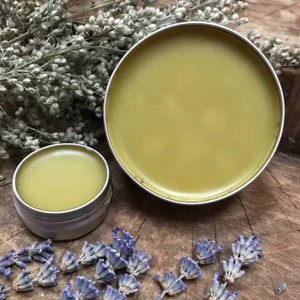
Mandrake ointment as the blood of the gods
In Greek mythology, the term "ichor" (ἰχώρ) refers to the life-fluid flowing through the veins of the gods—a kind of divine, ethereal “blood,” fundamentally different in nature from human blood. Homer, in the Iliad, describes how, when Diomedes wounds the goddess Aphrodite on the battlefield, red blood does not flow from her wound as one might expect. Instead (Book V, lines 341–345), he writes: “Immortal blood, ichor, flowed from her, as flows in the blessed gods; for they eat no bread, nor do they drink gleaming wine; therefore they are bloodless and are called immortal”. The reason for this non-human blood is their divine nourishment: they feed on nectar and ambrosia. Their life-fluid—and what makes them immortal—is a distillation of those two substances, which I personally suspect to be psychoactive in nature. But I’m getting ahead of myself.
Although the color of ichor is not explicitly stated, some later commentators claim it to be golden or clear. It is said that ichor grants immortality but, surprisingly, is also toxic to humans. When ichor falls to the earth, living entities may grow from it. For instance, when it dripped from Prometheus’s wounds, a magical herb sprouted from the drops, which Medea picked and used to concoct a potion that she gave to Jason.
What was this plant? In "Argonautica" by Apollonius of Rhodes (Book III, 844–853), it is described as having “saffron-colored flowers and a root red as fresh flesh,” and from it she prepares a salve that numbs pain, allowing the one who applies it to resist even burning fire and to be filled with courage and strength. The ritual of uprooting the plant is vividly described: “the black earth trembled, and from the depths it roared, as the Titan’s root was severed”. According to Raymond J. Clark in his 1968 article “A Note on Medea’s Plant and the Mandrake”, this groaning is a sign that the plant in question is the mandrake, just as in European folklore the mandrake was believed to grow from bodily fluids (semen, urine, sweat, etc.) of an innocent man who had been punished. As for the colors, the connection holds: crocus flowers are purple—like the mandrake’s. The mandrake’s root is typically yellowish-brown, the color of flesh or skin, and its shape resembles that of a human figure stripped of its skin. It is indeed poisonous, yet it also has both antiseptic and anesthetic properties. Accordingly, it was used both for disinfection and for pain relief.
No less important: the backstory of Medea preparing this love potion for Jason begins with Aphrodite being asked to cast a spell on Medea so that she would help the Argonauts retrieve the Golden Fleece. Aphrodite sends Eros to shoot an arrow at Medea, making her fall in love with Jason and prepare the potion for him. Since Aphrodite’s blood is ichor, we must conclude that this very “flying ointment” made from the mandrake, golden in color, is none other than the blood flowing through Aphrodite’s veins—therefore granting it aphrodisiac and magical love-inducing properties.
The next step—one I haven’t yet explored deeply—is the presence of certain poetic expressions that appear both in the Argonautica and in the Song of Songs, which also speaks of the magic of the mandrakes, and the attempt to investigate the reason for that. We encounter a number of suspicious key phrases, such as a virgin praised for her perfect breasts and delicate lips, described as being madly in love, opening the latch of the door while wiping her tears with hands dripping in oil and perfume. As she goes out to search for her beloved, light-footed female gazelles accompany her. And so on, and so forth.
-
The suicide tree
The Pong Pong tree (Cerbera odollam), featured in the third season of The White Lotus, is a lethal tree whose seeds contain a poison capable of stopping the heart. It belongs to the Apocynaceae family (of Nerium), and its fruit resembles a small mango, turning from green to red as it ripens. The seed contains various alkaloids, the main one being cerberin, which disrupts the function of heart muscle cells and causes a slowdown in the heart rate. One seed, or even half a seed, is capable of killing a person. In the state of Kerala, in southwestern India, half of the deaths from poisonous plants are caused by these seeds. In the 1990s, over 500 cases of suicide by this plant were documented, 70% of them by women. The plant has also become popular among suicides outside of Asia, even in the West. However, in The White Lotus, the person who takes it does not die but somehow recovers. This is unlikely, though possible. Atropine and digoxin are used to increase the heart rate, but it is not always effective. Perhaps the recovery story actually belongs to its cousin called "Sea Mango" (Cerbera manghas) which is mentioned in the history of Madagascar, where it was used for centuries to perform Ordeal ("trial by ordeal") to determine if a person was guilty or not. The accused were forced to swallow the poison, and if they survived, they were considered innocent. This form of trial killed about 3,000 people every year, both innocent and guilty (source)
-
Modified Human Bone as music instuments
Human bones discovered at Late Prehistoric archaeological sites along the Gulf Coast of Mexico appear to have been intentionally modified and transformed into musical instruments used in shamanic rituals for healing or communication with the dead. Among the most striking finds is a humerus bone that was repurposed as a percussion instrument known as a *rasp*, featuring 29 decorative notches and wear patterns indicating frequent use.
The research was conducted by Dr. Matthew S. Taylor from the University of Texas at Austin and was published in the Journal of Osteoarchaeology. Taylor concludes that the use of human bones was not accompanied by taboo—in fact, the cultures of the region did not regard the dead body as forbidden, but rather as a symbolic resource. For these communities, the body of the deceased was not something to be hidden or shunned, but a platform for continuity, remembrance, and ritual. Once a person died, their body no longer belonged to the individual—it became part of the community, a sacred object, or a medium of intergenerational transmission. The processing of bones was part of a cultural narrative: to remember, to guide, to unite the living with the dead.
This perspective echoes mortuary practices from other parts of the world. Among certain Amazonian tribes, the ashes of the dead are mixed with food or drink in memorial rituals. In Tibet, "sky burials" involve offering the body to birds of prey, reflecting a belief in returning the body to nature. In Postclassic Mesoamerica, bones were also used as ritual musical instruments—closely paralleling the finds from South Texas. This may even suggest formal connections, possibly through trade networks such as the so-called “Gilmore Corridor”—a hypothesized ancient trade route linking Mexico to the southeastern United States.
-
Laschamps Event as the dawn of civilization
A superficial and simplistic analysis of the following article might lead us to conclude that the reason Neanderthals went extinct while Homo sapiens survived is that Homo sapiens managed to develop effective strategies for protection against harmful radiation, whereas Neanderthals did not. This protective strategy included: dwelling in caves and shaded areas, creating clothing that covered the skin—thus enabling mobility even in unshaded and exposed environments—and most importantly, the use of "sunscreen": smearing the body with red ochre, which provided active protection against UV radiation. This protective quality of ochre has been scientifically verified, including its actual and effective SPF level.
Consequently, ochre—and the color red in general—became ritual symbols, through what is known as ״cultural construction״. What began as a practical means of protection evolved into a marker of identity, a form of group affiliation, and eventually a ritualistic component. Later on, ochre appeared in burial contexts, on cave walls, on figurines, and in decorative motifs.
Another hypothesis that can be drawn from the article is that the reason mountains became sacred may be linked to a phenomenon known as aurora —in other words, polar lights. While today we associate auroras only with the magnetic poles of the Earth (north and south), the article suggests that they once appeared in other parts of the world due to an unusual geomagnetic phenomenon known as the Laschamps Event (pronounced in French as ״Lashan״), which occurred about 41,000 years ago. During this time, Earth’s magnetic field dramatically weakened—to just about 10% of its current strength. In its weakened and unstable state, the field allowed cosmic and UV radiation to penetrate the atmosphere. As a result, due to the depletion of the ozone layer, auroras became visible even in tropical and temperate regions, especially in high-altitude areas.
Two particularly high-altitude sites—one in Ethiopia (at 3,500 meters) and the other in Tibet (at 4,600 meters)—show evidence of human activity during the Laschamps period. It is conceivable that the people who lived there were drawn to the visibility of this celestial phenomenon.
-
Thoughts on Messianic Cults
I don't know exactly what to say about the matter with Orit Struck's daughter*, and I didn't know that such things existed. I haven't heard the term "ritual abuse" and I've never been interested in the psychology of cults. But I couldn't help but think of Amon Hillman, who claimed that such things were institutionalized, albeit secret, rituals in early Christianity. At least what is described in this hebrew language link.
I will just point out that this sounds like a typical rite of passage, an initiation rite, which we deal with a lot in this group. So it could be that the reluctance and shock from this is just because we hold a different set of values than they do, and that in the religious thinking of the members of these sects this is something legitimate and desirable. That does not make it okay. But what interests me more is that the sects that are considered heretical in Judaism are consistently characterized by such rituals, according to the stories – from the Christians, through the Sabbateans and the Frankists, to the Hasidim and apparently now the settlers, whose antinomianistic manifestations we have seen quite a few in recent years, such as the permission to desecrate the Sabbath if it is a "commandment to conquer the land of Israel". I remember that Tomer Persico and Prof. Rachel Elior dealt with this in the past. The settlers (i.e. "Messianism from the seminary of Rabbi Zvi Yehuda Kook," or "Gush Emunim") are nothing more than a messianic sect that has begun to lose its way and is now in the cognitive dissonance stage.
Explanation and background: A video is circulating on Facebook in which the daughter of a female minister of a far-right religious party in Israel, claims that her parents forced her to participate in a gang rape that included sectarian and ritualistic characteristics, as if it were a Frankist sex ritual – that is, rape disguised as an ultra Orthodox Judaism. Last week, an article was published in "Israel Hayom" (a local newspaper) that dealt with the subject. In recent years, there have been several documentaries on national TV that dealt with the subject, mainly in Haredi communities, and not in religious-national settler communities. The timing of the video indicates that it was a trigger that arose in her. However, the explosiveness of the subject and the fact that it involves a minister being slandered by her political opponents, and the chaos that is currently taking place in Israel following the judicial reform and the question of the necessity of the war, make the subject very fertile ground for political backlash, and a classic court trial. Therefore, the credibility of the matter is questionable. However, I think this is irrelevant, and discussing it is of course irrelevant to our topic.
-
The amazing snakes
The book Slither by Stephen S. Hall is described in The New York Times Book Review as “important and groundbreaking,” being not merely a scientific book about snakes, but “a natural, cultural, ecological, and scientific reflection”. Ecological in the sense that, between its pages, Hall argues that humans label species as invasive in order to absolve themselves of responsibility for the environmental damage they themselves cause.
For example, the Burmese python in Florida. If humans weren’t trading exotic pets, snakes wouldn’t be escaping captivity. It is humans who disrupt the ecological balance — not the snake.
The snake is a creature often perceived as evil or dangerous, but in fact, it also inspires and serves as a source for diverse scientific research. True, it is dangerous, and the fear of it did serve as an evolutionary survival mechanism, but the snake has contributed to medicine, biology, and technology — both in the past and today. Let’s put it this way: animals regarded as so dangerous and alien would not have inspired endless fascination among prophets, poets, and artists — unless there was something to it.
Focusing on today: mechanisms of movement, venom chemistry, and the influence of snakes on fields like robotic engineering and advanced medicine. Viper venom led to the development of blood pressure medications, and research on pythons opens possibilities in diabetes and organ regeneration — because a python endures massive insulin surges after feeding and still copes through a unique biological mechanism. Female snakes are capable of protecting themselves from unwanted fertilization — by closing the fallopian tubes or altering vaginal pH. This too may contribute to women’s health research.
But the most interesting aspect (the very reason I wanted to buy the book) is Hall’s analysis of the transformation of the snake into a satanic figure in Christianity — as a response to the followers of Asclepius, the Greek god of medicine, who received his wisdom from snakes.
-
Bad psychedelic trips linked to early death for some
A new study has found a link between bad trips and an increased risk of early death. Individuals who experienced a severe negative reaction to a psychedelic trip and required emergency hospital treatment were found to have a significantly higher risk of dying within five years—2.6 times higher than those who did not require emergency care. One in twenty people report long-term difficulties they attribute to psychedelic use, with some developing post-traumatic stress disorders following bad trips.
That said, approximately 97% of people who use psychedelics do not require emergency room treatment. However, those who do may suffer from psychosis, disturbing and intense hallucinations, or acute mental health crises. These individuals may be overwhelmed by thoughts of self-harm, severe depression, or panic attacks. Suicide is the most common cause of early death in these cases, followed by unintentional drug poisoning, respiratory illnesses, and cancer.
In a clinical trial involving psilocybin, three out of 79 participants in the high-dose group attempted suicide. It’s important to remember that such trials involve strict screening procedures, excluding individuals with a history of schizophrenia or bipolar disorder. We currently lack strong evidence that integrative psychedelic therapy is broadly beneficial for mental health, and there is concern that certain individuals may suffer harm or serious adverse events as a result.
I prefer not to address the question of whether psychedelics are “good” or “bad.” For our purposes, the only relevant point is the analogy to religious rituals involving psychedelics, which often included battles with demons—battles that sometimes ended in death. We’re all familiar with the story of Ben Azzai, who “entered the orchard,” gazed—and died. We all know the legend of Rabbi Joseph De La Reina, who attempted to fight Samael and failed: some of his disciples died on the spot, others fled to Safed, went mad, and perished. He himself ultimately took his own life. We also know the story in the Zohar (portion "Boh") about Moses, who was led by the Holy One “through chamber after chamber, to a mighty upper crocodile, from whom many spiritual gradations descend”. Moses was too afraid to approach, for he saw its roots reaching into the upper realms. Only when God declared, “I am the Lord,” did he realize that it was God Himself who had to wage that battle—no one else. Moses feared death, because, let’s be clear: A trip is no child’s play.
-
Maori Psychedelic Therapy
A 2020 report by New Zealand’s Ministry of Health found that nearly 1 in 3 Māori experience mental illness or addiction in any given year—the highest rate among all ethnic groups in the country. But the Māori issue is not just about addiction. The real issue lies in identity and cultural heritage. The Tohunga Suppression Act of 1907 outlawed traditional Māori healing practices. Tohunga were traditional healers, or more precisely, individuals recognized as “experts or sacred specialists” in certain domains. What united these fields of knowledge was their grounding in Māori culture. The title tohunga included under its umbrella shamans, priests, traditional healers, spiritual teachers, prophets, tattoo artists, martial arts masters, and experts in carving and building traditional architectural monuments.
All of these roles were criminalized on the grounds that they were deceiving the public or interfering with “real” and scientific medicine. In reality, this was a profound act of cultural repression that led to the erasure of Indigenous knowledge, the interruption of healing traditions, and the underground transmission of cultural practices. The law was repealed only in 1962, but the cultural damage remains to this day—many elders no longer pass down their knowledge, and a new generation of Māori are now working to revive the identity and practices of the tohunga.
Among the forgotten traditions is the use of psychedelic mushrooms. One such mushroom, known in Māori as Whare Atua ("house of the god"), is now identified as the species Psilocybe weraroa—a native psilocybin mushroom from Aotearoa (the Māori name for New Zealand). Formerly classified as Weraroa novaezelandiae, it is now placed within the Psilocybe genus due to its psilocybin content and psychoactive effects.
The Māori describe it as a small, white, “gentle,” and “quiet” mushroom—“quiet” meaning its effects are slow but profound. Its name, “house of the god” or “dwelling of divinity,” emphasizes the mushroom’s sacred status. In Māori culture, it is considered a taonga—a sacred treasure and spiritual being connected to the divine and the ancestors. Legally, however, it is not yet recognized as such.
Taonga, meaning “a gift of spiritual, cultural, or historical value,” refers to any object—physical or not—that is considered Indigenous to New Zealand. This includes not only artifacts, but also language, knowledge, land, plants, and local organisms. The Māori see themselves as spiritual guardians (kaitiaki) of these treasures.
Today, Māori professionals, kaumātua (spiritual elders), researchers, and community members are initiating a comprehensive healing project called Tū Wairua, aimed at reviving the traditional use of this mushroom and treating addiction, mental health issues, intergenerational trauma, and the broader restoration of forgotten healing systems. The name of the project means “spiritual standing.” Wairua is spirit, soul, non-physical essence. Tū in Māori means to stand, to rise, to be present—and is sometimes also associated with the god of war and strength.
The trial takes place at a sacred traditional site, Rangiwaho Marae, and is accompanied by traditional Māori rituals such as karakia (prayer) and nohōpuku (meditative psilocybin sessions). From its inception, the project has been guided by the principles of mātauranga Māori, the Indigenous Māori knowledge system. Currently, the trial uses psilocybin imported from Canada, but organizers have obtained a license to cultivate ten varieties of native mushrooms, including Whare Atua.
Clinically, the first phase of the trial focuses on administering psilocybin to healthy participants to develop a safe and culturally appropriate therapeutic framework. In the future—pending funding—the next phase will target individuals addicted to methamphetamine, a particularly destructive drug that is widespread in Māori communities across New Zealand.
According to the Treaty of Waitangi, signed in 1840 with the British Crown, the Māori are entitled to possess and use all of their taonga. Accordingly, there is now a legal movement to recognize the right of Māori to use psilocybin mushrooms as taonga. As of now, the mushroom has not yet been officially classified as such—but one of the core aims of the project is to establish its legal recognition and protection.