
-

Essence of the epiphany
When the priest steps out at the midnight Easter service in the Orthodox Church, holding a lit candle and proclaiming, “Christ is risen!”, and all those present respond, “Truly, He is risen!”—many recognize this as a profound Christian moment. But few are aware that this ritual has very deep pagan roots.
In the mystery cult of Demeter and Persephone at Eleusis, initiates underwent purification, fasting, and stages of initiation—culminating in a dramatic midnight ceremony. The priests would enter the darkened hall with burning torches and flood the room with light—this was the moment in which the goddess revealed herself to the initiates. In Greek, this moment was called an epiphaneia — a “revelation” or “manifestation.”
That same pattern — a night turned into light, a divine appearance at the heart of darkness — appears almost identically in Orthodox Easter rites. The god disappears, then “rises,” and the light is passed from one candle to another. This is no coincidence. It is an ancient mystical pattern that was adapted into Christian ritual. The goal is to create a total sensory experience within the rite: darkness, torches, silent initiation, music, and at times, even the use of consciousness-altering substances.
Christianity—especially Eastern Christianity—preserved many of these elements: incense, icons, ceremonial robes, sacred chanting, and the dramatic structure of resurrection. God becomes a manifest presence—not merely an abstract idea.
The concept of divine epiphany through fire, smoke, light, and darkness appears in the Hebrew Bible as well. Take, for example, the pillar of cloud that led the Israelites by day and the pillar of fire that illuminated their way by night; or Mount Sinai, which “was altogether in smoke because the Lord descended upon it in fire,” and “its smoke went up like the smoke of a furnace.” Or consider: “A fire goes before Him and burns up His enemies round about” (Psalms 97:3).
We also see it in the burning bush from which God speaks to Moses, or in Ezekiel’s vision of a stormy wind from the north, “a great cloud with fire flashing continually.” And then there is the famous passage: “And behold, the Lord passed by, and a great and strong wind rent the mountains… and after the wind an earthquake… and after the earthquake a fire… and after the fire—a still small voice.” (1 Kings 19)
This same motif lives on in popular culture, in the form of pyrotechnic effects at rock concerts or smoke machines in nightclubs filled with floor-fillers. It was here, by the way, that I connected with an image that once excited the late Prof. Benny Shanon, during a meeting I had with him back in 2008–9, following his article on Mount Sinai and its analogy to the Ayahuasca experience. This is precisely the image I described to him—in these words—of what we might call an epiphany, and how in a nightclub one could sense an analogy to the “Sinai theophany.”
He said he had to witness such a moment himself. But when he did, he felt he had missed it. May his memory be a blessing.
In composing this post, I drew upon (particularly the description of Christian epiphany and its parallel to Eleusis) Lecture no. 19, “Rulers and Saviors,” by Jeremy McInerney, part of the course Alexander the Great and the Hellenistic Age (2000), within The Great Courses series. I also use this lecture in my seminar paper on the cult of Soter (Savior) rulers, especially in describing the Ptolemaia procession held by Ptolemy II for his father, Ptolemy I Soter—a procession that was “larger than life.”
Because to be a divine savior is, by nature, to be larger than life — and part of the symbolic game of aspiring to the title “Soter” is to embody such grandeur.
This, too, is how epiphanies of savior gods are described in Greek literature: the epiphany of Hekate Phosphoros during the salvation of Byzantion, Hekate Lagina honored as Soteira Epiphanēs by the demos of Stratonikeia, Zeus Panamarios at Panamara, and Artemis at Parthenos in the Crimean peninsula— all examples taken from section 2.3.1 of Theodora Suk Fong Jim’s seminal book, Saviour Gods and Soteria in Ancient Greece (2022).
-
Neolithic Hunger Games
Başur Höyük is an archaeological site in southeastern Turkey, near the city of Siirt, situated on the banks of the Upper Tigris River. The site dates back to the Early Bronze Age, approximately between 3100–2800 BCE, and was part of the broader cultural sphere of northern Mesopotamia.
Excavations conducted at the site since 2008 have revealed exceptional monumental tombs, notable both for their size and the richness of the grave goods found within them—copper tools, beads, textiles, and ivory artifacts—indicating a complex and developed society. Alongside these items, archaeologists also uncovered the skeletons of children and adolescents, most of them teenage girls, who had clearly died violent deaths—unequivocal evidence of large-scale human sacrifice.
In the initial phase of research, scholars interpreted the findings within the conventional framework for understanding ancient Mesopotamia: they assumed the tombs belonged to kings or young nobles, accompanied by sacrificial "retainers"—a pattern reminiscent of the royal tombs of Ur in southern Iraq. From this emerged the prevailing theory that the society at Başur Höyük was hierarchical and governed by centralized authority, with the sacrificial patterns reflecting the power of kings and princes.
However, a new study published in the Cambridge Archaeological Journal, led by archaeologist David Wengrow and his team, proposes a completely different interpretation. The researchers analyzed DNA samples from the bones of nine individuals and discovered that none of them were biologically related. Moreover, most were adolescent girls who had not yet reached full adulthood. Isotopic analysis further suggests that they were not local to the area, but had come from other regions—a rare but significant phenomenon.
This discovery upends earlier assumptions: rather than a king surrounded by sacrificed attendants, the burial represents a collective tomb of adolescents from diverse backgrounds, sacrificed in a concentrated ritual. It is possible that they were part of a unique age-set group, as seen in many egalitarian societies—a group undergoing a rite of passage or initiation together. The burial may not reflect a rigid hierarchy of king and subjects, but rather a more dynamic and complex social structure.Wengrow suggests that the sacrifice may have been part of a transitional ritual, possibly even a survival-based competition in which only some members of the group progressed to adulthood—a theory that evokes an ancient version of The Hunger Games, though he emphasizes that this remains speculative. It is also possible that the girls held ritual or religious roles that granted them special significance, and it was precisely for this reason that they were chosen for sacrifice.
-
Romano-British dog sacrifice
The practice of dog sacrifice appears throughout the history of the ancient world across various regions, time periods, and cultural, religious, and social contexts. Although dogs were often regarded as companion animals, in many cultures they also served as sacred beings, intermediaries between worlds, and at times, as ritual sacrifices.
For our purposes, the following text will focus on the Roman and Greek traditions. In these cultures, the dog was the sacred animal of Hades, the god of the underworld, and of Hecate, the companion of Persephone. Cerberus, the multi-headed hound, guarded the gates of the underworld and prevented the dead from returning to the world of the living—no one could outwit him, except those who did. And those who managed to do so were considered to have overcome death itself. The dog was thus seen as a liminal creature, positioned between the world of the living and the realm of the dead, acting as a bridge between them. In rituals aimed at connecting with the underworld, dogs were sacrificed as guardians, escorts, protectors, purifiers, and more.
Evidence of such dog sacrifice was recently found at a Romano-British site called Nescot, located in Ewell, Surrey. Remains of 140 dogs—comprising 5,463 bones—were recovered from a ritual shaft dated to the first century CE. This shaft, approximately four meters deep, also contained human remains, other animals, coins, metal artifacts, gaming pieces, and ochre—all of which indicate ritual use.
Based on the findings, it appears that both sick and healthy dogs were sacrificed—young and old, small and large. It also seems that for common folk, stray dogs were used, whereas for individuals of higher status, domestic dogs were selected. The remains suggest that some of these domestic dogs had genetic defects, likely the result of inbreeding within a closed population. No evidence of throat cutting or direct killing was found, suggesting that the dogs were chosen for sacrifice precisely because of their good health—consistent with Roman sacrificial norms, which required animals to be physically unblemished.
-
Celtic horse worship
An impressive Iron Age archaeological hoard has been discovered in North Yorkshire, comprising over 800 items. The findings are attributed to the Brigantes tribe, who dominated northern England during this period. The artifacts include decorated chariot parts used in both daily life and ceremonial contexts, ornate horse harnesses suggesting rituals associated with horses, ceremonial spears employed in religious ceremonies and offerings to deities, and adorned pottery possibly used for placing offerings or in cultic rituals.
The Brigantes were a powerful Celtic tribe that controlled much of what would become northern England (Yorkshire and surrounding areas) before the Roman conquest. The name "Brigantes" derives from the Proto-Celtic root brigantī, meaning "high" or "elevated." They worshipped Celtic deities, with their central goddess being Brigantia, considered the goddess of water, fertility, and war. Brigantia was often depicted with symbols such as a spear, a victory globe, and a Gorgon's head on her chest, drawing a parallel to the Greek goddess Athena, who bore Medusa's head on her shield. Her counterparts among the Celts were known as Brigid and Brigindā, sharing similar attributes like fertility, poetry, and healing.
The decorated horse harnesses, along with the chariot remnants and spears, might initially suggest a war cult (and indeed, Brigantia is considered a war goddess). However, upon closer examination, these elements—spears or arrows, horses, oak trees, and sacred springs—are often associated with consciousness-altering rituals. This connection links to poetry, healing, and prophecy, as well as to poison, symbolized by serpents or their human hybrids—the Gorgons. Apollo, for instance, was a deity associated with poetry and prophecy, known for slaying the Python serpent, and his son Asclepius was the god of medicine. Athena, who bore Medusa's image on her shield, had her temple violated by Poseidon, the god of horses. Horses were considered representations of madness and fervor, and their milk was used to prepare intoxicating fermented beverages. In trance ceremonies held at cave entrances, participants performed feats akin to fakirs, war dances, and self-piercing rituals. Everything is interconnected.
It's noteworthy that Brigid, originally an Irish goddess, was anthropomorphized, like many Celtic deities, into a Christian saint—Saint Brigid of Kildare. According to legend, her father entrusted her with a spear to give to the prince he intended her to marry. However, being righteous, she donated all her possessions to the poor, including this spear. Her father, enraged, sought to kill her, prompting her to flee until she reached an oak tree under which she established a monastery, maintaining an eternal flame there. Brigid was said to perform miracles and heal the sick, akin to Jesus himself. One of her most renowned miracles involved turning murky water into beer fit for drinking.
The anthropomorphization of Celtic deities was a common phenomenon, serving as a method for the monks who Christianized these peoples to bring them closer to the worship of the Creator. One of the more well-known anthropomorphizations is that of the horse and fertility goddess Epona, who became Rhiannon, the princess riding a white horse with birds singing around her head. Rhiannon is the Welsh version of the northern Irish goddess Macha, anthropomorphized as a woman in labor forced to race against the king's horses, a race she had to win to avoid execution. She succeeded and, after proving she could outrun a horse, gave birth to twins. Thus, she became the patroness of horse racing, childbirth, and northern Ireland, depicted as a martyr, incorporating an educational Christian element into her veneration.
-
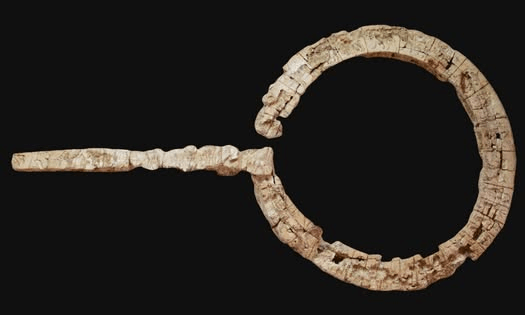
Religious use in Linear A
Linear A is the earliest known syllabic script, used in Minoan Crete. Linear B, which is composed of similar but phonetically different signs, was deciphered in the 1950s. However, Linear A has not yet been fully deciphered, partly because it was not written in any known language. While Linear B represents a language close to Greek—known as "Mycenaean"—Linear A was written in a language whose family is still unclear. Some scholars argue it was a Semitic language, perhaps a variation of Phoenician; others suggest it was Anatolian, that is, Indo-European.
In any case, what has been clear—based on numerical signs—is that the texts found so far were administrative records: inventories of goods, shipments, land ownership, offerings to gods, names of officials and settlements. Not religious texts. Or so it was believed—until now.
This month, the journal Ariadne, published by the University of Crete, featured an article claiming to have identified the longest Linear A inscription discovered to date, and also the first to represent a clearly ceremonial or ritual text from the golden age of Minoan civilization.
The inscription appears on an ivory ring with a handle, dated to the Neopalatial period (1700–1450 BCE), bearing a text of 119 signs that include depictions of animals, vessels, textiles, and hides—but no numbers. In contrast to most Linear A inscriptions, typically written on clay tablets for accounting purposes and containing numerals, the absence of numbers here suggests that this is not an administrative inscription but a ceremonial or religious text.
However, caution is advised, as it seems there are actually two inscriptions: one on the handle of the object appears to be a different text, including elements reminiscent of Cretan hieroglyphic script, and it does include some numbers. This could indicate that the scepter had dual usage, or perhaps was repurposed at some point. It may have originally served as an administrative tool, and only later been used in religious rituals—or vice versa.
Two facts suggest a later religious usage:
- The object was found in a location known as the "Ivory Deposit", where other ritual items, offerings, and bronze artifacts were also discovered.
- The quality of the engraving, recognized as "religious" in character, is especially refined, and the unique visual symbols are arranged within metopes (μετόπη, metope)—rectangular compartments that serve as discrete graphic units.
-
The blue lotus of today is not the blue lotus of ancient egypt
Products currently branded as blue lotus are significantly different from the plant used in ancient Egypt for several reasons. The first and most important reason is that today's products lack the psychoactive alkaloid present in the Nymphaea, nuciferine, and are not marketed as hallucinogenic plants but as mood and health enhancers—presumably because they are not potent. The products sold online are often other types of water lilies that are not psychoactive, and the amount of nuciferine in them is close to zero. Additionally, in ancient Egypt, complementary products were used to enhance the release and absorption of nuciferine, and consumption was not as recommended today online by drying or smoking. The complementary products were "infused oil containing fats that allowed the slightly fat-soluble alkaloid to fully dissolve in wine".
-
Ritualistic puppets of mayan culture
Five ceramic figurines with unique facial expressions were found at the San Isidro site in El Salvador, which was on the outskirts of the Maya culture. The figurines were likely used as puppets in public ceremonies to commemorate mythical or real events. The figurines are similar to those found at other sites in Central America, such as Tak’alik Ab’aj in Guatemala. The similarity in style and features indicates mutual cultural influences. The San Isidro site was likely an important commercial center, explaining the cultural and commercial connections with other regions in Central America. Among the possibilities being considered for the ceremonies in which these figurines were used are burial ceremonies, as the figurines were found in a burial structure. Since they are puppets, it is likely that they were part of a puppet theater that depicted historical or mythical scenes. The figurines may have been used in rites of passage such as coming-of-age or marriage ceremonies, and possibly in agricultural ceremonies.
-
Animism and shamanism in Burma
Professor Yuval Rotman from Tel Aviv University published a book last year titled "Trees and Spirits" (Magness Press), which explores animist beliefs, particularly the connection between humans and trees perceived as having a soul in Myanmar (Burma). The soul is called Yokazu, which literally means "a grasping/clinging/possessed plant," referring to a tree inhabited by a spirit. In Burmese, Nat refers to a spirit-possessed tree—not a human with a soul, but a spirit that can enter and possess living beings, plants, or even inanimate objects. However, unlike other Nat, Yokazu resides exclusively in trees—it is a tree in which a spirit dwells.
Rotman studied the relationship between religion, belief, and the soul through the ritual worship of tree spirits in Myanmar. According to him, this is the first study of its kind; even in Myanmar itself, the subject is considered marginal. In local communities, including Buddhist ones, there is a personal relationship with trees and their spirits, expressed through offerings, rituals, and the preservation of trees as part of tradition. The belief in tree spirits is not seen there as supernatural but as an everyday aspect of reality. And it is not a hallucination, he emphasizes—even normative individuals engage in these practices as part of cultural norms. The recognition of tree spirits exists both on a personal level, with trees accompanying families, and on a communal level, with trees serving as protectors of the village.
Rotman argues that animism cannot be understood through a Western framework of questions and answers but only through the experience of participation. Thus, classical research methodologies did not help him grasp what was happening—only an approach of listening and learning from local communities provided real insight.
-
Cat worship in ancient china
Not only cannabis migrated via the Silk Road. So did cats. Or more precisely, what is known as the "domestic cat," a descendant of the African wildcat. "Ancient Chinese even performed specific religious ceremonies when bringing a cat into their homes, seeing them not just as property but as honored guests". Before that: "Archaeological evidence shows that long before the arrival of domestic cats in China, people in rural Chinese communities lived alongside local wildcats (Prionailurus bengalensis). Researchers have previously found bones of wildcats dating back 5,400 years in an ancient agricultural village in northwestern Shaanxi province". In the picture: Cats that, because they don't have spots, are identified as domestic cats and not wildcats.