
-
5,000-year-old settlement shows evidence of early urbanization in Israel
In archaeological excavations at Khirbet Husham near Beit Shemesh, conducted by the Israel Antiquities Authority, a settlement from the Early Bronze Age, approximately 5,000 years old, was uncovered. The site includes a public ritual structure containing around 40 artifacts preserved in their original condition as they were placed before the site was abandoned. These items, some of them tiny, indicate that their use was symbolic and ceremonial. The artifacts contained possible residues, such as oils, water, wheat, exotic oils, or other substances, but further analysis is required to confirm their contents.
Near the public structure, large stone stelae arranged in rows were discovered, which researchers believe may have initially been part of an open ritual complex before it transitioned into a more controlled and enclosed structure. This shift likely reflects a process of social evolution, where religious practices became institutionalized with defined rules and structured spaces for worship. -

The Banyan tree
The Indian Banyan tree ("Ficus benghalensis"), also known as the Indian fig tree, holds extensive cultural, religious, and medicinal significance in Indian culture and religion. Its status as a sacred tree has developed over generations and continues to influence daily life, worship, and common beliefs. In addition to its religious value, this tree possesses medicinal properties that have made it an integral part of traditional Indian treatments, and its chemical attributes have also attracted scientific and research-based attention.
In Hinduism, the Banyan tree symbolizes the Trimurti—the sacred trinity of the gods Vishnu, Brahma, and Shiva. According to tradition, the tree’s bark represents Vishnu, the roots signify Brahma, and the branches symbolize Shiva. The belief gives the tree spiritual importance as a symbol of life and fertility, and it is therefore worshipped by childless individuals seeking blessings for fertility. The deep roots of the Banyan and its ability to spread and form a vast canopy are perceived as symbols of eternal wisdom and the connection between heaven and earth. In India, a ritual known as "Vata-Savitri Vrata" is practiced, where married women fast and circumambulate the Banyan tree, praying for the longevity of their husbands, inspired by the story of Savitri, who saved her husband, Satyavan, from the god of death. Buddhists also attribute great importance to the Banyan tree, as it is believed that Buddha sat under a Banyan tree for seven days after attaining enlightenment, though an alternative tradition suggests that Buddha sat under a different fig tree, the Bodhi tree ("Ficus religiosa"), rather than "Ficus benghalensis".
Beyond its religious significance, the Banyan tree is widely used in traditional Indian medicine, including Ayurveda, Siddha, and homeopathy. Every part of the tree—the roots, leaves, bark, and fruit—has various medicinal applications. For example, the bark is used to treat ulcers, skin diseases, and inflammatory conditions; the roots aid in managing diabetes, and the fruits serve to strengthen the immune system. The tree is considered essential in local medicine, especially for preventing infections and promoting general health.
The scientific basis for the Banyan tree's importance lies in its chemical composition, rich in bioactive compounds like flavonoids, terpenoids, and tannins. These components are responsible for the tree’s anti-inflammatory, antibacterial, and anti-diabetic properties. Studies have shown that these chemical compounds are particularly effective in boosting the immune system, preventing diseases, and enhancing overall health, which explains its widespread use in traditional medicine.
-
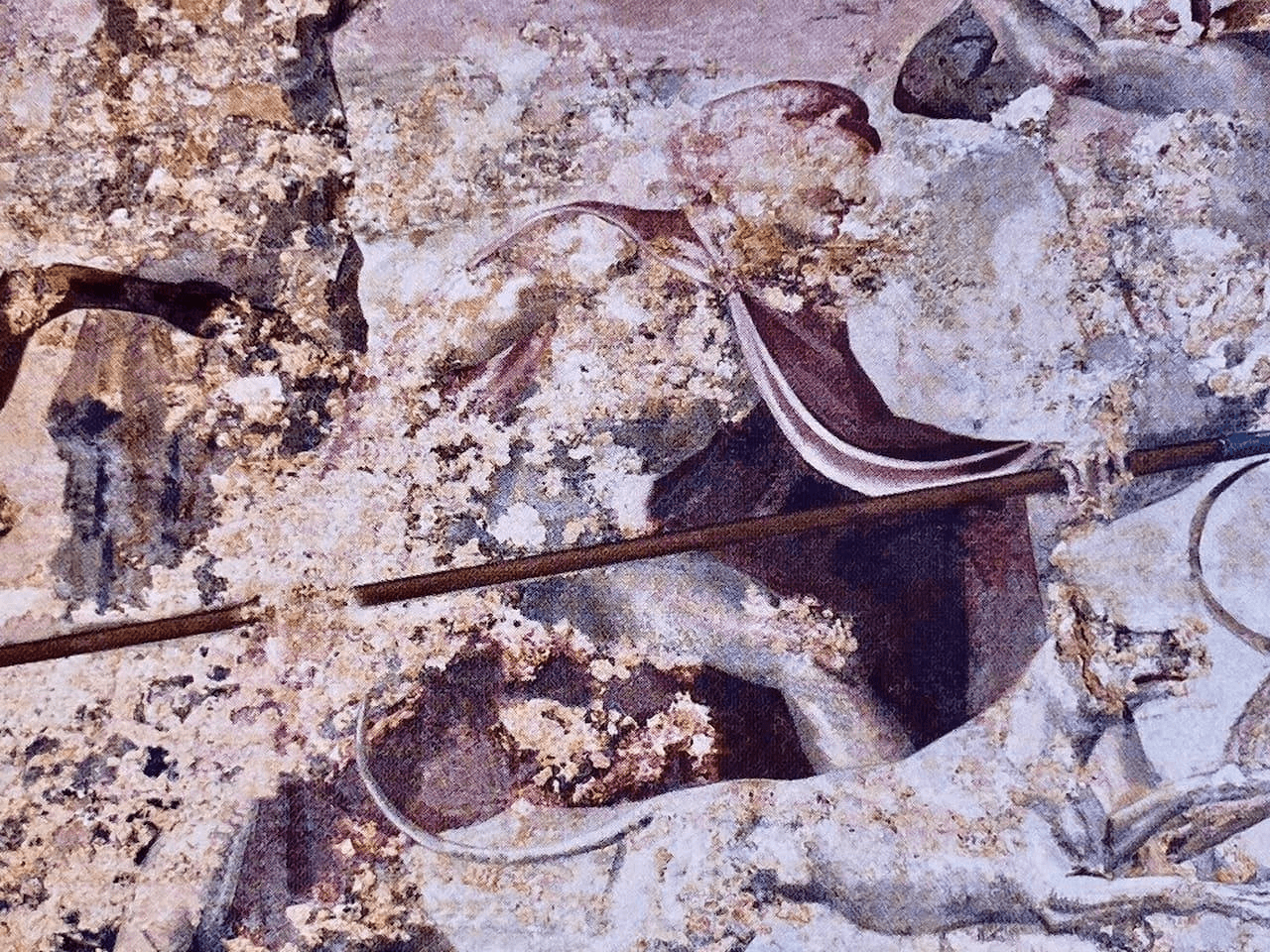
Sacred tunic of Alexander the Great identified
During excavations in Royal Tomb II at Vergina, Macedonia, Greece, archaeologists uncovered several prestigious artifacts, including a purple tunic, a golden oak wreath, and various royal items like a diadem and scepter. The purple tunic is made of cotton and dyed in Tyrian purple, a color associated with royalty. The golden oak wreath was found beside male skeletal remains in the tomb, aligning with ancient descriptions of Macedonian royal symbols. Among the textile layers in the tunic, traces of a white mineral called huntite were discovered—a material highly valued in Persia for its bright whiteness. This mineral was considered rare and costly, prized both for its pure color and its exceptional durability, marking it as a symbol of prestige. One of the figures in the fresco discovered at the site is wearing such a garment.
Historical sources indicate that Alexander the Great adopted the Persian tunic, the sarapis, as part of embracing Eastern royal customs, underscoring his role not only as ruler of the Greek empire but also as the sovereign of the kingdoms he conquered—Egypt and Persia. It appears that after Alexander's death, his half-brother Philip III Arrhidaeus inherited his position, suggesting that the tomb may belong to him or his successors, with these Eastern symbols as part of the legacy.
In nearby tombs, known as Royal Tomb I, a male figure with a fused knee was found, leading to the speculation that this was Philip II, Alexander’s father. The other tombs have been identified as those of Philip’s wife, Cleopatra, and their newborn son. These tombs were excavated in 1978. Initially, Tomb II was thought to belong to Philip II, who died in 336 BCE. However, shortly after the excavation, an alternate hypothesis emerged, proposing that Tomb II actually belongs to Philip III Arrhidaeus, who died in 317 BCE, Alexander the Great’s half-brother, while Philip II was buried in Tomb I, which had been looted.
-
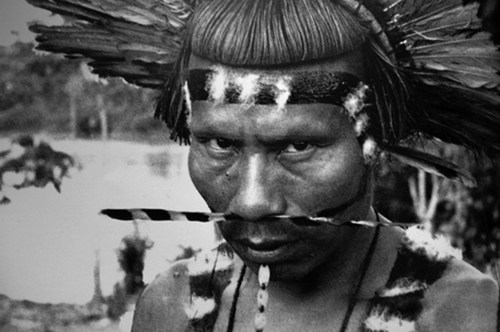
The Role of Disability in Shamanism: Claude Lévi-Strauss’s Perspective
In The Effectiveness of Symbols, Claude Lévi-Strauss discusses the "deviation" or physical disability associated with shamans, presenting it as a social function that plays a crucial role within the community. According to Lévi-Strauss, ritual interactions with the shaman provide individuals and the community a means to confront anxiety, frustration, and suffering. Through these rituals, the shaman creates symbolic context for states of psychological or physical disorder, turning them into manageable, understandable experiences that strengthen social cohesion and cultural order.
The shaman is often depicted as physically or socially distinct, embodying the “Other” within society—whether through disability, physical impairment, or unusual behavior. This difference is frequently interpreted as a sign of closeness to the spiritual realm. Lévi-Strauss argues that this very deviation allows shamans to be perceived as possessing unique qualities, enabling them to mediate between the material and spiritual worlds and thus bridge experiences of pain and illness with symbolic meanings. In the eyes of the community, the shaman serves not only as a healer but as a stabilizer of social order, transforming his personal state into a tool that supports and reinforces the social structure.
Lévi-Strauss describes the shaman as embodying a “controlled deviation,” using elements of pathology to create balance and social cohesion. Through ritual symbolism, the shaman’s role meets the psychological and social needs of the community, turning his “outsider” status into an essential function within traditional societies.
As Lévi-Strauss notes: “In tribal cultures, witch doctors were recruited from the disabled, ecstatic, nervous types, outsiders… Yet, no shaman is in daily life an abnormal individual, a neurotic or paranoiac; if he were, he would be classed as a lunatic, not respected as a priest. Shamans exploit psychopathology but also channel and stabilize it. More shamans mean less psychopathology in society”.
In some cultures, it is likely that shamans intentionally self-mutilated to serve this purpose. Their physical difference or unusual appearance thus serves a social function, reinforcing their role as a bridge between worlds.
-
The Disabled Shamans
While in the modern world, disability is often viewed as a state of physical or mental weakness, in many ancient cultures, those with disabilities were not perceived this way at all. On the contrary, they were empowered, respected, and even attributed with special spiritual abilities.
In the indigenous cultures of Central and South America, people with physical disabilities were not considered weak. The opposite is true. In small ceramic figurines found at the Michael C. Carlos Museum at Emory University, we see figures with unusual physiognomies—some with completely white eyes, others with protrusions from the chest and back, and in some cases, a combination of male and female genitalia on a single body. In many cases, these figures are adorned with luxurious clothing, jewelry, and depicted in meditation poses or fertility symbols—all signs of honor and spiritual roles. Shamans in these cultures were considered intermediaries between the physical world and the spiritual world, and they were attributed with healing powers and communication with spirits because of their ability to survive harsh physical challenges. In other words, their struggle with illness or disability was seen as a sign of spiritual strength, not weakness.
The attribution of shamans with disabilities to spiritual powers stems, in part, from the idea that the shaman is a figure who exists "in between"—between life and death, between male and female, between the visible and the unseen. In many cultures, especially in ancient America, shamans were seen as those who could traverse worlds and cross the boundary between the physical and the spiritual.
Disability or illness, which can be interpreted as being close to death or the unknown, was considered a sign that the shaman had undergone a physical or mental challenge that granted them access to other realms. For example, in one of the figurines documented in the Carlos Museum, a person with their face ravaged by leishmaniasis, a cruel disease that eats away the flesh around the nose and mouth, is depicted. The figurine does not present the person as a victim but rather as a spiritual figure of great power who survived a harsh disease and gained healing powers and spiritual communication.
Additionally, in the article "Empowered, Not Disabled" by Professor Rebecca Stone from Emory University, attached here, I can add a few things relevant to the upcoming lectures in the "Temple of Consciousness" series next month.
The first point is that it turns out that even in the Bible, various prophets, particularly the earlier ones, are depicted as having disabilities. Perhaps we haven't noticed this, and what is the interest in mentioning their disabilities? Moses was "slow of speech and tongue", Elisha was grotesquely bald, thus having physical differences, Jacob was limping, Job was afflicted with boils and suffering, and Jeremiah frequently describes how he suffered both from afflictions and negative reactions to his nature, and so on. Is this a coincidence, or were the prophets really a kind of shamans?
In mythology, there are many examples of disabled or unusual figures, who were sometimes elevated intellectually or spiritually precisely because of their conditions. For example, Hephaestus, the god of blacksmithing and fire, was disabled and deformed, but he was the one who forged the weapons of the gods. Metallurgy in the ancient world was almost considered a spiritual craft, as Dr. Nissim Amzallag will demonstrate in his upcoming lecture on December 18th. In Norse mythology, there are several disabled gods, such as Tyr, the god of war, who lost his hand when trying to save the world from the fearsome wolf Fenrir. War is the primary use of metal, and thus it is significant that this god is depicted as disabled. Odin is also described as having sacrificed his eye to gain knowledge and supernatural powers, a theme that recurs in many traditions.
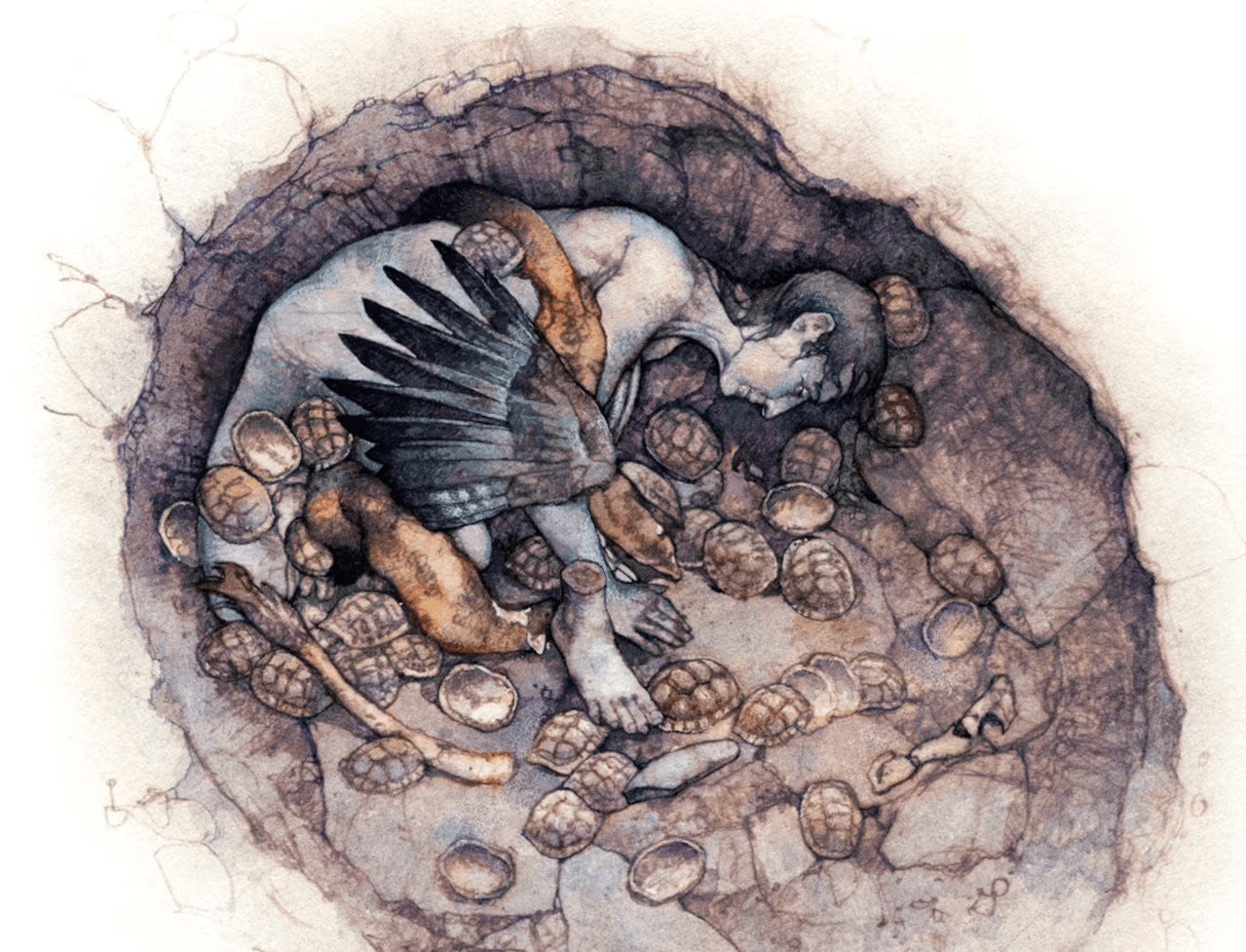
The second and more important point is that in the Hilazon Tachtit Cave, the Natufian shaman found there was disabled. Nevertheless, she was buried with honor, not only in the preparation of the grave but also with the offerings found with her. This indicated her high spiritual status. This subject will also be discussed by Professor Leore Grossman in her lecture on November 28th. However, Professor Grossman wanted to emphasize that she is an archaeologist, not an anthropologist, so the issue of disability will likely not be the central focus of her lecture, beyond a fun fact that strengthens the anthropological theories as Professor Stone suggested. In the attached image, an illustration of the shaman woman and the offerings found beside her, including a portion of a human leg… (Imagination can answer the question of why—perhaps it relates to her type of disability).
-
A new spin on the “Stoned Ape Hypothesis”
The "Stoned Ape Theory" was first proposed by ethnobotanist Terence McKenna in 1992. It suggests that the use of psychedelic substances, such as psilocybin mushrooms, played a key role in the rapid cognitive development of early human ancestors. According to McKenna, psilocybin helped early hominids enhance abstract thinking, creativity, and expanded consciousness, which ultimately led to the development of language, art, and culture.
The theory is controversial because it is based on speculative ideas that are difficult to prove empirically. Critics argue that McKenna’s theory veers towards Lamarckism — the idea that acquired traits, such as cognitive changes induced by psychedelics, could be passed down genetically to future generations. This concept contradicts Darwinian evolution, where genetic changes happen gradually through natural selection, not through traits acquired in an individual’s lifetime. Furthermore, McKenna’s hypothesis that psychedelic mushrooms were a regular part of early human diets is considered unlikely.
Cognitive neuroscientist and journalist Bobby Azarian offers a revised version of the theory. Instead of claiming that psychedelics altered human cognition in a heritable way, Azarian argues that psychedelics like psilocybin did not change genes but facilitated significant cognitive and cultural transitions. These transitions, once internalized by society, impacted cultural evolution and social transformation. Azarian’s theory focuses on the impact of psychedelics on consciousness and culture rather than genetics, thus addressing the primary criticisms of the original theory.
Azarian explains that psychedelics increase brain entropy (the level of disorder in brain activity), which disrupts established neural patterns and allows for the emergence of new insights and shifts in worldview. This can lead to significant cultural changes. The theory is based on the "Bayesian Brain Hypothesis", which views the brain as a prediction machine that continuously updates its model of the world to minimize prediction errors.
-
Czech bronze Age burial site demonstrates "sacred space"
Archaeologists have discovered two important burial sites near the city of Olomouc in Central Moravia, Czech Republic, during a rescue excavation along the future route of the D35 highway between Křelov and Neředín. The burial sites are linked to Chalcolithic European cultures, such as the Nitra culture and the Corded Ware culture.
In the graves of men from the Nitra culture, boar tusks and hunting tools were found, indicating that men held central roles in hunting and survival activities. Hunting was a crucial part of life during this period, and the presence of hunting tools in the graves suggests that this activity was considered important even after death, possibly as part of religious beliefs regarding hunters in the afterlife. In women's graves, beads made from animal antlers, likely from deer or similar animals, were discovered, suggesting the use of natural materials for decoration and jewelry. This may imply that women held some responsibility in using animals for social or ritual purposes.
The findings indicate post-mortem manipulation of the bodies, which could point to a belief in life after death and complex burial rituals. There is also evidence of gender-based differences in burial practices. Men were buried with tools related to hunting, while women were buried with jewelry and beads. This distinction reflects the social roles of each gender: men were seen as hunters and warriors in society, while women played a central role in the household or social production, expressed through jewelry and other personal items. However, these objects may have served not only for gender identification but also as ritual items representing the roles of the deceased in the world of the living and the belief that they would continue to hold similar roles in the afterlife.
Around some of the graves, circular wooden structures were discovered, likely marking sacred burial areas. This phenomenon of circular structures symbolizes, in many archaeological sites, the religious and ritual importance of the area. Mircea Eliade referred to this kind of delineation as "sacred space" or "hierotopy".
-
Medicinal anal smoking
Smoking in ancient times was, of course, also used for spiritual purposes (such as prophecy and, in contrast, exorcism), but primarily for medicinal purposes. Among other things, it was used in matters related to fertility, such as easing childbirth and helping women who suffered from excessive bleeding. It was even used to test for virginity and infertility by inserting the mouthpiece of a hookah with incense into the womb and checking if the scent would emerge from the mouth.
It seems that a similar practice was used to treat hemorrhoids. Maimonides, in his role as the personal physician and court physician to the Ayyubid vizier al-Fadl Abd al-Rahman, Salah al-Din's deputy, wrote a special treatise for him regarding the treatment of hemorrhoids, from which he suffered. He suggested preparing a mixture of leek seed, snake skin, colocynth, and more – mixing them all, burying them in a pit, placing a bowl with a walnut-sized hole on top, lighting a fire, and sitting down to allow the smoke to enter the rectum. This was to be done three times a day.
From the fascinating book ״Medicinal Substances in Jewish Literature of the Middle Ages and Modern Times: Pharmacology, History, and Halacha״ by Avraham Ofir Shemesh.
-
How Horses Shaped Human Civilization and Consciousness
William T. Taylor is an anthropologist at the University of Colorado Boulder and curator at the university’s Museum of Natural History. He studies the relationship between humans and horses from various perspectives, including historical, archaeological, and anthropological angles. Coming from a family of cowboys, Taylor connected to his heritage through his research on horses. This research is summarized in his recently published book, which explores the shared history of horses and humans, "Hoof Beats: How Horses Shaped Human History".
In his book, Taylor argues that horses have profoundly influenced human history and that the relationship between humans and horses is essential to human development. Horses facilitated the expansion of cultures, trade, technologies, and languages. They enabled people to travel quickly, transport goods, and conduct raids and wars. Taylor compares the domestication of horses to the ancient internet, in that horses transmitted knowledge and technologies to new places and contributed to the creation of new trade routes. Just as the modern internet allows people to share information rapidly over vast distances, horses served as a means of communication, trade, and movement of people, goods, and knowledge across extensive trade routes and regions of conquest. Horses also helped refine warfare—empires like the Mongol Empire or other early mounted archers would not have achieved their global reach without horses.
Furthermore, in a review of his book in The Guardian, attached here.Now, let me philosophize a bit about the evolution of technology: We understand that horses allowed humans to overcome the barrier of space and compress the dimension of time. The derivative of space in time is speed, and according to Paul Virilio, speed is the driving force of humanity. As humans overcome physical barriers and cause them to vanish, they essentially accelerate technology. Speed intensifies communication. Marshall McLuhan would argue that this affects human consciousness. Pierre Teilhard de Chardin describes this development of consciousness as the construction of an additional conscious layer above the layer of life. This layer continues to build as humans reduce spatial and temporal limitations to the point of their eventual dissolution. Teilhard called this dissolution the Omega Point—his term for the divine. Humanity strives to progress toward the divine, and speed is its means of doing so. This, therefore, explains why the horse became a sacred object—because it symbolizes fertility, power, and also a more advanced state of consciousness.
As for the horse as a symbol of power and a tool of war, horses intensified warfare. Virilio argues that the cognitive shift caused by acceleration, by increasing speed, results in confusion. Speed creates a state of uncertainty and instability in which the individual struggles to cope with rapid changes. Virilio calls this phenomenon dromology, the shock resulting from the acceleration of life and movement, which revolutionizes social order and human experience itself. This revolution is realized through conflict. The reason why technology advances through war, and why the domestication of the horse is linked to the expansion of human conflicts, is explained by this "dromological" force. This is also why the father of the gods, who is often also the god of war, is depicted as being equipped with a chariot drawn by horses. Likely, this is also why the apocalyptic prophecies foretelling great wars before redemption involve horses—whether it’s the Horsemen of the Apocalypse in Revelation, or Zechariah’s red, speckled, and white horses. In other words, the path to redemption is paved with struggles and wars, which are a necessary part of the journey, precisely due to this attribute of the horse: speed, power, and cognitive shock.
-
Archaeologists Find Throne and ‘Hall of the Braided Serpents’ in Peru
At the Pañamarca archaeological site in Peru, a throne room and a hall with murals of serpents have been uncovered, associated with the ancient Moche culture. The throne room is adorned with paintings depicting a woman sitting on a similar throne and receiving visitors, along with images of a crown, a crescent moon, sea creatures, and a weaving workshop. The throne itself, built around 650 CE, shows signs of wear on the backrest, indicating frequent use by someone who sat there. The researchers also found colorful stones and human hair embedded in it. The murals feature life-sized serpents with human legs, as well as warriors and a monster they are battling. It seems the room was a gathering place, and the murals were intended to evoke religious emotions. The throne likely served as the seat of the figure who conducted the ceremonies. But who was this figure?
The fact that the murals depict a crowned woman suggests that the throne was used by a crowned figure, most likely a female political leader. The Moche culture had long been thought to be dominated by male warriors and kings, but these findings indicate that women also held positions of political power. This is not the first discovery of women in powerful roles within Moche culture. A tomb excavated in 2006 contained the remains of the "Lady of Cao," a tattooed woman surrounded by war clubs and tools for throwing spears. Several rich tombs found at another site in 2013 held the bodies of women often referred to as the priestesses of San José de Moro.
These findings "open new windows into understanding Moche ceremonies in the grand temples and the role women played, not just the queen. For many years, we thought that the most important celebrations or ceremonies held in these places were related to human sacrifice, but with these discoveries, we now understand that very different ceremonies took place".