
-

The "soter" hellenistic ruler as a prototype of the messiah figure
This semester, I'm studying "Ruler Worship in the Hellenistic Period." Ruler worship originated in the East. Although there were certain honors given to heroes after the Spartan and Athenian wars, and even a hero named Lysandros had a festival named after him, he did not actively intervene in religious practices. Alexander, after conquering the East, sought to establish his rule according to the norms there and requested to be treated as a god. The Greeks, however, were not ready to accept such an idea, at least not during Alexander's lifetime. With Demetrius I Poliorcetes, however, things were different. Demetrios was a "Diadochi" ruler, meaning he was the son of one of Alexander's prominent generals, who divided Alexander's conquered territories among themselves after his death. Demetrios ruled about 40 years after Alexander’s death, but unlike Alexander, he did indeed seek to reform religious life in Greece.
Demetrios attempted to intervene in at least three types of religious practices. First, he sought initiation into the Eleusinian Mysteries, an ancient and secret tradition that required long preparations and precise stages. Demetrios demanded that the mysteries adapt to his schedule, requesting that the intervals between the stages be shortened so that they could all be completed in a short period. This step provoked opposition from the priest Pythodoros, who held the office of the torchbearer (Daduchos) and protested the disruption of the sacred order of the ritual. However, his protest was unsuccessful due to Demetrios’ political power. This move was perceived as a severe violation of a sensitive and sacred ritual. The timing and preparations for the ritual were crucial, likely because they involved practices for altered states of consciousness. When someone attempts to carry out the ritual without these practices, it essentially desecrates the ceremony.
After enemies of Athens took over the Delphic oracle, the Athenians were unable to visit and celebrate the Pythian Games. So what did they do? Demetrios decided to hold the games not in Delphi but in Athens. He permitted himself to do this since he saw himself as a god; as a god, he had the right to enact religious reforms. This act was unprecedented in Greek history and was considered a radical move, seen as a takeover of a sacred Greek rite. But again, there’s an underlying aspect here: Delphi's sanctity lay in the fact that only there could the Pythia prophesy because only in that place were there underground gases that induced her mystical state. Holding the festival elsewhere meant losing the psychoactive effect. Once again, this was perceived as desecration, as the ceremonies lost their consciousness-altering power.
The last thing he sought to change was likely also related to altered states of consciousness. Dionysus was revered in the Dionysia festival as the god of wine. Demetrios demanded that the festival's name and the month in which it was celebrated be changed to bear his name, "Demetrion." He insisted that the ceremony be conducted in honor of his worship, as if he were Dionysus himself.
His desire for this was not only a matter of prestige. Demetrios demanded the title "Soter," Σωτήρ, which means "savior" or "rescuer." This title was not merely a military honor for a leader who won a war and saved the residents of the area he liberated. It was a general title given to one who saved his community from a great threat or provided essential needs—such as healing, community protection, and cosmic order. Gods were called Soter because they possessed these qualities, which were considered spiritual. Demetrios sought to endow himself with this spiritual quality, which politically signified that whoever supported him would receive his blessing. Religiously, however, it was akin to the Christian view of Jesus—that whoever believes in his messianism achieves personal salvation. Thus, the messiah is a figure that represents both a governing ideal and a spiritual ideal. For those who participated in these celebrations with psychoactive elements but were previously excluded, the ruler’s intervention in the ritual granted them access to the mystery, promising them eternal life. In essence, Demetrios sought to democratize the religious experience, suggesting that those who support him could reach spiritual heights. Supporting him meant entering the holy of holies.
Naturally, I have much more to write about the similarity between ruler worship and the belief in a “messiah” and between the attributes given to a ruler and those ascribed to a messiah. I plan to explore this further over the semester. Meanwhile, I’d like to note that on a coin minted by Demetrios, he is depicted with a bull’s horn on his forehead—an image symbolizing the “exalting of the horn of his anointed one” (I Samuel 2.10)
-
Oldest bread is even earlier than oldest beer, both of the Natufians
Next week, we are going to hear about the world’s oldest beer, discovered around 12,000 years ago at a Natufian site (Raqefet Cave in the Carmel). But it's worth noting another Natufian site where a grain-based product was found, shedding light on Natufian grain usage that predates the domestication of grains. Once we understand this, we need to ask why it happened, or in other words, why was there a need to domesticate grains in the first place? An intriguing question, which I look forward to exploring next week.The oldest known flatbread in the world was found at Shubayqa 1 in northeastern Jordan, in the “Black Desert”, as part of a 2018 study by the University of Copenhagen. Specifically, charred remains of flatbread-like dough were uncovered. Through detailed analysis using microscopy and spectrometry, the researchers identified its components, including wild wheat and club-rush tubers, native plants from the Middle East, used as the base for the flatbread dough. These findings date back approximately 14,400 years (or up to 16,000 years according to conservative estimates), meaning this discovery predates the advent of agriculture by more than 4,000 years, proving that humans at that time already possessed knowledge of plant processing. This also shows that the Natufians lived not only in the western Levant, within Mediterranean woodland environments, but also in more arid regions. While this may seem unrelated, it demonstrates that Natufians inhabited a much wider geographic range than previously assumed, indicating that there were intercommunity connections across the Levant and possibly beyond.
Anyway, the Natufians used grinding and pounding tools to process grains and plant roots into flour, then created dough and baked it. This was an advanced food-processing technique involving peeling, grinding, and baking, suggesting that this flatbread was not merely a simple food item but held social and cultural significance. This indicates that the flatbread was likely not for everyday consumption but rather for a special ritual, raising the possibility that it was made for ceremonial purposes, or at least for a “special occasion”. It’s possible, then, that the need for grains for special or ritualistic events increased the pressure to develop organized agriculture, eventually leading to the domestication of grains. This implies that the motivation behind the agricultural revolution was, in fact, religious in nature. This is the central question.
The next section is my own thought, not related to the study. This idea suggests that humans domesticated grains because grains allowed for efficient experimentation with alcoholic fermentation—whether in making sourdough from improperly stored ground flour, or brewing beer from sprouted grains that had accidentally mixed with water. My own question is this: although alcohol may develop during the fermentation process of bread, the concentration is negligible, and it evaporates during baking. So, how can we present the preparation of flatbread for ritual purposes as something related to psychoactive ceremonies?
A speculative answer I give myself: if the bread was made from grains that, before being ground, were contaminated with mold or other psychoactive fungi, the flour from these grains could have retained their toxicity. There are reports from the Middle Ages of people consuming ergot-contaminated bread. So, who’s to say this flatbread wasn’t made from intentionally contaminated flour? This brings me closer to Brian Muraresku’s theory on the continuity of “sacramental ergot bread”.
-
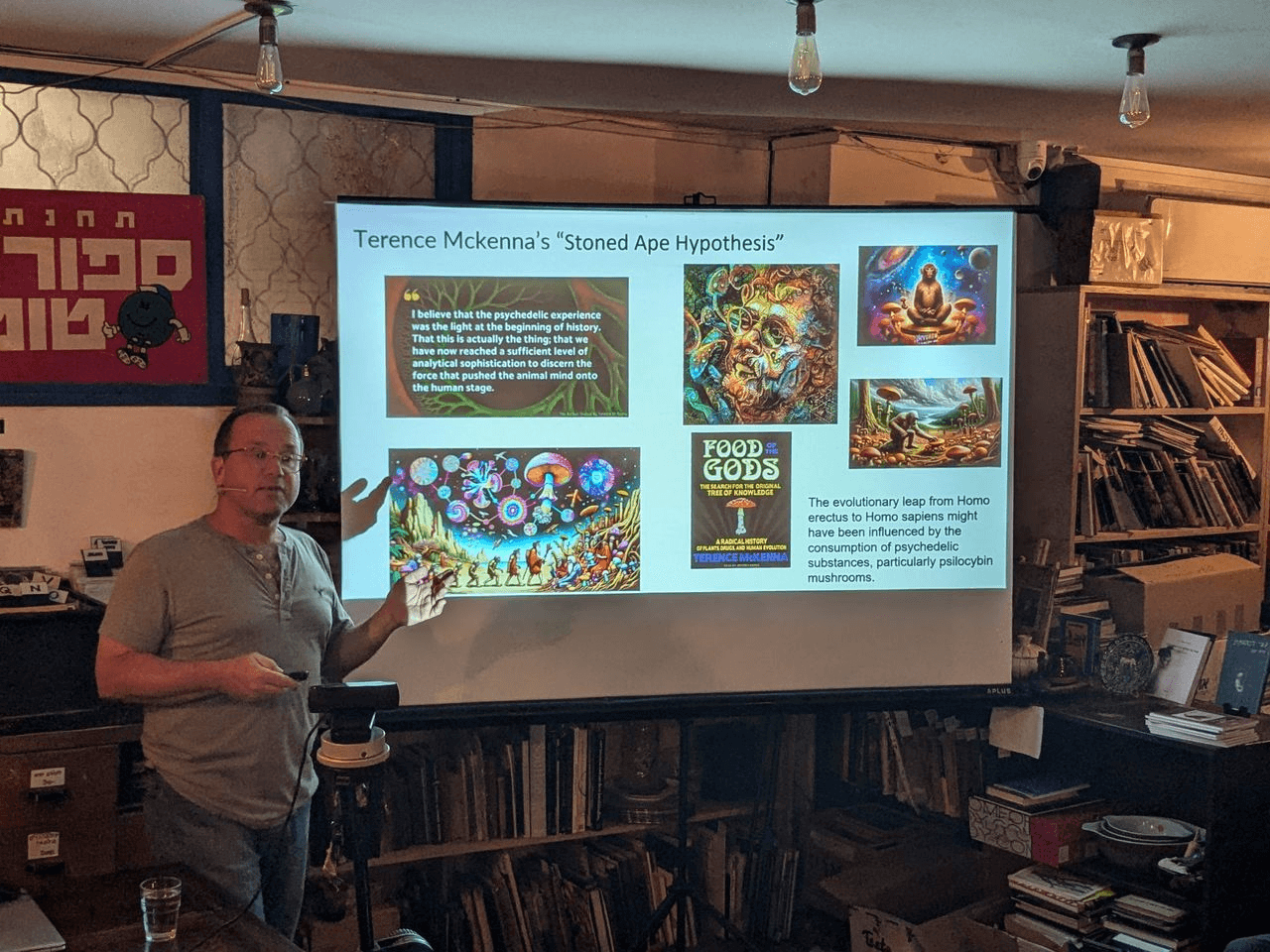
The trigger of the prehistorical man to use drugs
Yesterday, the "Temple of Consciousness" series began with a wonderful lecture by Prof. Ran Barkai from the Department of Archaeology at Tel Aviv University.
The lecture discussed psychedelic experiences during the Paleolithic period, focusing on caves as "doors of perception" or "portals" for communicating with the cosmos and the world beyond. It was suggested that Paleolithic caves served as sites for rituals and ceremonies, where people used consciousness-altering substances to undergo deep and mystical experiences. The paintings and symbols on cave walls, especially in places like Chauvet Cave in France, may be artistic expressions of altered states of consciousness.
The main argument presented was that the disappearance of megafauna (large animals) was one of the key reasons for the cave paintings, particularly in the Upper Paleolithic period. According to this view, the decline of megafauna, meaning the decrease in large animals like mammoths, giant bison, and prehistoric rhinos, created a sense of loss and distress among humans. This might have been traumatic for them, as these large animals were a significant part of their environment, diet, culture, and spiritual connection to the world. The cave paintings are described as a kind of ritualistic process, providing a renewed connection with animals that were no longer accessible as before and serving as a commemoration of those that had vanished. The paintings represented the large animals, and it is possible they were created as part of rituals meant not only to depict reality but also to reconnect humans with the lost history of their world.
Using caves as a ritual space and focusing on animals in the paintings might have evoked psychedelic and spiritual experiences in the participants. Entering the dark caves, along with low oxygen levels or the use of consciousness-altering substances, likely provided an experience that freed them from ordinary reality, allowing them to connect more deeply with the missing creatures and the broader meanings of their changing world. The cave paintings in the Paleolithic era were not created with artistic intentions in the modern sense of the word but rather for ritualistic and spiritual purposes—what Dr. Nissim Amzallag describes as "technopoiesis," creation for experience rather than for purpose. He will elaborate on this in the lecture concluding the series.
Why was megafauna important to humans?
Beyond simply meeting their needs, human diet was actually dependent on it. Large animals provided a rich food source and essential caloric abundance, particularly in harsh winters or during periods of limited vegetation. The meat and fat they provided were crucial for the diet and health of early humans. These animals' fat made the economy less dependent on other food sources, especially in places with a true scarcity of other foods, such as arid regions or areas with harsh climates where vegetation was sparse.
In addition, fat is an efficient energy source. In cold seasons, when the body needs extra energy to stay warm, fat served as a natural fuel, allowing the body to withstand difficult conditions. Fat balanced the high protein intake that was part of the diet of early humans. Protein-only consumption, without fat, can lead to a condition known as "protein hunger," where the body suffers from nutritional deficiencies and has difficulty properly digesting large amounts of protein. Fat allowed for optimal digestion of protein, providing the body with the energy and nutrients needed for proper function. Without megafauna, people would have had to adopt a different, more demanding diet that fundamentally altered their worldview.
In the absence of high mobility capabilities, people did not need to migrate when megafauna was present. Migration only began with the search for megafauna. If it migrated, humans migrated with it. Additionally, as we know, fat acts as a preservative, decaying very slowly. When such an animal was hunted, it could provide food for a very long period. They didn’t need to hunt more than once every six months!
-
New Study of 'Passover Letter' May Change What We Know About the Birth of Judaism
Haaretz English published an article on Dr. Gad Barnea's research from Haifa University, which explores the potential Zoroastrian origins of the Passover holiday as suggested by the "Passover Letter" from the island of Elephantine.Barnea points out several parallels between the customs described in the Passover Letter and Zoroastrian rituals, especially the "Yasna" sacrifices, the traditional sacrificial rituals dedicated to Ahura Mazda, the central deity in Zoroastrianism. Among the parallels noted are:
- The drink mentioned in the letter: In the Aramaic text, a drink is described as something to be consumed during the holiday. Barnea suggests this might refer to "Haoma", a plant-based drink that was an essential component in Yasna rituals and remained a central element in Zoroastrian ceremonies. Haoma symbolized purification and spiritual connection, just as wine later became a central symbol in Jewish Passover traditions.
- The mention of “anything leavened”: In Yasna rituals, a component called "Dron" was initially a sacrificial animal and later became an unleavened bread (similar to matzah). In Judaism, matzah is seen as a symbol of purity and the absence of leaven during Passover. This parallel suggests that the tradition of eating unleavened bread during Passover may have evolved under Zoroastrian influence.
- The timing of the holiday: The dates mentioned—15-21 of Nisan—align not only with Passover but also with ancient dates marking the first full moon of the year, a period associated with the start of the barley harvest and agricultural festivals. Yasna ceremonies also took place on dates connected to the agricultural calendar, suggesting that Passover may have originally been adopted as an agricultural festival.
Before being adapted as a religious holiday with a historical narrative related to the Exodus from Egypt, Passover may have appeared more as an agricultural festival with apotropaic elements, aimed at warding off the evil eye and ensuring a prosperous harvest. Similar to Zoroastrian rituals, the holiday likely marked the beginning of the harvest season and a desire to secure a good yield. Thus, Passover may have originally included rituals intended to protect against evil and banish the "evil eye" through the consumption of matzah (pure, unspoiled food) and a sacred drink. The emphasis on the Exodus story likely emerged later as the biblical narrative became integrated into the holiday tradition, imbuing it with a renewed national and spiritual meaning—possibly under Hellenistic influence.
Barnea speculates that the Passover tradition could represent a blend of several ancient rituals: the traditional Canaanite celebration, Zoroastrian elements, and perhaps (I think) even the Greek Demeter mysteries.
Gad Barnea's article is available in the open-access tribute book Shaul Shaked.
-
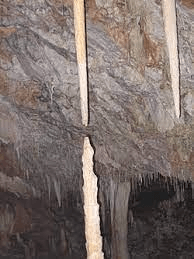
The caves as the doors of perception
Professor Ran Barkai will open the "Temple of Consciousness" lecture series tomorrow with a talk on the psychedelic experience in caves. Professor Barkai is an archaeologist and will likely focus on material findings that suggest entering a cave was a way for ancient people to experience altered states of consciousness. I doubt he will address philosophical or psychological interpretations or any other unprovable explanations. To fill this gap, I turn to Ze'ev Ben-Arieh, who dedicates a significant portion of his book ״The Goddess Culture in Israel״ (2021) to the psychedelic experience in caves.
In the first chapter of his book, Ben-Arieh assumes that, as the primary religion was one of fertility, caves were perceived as the womb of the earth. The inner and outer parts of the cave represented the female reproductive system, and entering the cave was a liminal space that symbolized a "return to the womb". Similar to the Jungian psychological archetype representing a desire to return to an original, fundamental state where a person was protected, worry-free, and fully connected to the source of life, the womb embodies a state of wholeness and unity that existed before separation or birth – when a person was still part of the mother.
Adding to this, in Platonic philosophy, this state is considered a purified condition, seen as the opposite of life, where the soul is exposed to eternal truths. Humanity originates from such a place and aspires to return to it. This concept aligns with the "fall from grace" described in Gnostic myth: a cosmic accident that cast consciousness into a "soiled" state. The world longs to correct itself, and this correction is salvation. Thus, consciousness seeks to elevate itself to its highest purpose, the state of catharsis. This aspiration is called anamnesis, or recollection – the desire to regain lost knowledge and return to that state.
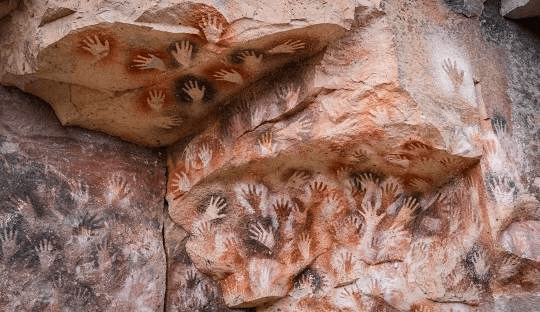
Ben-Arieh quotes Michael Rappengluck, who argues that humanity's interest in astronomy and gemstones is tied to the cave experience. Ancient people believed that stars and the moon, which disappear by morning, actually enter a network of underground caves, completing their cycle beneath the earth. They saw the subterranean world as a mirror image of the outer world. This belief led them to enter caves in synchronization with specific astronomical dates and from very particular angles where outside light penetrates the cave, illuminating a designated area. Their belief was reinforced by the discovery of sparkling crystals deep within the cave, resembling the stars, or the primordial matter. Those who entered the cave were exposed to this material, experienced it, and touched it, which is why we find evidence of people frequently touching the cave walls. The famous handprint murals bear witness to this.
What is this primordial matter? It might be water. Sacred caves often contain a spring or dripping water, usually forming stalactites and stalagmites that symbolized breasts or a phallus. The joining of the stalactite and stalagmite represents the union of the feminine and masculine. The material might also be fire, which creates shadows. When these shadows reflect on cave walls, they evoke a duality of the soul, an "other self" that lives outside us, essentially reflecting us. People were not accustomed to seeing their own reflection, and their image seemed wondrous. A broken and distorted figure, as seen on a cave's irregular walls, was perceived as a portal to another dimension. Professor Barkai is expected to discuss another aspect of fire: how it consumes oxygen in the cave, triggering hypoxia, which induces altered consciousness. Perhaps this also relates to the air element. The earth element, as already noted, is embodied by the unusual and rare minerals found deep within the ground.
Entering a cave essentially fulfilled the archetype of the "World Cave," where entering meant transitioning between universes: from the external universe or upper world to the inner universe or underworld. This transition is a liminal space linking the three levels of the cosmos: the sky above, the earth, and the cave as the nether world. People sought this connection, associating it with birth – whether literal, as women came to caves specifically to give birth, or symbolic, as people entered caves to experience rebirth, initiation, transformation, and transition.
Finally, the cover of Ben-Arieh's book features an image of the entrance to the "Witch's Cave" in the Hilazon Stream, which will be central to Professor Lior Grossman's lecture (in three weeks, on Thursday). He describes the cave's entrance as aligned with a mountain where, between its twin peaks, the sun rises on a special day of the year, illuminating the cave's darkness, symbolizing the fertilization of the earth. The entrance is shaped like a vagina, and when sunlight penetrates, if one stands at the entrance facing outward, he claims it reveals the shape of a woman's head. These elements, in his view, prove the matriarchal worship of the Natufian culture.
-
Archaeologists unearth rare serpent carvings depicting ‘powerful snake dynasty’ on ancient Mayan ball court
Archaeologists have uncovered carvings on an ancient Mayan ball court at the Dzibanché site in Quintana Roo, Mexico, depicting rulers of the Kaanu’l dynasty, who were active during the Early Classic period (500–600 AD). The stucco reliefs were found on two platforms near the ball court, which was used for ceremonial activities and ball games in Mayan culture. Stucco is a plaster-like material made from a mixture of lime, sand, and sometimes gypsum and cement. It was used in ancient architecture to create decorations and small sculptures on walls and ceilings, known for its relative durability and ability to retain its shape over time.
The reliefs, which now appear white, still retain traces of their original colors—red, blue, yellow, and black. They depict the dynasty’s rulers with snake imagery, a central symbol in Mayan culture used to assert the dynasty’s status by associating it with the strength and supernatural connection of snakes. The reliefs include three distinct scenes: the first scene shows two guardian figures standing beside a pedestal with symbols referencing a Kaanu’l ruler. The second scene depicts ancestral figures in a cosmic setting, surrounded by stars and intertwining serpents—motifs that reflect the dynasty’s connection to the gods. The third panel shows mythological animals linked to constellations. The snake imagery and mythological creatures highlight the Kaanu’l rulers’ attempt to position themselves as intermediaries between the gods and the people, thereby reinforcing their right to rule.
Unlike other Mayan sites, where stucco reliefs were found only on larger structures, these decorations were discovered on a ceremonial ball court, emphasizing the role of the ball court as a space for ritual activities. Ball games in Mayan culture combined athletic activity with religious worship and symbolized struggles between gods, making them events of religious significance for the community and the ruling class.
-
How Indigenous Australian Practices Helped Sustain Southeast Australia's Landscapes
A new study in the journal Science demonstrates how the ancient cultural practices of the Indigenous Australians, particularly their use of controlled burns as part of their traditions, played a crucial role in preserving the landscapes of southeastern Australia. Over thousands of years, and especially during the mid to late Holocene, these practices significantly reduced shrub cover by approximately 50%, preventing the buildup of fuel that could allow fires to reach the tree canopies and ignite destructive, high-intensity wildfires. The shrubs, which served as a "ladder" for flames to climb from the ground to the canopy, were a key factor in intensifying fires. Through the use of small, controlled fires, Indigenous Australians managed to maintain low fuel levels, promoting a balanced and more stable landscape over time. However, with colonization, these practices were halted, resulting in an unprecedented increase in shrub cover and an elevated risk of severe, catastrophic fires. The importance of these findings lies in their suggestion that traditional Indigenous knowledge can be integrated into modern forest management practices, especially in the face of climate change, which threatens ecological stability and increases the frequency of devastating fires. Reviving these traditional burning practices, in collaboration with experts and Indigenous communities, may serve as a key tool in mitigating the risk of severe fires and reshaping sustainable fire regimes while preserving Australia’s natural landscapes.
-
More chocolate, less alcohol
The Fry family, a British Quaker family who established the company J. S. Fry & Sons in the 18th century, operated with a unique religious and social agenda that led them to produce and market chocolate on a large scale. Following the Quaker belief system, which opposed alcohol consumption and upheld strict moral values, the Fry family sought to promote chocolate as a sweet and healthy alternative to alcohol. This vision was grounded in the belief that chocolate could serve as a satisfying and calming substitute for alcohol, encouraging a more moral and healthy lifestyle.
To realize their vision, the Fry family developed industrial-scale chocolate production techniques. In 1795, Joseph Storrs Fry, the son of Joseph Fry, introduced the use of a steam engine for processing cocoa beans, enabling more accurate and large-scale production of cocoa powder and cocoa butter. In 1847, the company created the first solid chocolate bar, a significant breakthrough in the market. They continued to develop additional products, such as the first filled chocolate bars, thus making chocolate affordable and accessible to the public.
The Fry family’s religious and social agenda, shared by the Quaker community, emphasized moral values and the avoidance of alcohol. This led them to transform chocolate from a luxury product into a widely accessible item that strengthened social bonds and promoted a healthier, morally sound diet.
Learn more about this history in the latest episode of Dr. Mark Plotkin’s podcast, a segment dedicated to the history of cocoa and chocolate, tracing its journey from the Amazon rainforests through the Industrial Revolution and American Revolution, to its modern-day status as a beloved treat. which is not exactly religion and ethnobotany except for the anecdote about the Quakers…
-
A race to save Indigenous trails may change the face of archaeology
The Babine Trail is a historic path in northwestern British Columbia, serving as a vital trade and cultural route for the Gitxsan people, and holds significant importance for their traditions and spiritual practices. Known as a “grease trail” due to its use for transporting eulachon fish oil, the trail has fulfilled both practical and cultural purposes for hundreds of years, connecting Indigenous communities along the region. Extending from coastal areas to the interior, including Fort Babine, the trail was used by the Gitxsan to transport goods and maintain cultural ties across their lands.
Currently, the trail faces threats from modern development projects, notably the proposed Prince Rupert Gas Transmission pipeline, which could intersect parts of the trail across several kilometers. This threat has raised concerns among Indigenous communities, as the trail represents not just a physical route but an essential cultural landscape. The pipeline project underscores the gap between the Indigenous perception of land as sacred and interconnected versus the Western approach to land management, which often prioritizes economic gains and infrastructure over cultural and spiritual preservation.
This gap can be described as follows: the Indigenous worldview sees the landscape as a sacred whole, where every element—trees, water, trails, and landforms—interconnects to contribute to the larger story of the place. The landscape cannot be separated into parts or viewed in isolation but is a single entity incorporating all its details. This perspective contrasts sharply with traditional Western approaches, which tend to separate “sites” and geographic locations as independent. Rather than viewing the landscape as a cohesive whole, Western archaeology often focuses on specific sites where physical artifacts like pottery, arrowheads, or building foundations are found, reflecting a tendency to prioritize discrete details over an appreciation of the landscape as a unified entity.
Indigenous communities, including the Gitxsan, are actively working to preserve the Babine Trail by employing advanced technologies such as lidar mapping to document the trail and validate its historical and cultural importance, with the hope of preventing or rerouting the pipeline. These efforts are also supported by important legal precedents, such as the Delgamuukw case, to strengthen Indigenous land rights and promote a landscape-focused heritage preservation approach that honors the sacredness of the land and the historical continuity of the trails.