-
The Death Whistle: Ancient Rituals, Fear, and the Universal Power of Wind Instruments
The death whistle is an ancient and mysterious instrument found in Aztec tombs, seemingly used for cultural and ritual purposes. These whistles, often shaped like skulls, produce high-pitched, piercing sounds reminiscent of human screams. The sound is created by airflow passing through internal channels designed to collide, generating a unique and intense auditory effect. Archaeological findings indicate that the whistles were meticulously crafted, showcasing technical knowledge aimed at creating sounds with particularly strong emotional impact.
The whistles were likely used for various purposes, although their exact functions remain unclear. One prominent theory is that they were employed in ritual ceremonies, especially during human sacrifices. The sound may have been used to honor the gods or to drive away evil spirits from the dead on their journey to the afterlife. Some researchers suggest the whistles were also used to create terror on the battlefield, with groups of warriors employing them to confuse and frighten enemies. Additionally, other theories propose that the sounds carried mythological significance, such as imitating the winds of Mictlan, the Aztec underworld, or connecting to Ehecatl, the god of wind.
Archaeological findings and contextual evidence strongly support a connection between the whistles and ritual practices. Their placement in the graves of sacrificial victims, particularly those found in temples like the Ehecatl-Quetzalcoatl temple, suggests they were integral to complex death rituals. The unique sounds may have symbolized a transition to the afterlife, and their presence alongside human remains implies that the whistles were an inseparable part of death rituals and the mystical relationship with the deceased.
The psychoacoustic effects of the death whistles have been documented in modern studies that examined their impact on contemporary listeners. In a recent study, researchers used brain imaging techniques to track the cognitive and emotional responses of participants exposed to the sounds. The findings revealed heightened activity in the auditory cortex, reflecting a state of alertness and fear. Participants reported feelings of discomfort and a desire for the sound to stop. Another observed phenomenon was the mental confusion caused by the sounds, likely due to the brain's difficulty processing and categorizing the origin and purpose of the sound.
The use of wind instruments to create such effects, whether in warfare or funerary rituals, is not unique to the Aztecs. Among the Celts, for example, wind instruments like the carnyx—a bronze horn with an animal-shaped bell, often resembling a boar or dragon—were used in both war and ritual contexts. The carnyx produced sharp, deep sounds designed to intimidate enemies on the battlefield and boost the morale of warriors. It was also employed in ritual ceremonies, possibly to honor gods or as part of initiation and burial rites.
In Norse culture, one prominent wind instrument used in rituals, ceremonies, and battle contexts was the lur. The lur, often crafted from bronze or wood, was a long, curved instrument with a trumpet-like bell. Carefully hand-crafted, the lur served both ritualistic purposes and as a means of communication during battles.
The lur also played a significant role in Norse rituals related to death and transitions to the afterlife. The deep, resonant sound of the lur was considered sacred and connected to the spiritual realm. It was part of the ritualistic atmosphere, possibly guiding the soul of the deceased to the afterlife or serving as a medium to communicate with gods such as Odin, Freyja, or Hel, the goddess of death.
In addition to the lur, the Norse also used drinking horns made from animal horns, often elaborately decorated. These horns served as both ritualistic drinking vessels and sound-producing instruments. Their dual function reflected the close connection between the realms of the living, the spiritual, and the dead in Norse culture. For example, in Blót ceremonies—sacrificial rituals—drinking horns were used to drink mead or honey-based beverages while sacrifices, often animals and occasionally humans, were offered to the gods. The blood from these sacrifices was sometimes used for divination or as a decorative element, symbolizing the connection between life and death. Many etymologically related words, such as the Old English blōtan (sacrifice), the word for blood (blōd), and blow (referring to the act of blowing air), highlight the interconnectedness of these practices.
There are parallels in African and Asian cultures where wind instruments were used in funerary rites. Moreover, the Bible itself provides references to the use of wind instruments in sacrificial worship and warfare. In Numbers 10, the Israelites were commanded to use trumpets in battles and ceremonies: "And when you go to war in your land against the enemy who oppresses you, then you shall sound an alarm with the trumpets, and you will be remembered before the Lord your God, and you will be saved from your enemies. Also in the day of your gladness, in your appointed feasts, and at the beginning of your months, you shall blow the trumpets over your burnt offerings and over the sacrifices of your peace offerings."
The trumpet or horn itself, referred to as the "cornu", was a wind instrument resembling a tuba, used by the Romans in warfare but also in rituals like those honoring Dionysus and Cybele, sacrifices, funerals, and ceremonial feasts. This instrument was inherited from the Etruscans, who preceded the Romans in Italy and likely influenced the Greek "salpinx", a similar war horn used in Greek battles.
-
The Earliest Spindles: Technological Innovation and Ritual Significance in Natufian Culture
New from Professor Leore Grossman's lab at the Hebrew University: the earliest evidence of ancient spindles and spinning tools has been discovered at Nahal Ein Gev, specifically at the Nahal Ein Gev II site, dating back to the Natufian period, approximately 12,000 years ago. Using advanced 3D scanning and analyses, researchers found that 100 perforated stones from the site served as spindles for spinning fibers into threads. The stones, mostly made from local limestone, were perforated in two directions and exhibited well-balanced designs that allowed for smooth rotation. Experiments demonstrated their efficiency in techniques such as supported spinning and drop spinning. These stones represent an early and significant stage in rotational technologies, long before wheels were used for carts. They illustrate the mechanical principles of a wheel-and-axle system and mark a milestone in human innovation. The technological principles demonstrated by these spindles formed the foundation for later developments, such as pottery wheels and cart wheels, highlighting the cumulative nature of technological advancement.
Now, setting technology aside, let’s discuss ritual significance. There are examples from later cultures where spinning was part of religious rituals, such as in Greek mythology, where the Fates (the Moirai) spun the threads of human destiny, with threads serving as a metaphor for the connection between human life and the gods. In ancient Egypt, textiles and threads were used to create shrouds for mummification, as part of the transition to the afterlife. There are also parallels from Andean and even Norse cultures, where spinning and weaving were often imbued with mystical significance and frequently associated with women.
However, what interests us most is the Levantine tradition. In the Levant, women wove for goddesses of worship, and spindles and loom weights were primary attributes associated with women. The wheel, particularly when featuring a hole, symbolized femininity, while the thread symbolized a phallic element penetrating the wheel. Interestingly, those who engaged in spinning within the context of ritual were not primarily women but rather transvestites, eunuchs, or other androgynous figures known as kurgarrus. These individuals were likely the "kedeshim" mentioned in biblical texts. In the Book of Kings, it is described how, in the Asherah cult, women wove in the "houses of the kedeshim": "And he broke down the houses of the kedeshim that were in the house of the Lord, where the women wove coverings for the Asherah."
Could there be a connection between this specific technological development and the later rituals, essentially a form of technology worship, somehow linked to fertility? This is my own thought, not Professor Grossman’s. As will be presented in her upcoming lecture next week (November 28), archaeological findings provide us with tools to imagine and construct theories or at least align the discoveries with later parallels and attempt to explain logically how things might have evolved.
-
New Neolithic Stone Circles on Dartmoor: Unlocking the Sacred Landscape of Prehistoric Britain
Two new Neolithic stone circles have been discovered on Dartmoor, an area renowned for its prehistoric heritage. One of the circles, named "Metheral," resembles Stonehenge and may have been part of a henge monument. The second circle, located outside the "sacred arc," was found near a collapsed dolmen known as the "Fallen Brother Dolmen." Additionally, evidence has emerged suggesting that these monuments were part of a broader system of structures intended to mark the high ground in the area. The discovery supports the "sacred arc" theory, which posits that a series of monuments were constructed on Dartmoor's uplands for religious or ceremonial purposes. These findings indicate that Neolithic communities viewed the landscape as sacred and engaged in extensive travel and trade, as suggested by similarities to stone circles in other regions, such as Orkney. The monuments may have served as pilgrimage sites, venues for rituals, or even landmarks marking social and cultural connections between distant communities.
-

Psychotropic and Symbolic Substances in a 2nd-Century BCE Egyptian Bes Cup
In a study focusing on an ancient Egyptian "Bes" mug from the Ptolemaic period, dated to the 2nd century BCE, researchers successfully uncovered the composition of substances used in religious and magical rituals in ancient Egypt. The research was led by Davide Tanasi, a professor at the University of South Florida, who identified chemical traces of psychoactive substances in the "Bes" mug, reinforcing historical records and myths about ceremonial practices in ancient Egypt. The mug, part of the Tampa Museum of Art's collection, underwent advanced chemical analyses that revealed a mixture of psychoactive plants, bodily fluids, and alcohol, likely used in fertility-related magical rituals.
The analysis identified psychoactive substances such as Peganum harmala (Syrian rue) and Nymphaea caerulea (blue lotus), both known for their mystical and hallucinogenic properties. Human bodily fluids, including breast milk, blood, and mucus, were also detected, suggesting symbolic and magical use. For example, breast milk represents nurturing and life, while blood is considered sacred, symbolizing life, death, and rebirth. Additionally, natural ingredients such as honey (both regular and royal jelly), sesame seeds, pine nuts, fermented grapes, and licorice (Glycyrrhiza glabra) were found. These likely served to enhance the flavor and preserve the liquid but also carried symbolic significance. Fermented grapes and alcohol, for instance, held their own ritual importance.
The research employed chemical and genetic analysis techniques, utilizing proteomics and metabolomics to identify food components, plants, and proteins, as well as ancient DNA analysis to detect the origins of the substances. The study was conducted in collaboration with researchers from the Universities of Trieste and Milan in Italy and as part of the Mediterranean Diet Archaeology Project.
Note that the news is not new. What is new is the scientific article published this week. Here is the last time I wrote about this in July 2023. -
Tracing the Domestication of Opium: From Wild Poppy to Ritual and Trade in Prehistoric Cultures
The story of opium domestication is a complex process that can be traced through changes in the genetics and morphology of its seeds over thousands of years. The poppy began as a wild plant native to the western Mediterranean region, specifically the coasts of Catalonia. Initially, it was harvested by prehistoric cultures as part of a diverse agricultural system that included grains and legumes. Archaeological evidence suggests that its cultivation started with wild varieties for nutritional or medicinal purposes, but gradually, the plant underwent morphological changes that adapted it to controlled growing conditions and specific uses.
The morphological changes in opium seeds provide clear evidence of the domestication process. A study analyzing waterlogged seeds from the Neolithic and Late Bronze Age revealed gradual changes in seed size. Seeds from earlier periods exhibited characteristics similar to wild plants, but by the Late Bronze Age (around 1075 BCE), a significant transformation was evident. The seeds had become larger and more elongated, a definitive feature of a domesticated plant. This change, which occurred in regions beyond the plant’s natural range, indicates adaptation to agricultural needs and practical applications.
The motivations for opium domestication were likely tied to both nutritional needs and its medicinal and ritualistic uses. The poppy’s ability to produce psychoactive resin made it a highly valuable resource for ancient cultures. Opium compounds found in skeletons from Neolithic burial sites, such as those in the Can Tintorer mine in Catalonia, suggest that opium was used in burial rituals. At Can Tintorer, skeletons buried in a disused variscite mine showed traces of opium compounds, highlighting its ceremonial importance. Additionally, in the Cueva de los Murciélagos, resin-rich poppy capsules were found stored in baskets woven from esparto grass and painted with geometric patterns.
Following the Neolithic period, opium began to spread from Iberia to other regions. It reached the Aegean only at a later stage, after 3000 BCE. This diffusion was likely driven by ancient trade networks, where merchants or mobile communities transported opium as part of broader trade systems that included other luxury goods such as incense, resins, and jewelry.
The genetic process of opium domestication likely involved selective breeding of varieties with desirable traits, such as increased seed size and higher resin content. This selection progressed gradually in areas beyond the plant’s natural range, such as the Alps, where wetter environmental conditions facilitated the adaptation of the poppy to agricultural needs. Over time, opium became integrated into regional trade systems and was distributed as a prestigious crop to distant regions, underscoring its cultural and economic value.
-
Copper Mining and Ritual Practices in Timna
The idea of a copper miner cult in the Arava Valley is still considered fringe, discussed mainly by daring biblical scholars and some sensationalist enthusiasts (such as Israel Knohl) or non-mainstream researchers (like Nissim Amzallag). But that may be changing.
Professor Erez Ben-Yosef and Dr. Sabina Kleiman from the Department of Archaeology and Ancient Near Eastern Cultures at Tel Aviv University, along with Dr. Assaf Kleiman from the Department of Archaeology at Ben-Gurion University, have recently published a study in the Oxford Journal of Archaeology. Their research suggests that the discovery of decorated ceramic vessels at the Timna copper mines was not a byproduct of passing trade but rather deliberate ritual objects brought specifically for ceremonial purposes. The question remains: why?
The answer is that a temple was needed there. But why would a temple be necessary in the mines? Presumably, it was to ensure the successful extraction of resources and to protect those engaged in the grueling and dangerous mining work. Temples have been discovered at various industrial sites, including coastal areas and regions where marine snails were hunted for their shells. This, the researchers argue, was no different. The rituals were not dedicated to a specific patron deity but to a general national god. Others take this further, asserting that the mining and metalworking processes held mystical significance, and the rituals were performed in honor of a specific patron deity of the craftsmen.
Are the researchers themselves making bold claims? Based on the report, it seems they are. “The copper artisans brought with them the most advanced metallurgical technology of the ancient world, along with suitable rituals and cultic tools that were an inseparable part of the technological industry itself. At that time, there was no separation between these realms, and the workers called upon the gods to ensure their success. One can assume that extracting copper from stone was perceived as a form of magic, and they prayed for its success,” they say.
Dr. Nissim Amzallag, a leading figure among these “bold researchers,” is scheduled to give a lecture as part of the Temple of Consciousness series on December 18 at “The Little Prince” in Tel Aviv. Dr. Amzallag will elaborate on the claim that “suitable ritual tools were an inseparable part of the technological industry itself,” arguing that what was revered was not the product but the technology itself.
-
Psychedelic Rock Art in Colombian Amazon
The rock art of Serranía de la Lindosa in the Colombian Amazon is one of the world’s most spectacular and ancient rock art collections. The paintings, estimated to be around 12,500 years old, include depictions of humans, animals, plants, and hybrid entities, symbolizing a profound connection with spiritual realms, shamanism, and the ontological worldviews of Indigenous communities in the region. Researchers from the University of Exeter conducted in-depth interviews with elders from Indigenous communities to understand the spiritual and ontological significance of these motifs, examining the paintings not only "externally" through scientific empirical tools but also "internally."
The artwork is composed of figurative, geometric, and botanical motifs, each type expressing spiritual and animistic beliefs characteristic of the Indigenous culture in the region. This art doesn’t simply represent animals and humans; it also portrays complex connections between spiritual and earthly worlds, which can only be fully understood by local ritual specialists.
At one site, Cerro Azul, paintings show human figures with deer-like legs, symbolizing transformation—a shift between human and animal domains. This shape-shifting represents the shaman's ability to become an animal, communicate with their spirits, and access parallel worlds. Such transformation often occurs in ceremonies involving psychoactive plants like yagé (ayahuasca) and yopo. Plant-like motifs with human-like legs also appear at sites like Demoledores, hinting at a connection between the plant and human worlds. These motifs may reflect the belief that plants possess spiritual power, allowing shamans to access different realms through the plant’s spirit. Plants like yopo and tobacco are depicted in the rock art and are traditionally used in ceremonies to achieve altered states of consciousness.
This last paragraph may seem familiar to those who know stories of Maria Sabina, who described mushrooms as “sacred children,” or Don Juan in Carlos Castaneda’s works, who referred to peyote and datura as teachers or "allies." Similarly, Amazonian elders describe these plants as spiritual entities that grant access to other realms and aid in gaining knowledge. Depictions of such plants are found in the Chiribiquete rock shelters. I don’t see much difference between datura paintings in Pinwheel Cave—where datura remains were found on the ceiling—and these rock shelters, which serve as a kind of cave. Both serve as testimonies, now oral, to the use of consciousness-altering substances near "natural monuments."
Another fascinating motif in Serranía de la Lindosa is of snakes with legs and horns, portraying the snake as a liminal creature capable of moving between water and land, symbolizing the ability to transition between worlds. The snake, which can shed its skin, is seen as a symbol of rebirth and transformation. Such images reflect beliefs that shamans can transform and undergo spiritual rebirth after rituals. Other frequently depicted animals include bats, often shown in a frontal view. Bats hold great significance as nocturnal animals associated with the spirit world. Bats often hang in liminal spaces like caves and tree roots, considered portals to the underworld. According to Indigenous sources, the bat is not just an animal but a ritual figure—the shaman may don its spiritual guise and transform into a bat during certain rituals.
Geometric motifs, such as concentric circles and U-shaped forms, are seen as portals to the spirit world. For example, in one painting, a U-shaped form appears beside a deer, considered a ritual figure—a spiritual gateway to another world. These geometric motifs may be associated with altered states of consciousness, where shamans experience visions of traversing worlds and search for prey in upper and lower realms.
In short, this supports David Lewis-Williams' hypotheses and bold interpretations of the link between rock art and visionary experiences and altered states of consciousness in ancient cultures. This is further explored in a recently published paper in a special issue of the journal ״Arts״, titled "Advances in Rock Art Studies."
-
earliest ochre mine unveiled
Researchers have uncovered the world’s oldest ochre mine, located in the “Lion Cavern” in Eswatini (formerly Swaziland). The researchers estimate that intensive ochre mining took place at this site approximately 48,000 years ago. This finding provides rare evidence of early human use of ochre pigment, which served religious rituals, burial ceremonies, body adornment, and established profound symbolic connections between humans and nature.
There is evidence of ochre use dating back over half a million years. However, until recently, no evidence existed of intensive mining activity or the preservation of such evidence. Mining, as opposed to shallow digging, involves deep excavation. Evidence of targeted mining suggests a high level of usage, indicating demand and likely long-distance transportation of the material.
Ochre is a mineral rich in iron oxide and primarily appears in colors such as red, yellow, purple, brown, and black. The color is determined by the quality and concentration of metals, oxygen, and water present. Various rituals with different cultural meanings used colors according to their qualities and availability.
Ochre held high religious and ritual significance in many cultures. In its vivid red form, it was associated with blood, strength, and life, often symbolizing the transition between life and death and the spiritual rebirth of a person. Ochre production involved mining, grinding, and mixing with various substances, such as oil, milk, blood, or resin. This mixture was used to cover bodies in burials, anoint the skin in rites of passage, color hair, and decorate ritual objects. For example, in weddings, brides were adorned with red ochre and animal fat as part of their status change. Ochre was also used in healing ceremonies, where traditional healers applied ochre pigments in various colors for healing and decoration rituals.
-
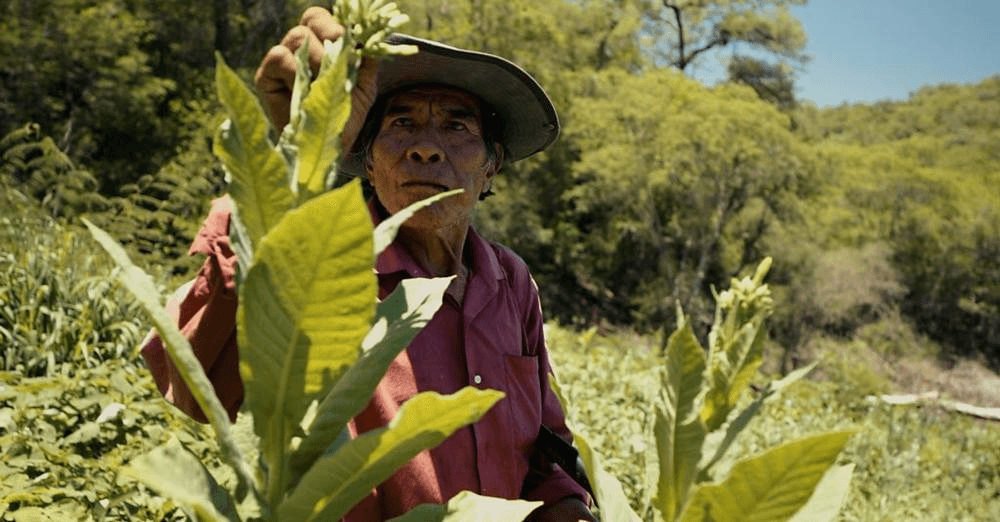
The dangerous tobacco's sacred origins
It turns out that the origin of tobacco is in southern Bolivia, from where it spread to the rest of the Americas between 3000 BCE and 2500 BCE. The local traditions regarding the medicinal and spiritual properties of the plant have been orally passed down for thousands of years. The video demonstrates a shamanic ritual in which tobacco smoke heals.