
-
Was the coca known in europe more than 200 years before we knew it was?
Traditionally, it was believed that the coca plant first arrived in Europe in the 19th century, brought by explorers and traders who carried samples from North and South America. Spanish colonizers were familiar with the plant as early as the 15th century, but it did not become a significant trade commodity in Europe until the 19th century, when it began to be distributed as a medicinal substance and for other uses. A new study suggests that the coca plant was present in Europe as early as the 17th century, nearly two centuries before previously thought. Toxicological analysis of 17th-century human remains found in Milan, Italy, revealed active components of coca, indicating that it was consumed in some form in Europe during that period.
In the early 19th century, the use of the coca plant in Europe focused on medicine—primarily for pain relief and treatment of various ailments. Cocaine, the active compound in the coca plant, started being used in medicine as an analgesic and even as an anesthetic for minor surgeries, until it was found to have addictive and problematic effects. Evidence from the 17th century suggests that coca use was likely for stimulation and coping with physical challenges. The usage probably was not for official medical purposes (it was not included in the hospital's pharmacopeia) but rather for personal or folk purposes, possibly for recreational use or to ease hard labor.
-
‘high’ on oxygen deprivation – the debate
Three years ago, a Ph.D. student of Professor Ran Barkai from Tel Aviv University co-published an article with him on a hypothesis suggesting that Stone Age cave paintings were created, at least partially, due to conditions of oxygen deprivation (hypoxia) in the caves. According to the research, low oxygen levels in the caves may have induced hallucinations in the painters, inspiring them to create art. In other words, the hallucinatory experience influenced the nature and content of the paintings and may have led to fantastical designs and depictions related to a unique state of consciousness.
Archaeologist Paul Pettitt critiques (or rather, critiqued, shortly after the article’s publication) this hypothesis. He argues that many cave paintings are characterized by complex details and high levels of accuracy, indicating careful planning rather than spontaneous creation under the influence of hallucinations. Additionally, many caves are well-ventilated, such as the Salon Noir in France, making it unlikely that all painters experienced hypoxia in every cave where they painted. Furthermore, mild hypoxia symptoms include headaches, dizziness, and nausea, which could actually hinder the creative process. In summary, he argues that the theory overlooks the depth and imagination of early humans, who were capable of creating complex art from their inner worlds, not necessarily influenced by altered states of consciousness.
Professor Barkai will address these questions and critiques in a lecture opening the "Temple of Consciousness" lecture series (6/11/2024), which will take place in about a month at "HaNasich HaKatan" (Le Petit Prince) in Tel Aviv.
-
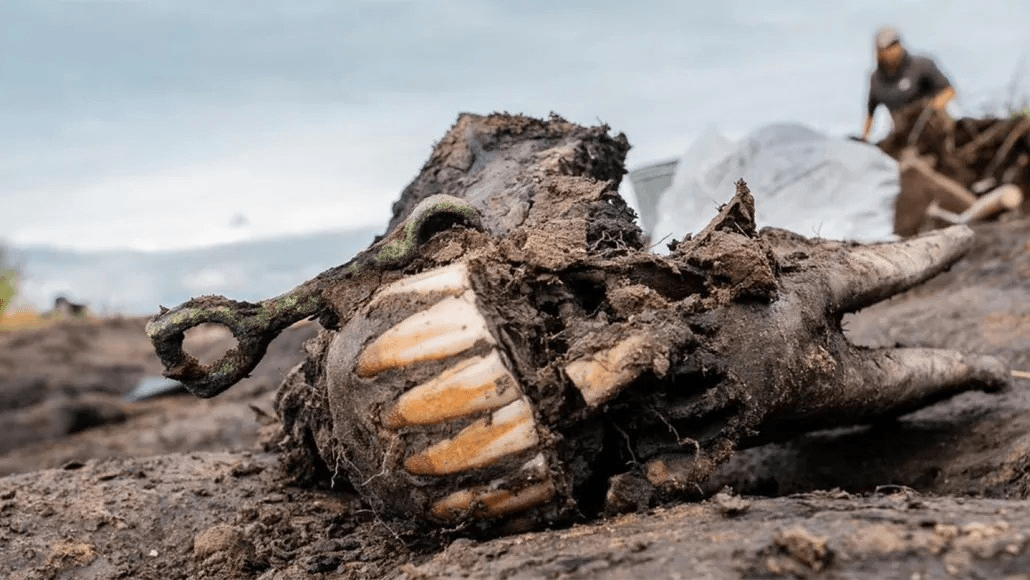
Evidence to scythian "spectral rider" burial
At Tunnug 1, a royal tomb in Tuva, southern Siberia, the remains of at least 18 horses and one human were found, sacrificed as part of a burial ritual that appears similar to the horse-sacrifice ceremonies described in Scythian burial practices. Additionally, items such as horse tack, bronze belt fittings adorned with animal motifs, and weaponry were discovered, along with carbon-14 dating indicating the Early Iron Age—specifically, the late 9th or early 8th century BCE.
The findings align with the descriptions of Herodotus, the Greek historian, who described the burial of Scythian kings, in which servants and horses were sacrificed as part of the ritual. Furthermore, the use of birch stakes corresponds to the concept of "spectral riders" mentioned by Herodotus as unique Scythian burial practices.
The findings at Tunnug 1 indicate a cultural connection between the horse-herding cultures of southern Siberia and the Scythian culture, suggesting cultural continuity and a trend of spreading burial and riding traditions from east to west across the Eurasian steppes. The tradition that began in Siberia in the 9th century BCE likely spread westward and became an essential part of the known Scythian culture. These findings point to cultural interactions between Siberian populations and the Scythians in the west earlier than previously thought.
The "spectral rider" burial described by Herodotus is part of an additional ritual performed at "the turn of the year" (4.72). Herodotus details the royal burial rites as involving the transportation of the body from tribe to tribe, with each tribe performing unique mourning ceremonies that include self-inflicted injuries as a sign of respect. After the journey ends, the body is taken to a designated burial site.
The body is wrapped in wax, and the abdominal cavity is cleansed and filled with spices and medicinal herbs. Following this, the body is transported in wagons to the tribes under Scythian rule. At the designated burial site, various items are placed alongside the king, such as spears, mats, servants, horses, and an array of other items, including gold bowls, though silver or copper is not used. The grave is covered by a large mound.
At the end of the year, an additional ritual is conducted in which fifty servants and fifty horses are selected for sacrifice. Each body is filled with chaff, and the sacrificed horses and attendants are arranged in a circle around the tomb on half-wheels and logs supporting the bodies, giving the appearance that the horses are mounted, with legs hanging in the air, supported by stakes that pierce the horse to maintain stability.
The burial of commoners is also described: they are transported by relatives to visit friends for forty days before burial. After burial, a unique Scythian purification ritual is performed, which involves heating stones and boiling water in dedicated tents. This ritual includes heating cannabis seeds on heated stones to create thick, hot smoke, inducing perspiration. It serves both for cleanliness and a refreshing sensation in place of water bathing, and in this context, it is performed for purification purposes.
Afterwards, when the year comes round again, they do as follows:—they take the most capable of the remaining servants,—and these are native Scythians, for those serve him whom the king himself commands to do so, and his servants are not bought for money,—of these attendants then they strangle fifty and also fifty of the finest horses; and when they have taken out their bowels and cleansed the belly, they fill it with chaff and sew it together again. Then they set the half of a wheel upon two stakes with the hollow side upwards, and the other half of the wheel upon other two stakes, and in this manner they fix a number of these; and after this they run thick stakes through the length of the horses as far as the necks, and they mount them upon the wheels; and the front pieces of wheel support the shoulders of the horses, while those behind bear up their bellies, going by the side of the thighs; and both front and hind legs hang in the air. On the horses they put bridles and bits, and stretch the bridles tight in front of them and then tie them up to pegs: and of the fifty young men who have been strangled they mount each one upon his horse, having first run a straight stake through each body along by the spine up to the neck; and a part of this stake projects below, which they fasten into a socket made in the other stake that runs through the horse. Having set horsemen such as I have described in a circle round the tomb, they then ride away.
-
Two references in Hugh Bowden's book, "Mystery Cults of the Ancient World" (2010), to the question of whether psychedelic drugs were consumed by Mysteries
"Before answering these questions, there is one more avenue of experience to explore. In the middle of the twentieth century, the Eleusinian Mysteries were approached from the standpoint of ethnomycology, that is, the study of the role of mushrooms in human society. The poet and mythographer Robert Graves was the first to suggest that the Eleusinian Mysteries might have involved hallucinogenic mushrooms. Then, in a book first published in 1978, a group of authors including Albert Hofmann, the scientist who first synthesized LSD, argued that the ‘secret’ of the Mysteries lay in the use of a hallucinogen related to LSD. The authors argued that the kykeon drunk by initiates contained psychoactive elements that were produced by the ergot fungus. The usual effects of ergot poisoning include painful convulsions, but the fungus generates chemicals including lysergic acid, and these can produce hallucinations. Although the hypothesis was not well received by classicists, it has continued to receive attention, and new studies of the theory continue to appear. There are, however, objections to this approach, both practical and theoretical.The practical objection is that it has not been possible to recreate the hallucinogenic effects that the theory proposes. Ergot poisoning tends to be painful and often fatal at levels that might generate hallucinations. If the hallucinogens cannot be produced in modern laboratories, it is difficult to see how they could have been regularly and reliably created in ancient Eleusis.
The theoretical objection concerns the idea that identifying the drug somehow explains the meaning of the cult. Ancient and modern accounts of the Mysteries emphasize disorientation and dramatic visual experiences. It is conceivable that drugs might heighten these effects, but there is no reason to believe that the experience would lose its power in their absence. The cult of Dionysus was very much associated with alcohol, in the form of wine, but as we will see in a later chapter, it is not certain that wine did play a role in nocturnal Bacchic revels. The highly exaggerated account of Bacchic activity in Italy given by the Roman historian Livy (59 BC–AD 17) includes all kinds of theatrical effects, achieved by mechanical means. Athenians in the fifth century BC were able to generate spectacular visual effects in performances of tragedy and comedy that were put on in honor of Dionysus. If we are to look for an external explanation for the power of the Eleusinian experience, the theatre seems a better place to look than the kitchen or brewery." (Chapter 1)
"Modern enthusiasts have sometimes turned from sex to drugs in the search for the secrets of the mysteries. This is most effectively depicted in fiction. For instance, in Donna Tartt’s 1992 novel, "The Secret History", a group of students manage to recreate a state of Bacchic ecstasy through a combination of ritual actions and ingestion of mind-altering plants. Apparently more seriously, there have been claims that the hallucinogenic effects of ergot or other fungi had a central role in both the Eleusinian Mysteries and the mysteries of Mithras. Similarities have been identified, with more or less plausibility, between ancient mystery cults and modern rave culture, although here the focus has been on the use of intoxicants, which is questionable in ancient contexts, rather than the role of loud, rhythmic and repetitive music, which certainly was common to both. But the desire to identify a lost secret—something that, once it is correctly identified, will explain what a mystery cult was all about—is bound to fail. As we have seen repeatedly through this book, it is unlikely that any such lost secret ever existed. There were certainly objects and actions that were only meant to be seen by initiates, but knowing what these were would not necessarily help us to understand the mysteries. It is quite possible that within the surviving contradictory descriptions of the mysteries we actually have all the information there ever was. Rather than searching for lost secrets, we should examine what we do know." (Chapter 11)
-
Who were the Philistines?
Since the era of the patriarchs is dated from the birth of Abraham and lasted about 200 years, and 400 years before the Exodus, it places this period in the 18th century BCE. Some scholars, however, date it as late as the 14th century BCE, which is still centuries earlier than the archaeological evidence pointing to the invasion of the "Sea Peoples" in the 11th century BCE. The prevailing opinion is that the Philistines were indeed among the Sea Peoples, but if so, why does the Bible contradict this? One could argue that the Bible is not a historical record, yet there is also a harmonistic approach that speaks of two invasions, or in other words, two waves of migration by those whom the Bible calls "Philistines." This perspective is also popular among traditional biblical commentators, as Genesis describes the Philistines as coming from "Casluhim," of Egyptian origin, whereas in Amos, they are said to have come from "Caphtor" (Crete), as is also mentioned in Deuteronomy, where it is recounted that they displaced a people called the "Avvim." This suggests that there were two groups of Philistines.
Archaeology supports this theory — that the first wave may have consisted of different people than the later wave, perhaps Semitic or Egyptian, while the second was Aegean. First, in Philistine cities like Ashkelon, Minoan pottery from the Middle Bronze Age has been discovered, indicating trade and perhaps even a Minoan presence in the area as early as the 18th and 17th centuries BCE. Another important piece of evidence comes from the Kom el-Hetan stele of Amenhotep III, which describes Aegean settlements and calls these settlements the "lands of the Fenkhu". The term "Fenkhu" is also used to describe the inhabitants of Canaan. The fact that they are referred to by the same name suggests a connection between Aegean cultures and the Canaan region before the arrival of the Sea Peoples. The exact meaning of "Fenkhu" is unclear, but it is thought to mean "woodcutters." However, the term bears a strong resemblance to the word "Phoenicians" and the Greek term "Phoenix," which means "Tyrian purple." As previously noted, it is believed that the origin of purple dye production from sea snails may trace back to Minoan culture.
Returning to the Bible, among David's warriors are found the "Cherethites and Pelethites", troops led by Benaiah son of Jehoiada. The Negev of the Cherethites was the southern part of "Philistine territory," suggesting perhaps a linguistic slip where the letter "Shin" (ש׳) was omitted, making "Cherethi" and "Pelishti." The connection between the Cherethites and the Philistines appears several times: "Woe to the inhabitants of the seacoast, the nation of the Cherethites! The word of the Lord is against you, O Canaan, land of the Philistines," and "Behold, I will stretch out my hand against the Philistines, and I will cut off the Cherethites and destroy the remnant of the seacoast." Additionally, a link between King David and the Gibeonites is known. Gibeon was one of the cities of the "Hivites", as mentioned in the Book of Joshua: "And their cities were Gibeon, and Chephirah, and Beeroth, and Kirjath-Jearim." Some believe the "Avvim," whom the Philistines displaced, may actually refer to the "Hivites." The term "Hivite" may derive from the word for "snake," and it is known that the Minoans worshipped the Snake Goddess. Thus, they may have been called "Hivites", or "the snake-worshipers". When the Hivites made a pact with Joshua, they claimed to be from "a distant land". After their deception was discovered, they were punished to become "hewers of wood and drawers of water," roles that align with the Egyptian term "Fenkhu" for the Minoans as woodcutters. Additionally, as noted by Israel Knohl in his book The Name, there was an ancient practice in which war captives became temple servants. Thus, the Gibeonites were consigned to this role: "And now you are cursed, and none of you shall be freed from being bondmen and hewers of wood and drawers of water for the house of my God." Later, we indeed see snake worship in the Temple with the bronze serpent, Nehushtan, which the Israelites worshipped until the days of Hezekiah.
BTW: Acish (King of Gath) is a word of Greek origin. By the way, Echis in Greek is a snake. The word Rafah (a philistine settlement) also supposedly has a Greek origin
Both of these topics — evidence of Aegean and Minoan worship among the Philistines (Dr. Suembikya Sue Frumin) and the copper snake worship in the Temple (Dr. Nissim Amzallag) — will be addressed in the lecture series "Temple of Consciousness". On this occasion, I would like to invite you once again to purchase tickets in advance, as seating is limited.
Notes:
Since it is reported in the Book of Samuel that Saul’s family lived in the region of Gibeon, and Saul had a conflict with the Gibeonites. And since one of the forefathers of the tribe of Benjamin is named “Rapha” (1 Chronicles 8), and in the same place it is written that the Benjaminites lived in Geba and were exiled to Manahath, and also settled in Aijalon, where they drove out the inhabitants of Gath, the place where the children of Rapha lived. And since the father of Gibeon dwelt in Gibeon and his wife was named Maacah, who was the mother of Kish, Saul’s father. And Maacah is also the name of the kingdom located in the “Land of the Rephaim” in the Golan. And since among the ancient Canaanite peoples are the Rephaim and the Avvim. The Avvim are also considered one of the Philistine rulers, “the Gazite, the Ashdodite, the Ashkelonite, the Gittite, and the Avvim.” And as mentioned, the Benjaminites expelled the Rephaim who lived in Gath.
Therefore, there is evidence from the cross-referencing of biblical sources that some kind of exile and expulsion event occurred in Gibeon by invaders (Benjaminites) who drove the inhabitants westward to the city of Gath. The war between Israel and the Philistines was based on this background. After the Israelites defeated the Philistines, they appointed them as servants in the temple, presumably in the temple at Kiriath Jearim, where the Ark of the Covenant was brought after its exile and later transferred to Jerusalem.
My conclusion is that this is, in fact, documentation of the Minoan invasion of the hill country and their expulsion back to the coast. The fact that the Temple was situated in “Gibeonite” cities hints that this friction influenced Israelite worship, which was affected in some way by Minoan practices.
The most astonishing thing, in my view, is the existence of the city Kition (Κίτιον), established precisely during the period of the Sea Peoples’ migrations and seemingly named after the color "ketem"—which was associated with the color of the serpent. The island itself, where Kition is located, is called Cyprus, named after the cypress tree, which supposedly had this color. Although Kition was founded by the Greeks, it soon became a Phoenician city and was called “New City” (Kart Hadshat) just as many other Phoenician cities were named in different places. This suggests that the Phoenicians might actually have been the Minoans themselves—a question mark. In any case, the cypress tree, along with the Phoenician veneration of cedar trees, and Hiram of Tyre’s expertise “in all works of copper,” which in another place is said to have sent “cedar and cypress wood” for the construction of the Temple. All these specialties in metalworking and woodcraft align with what is written in the Bible about the Philistines (who possessed iron chariots) and what archaeology reveals about them as “woodcutters”. The Philistines were known as “Kittim”, from among the Greeks, “Elishah, Tarshish, Kittim, and Rodanim” (1 Chronicles 1:7). They had a fleet, being seafarers, “Ships will come from Kittim, but they will be humbled by Assyria” (Number 24:24) Notably, Assyria conquered Kition in the 7th century. Link: the origin of the word “ketem” in Kition and the color of the cypress tree.
-
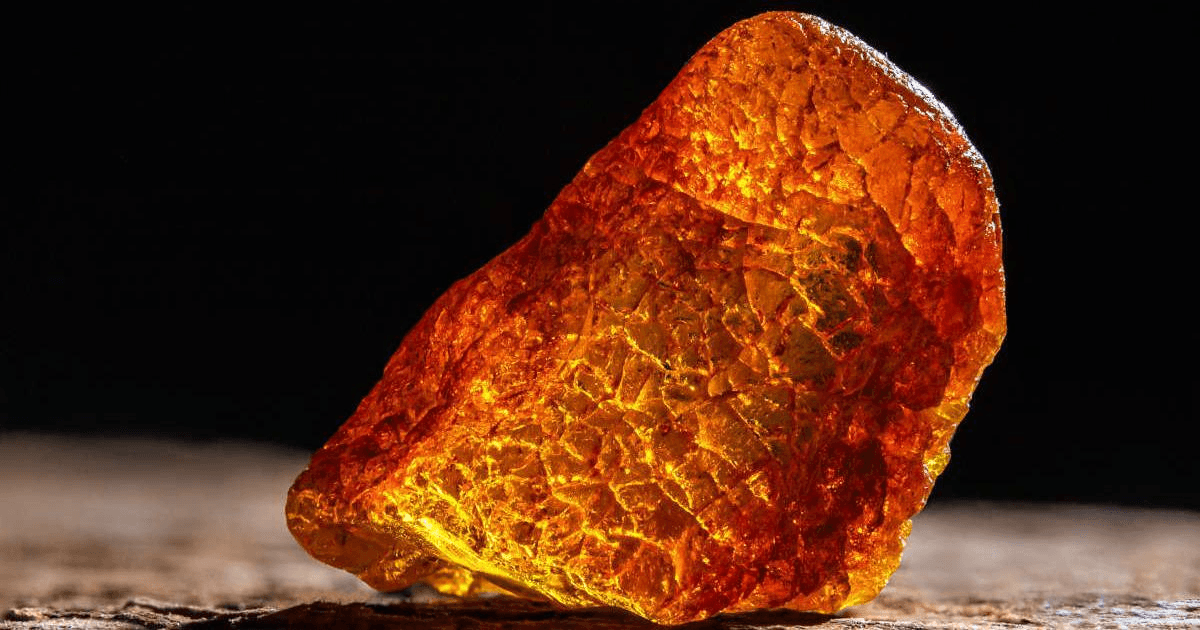
The amber as sun god worship
Polish archaeologists have discovered that in Mycenaean culture (pre-Homeric ancient Greece, late Bronze Age), amber was used as a symbol of high social status and as part of sun worship. Amber was found in the lavish graves of Mycenaean elites, mainly in the form of jewelry and ornaments, indicating its social and spiritual significance. Amber was considered a sacred material associated with the sun. The sun symbolized power and divine rule, and therefore, amber, with its golden color, represented possessing a part of the sun itself. This connection to the sun justified the aristocratic status in Mycenaean society. Most of the amber used by the Mycenaean elites came from the Baltic Sea, especially from the Gulf of Gdańsk, which was also a center of amber trade in ancient times.
Amber is fossilized tree resin that solidified over millions of years. Its vibrant color ranges from golden to orange and brown. In Greek mythology, amber is linked to the tears of the gods. According to legend, when Phaëton, the son of Helios, the sun god, died, his sisters were so heartbroken that they turned into trees and shed golden tears over their brother's death, and these tears eventually turned into amber. In Greek, amber is called "electron". The fact that when amber is rubbed with fur, it can attract light objects like feathers or straw—what we now know as static electricity—gave electricity its name, derived from the word "electron". In the book of Ezekiel, the color described as emanating from the fire surrounding the figure on the divine throne is called "Hashmal." In the Septuagint, this word is translated as "electron". Since the description of the divine chariot bears some resemblance to the myth of Helios' fiery chariot, and to other sun gods like Baal, "Rider of the Clouds" there may be some justification for this translation. It is unclear whether the Hellenists who translated the text in Ezekiel associated Yahweh with Helios due to their cultural associations or because this was indeed how Yahweh was identified among Jews at that time.
-
The pantheism of the Maya throught the worship of the storm god Huracán
The word "hurricane" is derived from the name of the storm and creation god in Mayan mythology, Huracán, whose name in the K'iche' language means "one leg." The god Huracán represented the power of storms and tornadoes, and from there, the term passed to the Caribbean islands and then into various Western languages, including English, with its current meaning of a hurricane.
In Mayan mythology, there are two storm gods. Besides Huracán, there is also K'awiil. The Maya defined an additional god, likely because natural forces are complex, and the myth of Huracán did not address their sociological needs, such as a god related to royalty and the divine selection of kings. Since K'awiil was dedicated to the agricultural aspect, there was a need to present the kings as mediators between the supernatural forces and human society. They conducted religious ceremonies and summoned the spirits of ancestors, something made possible only through a connection with such a god.
Huracán was a solar god in the sense of being a creator and destroyer god. In the myth of Huracán, the god of creation and storms, he created humanity but also harmed them to prevent them from being equal to him. In doing so, Huracán not only harmed his creations but also himself and his power. Since the Maya believed that all creatures and forces are interconnected in mutual dependence, harming nature was seen as harming the entire system, including humanity itself. Thus, the message emerges that humanity is not separate from nature, and when nature is harmed, it also harms people, as nature and humanity are part of the same whole system.
For more details, see the article on The Conversation website.
-

The Evolution of Consciousness: From Primordial Unity to Self-Awareness
Future researcher David Passig has a new book that deals with the evolution of human consciousness, referred to as "qualia". The book describes its stages of development so far and offers directions for its future evolution. Passig explains ancient ideas about humanity’s place in the world, how they developed into religions, and the paths they might take in the urban civilization of the 21st century. This summary will focus on the evolution of consciousness up to the stage of institutionalized religion.
According to Erich Neumann, the consciousness of early humans is similar to that of modern-day infants. Neumann argued that until about the age of two, infants live in a state of unity with the external world, without distinguishing themselves from their surroundings. He called this state the "Ouroboric stage", named after the mythological snake that swallows its own tail to form a circle, symbolizing totality and primordial unity. Similarly, Neumann suggests that early human species, prior to Homo sapiens, experienced themselves as an inseparable part of nature. The advantage of the Ouroboric state lies in the experience of harmony and peace, but it is limited because it lacks differentiated self-awareness, preventing higher-level insights or the ability to cope with the complexities of the outside world.
Later, with the development of Homo sapiens-sapiens, distinct self-consciousness emerged. This process brought with it feelings of pain, confusion, and separation, comparable to a rebirth, where humans transition from unity to a distinct sense of individuality. This experience is accompanied by the loss of innocence and harmony with nature, driving humans to seek ways to heal the rupture and return to that original sense of unity. This search, filled with frustration, provides comfort and forms the basis of the religious experience—and even the scientific one—as humans attempt to restore order to the lost harmony.
Passig calls this phase the "Awe-inspiring qualia", in which humans recognize positive aspects of their consciousness. They begin to assume that the spark of consciousness they experience is divine or that it was stolen from the divine. Religious rituals were created as a response to the alienation and frustration that accompanied this awakening of consciousness, aiming to bring people back to the sense of unity, or at least to invoke it temporarily.
Over time, intellectual conflicts about the meaning of consciousness began to surface, and humans experienced frustration from not knowing how to manage it properly. The heightened sense of responsibility that arose from consciousness created a feeling of loss and disorientation, leading to the emergence of both mysticism and philosophy—different ways of addressing the questions raised by the awakening of consciousness.
This evolution, according to Passig, is reflected in the stories of Genesis and the expulsion from the Garden of Eden. When Adam and Eve ate from the Tree of Knowledge, they became self-aware and conscious of the world around them, leading to their exile from paradise. This story mirrors the moment when humanity transitioned from an initial state of unity to a sense of separation, becoming aware of good and evil. The struggles brought on by differentiated consciousness—competition, jealousy, and violence—are reflected in the story of Cain and Abel. The punishment Cain receives, eternal wandering, symbolizes the sense of exile and loss tied to the process of separating from the Ouroboric unity.
-
How old is beer?
Travis Rupp, the "Beer Archaeologist", argues that beer is primarily a social beverage, and it always has been. Unlike other alcoholic drinks like wine or whiskey, which are typically consumed in more intimate settings, beer has mainly been consumed in social gatherings. Beer is an incredibly ancient beverage, with evidence of beer production found in Raqefet Cave in Israel, dating back to 11,000 BCE. Rupp believes that the age of beer may turn out to be even older as science progresses. The current dating alone makes beer as old as agriculture itself, and it’s possible that beer actually contributed to the development of agriculture.
The definition of beer should be broad. Rupp argues that beer should not be limited to traditional ingredients like barley, wheat, or hops. In his view, any beverage that undergoes a brewing and fermentation process can be considered beer. This approach allows for experimentation and the expansion of beer flavors. In fact, it was only in 1516, when the Bavarian Beer Purity Law was enacted, that beer was defined as a drink made only from water, barley, and hops, thereby narrowing the definition of beer. This law had a significant influence on beer production in Germany and on American brewers who immigrated from Germany. However, in reality, beer can be any brewed beverage, even with fruits, various herbs, and ingredients that give beer a more versatile flavor than the bitterness we commonly know. Experiments with different and unique beer flavors, including the recreation of ancient recipes and historical hybrids like beer-wine, may expand our understanding of what beer was and what its role was in history.
The article mentions the beer discovery at Raqefet Cave—let us not forget: Prof. Dani Nadel, who led the team that researched Raqefet Cave and the “world’s oldest beer,” will give a lecture on the ritual burial ceremonies at this archaeological site on Wednesday, November 13, 2024, as part of the "Temple of Consciousness" lecture series.
-
A recipe for the biblical "ashishot"
Netanel Ellinson recreates the recipe for "Ashishot" according to the Jerusalem Talmud, where it is said: "Rabbi Yassa went to Rabbi Yose, and he brought before him toasted beans that were ground, kneaded with honey, and fried. He said to him: These are the 'Ashishot' that the sages spoke of" (Jerusalem Talmud, Nedarim 6:10).
Take note, according to this, Ashishot are honey and beans cakes, not as John Kitto claimed. John Kitto, in his ״A Cyclopaedia of Biblical Literature״ from the 19th century, suggested that Ashishot comes from the same etymological root as the word "hashish." He claimed it was a sweet cake baked by burning syrup in a fire, and comparable to what the German scholar Adam Olearius described in his 1637 visit to Persia as a dish called “Zutzuch”. Zutzuch was a type of mixture made from "dushab" (boiled wine essence) combined with crushed almonds, flour, and peeled nuts, pressed into a long, narrow bag. After being pressed, it forms a hard paste that must be cut and then dissolved in water to make a pudding.