
-
Burned Bones and Rituals: Unraveling the Mysteries of Trypillia Culture in Neolithic Ukraine
A research team led by Johannes Müller from the Institute of Prehistoric and Protohistoric Archaeology at Kiel University, Germany, has uncovered new details about the lives of people who lived over 5,600 years ago near Kosenivka, Ukraine. The Neolithic Cucuteni-Trypillia culture thrived in Eastern Europe between 5500 and 2750 BCE. Their large settlements, housing up to 15,000 inhabitants, were among the earliest and largest urban-like centers in prehistoric Europe. Despite the vast number of archaeological artifacts left behind by the Trypillia people, very few human remains have been found, making it difficult to study many aspects of their lives.
Now, however, human remains have been discovered — but they were burned. Fifty fragments of human bones found in the remains of one house belong to at least seven individuals, including children, adults, men, and a woman who may have been residents of the house. The remains of four of them were significantly burned. How did they die? The researchers explored various possibilities: some suggest it was an accident, others point to violent events, and another possibility considers cremation — a ritualistic burning of the dead, potentially part of human sacrifice.
Microscopic analysis of the bones indicates that the burning occurred shortly after death, as the bones remained “wet” during the burning due to a preserved concentration of collagen (the protein that forms gelatin). This supports the theory that their deaths may have resulted from carbon monoxide poisoning or direct exposure to fire. The question remains whether this was an accidental death caused by a fire, or whether it was intentional. Two skulls exhibited trauma occurring around the time of death (perimortem), raising the possibility that violence played a role, potentially as part of an invasion, conflict, or even as part of a ritual involving human sacrifice.
Moreover, burning houses was a known practice in Trypillia culture, thought to symbolize communal or personal transitions. Analyses from other sites suggest that burning houses was a deliberate cultural ritual, possibly involving fire as a purifying or transformative element. Could the practice also extend to burning human remains as part of a purification or farewell ritual, facilitating the souls’ transition to the afterlife — in other words, intentional cremation?
It is worth noting that cremation was not a common practice in Europe during the Chalcolithic period (circa 4800–3000 BCE). Cremation became more prevalent only later, during the Bronze Age. Chalcolithic cultures, particularly in Eastern Europe, typically buried their dead in private or collective graves, often within homes (“under the tiles”) or nearby. While fire rituals were observed in various cultures, they were not generally linked to funerary practices. Human sacrifices did occur during this period, primarily in the Mediterranean basin. For instance, the “Death Pit” discovered at Domuztepe in Turkey offers evidence of such sacrifices — possibly even accompanied by acts of cannibalism!
-
Desert Kites: Ancient Hunting Tools and Their Cultural, Ritual, and Ecological Significance
Desert kites are ancient structures designed as highly efficient tools for the mass hunting of animals. These structures feature long stone walls arranged in a funnel shape, guiding animals toward a central trapping point—usually a deep pit or steep slope—where the prey was captured. The kites were carefully constructed to utilize natural terrain features, such as slopes, cliffs, and valleys, and were specifically adapted to the natural behaviors of the animals they targeted, such as gazelles and ibexes, which roamed these areas.
Desert kites represent a significant milestone in the cultural evolution of humanity. They symbolize a transition from individual hunting techniques to complex social structures requiring planning, collaboration, and deep ecological understanding. Using these kites necessitated knowledge of animal behavior and local ecosystems, allowing for efficient utilization of natural resources while maintaining ecological balance. For example, selective hunting of young male animals demonstrates a form of sustainability aimed at preserving the reproductive capacity of the population.
Beyond their functional role in hunting, desert kites also served as social and ceremonial focal points. The construction of kites, which demanded collective investment of time, labor, and resources, strengthened community bonds. These kites became arenas for social events involving large groups of local residents who participated in communal hunts. Archaeological findings, such as rock art depicting hunting scenes and human figures, highlight the cultural and ritualistic significance of these structures, suggesting they served purposes far beyond mere utility.
Professors Guy Bar-Oz, Dan Malkinson, and Dani Nadel have thoroughly explored this phenomenon in their book, The Silent Testimony of Desert Kites, published by Yad Ben-Zvi Press. Desert kites are found across various deserts, particularly within the desert belt around the Land of Israel and in the Negev. Many of these kites were discovered by Dr. Uzi Avner.
Dr. Uzi Avner, a veteran researcher of the Negev and Arava with the Israel Antiquities Authority, discovered his first desert kite in 1969. His groundbreaking research redefined the understanding of these structures, which were previously thought to serve as gathering pens for livestock. Dr. Avner proposed instead that they were hunting installations. Over the years, he identified more kites, some requiring no excavation to reveal. He identified three near Kibbutz Samar in the Arava. His research concluded that while the kites were used for hunting, their usage was highly selective and primarily reserved for special events and ceremonial purposes rather than routine hunting.
The local economy at the time relied more heavily on sheep and goat herding and agriculture than on hunting. Hunting through kites was limited to special occasions, which Dr. Avner argues were likely associated with ritual hunting. He supports this theory with findings from rock art depicting ibexes in scenes with symbolic or ritualistic themes. These rock engravings, found at various sites in the Negev and other desert regions, prominently feature ibexes, often shown interacting with humans in ways that suggest symbolic or ceremonial significance. For instance, ibex hunting is depicted unrealistically, such as spearing an ibex between its horns—a method inconsistent with practical hunting, implying its ritual nature. Furthermore, ibexes were not part of the local economy; no ibex bones have been found in archaeological sites from the kite-using period. While ibexes were hunted for food in much earlier times, by the period when kites were in use, hunting them appears to have been strictly ceremonial.
Dr. Avner also finds support for his theory in Bedouin traditions, where ibexes are associated with rain rituals. Himyarite inscriptions from northern Yemen, dating to the ancient Himyarite Kingdom, recount how a deity withheld rain because a tribe failed to hunt ibexes properly. The myth linking ibexes to rain and fertility rituals underscores the possibility that hunting with kites reflected a religious-ritual framework. This usage may have originated as early as the Chalcolithic period.
-
Discovery of a New Psilocybe Species in South Africa Brings Insight into Psychedelic Fungi Evolution
Psychedelic mushrooms growing in South Africa have been identified as a new species closely related to Psilocybe cubensis, the most well-known “magic mushroom” species. The discovery brings scientists one step closer to understanding the evolutionary origins of these psychoactive fungi. Alex Bradshaw from Clark University in Worcester, Massachusetts, and his colleagues named the newly described species Psilocybe ochraceocentrata, due to the ochre color at the center of its cap. -
The Burning Bush and Zoroastrian Parallels
Gad Barnea from the University of Haifa analyzed the Zoroastrian context of the Burning Bush pericope in a lecture he delivered yesterday. The inspiration for the biblical story primarily lies in two areas: the role of fire in worship and the philosophical concept of God’s existence. The Burning Bush represents a divine revelation through fire, and Jewish worship, like Zoroastrianism, is structured around perpetual fire. Regarding the concept of God, God identifies Himself to Moses with the phrase “I Am Who I Am.” This echoes the depiction of Ahura Mazda in the Bundahišn as “the one who was, is, and will be” (Bundahišn 1:2). In both traditions, God is perceived as “eternal” or “existent,” and thus His revelation must embody these qualities—an eternal fire that always exists, the bush burning yet not consumed, symbolizing the fire’s perpetuity. Furthermore, God’s command to Moses to remove his sandals resembles Zoroastrian rituals in which priests remove their shoes before the sacred fire as a symbol of reverence and sanctity.
The ‘Atrwdn is a term referring to a ritual fire-altar mentioned in documents from the Elephantine archives. The word is borrowed into Aramaic from the Avestan Ātār, meaning “holy fire.” In the Zoroastrian context, this fire is considered divine and central to religious ceremonies. The ‘Atrwdn is mentioned in connection with offerings made to Yahweh but is not a traditional altar where sacrifices are consumed by fire. Instead, it functioned as a fire-holder used for veneration and worship, not for burning substances or sacrifices. The choice of the term ‘Atrwdn reflects a connection to Zoroastrian practices. The Jews specifically opted for the Persian term rather than Aramaic equivalents like dudā denūrā or madbḥā. This choice is further evidence that Judaism, particularly during the Persian period, was exposed to Zoroastrian ideas that influenced its rituals and theological concepts.
Dr. Barnea did not mention this, but it is worth discussing the vision described in the Book of 4 Ezra (also known as 2 Esdras). In this vision, Ezra sits under a tree, and a voice calls to him—the same voice that spoke to Moses from the Burning Bush—commanding him to write the Torah. This command comes after Ezra pleads with God to reveal the secrets of the Torah that was burned, lamenting that “no one knows what You have done or what will happen,” and that “the world lies in darkness, and people sit without light.” God instructs Ezra to gather five elders, and over forty days, He dictates to them 94 books. Of these, 24 become the public Torah (the canonized books), while 70 are hidden and revealed only to the wise. Ezra receives the Torah after being commanded to open his mouth and drink “what I give you”—a cup filled with something that appears like water but looks like fire. This suggests that the Torah itself is symbolized as fire: both the burned Torah and the newly dictated one. Moreover, the process of renewal is likened to fire. Some interpret this as a psychedelic reference, while others see it as clear Zoroastrian influence, as though it were a ritual involving the drinking of haoma. In this sense, the Burning Bush could be framed as a vegetal revelation of God within the fire, on Mount Horeb (Sinai). This aligns with the notion that Moses received the first Torah at Sinai in the fire, and Ezra received the second Torah at Sinai in the fire, in a ritual described as resembling a Zoroastrian ceremony.
-
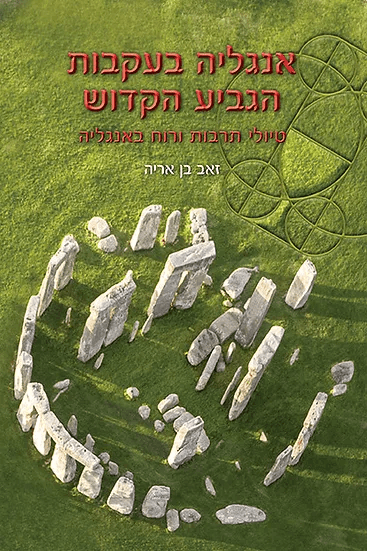
Ley Lines and Sacred Geometry: Shamanic Journeys, Spiritual Acoustics, and the Mysteries of Neolithic Britain
I’m not particularly fond of New Age ideas or alternative theories in the style of Graham Hancock. However, I do appreciate theories that touch on shamanism and altered states of consciousness, which is why I find value in exploring Paul Devereux’s theory regarding the essence of ley lines in Neolithic sites across ancient Britain. (An excerpt from Zeev Ben Arie's "England, on pursuit of the holy grail". also in his weblog)
In general, ley lines are a phenomenon where sacred sites on a map seem to align in straight lines, even if, on the surface, there appears to be no connection between them. One of the most famous lines is the St. Michael or Mary Line, which connects in a straight imaginary line places such as the Stella Maris Monastery in Haifa, Delos, Delphi, and two tidal islands off the North Sea coast—Mont-Saint-Michel and St. Michael’s Mount. Similarly, ley lines are allegedly found in the cursus tracks that link Neolithic sites in the Stonehenge and Avebury complexes, which has led alternative researchers to believe that this alignment was intentional because these sites sit on energy lines beneath the earth. This energy, possibly some kind of magnetic field, is said to create a unique spiritual atmosphere ideal for ritual activities. Perhaps this is why magnetic flux is called “induction,” as the presence of an electromagnetic field is a force that, when you are within it, you can feel—even if you don’t know how to explain it.
As this concept drifted into occult and pseudoscientific interpretations, those wishing to maintain a serious approach to research sought to align it more with mainstream scholarship. This is where Paul Devereux’s perspective comes in. He suggested that these lines are not necessarily tied to physical energy but rather to shamanic experiences. In other words, ley lines are a type of sacred geography that originated from the experiences of shamans, who had out-of-body experiences that manifested as linear or geometrical movements. Straight lines were believed to assist spirits on their journey to the afterlife: a straight path facilitates movement, while a crooked line or labyrinth traps them. Straight motion, in general, symbolizes perfect movement and emphasizes cosmic order. Trapping straight motion prevents it from continuing its perfect trajectory. This concept has various applications—not just for capturing souls or spirits (like in the labyrinth of the Minotaur or the Hypogeum of Ħal Saflieni in Malta) but also in the interaction of architecture with sunlight. The sun, symbolizing cosmic order, emits straight rays of light, which are a message from the “ether.” When these rays are captured, the blessing is momentarily contained. Some structures feature architectural designs that trap a ray of sunlight at a specific moment of the year—often during solstices or equinoxes.
Devereux also supported the idea that Neolithic sites were constructed to create acoustics that generate sound waves at a specific frequency, stimulating the brain’s right hemisphere, which is responsible for intuition, emotion, and transcendence, while allowing the left hemisphere to rest—resulting in a spiritual experience. This frequency, 111 Hz, is considered the “divine frequency,” and it is said that many temples from that period resonate it through their walls. For example, temples in Malta, some of which are located at ley line intersections, exhibit this phenomenon. Others, like Ħal Saflieni, are designed as labyrinths that, perhaps, trap the spirits within them—for reasons that may have served specific purposes.
-
37,000-Year-Old Ritual Ceremony Unearthed in Manot Cave: Earliest Evidence in the Middle East
Evidence of a ritual ceremony conducted in the depths of a stalactite cave 37,000 years ago—the earliest such evidence discovered in the Middle East—has been uncovered in Manot Cave in the western Galilee. The study, led by Omry Barzilai of the University of Haifa, was published today in the journal Proceedings of the National Academy of Sciences.
Manot Cave was first revealed in 2008 during construction work that damaged its ceiling. The cave was identified as an active stalactite cave containing significant archaeological finds. In 2015, researchers announced the discovery of a skull cap dating back approximately 55,000 years, providing evidence of the presence of modern humans in the region during that period. In 2019, teeth dated to around 40,000 years ago were discovered, suggesting the presence of both modern humans and possibly Neanderthals in the cave. Now, a third study has been published, focusing on ritual activity in the cave.
In the cave’s deepest and darkest chamber, researchers uncovered a large space with natural acoustics. Within this chamber, they found a carved rock resembling a tortoise shell, situated in a unique niche. While it is not certain that it depicts a tortoise, the geometric engravings suggest the pattern of a shell. The spiritual significance of tortoises in this region during ancient times remains unclear, but it is hypothesized that the tortoise may have served as a totem. It is known that tortoise shells frequently appeared in the burials of prominent figures in the Middle East during the Late Stone Age, such as at Hilazon Tachtit Cave.
The collection of finds in the cave, including a deer antler discovered in a hidden chamber, indicates that the space was used as a ceremonial gathering place. The placement of the tortoise-like rock in a location far removed from the cave’s everyday activities near the entrance suggests that the area was set apart from the rest of the cave. Evidence of wood ash particles on nearby stalagmites points to the use of torches to light the space. Similar and much earlier ritual spaces have been found in France, such as in Bruniquel Cave, where it has been shown that Neanderthals engaged in ceremonial activities.
Additional findings link Manot Cave to a contemporaneous culture in Europe, the Aurignacian culture, associated with modern humans. It appears that those conducting the rituals in the cave may have come from Europe or had some connection to that culture.
-
Heavenly Horses: Myth, Reality, and the Symbolism of Power in Ancient China
Myth and reality intertwine in the story of the “Heavenly Horses”, creatures regarded as nearly supernatural beings in ancient Chinese culture. According to legends, these horses were extraordinarily fast, capable of covering a thousand li (approximately 400 miles) in a single day, and their movement was described as flying above the ground. Their bodies were marked with unique tiger-like patterns, and under great exertion, they would sweat blood, giving them the appearance of being colored in cinnabar—a bright red pigment considered sacred in China. In Chinese culture, these horses were seen as auspicious omens from heaven and symbols of the divine connection to the emperor’s rule. The legendary speed of the Heavenly Horses is beautifully represented by a bronze statue found in a 2nd-century Chinese tomb: its tail flies upward, its legs stretch out in wild motion, and the heavy sculpture balances impossibly on a single slender hoof perched on a tiny bird.
The Heavenly Horses were indeed real animals, despite the mythical aura surrounding them in the stories. These horses, renowned for their strength and speed, originated from Central Asia, particularly the region of Ferghana (modern-day Uzbekistan). Emperor Wu of the Han dynasty waged extended military campaigns lasting 12 years, costing many lives, to acquire these horses. They became a critical asset for enhancing the cavalry of his army, significantly contributing to the expansion of the Chinese empire’s borders. Scholars suggest that these horses were likely of the Akhal-Teke breed, originating from Turkmenistan. Known for their long, slender build, remarkable speed, endurance, and unique metallic sheen on their coats, the Akhal-Teke horses may well have inspired the legends of the Heavenly Horses.
Did they sweat blood? There is a plausible biological explanation for this phenomenon. It may have been caused by a real physiological condition known as Dermatitis hemorrhagica, where small blood vessels beneath the skin rupture during extreme physical exertion, resulting in droplets of blood appearing on the skin.
Beyond their military utility, the Heavenly Horses served as a divine symbol legitimizing the emperor’s rule, reinforcing his political and religious authority through the “Mandate of Heaven,” the celestial justification for imperial rule. This connection to the heavens likely explains their celestial name. Politically, the use of these horses, and the fact that Emperor Wu’s campaigns to acquire them led to military victories and territorial expansion, symbolized dominance over neighboring nomadic tribes and rival peoples, affirming his superiority.
In general, Emperor Wu had a fascination with mythical and extraordinary creatures, making the story of a unique horse unsurprising. He established Shanglin Park, a garden that supposedly housed a collection of marvelous creatures from the farthest reaches of his empire, such as ostriches, rhinoceroses, unicorns, and even a glowing coral tree. While some descriptions are undoubtedly fantastical, many reflect tangible reality. A poem from that era describes the park as a microcosm of the world, where one could run on grass in the dead of winter and walk on frozen streams in the height of summer.
-
Germanic communities of the Roman period used stimulants at the battlefield
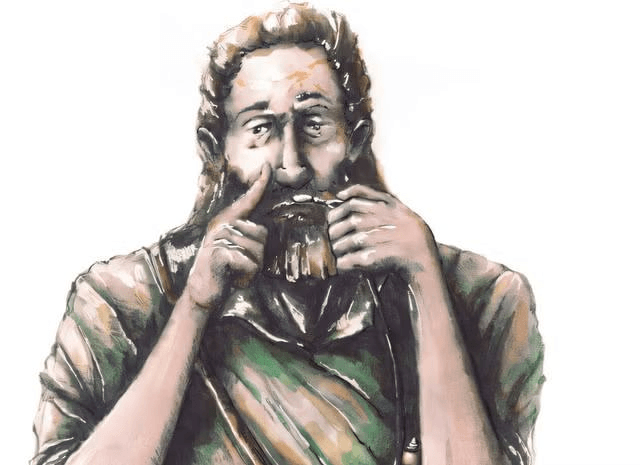
Researchers from Maria Curie-Skłodowska University in Poland have discovered small spoon-shaped tools attached to the belts of warriors in Northern Europe. They sought to identify available plant-based raw materials that stimulated the body and assessed their effectiveness. They concluded that these plants included various stimulants and mind-altering substances, and thus inferred that these tools were used to store and to use them before battles. Consequently, they estimated that the use of stimulants to enhance physical exertion was far more common than previously assumed. Specifically, the researchers collected 241 such objects, which they classified typologically. They found that all these objects were discovered alongside items related to war equipment. This discovery serves as the basis for their conclusion. What we are seeing here is essentially scientific evidence of the Berserker ritual! Until now, evidence for such practices only existed in later Norse texts from the 8th to 11th centuries. Now, there is evidence even from the early centuries CE!
What were these plants used for, and why would warriors carry them into battle? In the military context, these substances helped warriors reduce fear, cope with stress, and enhance their physical and mental endurance. Medically, they were used as painkillers, to alleviate stress, and to treat inflammations. Additionally, sites examined included ritual locations used either before heading into battle or afterward, during burial ceremonies. In ritual contexts, drugs were used to communicate with spirits, intensify religious experiences, and accompany funerary rites.
The warriors belonged to Germanic tribes such as the Goths, Vandals, and Franks, who were active primarily during the Roman period (1st to 5th centuries CE). They fought against the Romans as well as among themselves, across Central and Northern Europe and in the Scandinavian regions.
Among the identified plants were opium poppy (Papaver somniferum), hops (Humulus lupulus), cannabis (Cannabis sativa), henbane (Hyoscyamus niger), belladonna (Atropa belladonna), and datura (Datura stramonium). The researchers noted that datura appeared in Central Asia and the Iberian Peninsula between the 4th and 12th centuries BCE, although some believe it only arrived from North America after the continent’s discovery. Additionally, traces of mushrooms like Amanita muscaria and ergot (Claviceps purpurea) were identified. While cannabis was likely domesticated, most of the plants were wild species. The use of these plants as medicines and ritual preparations required specific knowledge: where to find them, when to harvest them, how to prepare them to maximize their effects, and how to store them. The researchers inferred that mushrooms were dried to preserve their potent compounds without losing their effectiveness, enabling long-distance transport.
Although no direct remains were found, the researchers hypothesized that local populations, based on the abundance of specific mushrooms in the area, likely recognized and gathered species such as Clitocybe, Inocybe, Psilocybe, and Russula.
Active substances were dissolved in liquids, primarily alcohol, or prepared as powders to be inhaled through the respiratory tract. A researcher named Katarzyna Czarnecka hypothesized that small metal containers found in women’s graves were used to store such substances. The researchers also speculated that small wooden boxes found in wealthy graves served a similar purpose. The dosing of these substances was done using small spoons that were part of the belt’s construction. The size of the spoons helped measure a safe amount of stimulant to enhance physical effort or relieve stress. Exceeding these doses could lead to tragic consequences, such as severe side effects or poisoning.
-

The Bee as a Messenger of Wisdom: Insights from Proverbs and Ancient Traditions
A few further thoughts on the bee’s role as a messenger of wisdom. The bee, as a divine courier of wisdom, smuggles deliveries from the celestial dealer. Interestingly, the Septuagint translates the verse “Go to the ant, you sluggard; observe her ways and become wise” as if it refers to the bee instead of the ant. According to Hilda Ransome in her book "The Sacred Bee in Ancient Times and Folklore", the verse is not about an ant but rather about a bee.
The verse: “Go to the ant, you sluggard; observe her ways and become wise. Though she has no officer, overseer, or ruler, she prepares her food in the summer and gathers her provision at harvest” is interpreted in this light not as a call to imitate the material labor of the ant or bee, which works diligently even when there is no apparent need, but as a directive to look to the bee as a source of wisdom. Thus, one should observe and learn from her.
In its broader context, the verse critiques sleeping in the middle of the day. The Book of Proverbs, in general, extols the virtues of “wisdom” and urges devotion to it as if it were one’s spouse—guarding it, being jealous for it, and never letting it stray from one’s side. According to the Gnostic model of “Pistis Sophia”, every moment spent clinging to wisdom serves as a shield against the onslaught of worldly vanities. Any moment not dedicated to adhering to wisdom leaves one vulnerable to seductive ideas and susceptible to their pitfalls. Wisdom is thus seen as one’s insurance policy.
The chapter compares this to a gazelle fleeing from a predator. Just as a gazelle must remain alert to dangers and cannot afford to sleep, lest it be caught, so too must the wise avoid retreating into the sleep of dreams, where the mental defenses afforded by constant study and repetition are absent. Hence, the need to minimize sleep, especially midday naps.
In the ancient context, Romans customarily took a break from work in the sixth hour of the day, called sexta, using it for rest. Among Jews, however, this time was dedicated to prayer rather than relaxation. Known as chatzot (midday), this time allowed those who missed the morning prayer to complete it and, shortly thereafter, to perform the Mincha Gedola (early afternoon prayer).
The sages encouraged dedicating this break to study and prayer, elevating this practice above priesthood and kingship. As stated in Pirkei Avot 6:6, Torah is acquired through “minimal indulgence, minimal sleep, minimal conversation, minimal laughter, patience, a good heart, faith in sages, and acceptance of suffering”. This teaching applies specifically to this midday break when Jewish laborers refrained from indulgence, chatter, or amusement, instead committing the time to prayer and supplication, including the posture of nefilat apayim (prostration). Because the break was short—only an hour—and prayer was relatively lengthy, Jews had little time to truly rest, eat, or relax, enduring this deprivation as a form of suffering accepted with faith in the sages. The concept of “faith” (pistis) is critical here.
The Talmud in Sukkah 26 emphasizes: “Rav said, it is forbidden for a person to sleep during the day longer than a horse sleeps. And how long is a horse’s sleep? the time of Sixty breaths”. Abaye noted that the example of King David, who minimized his sleep (and would wake even in the middle of the night to study Torah), should be followed. Abaye himself once slept slightly longer than the sixty breaths—a few minutes, roughly the time it takes to walk from Pumbedita to Bei Kuvei, likely a short hour—and was chastised with the verse from the same chapter in Proverbs (6): “How long will you lie there, sluggard? When will you rise from your sleep?”