
-
The Sacredness of the Color Purple: The Hellenistic Ruler Cult and the Spiritual Symbolism of Crimson
I am currently writing a seminar paper on the sanctity of the color purple in the context of the Hellenistic ruler cult and am required to connect the preferences of Hellenistic rulers for purple garments to their aspirations of being regarded as gods. Within this framework, I am delving into the origins of admiration for purple. In the past, I wrote about the role of incense made from operculums (shell covers) of snails, which served as an anesthetic during childbirth. The powder derived from these operculums had medicinal properties, supposedly endowing the shamanic midwives who used it with sanctity and elevating the materials they worked with into symbols of holiness. Similarly, ergot functioned as a type of anesthetic and is also purple, just like the chaste tree (Vitex agnus-castus), as noted in Dr. Suembikya Frohmann’s lecture, which was used to relieve menstrual pain and as a natural abortifacient. I am jotting down these inputs mainly as references for further exploration.
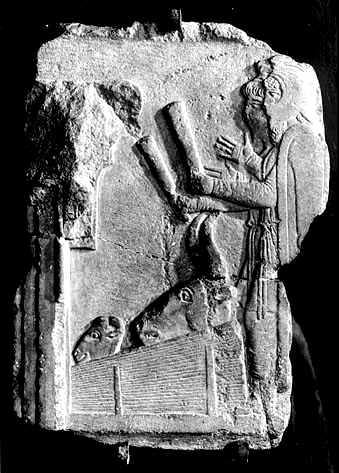
Mary Boyce argues in the second part of her book A History of Zoroastrianism that purple was the color of the warrior class in ancient Persian society and that their garments, known as kandys and sarapis, were purple. A relief found in Dascylium, Asia Minor, the seat of the satrap after Cyrus’s conquest, depicts two magi wearing purple kandys and holding a barsom (bundle of twigs) as well as a mortar and pestle, both items associated with the haoma ritual (see attached image). The barsom, initially made of branches and later of metal wires, symbolized creation and immortality. Regardless of the material, the focus here is that those wearing the purple kandys performed the haoma ritual. The question remains whether they were priests or warriors. Boyce suggests it is possible that warriors themselves conducted the ritual.
Why warriors and purple? In her book on the goddess Anahita, Manijeh Saadi-Nejad of the Free University of Berlin claims a connection between Anahita and warriors. She was often referred to as “heroic” (sura), which explains why her chariot was described as draped in purple by Xenophon. Anahita was a water deity, and in the Ābān Yašt she is described as receiving offerings that included “haoma mixed with milk, barsom, and good thoughts, words, and deeds.” It can be inferred that warriors dedicated their victories to Anahita by preparing haoma as part of their pre-battle preparations, similar to other Indo-European traditions, such as Germanic warriors using mead in rituals.
Anahita’s martial attributes were inherited from the Babylonian Ishtar or, more accurately, the Sumerian Inanna, who was considered a goddess of war. Inanna also had an ambiguous gender, perhaps due to the association of warfare with masculinity. Her cult involved transvestite priests called kurgarrū, who performed ritual war dances. These priests were often described as engaging in ritualistic sexual acts, sometimes homosexual in nature. Later, these priests were referred to as qedeshim, and it is said that they wove garments for Asherah, typically goat wool dyed scarlet. Interestingly, Barbara G. Walker claims these colors were associated with fertility goddesses because they resembled menstrual blood. Whether Walker’s claims, as a feminist scholar and knitting guru, are fully substantiated is debatable. However, when addressing fertility within the context of warfare and bloodshed, the connection to sanctity and altered states of consciousness becomes apparent.
Akkadian documents reference crowns of purple wool adorning Ishtar’s head. Isaiah 28:1 seems to allude to such a crown, using the Hebrew term tzitz, which parallels the tzitz (frontlet) of the high priest, connected by a cord of tekhelet (blue). The term, according to the Septuagint (petalos), and descriptions in Kings, might indicate a floral shape. Josephus also compares the tzitz to the flower of the thorn-apple (datura). While its flower is not purple, its relatives often are. However, the form might resemble the bloom of the myrtle plant. Myrtle was used in fertility rituals and life-death ceremonies. Some argue that the barsom is essentially made of myrtle branches.
Myrtle was believed to ward off the evil eye. Similarly, the tzitz was said to protect against the evil eye with the name of God inscribed on it, functioning as an amulet. In Greek, hērōs means “protector.” Some suggest Hera’s name derives from this. The word itself originates from the Proto-Indo-European root ser- (“to flow” or “river”), appearing in Greek (ἥρως, hērōs) and Sanskrit (सरित्, sarit). This etymology also aligns with the Avestan word for “hero,” sura.
This leads me to consider: is there a connection between myrtle and the color purple? Likely so, given the myrtle’s purple berries. Was there a link to women’s health? Indeed, myrtle was used to alleviate excessive menstrual bleeding and ease menstrual symptoms.
To conclude: the theme of protection is closely tied to the color purple. By donning purple garments, one symbolizes oneself as a protector and savior. Fertility is also linked to purple. Wearing purple signifies an association with birth and rebirth. In Greek thought, this concept correlates with eudaimonia—a state of happiness or flourishing. Most significantly, victory in battle is tied to the color purple. Alireza Shapour Shahbazi of Harvard argued that Xenophon’s description of a chariot draped in purple was not in honor of Anahita but of Kavi Vishtaspa, the warrior-king and patron of Zoroaster—or, more precisely, of his spirit (fravashi / frauuast). Vishtaspa is depicted as a warrior in the name of Ahura Mazda, though at some point his battle becomes allegorical—a fight for faith against its enemies. For example, in the Denkard, he is described not as a physical warrior but as a spiritual one. Purple signifies being a warrior in every sense: an invincible king who defends his realm and a spiritual warrior fighting for the gods, symbolizing a unique covenant with them.
-
Stonehenge is not a religious site but a political monument
Stonehenge is not a religious site but a political monument. This is the assertion of Professor Mike Parker Pearson from University College London, who is considered one of the leading archaeologists in the study of Stonehenge and the Neolithic period in Britain. He led one of the most comprehensive studies ever conducted on Stonehenge and its surroundings – the Stonehenge Riverside Project – and discovered the village that housed the builders of the site, the Neolithic settlement of Durrington Walls. He first published his conclusions in a 2012 book titled Stonehenge, Exploring the Greatest Stone Age Mystery. Now, he is publishing another article in the journal Archaeology International, in which he uses recent discoveries about the great distances from which the stones at Stonehenge were transported to support his hypothesis that the monument served as a means of uniting the peoples of ancient Britain.
The stones at Stonehenge were brought from very distant places to Salisbury Plain. The bluestones, for example, originated in the Preseli Hills in Wales, 225 kilometers (140 miles) away. The massive sarsen stones were transported from “only” 24 kilometers (15 miles) away, yet their weight made them challenging to move. The altar stone, according to research, came from northeast Scotland, a staggering 700 kilometers (435 miles) from Stonehenge. Transporting these stones from such distant locations required planning, organization, and collaboration among different communities across the British Isles. This cooperation demonstrates intentional efforts to establish connections between different regions. The stones symbolized roots and ancestry, tying local populations to their places of origin. The transport of the altar stone from Scotland, for instance, may represent a political or cultural alliance between Scotland and southern Britain.
Stonehenge is the only stone circle among more than 900 in Britain where all the stones were brought from such great distances. This uniqueness suggests that the monument was intended to represent an extraordinary unification of distant communities. The second phase of Stonehenge’s construction (around 2500 BCE) coincided with increasing contact between the inhabitants of Britain and migrants from Europe, such as the “Beaker People.” It is possible that Stonehenge was built as a statement of unity among the “indigenous” populations, responding to the cultural and demographic changes of the time.
Until now, the prevailing theories about Stonehenge’s purpose have centered on several main ideas. Many believed that Stonehenge served as a religious temple or a spiritual site for worship, while others suggested it was an advanced observatory aligned with the winter and summer solstices. Some proposed that it was a ceremonial burial ground or a social gathering place for Neolithic communities. Parker Pearson himself, during his tenure as a professor at the University of Sheffield, supported some of these ideas. While these interpretations remain valid, Parker Pearson now argues that the presence of stones and “gifts” from such distant places transforms Stonehenge into a kind of microcosm of the British Isles. Therefore, he believes it should be regarded as a political statement as much as it is a religious or astronomical site.
-
The purpose of Rujm el Hiri was not astronomical
Rujm el-Hiri (also known as "Gilgal Refaim") is an impressive and mysterious archaeological site in the Golan Heights, located near Moshav Yonatan. It is one of the most fascinating and unique sites in Israel from both an archaeological and historical perspective. In Arabic, its name means "the stone heap of the wild cat" or "the leopard." The Hebrew name refers to the "Refaim," mythical figures mentioned in the Bible as giants or mysterious beings. However, there is no evidence to suggest that the Refaim actually existed or that this site was associated with them.
The site was constructed approximately 6,000 years ago, a period corresponding to the late Stone Age and the early Bronze Age. It consists of five circular rings made of heavy basalt stones surrounding a central mound. The diameter of the outer circle is about 150 meters, and the outer wall stretches nearly half a kilometer. The structure is composed of approximately 50,000 basalt stones, with a total estimated weight in the thousands of tons. At its center, there is a structure about five meters high. What was its purpose? This remains unclear.
The prevailing theory suggested that Rujm el-Hiri served as an astronomical observatory or an ancient calendar. According to this hypothesis, the structure was designed to mark important dates, such as the summer and winter solstices, based on the passage of sunlight through openings in the stone circles.
A new study by researchers from Tel Aviv University and Ben-Gurion University, published this month in the journal Remote Sensing, offers a different perspective. Led by Dr. Olga Khabarova from the Department of Geophysics at Tel Aviv University, the research suggests that the site's purpose was different: Rujm el-Hiri may have served as a gathering place, a cultic site, or part of a broader landscape utilization system for purposes such as agriculture, defense, or burial. The researchers also note that nearby tumuli and other findings may be part of an extensive network used for diverse purposes across historical periods.
The primary reason for rejecting the astronomical hypothesis is the discovery that the original location of the mound is tens of meters away from its current position. Tectonic and geodynamic movements in the region caused Rujm el-Hiri to shift from its original position, and its current orientation does not align with celestial bodies as it might have when it was first built.
Structures in the region, including Rujm el-Hiri itself, were reused multiple times over thousands of years. This is a common characteristic of cultic sites, where the function evolves according to the needs and cultural significance of the period. These structures were clearly used for ritual purposes, and not merely for astronomical observations—or at least for astronomy tied to ritual contexts. The identification of nearby burial tumuli, which are typical of cultic or burial sites, strengthens the idea that this was a religious or ceremonial site.
Rituals or religious ceremonies do not require precise astronomical accuracy but often focus on symbolism or the significance of the structure itself. Circular structures were frequently considered symbolic in ancient cultures, representing cycles, unity, or cosmic connections, beyond their technical astronomical applications.
-
Minoan Civilization Customs That Survived in the Christian Orthodox Religion
Many customs, cultural practices, and traditions of the Minoan civilization from Crete have been preserved, in one way or another, within Orthodox Christianity, according to an article on the Greek Reporter website. I do not personally know the author, and based on his LinkedIn profile, it appears he holds a master’s degree but works primarily as a journalist. However, he bases some of his claims on archaeological findings and particularly on the work of Nanno Marinatos, a professor in the Department of Classics at the University of Illinois at Chicago. Marinatos, in her research, suggests that pagan agricultural festivals focused on spring and harvest in ancient Greece may have influenced Christian spring celebrations, such as Easter.
The Minoan culture significantly impacted popular religion in Greece, particularly regarding nature worship and symbols of life such as caves, natural springs, sacred trees, and animals like the snake, which sheds its skin and renews itself.
Easter: One of the most significant influences is Easter. Fertility and spring rituals in Christianity, such as Easter, are thought to reflect Minoan agricultural ceremonies tied to the cycles of nature and harvests. Marinatos bases this assertion on archaeological evidence of offerings and worship at Minoan sites such as the Idaean Cave. The seasonal renewal of crops, which formed the foundation of Minoan fertility worship, was adapted into Christian practices.
Cave Worship: Christians were also influenced by the tradition of birth in a cave, which has its roots in Minoan myths. Jesus’ birth in the Nativity Cave appears to reflect a direct influence from Minoan culture. Minoan cave worship was widespread in places like the Idaean and Psychro Caves, which were believed to be the birthplace of gods such as Zeus. Caves were also used for incubation rituals, and later, Orthodox Christian saints and monks continued this veneration of caves.
Sacred Trees: Olive and fig trees, revered in Minoan culture as symbols of life and sanctity, played a similar role in Christianity. An example of this is the Church of Saint Theodora in Vastas, where the roots of a tree intertwine with the church structure, connecting nature with sanctity. Popular Christian traditions also emphasize the veneration of sacred trees, such as the Christmas tree.
Animal Symbolism: Animals were central to Minoan culture, with bulls holding sacred status and being at the center of rituals such as bull-leaping ceremonies. Frescoes depicting these scenes have been found in palaces like Knossos. In Christian iconography, especially in Orthodox Christianity, the bull often appears in Nativity scenes, such as the depiction of Jesus’ birth in the Nativity Cave. Christian tradition associates the bull with Saint Luke, one of the four Gospel writers. This symbolism stems from Luke’s emphasis on sacrifices and religious rituals, particularly at the beginning of his Gospel, which describes Zechariah the priest in the temple.
The Minotaur and the Labyrinth: The bull was the central element of the Minotaur myth, a hybrid monster with a human body and a bull’s head, trapped in a labyrinth. This structure, a complex maze, symbolized intricate journeys and cycles. Labyrinth patterns appear in Minoan artwork and were preserved in the architecture of cathedrals, where labyrinths serve as metaphors for spiritual journeys.
One example is Chartres Cathedral in France. Although it is located in the West, it was built before the schism, possibly as early as the 5th century. At the center of the cathedral is a labyrinth with 11 concentric circles surrounding its symbolic center. The allegory was that to fully appreciate the glory of the church, one had to reach the center. Pilgrims walking the labyrinth would metaphorically “seek the complex truth” as they reached its center, symbolizing a discovery of “the truth.”
-
Technopoiesis and testimonial artifacts
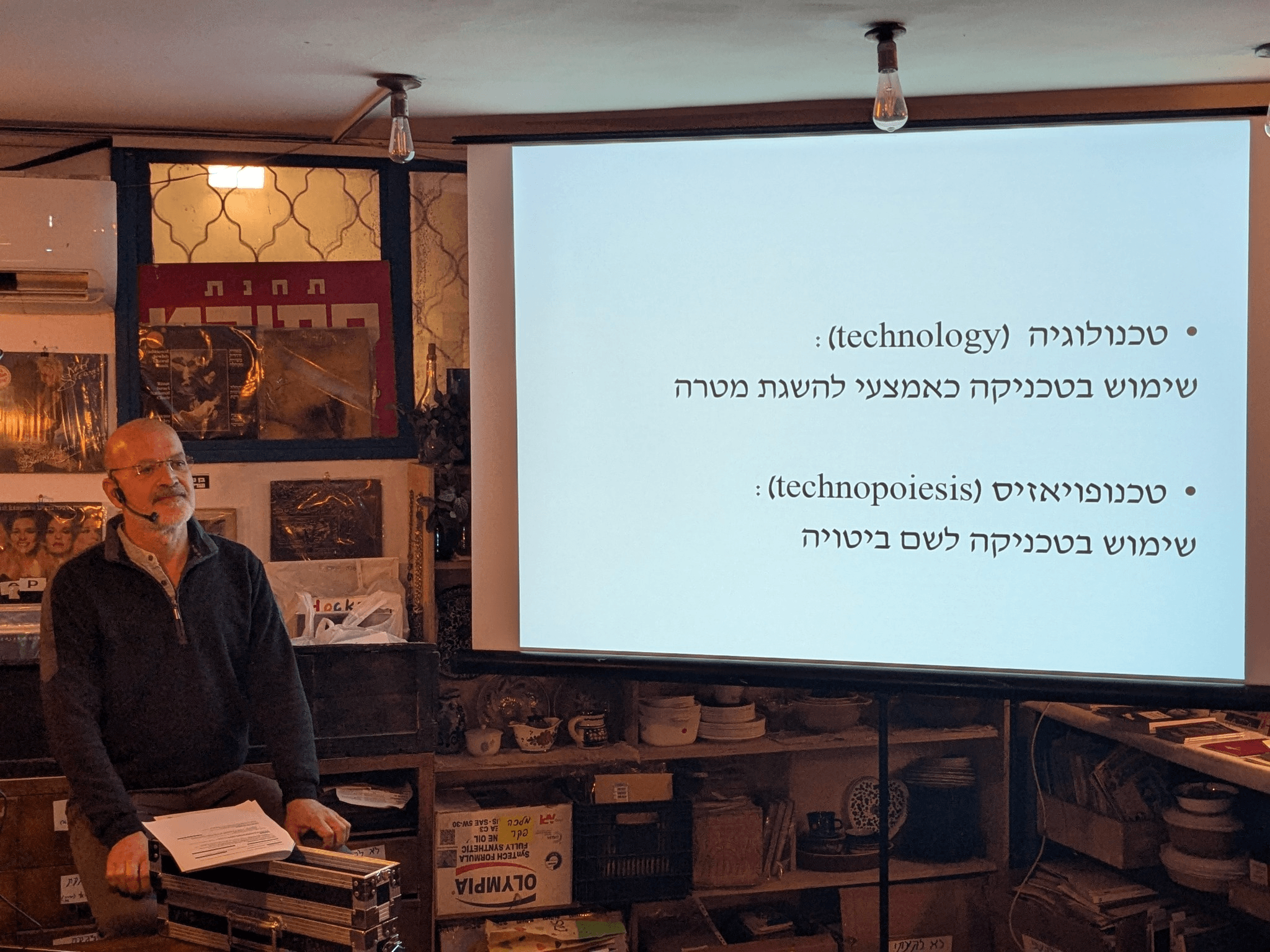
Yesterday marked the sixth and final lecture in the current series of “Temple of Consciousness” talks. The series was a success. It served as a pilot to gauge interest, and the demand and engagement proved it to be both fascinating and mind-blowing. Dr. Amzallag’s lecture on Technopoiesis was a testament to this. The lecture itself was a spiritual elevation.
In the framework of technopoiesis, technological innovations are seen as revelations of cosmic or divine secrets. For instance, in ancient times, the creation of metals like copper or iron was perceived as an act of creation that enabled humans to connect with the gods or cosmic laws. Technopoiesis involves the act of technological creation as an artistic, religious, or cosmic expression, where the act itself becomes a pathway to experiencing deep meaning rather than merely achieving utility.
If until now we regarded plants as entheogens, or even animals and inanimate objects, in technopoiesis, science itself becomes an entheogen.
Amzaleg argues that humans tend to demonstrate technophysis through what he calls a "testimonial artifact." A testimonial artifact is an object created within the framework of technophysis, whose primary purpose is to showcase the power, capabilities, or achievement of the technique rather than serve a practical or utilitarian function. These artifacts are created out of a drive to display the potential of the technique itself and to explore its boundaries, rather than to fulfill a practical need.
For example: jewelry. During the Bronze Age, jewelry was made of bronze to showcase the ability to process these metals. Perhaps it was even meant to metaphorically place these innovations close to our hearts, to always keep the wonder of these advancements in view.
I intentionally mention the eyes and heart. Regarding the fringes (tzitzit), it is said, “And you shall look upon it, and remember all the commandments of the Lord, and do them, and not follow your own heart and your own eyes, which you are inclined to go after.” The fringes are a witness object. The tefillin (phylacteries) are also witness objects: “And it shall be for a sign upon your hand and for frontlets between your eyes, that the law of the Lord may be in your mouth.” The Bible often speaks of signs and symbols, declarations that “the name of the Lord is called upon you.” Circumcision is such a sign, even representing a form of body modification that not only imprints the change upon the person but embeds it in their body, much like a tattoo. Incidentally, tattoos are forbidden because they are signs or, as mentioned in the Book of Revelation, “marks” of a competing god. Revelation 13 speaks of the faithful of the “beast” bearing marks on their foreheads, the “name of the beast,” the number 666—a quintessential witness object.
Cain, according to Dr. Amzallag, symbolizes metallurgy, which at the time was the pinnacle of advanced technology. The name Cain (Kayin) literally refers to molten metal, the smelted copper that takes the shape of its mold. Cain bore a mark on his forehead, a mark that was precisely this kind of witness object. A witness object is a “technological statement.” It exists to showcase the sheer ability to create it, to amaze, to inspire, or to explore, rather than to serve an immediate practical function.
-
Mass Violence or Ritual Cannibalism? Unraveling the Mystery of Bronze Age Atrocities in Somerset
The following text includes facts and hypotheses based on interpretations, which themselves rely on a paradigm involving prior assumptions. Therefore, multiple interpretations can be presented depending on what you are seeking.
First, the facts. Researchers have uncovered evidence of a mass killing that occurred approximately 4,000 years ago in a 15-meter-deep natural shaft at Charterhouse Warren, Somerset, UK. The study, published this week in the journal Antiquity, describes a violent event in which at least 37 men, women, and children were brutally killed. Their bodies were dismembered after death, and parts of their remains were thrown into the shaft alongside butchered cattle and other animal remains. During the analysis of the remains, the researchers identified severe trauma to the skulls of about 45% of the victims, likely caused by blunt force weapons. Additionally, 20% of the bones showed cut marks, indicating dismemberment and the removal of flesh. Some of the long bones were broken, suggesting the extraction of bone marrow—a process typical of animal butchery and a clear sign of marrow consumption. And what is done with bone marrow? It is eaten! Another indication of what might be interpreted as cannibalism is the presence of human bite marks on bones from feet, hands, and ribs.
The victims were thrown into the shaft alongside butchered animal remains, primarily cattle, in what appears to have been a single event that took place between 2210 and 2010 BCE. The site itself, located in a natural limestone cave within the Mendip Hills, is notable for being an unusual location for the disposal of bodies. The shaft may have held symbolic or strategic significance for those involved in the event. Interestingly, bacteria associated with the plague (Yersinia pestis) were identified in two of the bodies, though it remains unclear whether this was known at the time of the massacre or if it played any role in the event.
Now, the hypothesis. What does this mean? Firstly, it suggests that cannibalism occurred. But why cannibalism? Anthropologists study this question and sometimes conclude that consuming the body of a person transfers the spirit of the dead. However, the question arises: why act with such violence? If cannibalism is part of a mourning ritual, it would not require subduing resistance. Additionally, was there any resistance? The answer is likely no. The victims were probably bound hostages, as logic suggests. This leads to the conclusion that the event involved war captives, likely the result of a conflict between communities, cycles of revenge, or political and social tensions during the Early Bronze Age.
Now, the counter-hypothesis. Just last week, there was a similar discovery of a house burned with its inhabitants inside. The assumption was that this was part of a ritual fire ceremony and that the deceased were victims of human sacrifice. Human sacrifices were known during this period and earlier, and in some locations, “death pits” containing human remains have been found, with suspicions of accompanying cannibalism as part of the ritual.
Bodies were not thrown into pits simply as trash; pits—especially natural ones—were often considered “gates to the underworld.” The deep shaft, located in a limestone cave, is a unique and striking location, suggesting that it might have had symbolic meaning. Furthermore, if the aim was merely to kill people, why focus so heavily on post-mortem violence and the treatment of the bodies after death? And if animals were already present, why break the human bones to consume their marrow? Such actions must have meaning. The rarity of these practices implies significance—consuming human marrow was not a widespread practice. In certain cultural contexts, this event could be interpreted as part of a transition ritual, appeasement, or purification.
As noted, there are parallels in prehistoric periods to ritual cannibalism, even if geographically distant from Bronze Age Britain. However, ritual cannibalism might also have existed in Britain itself. For example, in Gough’s Cave, also located in Somerset, evidence was found for prehistoric cannibalism and the deliberate treatment of skull bones to create “skull cups”—a phenomenon that, in later cultures, was interpreted as ritualistic.
Why, then, reject the possibility of a ritual? The scale and severity of the violence at Charterhouse Warren exceed what might be expected in a typical ritual. Additionally, there is no clear evidence (even Gough’s Cave remains speculative!) of similar transition rituals or ceremonies in Early Bronze Age Britain. Furthermore, attempts to dehumanize victims are well-documented in cases of violent conflict throughout human history.
In conclusion, while the evidence supports interpretations of mass violence and cannibalism, the exact motives remain unclear. The competing hypotheses—cannibalism as a result of conflict or as part of a ritual—are open to further research and interpretation.
-
Actress, 33, dies after consuming frog venom at spiritual cleansing retreat in Mexico
Kambo is a substance derived from the skin secretions of the giant leaf frog (Phyllomedusa bicolor), a species native to the rainforests of the Amazon. Known as the “frog vaccine” (Vacina do Sapo), it has been used for centuries as an important therapeutic and spiritual tool by indigenous tribes in South America. In recent years, Kambo has gained popularity outside its native region, particularly among enthusiasts of alternative medicine in the West. However, the lack of solid scientific evidence for its efficacy, combined with the significant risks associated with its use, has sparked widespread debate.
The active compounds in Kambo contain numerous bioactive peptides that impact various systems in the body. These include opioid-like substances that act as potent painkillers, vasodilators that improve blood flow, and antimicrobial agents. While some users report beneficial effects, the application of Kambo also induces immediate physiological reactions such as nausea, vomiting, diarrhea, and rapid heart rate. In traditional ceremonies, these responses are considered part of a “cleansing” process for both the body and soul. However, when not properly managed, they can pose serious health risks.
Kambo use is particularly prevalent among indigenous tribes in the Amazon, such as the Matsés, Katukina, Marubo, and others. For these communities, Kambo serves not only as a therapeutic remedy but also as a spiritual practice. Traditional Kambo ceremonies aim to cleanse the body and expel “Panema,” a negative force believed to cause bad luck, illness, or laziness. It is also used to enhance fertility, empower hunters, and address various medical issues like infections, fever, or digestive problems. The ritual typically involves creating small burns on the skin and applying the frog’s secretion directly to the wounds. After about 20 minutes, the substance is removed, and participants undergo vomiting, diarrhea, and sweating, which are seen as part of the cleansing process.
In recent years, Kambo has become an alternative medicine practice in the West, often marketed as a detox or wellness treatment. However, there is no scientific evidence to support these claims, and its use raises significant ethical and safety concerns. Many critics view its popularity as part of a broader trend of cultural appropriation and commercialization of indigenous traditions. Moreover, the practice is far from animal-friendly, as the frogs are often stressed to extract the secretion. Kambo’s dangers are also well-documented; unqualified practitioners have caused severe harm, including deaths. A notable example is the tragic death of a Mexican actress, who could potentially have survived had she been taken to a hospital in time. However, she was denied medical intervention, possibly due to the underground nature of Kambo ceremonies.
In some countries, Kambo has been explicitly banned. For instance, Brazil and Chile prohibit its sale or importation, and in Australia, it is classified as a Schedule 10 poison, making its use, sale, and distribution illegal. In other regions, where it remains unregulated, Kambo is often practiced discreetly due to the associated risks. Even in these areas, its use tends to stay under the radar, given the legal ambiguities and potential for harm.
While Kambo continues to attract attention as a traditional remedy and alternative therapy, the risks it poses far outweigh any unproven benefits. Without rigorous scientific validation or proper regulatory oversight, its use remains dangerous. For those considering Kambo, caution is paramount, as the potential for harm extends beyond the individual to cultural, ethical, and environmental dimensions.
-
“Suicide Homes”: The Shamans of El Alto and Their Sacred Struggle Against Nature
These shamans live on a cliff with a 90-degree slope. Heavy rains are making their already fragile homes even more unstable. The municipality of El Alto in Bolivia wants to evacuate them out of concern for their safety, but they refuse. The local residents support them, even though these homes are referred to, even among themselves, as “suicide homes.” The shamans argue that these locations serve as the sites for their offerings to Mother Earth, Pacha Mama. As dangerous as it is, they insist it is essential for them, and they are not willing to leave. What they are willing to do, however, is to redirect the rainwater flow elsewhere.
-
The Mystery of the Siberian Petroglyph: Symbolism, Myth, or Modern Fabrication?
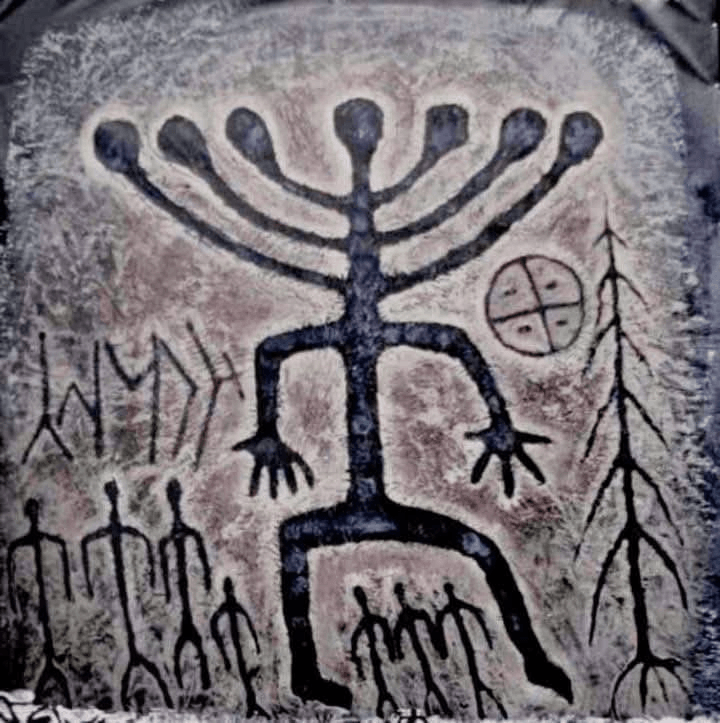
I cannot find any references to this petroglyph, which was supposedly discovered years ago in Siberia. I am inclined to believe that if none of the databases recognize it, and the only places where it appears are Pinterest and Instagram, then it is likely fake.
That being said, this object is meant to symbolize the World Tree and serve as a fertility symbol. Between its legs, we see figures, which suggests it depicts a birth scene. It is supposedly connected to the seven-headed serpent from Mesopotamia and the “Timora,” which adorned representations of the deity dwelling between the two cherubim (winged figures). In both cases, it represents the deity itself. The serpent is, naturally, a liminal representation between life and death, which in primordial thought is interpreted as the moment of birth (and the moment of rebirth, that is, what happens after a near-death experience). Even in the Bible, God’s figure is described in this way, through the “eyes of the Lord” and the “appearance of the lampstand,” which is hinted to be what Moses saw at the burning bush: a branched plant, with each of its branches burning.
