-
The psychedelic history of Mormonism
The article The Entheogenic Origins of Mormonism: A Working Hypothesis was published in 2019 in the Journal of Psychedelic Studies. This groundbreaking article presents the hypothesis of possible entheogen use in early Mormonism, particularly under the leadership of Joseph Smith. Robert T. Beckstead, one of the article’s authors, had already proposed a similar idea in 2007 during a lecture titled Restoration and the Sacred Mushroom at the Sunstone Symposium. In 2017, Bryce Blankenagel and Cody Noconi presented a paper titled Revelation Through Hallucination at another Sunstone Symposium, expanding on these ideas and focusing on the connection between psychedelic use and Joseph Smith’s religious revelations.
The 2019 article was essentially a collaborative effort by these three authors. It marked the first time this idea was presented systematically and academically, combining historical documentation, visionary accounts, and anthropological theories. Assisting them in the anthropological and phenomenological aspects of psychedelics was Dr. Michael Winkelman, a former professor at Arizona State University and a prominent researcher in medical anthropology and consciousness studies in the “new wave of psychedelics.” If you’re familiar with the theory that cross-cultural shamanism is the fundamental component of religion, and that early philosophers and prophets of Israel were essentially shamans in the guise of religious scholars, then you are already acquainted with Michael Winkelman. As early as the 1990s, Winkelman published groundbreaking articles, such as Shamans, Priests, and Witches: A Cross-Cultural Study of Magico-Religious Practitioners.
The article’s central claim is that Joseph Smith used entheogens (psychedelics) as part of the religious rituals of early Mormonism to encourage visionary spiritual experiences among his followers. Psychedelic use was common in 19th-century folk medicine, particularly in the regions where early Mormons settled. Substances such as Datura and psilocybin mushrooms were available in areas of Mormon settlement. The Smith family had a background in herbal medicine and magical practices. Emma Smith, Joseph’s wife, was known to use ingredients such as Datura in “healing salves.” Their grandchildren reported the use of psychoactive medicinal drinks, including beer infused with ginseng and lobelia.
Based on these accounts, as well as Joseph Smith’s descriptions, central visions in Mormon doctrine—such as the revelation of the Three Degrees of Glory (as described in Doctrine and Covenants 76)—could be interpreted as having been written under the influence of psychoactive substances. Physical symptoms and descriptions of these experiences resemble those of psychedelics, as described in other reports of religious visionary experiences and psychedelic medicine. Other stories from early Mormon history, such as the dedication of the Kirtland Temple in Ohio, where about 500 participants reported angelic visions, suggest that wine used in these ceremonies might have been infused with Datura. These theories rely on indirect evidence and intersecting theories in psychology, anthropology, and religion. They seem plausible when viewed in the context of 19th-century alternative medicine and its connection to religion, as well as parallel theories about visionary experiences in the history of religion.
For example, Spiritualism believed in healing through supernatural means. The Adventist movement promoted the use of herbal medicine for treatment. Christians in general viewed healing as a part of faith in miracles. At the time, miracles were phenomena that could not be explained by contemporary scientific knowledge, and the botany of these plants was not well understood. Thus, the side effects of these plants were often considered miraculous. Furthermore, in rural areas of the 19th century, where interactions with Indigenous peoples occurred, a form of syncretism developed. Indigenous people integrated Christianity into their rituals, creating a form of Christianity that incorporated native ceremonies (e.g., the Peyote Church). Conversely, rural Europeans gained some understanding of local herbal medicine, including the mind-altering effects of plants used by Indigenous peoples.
This is well and good, except for one point: Mormonism is one of the most strongly opposed religious movements to the use of drugs or unregulated medications. Visionary experiences are generally not accepted within Mormon values, which emphasize moral and physical health. The Word of Wisdom, introduced by Joseph Smith in 1833, is a dietary and spiritual guide recorded in the Mormon scripture Doctrine and Covenants (Section 89). This moral and dietary code instructs church members to maintain their physical and spiritual health. It prohibits alcohol, tobacco, coffee, and tea, which are considered harmful physically and mentally. Instead, it encourages the consumption of wholesome substances like whole grains, fruits, vegetables, and meat in moderation. The body is viewed as a temple that must be respected and cared for through preventive medicine, physical activity, self-discipline, and community support.
Joseph Smith himself! How do we explain this apparent contradiction? First, it is not certain that it was Smith himself or during the period in question. Scholars of Mormonism challenge the claim that Doctrine and Covenants was written as a single, unified text. Instead, they argue that it was compiled over the 19th century and edited by various hands. The article agrees with this and suggests that after Smith’s assassination, Mormonism underwent a transformation. It can be seen as a reform or simply as an adjustment. During Smith’s life, he was the main attraction. To promote the new religion, he actively participated in rituals, and the use of entheogens was a “shortcut”—whether participants knew about it or not. This helped create powerful spiritual experiences. After his death, his charisma and practices disappeared. His successors, particularly Brigham Young, could not replicate them—perhaps they didn’t know how, or perhaps they didn’t want to. Faced with external challenges, Mormon leaders emphasized community structure and strict rules, focusing on preserving the religion rather than achieving extraordinary spiritual experiences.
During this period, the principles of the Word of Wisdom were further developed and institutionalized. Was it originally so strict about entheogens? It is impossible to know. It is also unclear whether they understood which substances caused these religious experiences and what their nature was. Drugs in the modern, synthetic sense did not exist at the time. Consequently, people had to be kept away from substances that were potentially dangerous without proper knowledge or supervision. Authority became an essential component of the approach to entheogens. Joseph Smith may have developed expertise as an herbalist or had connections to herbalists who discovered the “Holy Grail.” His successors likely did not.
Public opinion at the time viewed the use of mind-altering substances, particularly in a religious context, as witchcraft or paganism. This suspicion contributed to social unrest, violence, and eventually the assassination of Smith. This hostility also forced the Mormons to relocate multiple times, as public opposition followed them, at least until they moderated their practices, including abandoning polygamy and adhering to American laws. The same evolution may have happened with drugs.
Bryce Blankenagel has since become the host of popular anti-Mormon podcasts such as Naked Mormonism and Glass Box. Cody Noconi authored a 500-page book titled The Psychedelic History of Mormonism, Magic, and Drugs. Both continued publishing articles and participating in events like the Sunstone Symposium, an annual conference focused on Mormon studies. Together with Brandon Crockett, another podcaster in the field of Mormon criticism, Noconi co-produced a 40-minute documentary titled EntheoMagus, which explores this topic further and adds another chapter to the study of entheogens in Christianity.
-
Purple in ancient Greek Cult
Purple was a distinct marker of wealth, luxury, and social status in ancient Greece. It symbolized divine and priestly status, with purple garments often signifying the role of priests as intermediaries between gods and humans. For instance, the priests of Demeter in Ephesos wore purple garments as part of their rituals. Similarly, the priests of Dionysos in Skepsis were required to wear a purple chitōn. Priests of Nike and Zeus Alseios in Kos were instructed to wear purple garments and gold ornaments inside the temple, during processions, and sacrificial ceremonies. Likewise, Anaxenor, a priest of Zeus Sosipolis in Magnesia, donned purple garments, according to Strabo. Heracles’ priests in Tarsos wore purple and white robes, as noted by Athenaeus. In Eleusis, according to Pseudo-Lysias (4th century BCE), priests and priestesses wore purple garments.
Interestingly, in Eleusis, the term phoinikides is used to describe these garments, which seems to refer to plant-based purples (such as hyakinthos, derived from the hyacinth flower). Plant-based purples were considered “lesser” due to their lack of permanence. Unlike shellfish-derived purple, plant-based purple would fade quickly, symbolizing impermanence. This distinction underscores why garments dyed with shellfish purple (halourgos or porphyreos) became symbols of wealth and status. Shellfish purple, being far more durable, signified opulence, much like the difference today between inexpensive smartphones and luxury brands like iPhones.
Most purple textiles used in sanctuaries were derived from marine sources. Temple inventories in locations such as the Parthenon and Samos recorded purple garments as sacred offerings. These included fully purple garments or textiles with purple borders, described with terms such as halourgos (“made from the sea”) and porphyreos (“produced by the purple fish”). Aeschylus’ Agamemnon provides further evidence for the marine origin of purple, describing the sea producing a “rich, costly, and ever-fresh purple dye” (lines 957–960).
Moreover, Aeschylus attributes a sacred quality to embroidered and purple garments. Agamemnon declares that only gods are entitled to such luxurious textiles, warning against human vanity that might provoke divine jealousy (lines 921–926, 946–947). The gods and heroes themselves are often depicted wearing purple: Athena dons an intricately embroidered robe emphasizing her divine status (Iliad VIII.385–389), while Odysseus wears a purple cloak adorned with a gold brooch, highlighting his high social rank (Odyssey XIX.226).
In the Hellenistic period, purple garments became associated with royalty. Strabo notes that descendants of Androclus, the mythical founder of Ephesos, were granted the privilege of wearing purple robes and receiving front-row seats at public games (Strabo XIV.1.3). Ephesos, a center for purple dye production in Asia Minor, was renowned for its association with honor and prestige.
In mysteries and sanctuaries, purple was so distinct for worship that participants were required to wear simple white garments symbolizing cleanliness and humility before the gods. Many dress codes prohibited worshippers from wearing purple garments, gold jewelry, or dyed clothing, aiming to prevent vanity and the display of personal wealth. Humility and modesty were central to the ritual experience and the social order in ancient Greece. Purple and embroidered garments were considered, as noted, to reflect a lack of reverence toward the gods. Ritual dress codes focused primarily on women, as their modesty was seen as essential for preserving their honor. However, these regulations were not restricted to women alone and imposed similar codes on male worshippers.
The fact that murex shells were found at sacred sites in Corinth and Delos, sometimes whole and unbroken, suggests that these items were used as symbolic offerings rather than merely as raw material. Similarly, at the Peristeries sanctuary in Cyprus, large quantities of trunculus shells were discovered. It appears that these shells served as symbols against the evil eye, what is known as apotropaic objects. However, it is also possible that these were brought because dyed textiles were too expensive to offer, so instead, people brought shells representing the mollusk, as the color itself was prohibitively costly. A symbolic offering serving as a substitute for the real item is called in Latin “part representing the whole” (pars pro toto). In this case, the shell symbolized the purple color and its ritual power.
We recognize this concept from the Passover Seder, for example, where there are symbolic “signs” like matzah and bitter herbs, and even the egg symbolizing the festival sacrifice. It is also plausible that the incense and tenths of fine flour accompanying sacrifices, or alternatively the cannabis remnants found at Tel Arad, served a similar purpose: symbolizing psychoactive rituals, though the materials themselves were insufficient to induce such an experience. Alternatively, it may indicate a deliberate concealment of such rituals under the guise of secrecy.
Bibliography
Cecilie Brøns – Sacred colours: purple textiles in Greek sanctuaries in the second half of the 1st millennium BC. in Treasures from the Sea, Sea Silk & Shellfish Purple Dye in Antiquity. Edited by Hedvig Landenius Enegren and Francesco Meo. Oxbow Books, 2017
Aynur-Michèle-Sara Karatas – Greek cults and their sacred laws on dress-codes: The laws of Greek sanctuaries for clothing, colour, and penalties against misbehaviour. Revue des Études Anciennes (2020) 122-2 pp. 445-488 -
The revival of Korean shamanism
Korean shamans, known as Mu (무) or Mudang (무당) in Korean, are representatives of an ancient spiritual tradition rooted in communication with higher entities, spirits, and ancestors. This spiritual tradition, called Musok (무속), is a central element of Korean culture and folklore. The primary role of shamans is to perform rituals known as Gut (굿), aimed at promoting the well-being of individuals and society. While both men and women can become shamans, the majority are women, referred to as Manshin (만신).
The term Mu is related to the Chinese root Wu (巫), which represents shamans in China, but there are significant differences between the two. Historically, the Wu in China was part of a ceremonial and governmental framework, while the Korean Mu evolved within a culture where shamanism was at times rebellious, resisting institutionalized religious and political influences like Confucianism. Korean Mu, unlike the institutionalized Chinese shamanism, retains a strong connection to intuitive and spiritual rituals, involving dance, song, and trance. It is deeply embedded in local culture, relying on traditions, folk beliefs, and uniquely Korean myths. While Wu emphasizes rituals tied to state power and central deities, Musok focuses on personal interactions with local spirits and solving individuals’ daily challenges.
As mentioned, the Gut ritual is the core of Korean shamanism. This ritual is a highly sensory and emotional experience. The Mudang enters a trance state and performs possession, during which spirits speak through her. Throughout the ritual, participants witness dramatic processes involving singing, dancing, offerings (such as meat, fruit, and alcohol), and encounters with deities and ancestral spirits. The ritual features colorful costumes, paintings, statues, incense, and more, along with awe-inspiring fakir-like performances that enhance the experience. At the same time, this is not a passive event; the shamans encourage audience interaction, inviting questions and making the ritual highly participatory. The ritual’s objectives are diverse but often focus on removing curses and bad luck, appeasing restless spirits, bringing prosperity and success, and healing the mind-body connection.
In recent years, shamanism has experienced a revival, particularly among younger generations in Korea. Shamans have become popular figures on platforms like YouTube and TikTok, where they offer spiritual counseling, fortune-telling, and entertainment content. For instance, one prominent shaman operates a channel with hundreds of thousands of followers. The reasons behind this resurgence are varied, including a New Age spiritual quest, the perception that institutionalized religions fail to provide sufficient answers, a search for Korean cultural identity in an era of Americanization, and, above all, the fast pace and existential anxieties of industrialized life. Shamans serve as a kind of psychologist with a traditional, nationalistic, and sometimes even “pop-culture” twist. A variety of films and television shows now include shamans among their characters, normalizing and representing this phenomenon.
One of the latest examples is the inclusion of a shaman character in the newly released second season of Squid Game. While I’m not an avid follower, character 044 is portrayed as a shaman.
Probably Prof. Liora Sarfati of Tel Aviv university published a book on this topic few years ago.
-
The snake as a symbol of yoga and altered states of consciousness
In Hindu mythology, there is a central myth describing the search for the nectar of immortality, Amrita. This nectar is what the gods seek and rely upon for sustenance. By drinking it, they gain access to supreme knowledge. Following a curse placed upon Indra, the king of the gods, the Devas (the benevolent beings) lost their power and needed the production of Amrita to regain it. With no other choice, the god Vishnu advised them to collaborate with their enemies, the Asuras (the malevolent beings), in a joint effort to produce the nectar. The raw materials came from the cosmic ocean, particularly a part of it known as the Ocean of Milk. To produce Amrita, the milk needed to be churned, a process akin to shaking the milk forcefully to separate the fatty layer from the liquid, symbolizing an earthquake-like event.
The cosmic ocean is Vishnu’s dwelling place. From this cosmic ocean, the Ganges River descends; it is said that the Ganges originates from Vishnu’s sweat. Vishnu lies on the serpent Shesha in a Yoga Nidra pose, dreaming of the world. The world, as described, is Vishnu’s dream. Shesha has multiple heads that form a canopy over Vishnu. Above this canopy lies the world itself. Shesha exists in a state of apneic existence—a state where he practices Pranayama (breath control) and does not breathe. By mastering this, he controls his soul, life energy, and Prana. Those who succeed in not breathing achieve liberation from the body and spiritual release. Vishnu is considered a master of Pranayama, and with every breath he takes, he creates the world. Since we live in a single existence, it is understood as if the world was created only once, and thus Vishnu is perceived as not breathing. When Shesha loses his yogic balance and breathes, the world shakes. Here again, we see the metaphor of an earthquake.
Incidentally, anyone who observes snakes closely will notice their ability to hold their breath for extended periods, particularly when conserving energy during rest or waiting for prey. Snakes are so skilled at breathing that they can continue to do so even while consuming their prey—a process that can take a long time. They achieve this by extending their trachea forward during swallowing. Some snakes can also dive underwater, holding their breath for significant periods. Some can even breathe through alternative methods, such as cutaneous respiration (breathing through the skin).
The earthquake metaphor is a necessity since one cannot avoid breathing altogether. Chaos, therefore, is inevitable. The role of the snake is to balance this chaos. Similarly, Vishnu’s role is to balance order and chaos, maintaining existence. Order symbolizes the cessation of breathing and spiritual liberation, while chaos symbolizes breathing and lack of spiritual release. When practicing Pranayama, the cycle between inhalation and exhalation represents rhythm and cyclicality. Snakes, as a general symbol, represent cycles and renewal—they shed their skin, reflecting transformation.
Thus, snakes served as cosmic beings. In Hinduism, they are called Nagas, and Shesha is one such Naga. The leader of the Nagas is called Vasuki. Here, we return to the story of the churning of the ocean. As noted, Vishnu advised producing Amrita from the Ocean of Milk. To achieve this, he incarnated as a tortoise, stabilizing the churn and supporting the churning pole. The pole itself was Mount Mandara, believed to exist in the Indian state of Bihar near the Ganges. Vasuki volunteered to serve as the rope used to rotate the churn. The serpent coiled around the mountain, and the two factions—the Asuras and the Devas—competed in a tug-of-war. Each time one side overpowered the other, the mountain rotated, churning the ocean. Again, the earthquake metaphor emerges.
During the churning of the ocean, several mishaps occurred, threatening to destroy the world, prompting the gods to intervene. The second and less significant mishap occurred after the Amrita was ready—the Asuras coveted it. Vishnu disguised himself as a beautiful woman named Mohini and seduced the Asuras into giving her the Amrita. She then gave it only to the Devas. However, an Asura named Rahu disguised himself as a Deva and attempted to drink the Amrita. To prevent the nectar from reaching the Asura, Mohini—Vishnu in disguise—decapitated him.
The more critical mishap occurred during the preparation of the Amrita (and the extraction of 14 treasures from it). A toxic liquid called Halahala, a lethal poison, was released, threatening to destroy creation. The poison emitted deadly fumes, and both groups—the Devas and the Asuras—almost suffocated. The poison likely alludes to snake venom, symbolizing the dark side of existence, the bitterness of death, and the shadowy aspects of altered consciousness and madness. It posed a dire threat to the world, and only Shiva’s intervention saved the day. Shiva consumed the poison, saving creation. As a result, his throat turned blue, earning him the name Neelakantha (“The Blue-Throated One”).
It is worth noting that in some sacred texts, the Soma itself is referred to as Amrita. Thus, although it is not explicitly stated, the nectar of immortality and the drink of the gods are associated with altered states of consciousness. While the exact preparation of Soma remains unknown, it is clear that the process involved crushing a certain plant, extracting juice from the resulting pulp, mixing it with water, and adding milk and clarified butter (ghee). Ghee is highly concentrated and does not require refrigeration due to its high-fat content. Its preparation involves extensive processing: first, regular butter is made, then melted, with the foam skimmed off before re-solidifying it—a meticulous and lengthy process.
Interestingly, in central India, within Telugu culture, an annual festival called Nagula Chavithi is celebrated. During this festival, women fast and worship the serpent god through rituals involving offerings of milk and dried fruits to snakes. The festival spans several days, with one specific day dedicated to a special Naga, Ashtanga, an eight-headed cobra. It is said that this specific day coincides with the day Shiva drank the Halahala to save the universe.
Animal rights activists disapprove of this practice. Firstly, snakes cannot digest milk. The snakes involved are often starved until they are willing to drink the milk. Snake charmers typically break the snakes’ fangs, sew their mouths shut, and leave only a small hole at the front for the snakes to breathe. Additionally, milk is a product of an industry that exploits cows, which are considered sacred in Hinduism.

-
Garlic as a plant sacred to the fertility goddesses
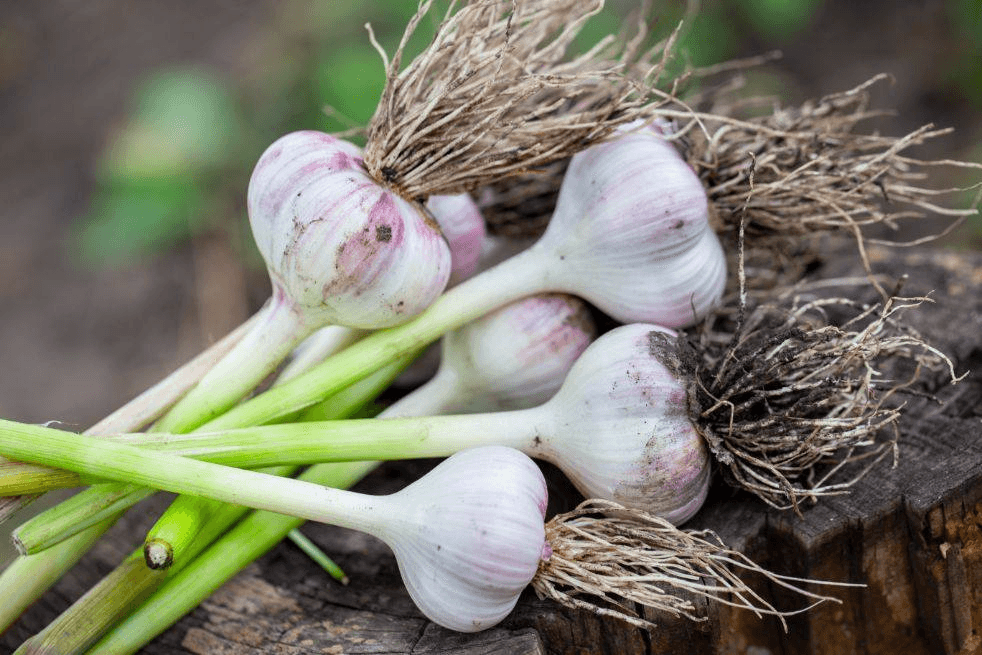
Garlic has played a significant role in fertility rituals across various cultures throughout history. This is due to two main reasons. The first and most well-known is stated in the Talmud: garlic is an aphrodisiac that “induces love and removes jealousy” and “increases seed”, meaning it promotes fertility. Science supports this, as raw garlic is known to increase testosterone levels, thereby enhancing sperm production.
Not only does garlic enhance fertility, but it also symbolizes masculinity and strength. Ancient Olympic athletes consumed garlic and even rubbed it on their bodies before competitions, believing it would boost their power and performance. Similarly, warriors used garlic to fortify themselves before battles and gladiatorial games. The Romans would plant garlic in conquered lands, believing its courage-enhancing properties would seep into their soldiers through the soil. In ancient Egypt, garlic was provided to slaves to strengthen them for building the pyramids. Such was its value that inscriptions on pyramids mention an expenditure of 1,600 talents of silver on garlic, and the cost of several cloves could purchase healthy slaves.
Garlic’s sulfur compounds improve blood circulation, which ties into the second reason for its role in fertility: women’s health. In ancient Egyptian and Greek medicine, garlic was used to treat menstrual issues and infertility. Ancient medical texts mention garlic’s ability to enhance blood flow in the pelvic region, aiding childbirth. There are also numerous references to garlic as a menstrual stimulant and an abortifacient. The Ebers Papyrus (1550 BCE) describes a garlic-and-wine solution to restore menstruation. The Carlsberg Papyrus (1200 BCE) details a diagnostic test for female sterility, where a woman inserted a peeled garlic clove into her vagina overnight; if the garlic’s scent emanated from her mouth the next morning, she was deemed fertile. Hippocrates (460–370 BCE) recommended garlic to assist with placental expulsion and to treat abdominal tumors, particularly in the uterus.
As an antiseptic, garlic also played a role in preventing infections during childbirth, a process often associated with impurity and demonic forces. In ancient Greece, midwives would hang large quantities of garlic in birthing rooms, filling the space with warm, healing, and antibacterial garlic vapors believed to repel evil spirits. After birth, newborns would wear necklaces of garlic cloves for protection. Traces of garlic have been found in the armpits and groin of mummies, likely to mask odors and prevent decay.
In ancient Egypt, garlic was linked to the fertility and nature goddess Isis. Its multiple layers symbolized the structure of the spiritual universe according to Egyptian cosmology—concentric circles of heaven, earth, and the underworld. Onions and garlic, with their layered structure, reflected this cosmic organization. When cut, their shapes resembled the moon, which was associated with fertility goddesses. In Rome, garlic featured in rituals honoring Ceres, the goddess of fertility and agriculture, where love potions made from garlic juice and coriander were believed to enhance passion and female fertility.
However, garlic’s association with fertility and aphrodisiac properties also led to its connection with improper sexual behavior. In Christianity, for example, garlic is linked to the devil. It is said to have grown where Satan placed his foot upon leaving Eden, a belief mirrored in Islam. In the Book of Revelation, Satan is condemned to a lake of fire and brimstone, and garlic, containing sulfur compounds, became symbolically associated with this punishment. In Hindu mythology, garlic originated from a mishap involving the distribution of divine nectar (amrita), granting it healing powers but also marking it with demonic origins. According to the myth, when the gods and demons churned the cosmic ocean to extract the nectar of immortality, the demon Rahu drank some before being decapitated by Indra. A drop of the nectar fell to the earth, from which medicinal herbs and garlic sprouted. Consequently, garlic is not offered as naivaidya (religious food offering) to Hindu gods, as it originated from Rahu, a demon.
Garlic’s association with impurity is also evident in ancient rituals. Egyptian priests refrained from eating garlic due to its odor, which was considered unsuitable for purification ceremonies. Even in the cult of Cybele, a fertility goddess, Greeks who consumed garlic were barred from participating in her mysteries, as its smell was believed to disrupt the sacred atmosphere.
In Greek culture, garlic was associated with protection from demonic forces. It was a symbol of Hecate, the goddess of witchcraft and crossroads. Devotees left garlic at crossroads as offerings to seek her protection. According to mythology, Hermes gave Odysseus a magical herb called “moly” to protect him from Circe’s enchantments; some believe this herb was wild garlic, said to neutralize demonic powers.
Finally, in Jewish tradition, garlic’s role in fertility and intimacy was well understood. The Talmud states that Jews and Samaritans alike ate garlic on Friday nights to promote fertility and fulfill the Sabbath mitzvah of conjugal relations. The Shulchan Aruch further emphasizes that marital intimacy is one of the delights of the Sabbath, aligning with garlic’s aphrodisiac properties and its connection to fertility.
-
A mysterious mound in Norway turns out to be a place of worship
In the official statement from the Norwegian National Agency for Cultural Heritage, dated December 20, 2024, it was announced that the Karnilshaugen mound in Gloppen — located 420 kilometers northwest of Oslo, near two fjords, Hyefjorden and Gloppefjorden — is the largest burial mound in western Norway and one of the largest in the Nordic countries. Using ground-penetrating radar technology, archaeologists from the universities of Bergen and Stavanger confirmed that the mound was artificially constructed, likely during the Iron Age. Additionally, the mound is aligned with an astronomical phenomenon: during the winter and summer solstices, sunlight passes through a mountain crevice and illuminates the mound, suggesting it served as a ceremonial gathering place. The statement noted that the mound has not been excavated, and its contents remain a mystery.
-
Porridge, not bread: new discoveries about the Neolithic diet in northern Europe
It turns out that the domestication of grains—at least in Northern Europe during the Neolithic period—was not for the purpose of baking bread, as there is no evidence of grinding grains into flour. While grains were indeed ground, it was not to produce flour for bread but rather for making gruel or grain-based soup. Researchers found no evidence of beer brewing at the site and noted that clear evidence of beer production in Denmark does not appear until the Bronze Age. It can be assumed that beer is essentially fermented gruel, or more accurately, gruel is unfermented beer. The transition from gruel to beer may have occurred naturally—gruel left for an extended period could have begun fermenting naturally due to wild yeast in the environment. This is likely one of the ways beer was discovered, and the process was refined over time.The study was published in the journal Vegetation History and Archaeobotany and conducted by a team of researchers from Denmark, Germany, and Spain, including scholars from Moesgaard Museum and Aarhus University in Denmark. The researchers examined grinding stones found at the Frydenlund site on the island of Funen in Denmark, alongside over 5,000 charred cereal grains, such as naked barley, emmer wheat, and durum wheat. Microscopic analysis of phytoliths (mineral remains of plants) and starch grains revealed that the stones were not used to grind grains into flour for baking bread. Instead, the starch grains were identified as originating from wild plants, suggesting that the inhabitants used the grinding stones in a manner similar to a mortar and pestle to prepare gruel. Gruel was a staple food, complemented by a varied diet that included berries, nuts, roots, and meat.
-
Santa Claus is a psychedelic mushroom
This item, while not new to The New York Times, appeared yesterday on the Boing Boing blog. In 2010, Matthew Salton published a short video and article as part of The New York Times’ “Op-Doc” series, suggesting that Santa Claus, as we know him today, draws inspiration from the spiritual rituals of the Sámi shamans in Finland. Salton interviews Professor Carl Ruck and Lawrence Millman, a scholar and mycologist specializing in the traditions of northern peoples.
There are numerous parallels between the shamanic rituals and the story of Santa Claus. Shamans, like Santa, were perceived as powerful figures capable of overcoming the limitations of time and space. For instance, the Sámi’s use of reindeer in their rituals mirrors Santa’s tradition of flying reindeer. Similarly, the shamans’ practice of climbing through house chimneys to perform their rituals corresponds to Santa’s well-known method of entering homes via the chimney. Additionally, the shamans brought “gifts” of healing and comfort, reminiscent of the presents Santa delivers on Christmas Eve.
In both Salton’s article and the accompanying video, the cultural correspondence between ancient shamanic rituals and the folkloric figure of Santa as we know him today is emphasized. References are also made to Paul Devereux’s book, The Long Trip: A Prehistory of Psychedelia—the same Paul Devereux known for his work on ley lines—which explores connections between ancient psychedelic traditions and modern stories. Further analysis is provided by Greg Taylor from The Daily Grail, who examines the cultural and spiritual background of these traditions.
-
The crimson and the opium: symbolism of life, death and birth in ancient cultures
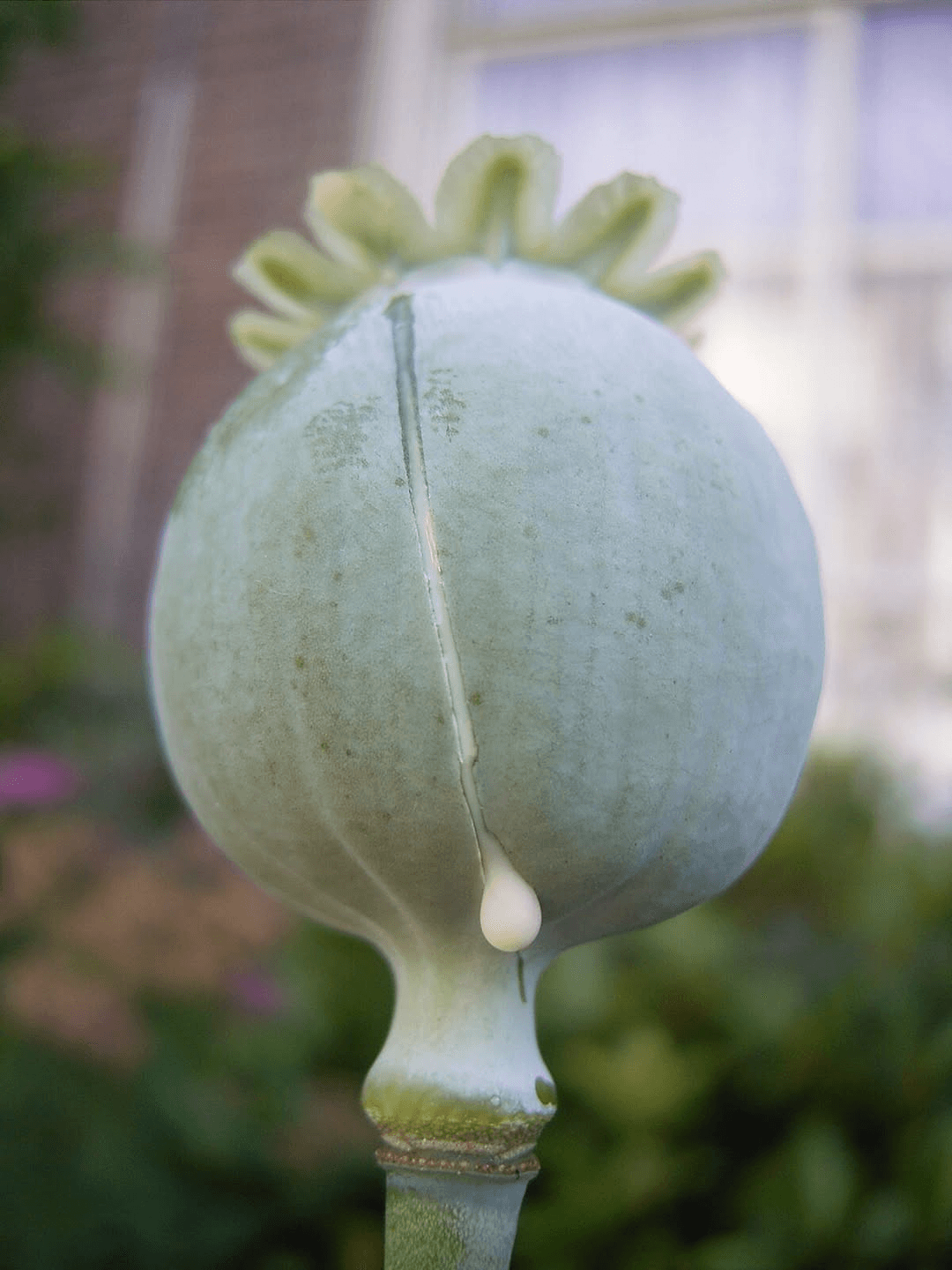
The extraction of Tyrian purple dye and opium from the opium poppy (Papaver somniferum) are fundamentally different processes, but they share a symbolic and conceptual similarity. Both involve the extraction of a rare and highly valuable substance from a living organism, and the act of extraction itself is tied to wounding and the release of an essential essence for a prized purpose. Another commonality is that the extraction of both is often described in terms of drawing nectar from a “flower”—a metaphor that encapsulates not only the physical nature of the substance but also its symbolism, as a representation of life cut short and the cost of obtaining something precious.
The process of extracting Tyrian purple from sea snails is metaphorically described by Aristotle and Pliny the Elder, who refer to the juice extracted from the mollusk as a “flower” (ἄνθος in Greek, flos in Latin). This juice is drawn from an organ in the mollusk’s neck, and it must be extracted while the mollusk is alive, as the creature “vomits” the juice upon death, diminishing its quality (Aristotle, Hist. an. 547a26-27; Pliny, Nat. 9.125-26). The metaphor of the “flower” conveys the substance not only as a product of great value but also as a symbol of life interrupted—like a flower plucked from its stem. This process is reminiscent of opium extraction, which involves scoring the unripe seed pod of the opium poppy to release its milky latex, considered the plant’s essence. In both cases, the act of wounding or incising is essential for extracting the substance, which represents the organism’s life force.
The term “flower” offers a dual-layered symbolism: on one hand, it emphasizes the beauty and natural origin of the extracted substance, and on the other, it hints at the fragility of life and the cost of extracting the essence. Aristotle, for instance, uses the term “flower” to describe the juice extracted from the Tyrian mollusk, noting that it is located between anatomical structures, one of which he calls (μηκῶν), often translated as “a liver-like organ” but also interpretable as “poppy.” This connection bridges the processes of dye production and opium extraction, linking them as substances associated with sacrifice, unique uses, and prestige.
The act of “vomiting” in these processes evokes an analogy to the shedding of blood. The question is what connotation this carries. Claire Stocks argues that it parallels blood spilled in battle. In the Aeneid, Virgil uses the process of Tyrian purple extraction as a symbol of life and death, akin to the bloodshed in battle. The blood of young warriors who die in combat is likened to “purple flowers” plucked before their time. Similarly, Virgil frames the fall of the Roman Republic through the scene where Aeneas plunges his sword into Turnus, staining it with Rutulian blood and dyeing it purple. This act symbolizes the fall of the Republic as a necessary foundation for the reestablishment of Roman imperium, achieved through violence. The civil wars, which Augustus concluded with his Pax Romana, are framed as both an inevitable and perhaps desirable process.
It is worth noting that in Roman culture, Tyrian purple was seen as a symbol of imperium but also of greed and decadence. Cicero described it as such, particularly in reference to Julius Caesar’s arrogance and his purple robe, which emphasized his monarchical status—a direct affront to traditional Roman republican values. Thus, Tyrian purple also came to symbolize destructive, unchecked power. Pliny the Elder, for example, describes the process of dye production as marked by “madness” (insania), hinting at humanity’s relentless pursuit of unbounded luxury.
Returning to the notion of bloodletting, it is tempting to interpret the “vomiting” of the opium and Tyrian substances as analogous to the afterbirth expelled from a woman’s body post-delivery, or perhaps even the child itself. A perspective, treated with skepticism in one of my previous posts, suggests a connection to menstrual blood. In any case, the moment of scoring the poppy pod and the crushing of the mollusk’s operculum are likened to the moment of childbirth, imbuing the act with an additional sacred reference.