-
Sun stones and the darkened sun
More than 100 engraved stones depicting sun motifs were discovered at Neolithic sites in Denmark, and researchers link them to a catastrophic volcanic eruption that occurred around 2910 BCE. This eruption plunged the world into prolonged darkness, resulting in global cooling, crop failures, and famine. Ice cores, tree rings, and lake sediments indicate a dramatic reduction in solar radiation during that period. The researchers, led by Rune Iversen from the University of Copenhagen, highlight the exceptional accumulation of these stones in the archaeological record, interpreting them as a societal response to the crisis. Iversen’s team uncovered a collection of over 600 decorated stones between 2013 and 2018 at ritual gathering sites from the period. It appears that the people of the time carved and refilled several ditches over the span of about a century. Around 2900 BCE, they scattered sun stones across the land like seeds in a field, sealed the ditches, and constructed several circular wooden structures over them. Alison Sheridan, an archaeologist at the National Museums of Scotland in Edinburgh, interprets the solar motifs as a plea for the return of the sun and, consequently, the restoration of fertility. Mark Vander Linden from Bournemouth University cautions against drawing a direct causal link without a broader understanding of the chronological context.
-
Reconstruction of 1200 years old ancient tattoos
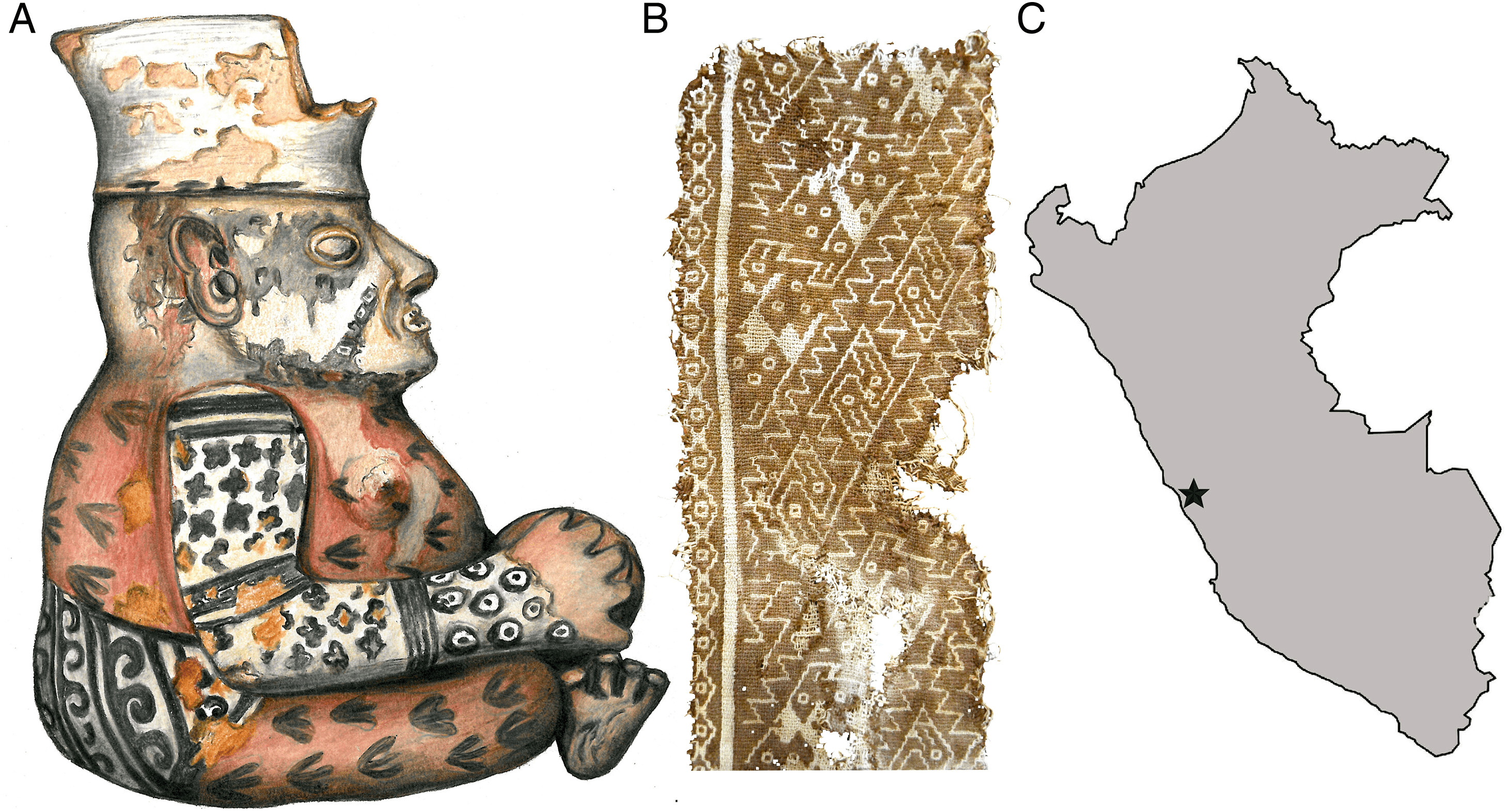
Researchers from the Institute of Archaeology at University College London have successfully reconstructed 1,200-year-old tattoos from the Chancay culture in Peru using an innovative technique called “laser-stimulated fluorescence”. The technology was applied to the remains of mummified bodies, where the textures of the skin could still be identified. What is even more remarkable is that, despite being created under suboptimal conditions using materials that modern tattoo artists would consider primitive—such as cactus needles or sharpened animal bones—the tattoos exhibit an impressive level of precision. Among the discovered tattoos were geometric patterns, including triangles and diamonds, as well as various animal motifs, all delicately imprinted on the skin of the mummified individuals.
-
The midwife as a symbol of wisdom
Midwives have been considered wise throughout history due to their critical role in the birthing process, which required not only a deep physiological understanding but also emotional, spiritual, and social insights. They played a central role in prehistoric and ancient communities, where their knowledge was unique, rare, and essential for human survival. In an era when childbirth was fraught with risks, midwives were not only caregivers but also guides, spiritual leaders, and mediators between the physical and spiritual worlds. This image of the midwife extended beyond her physical role, transforming her into a symbol of wisdom and spiritual enlightenment. Midwives were considered wise not only because of their practical expertise and empirical knowledge but also because they had an advantage unique to women: unlike men, who cannot give birth, women experienced midwifery both as caregivers and as those giving birth. This dual perspective allowed them to understand the process as both object and subject. This advantage made them indispensable, and in non-patriarchal societies, it also granted them status.
In pre-scientific societies, where high maternal and infant mortality rates were common, the profession combined remedies and charms to ward off harm, particularly because childbirth was considered a liminal experience between life and death. In this process, the odds of survival were roughly equal to the odds of death, and it was the midwife’s skill that could tip the scales toward life—making her a giver of life. Birth was seen as a transition between worlds. The woman was thought to be moving toward the realm of the dead, with an equal chance of staying there or returning to the world of the living. This was akin to a defenseless animal living on the edge in the wild, where a predator might attack from above or ambush from the ground. The analogy extended to predators capable of surprise attacks, venomous strikes, or precise and swift movements. Consequently, fertility goddesses, patronesses of childbirth, were often depicted with traits of such animals.
The tools midwives used included pain-relieving aids, relaxants, and anesthetics, which could serve as healing agents in normal circumstances but could also facilitate religious experiences or, alternatively, act as poisons. In this sense, the midwife was seen as someone who guarded the vulnerable “prey” and prevented it from being devoured. If a predator attacked and injected venom, the midwife could channel its effects from death toward life. This explains why animals considered prey, such as sheep and cows, became symbols of fertility. Similarly, animals with reproductive strategies involving the laying of many eggs in one cycle, relying on the survival of only a few, also became symbols of fertility. This strategy characterizes frogs, which lay thousands of eggs per cycle, though snakes also lay dozens.
The duality between venom as an analogy for altered states of consciousness—both enlightening and maddening—is complex, but this discussion focuses on another analogy, one famously employed by Socrates in Plato’s Theaetetus. Socrates, according to his account, was the son of a midwife, although it is unclear whether this detail serves as part of his rhetorical analogy. Socrates uses the image of the midwife to explain his role as a teacher and philosopher. He describes himself as a “midwife of ideas,” whose role is to help others “give birth” to their thoughts and insights while examining their ideas to determine whether they are “living offspring” or “false phantoms.” Wisdom, therefore, is an internal discovery that requires guidance and facilitation but not external imposition:
“I have no wisdom of my own. I do not generate ideas but only assist others in bringing them forth… We must examine the fruits of our thought from every angle to ensure we are not deceived by lifeless illusions. Those who seek my company experience pain like a woman in labor… My art can bring pain or alleviate it.”The midwife is a guide who enables the woman to give birth safely despite the pain and difficulty, but ultimately, it is the woman who gives birth. Similarly, the responsibility for ideas and their validity remains with the student, just as the responsibility for childbirth remains with the mother. The midwife is a facilitator of understanding without dictating answers. The student is the one who ultimately uncovers the truth. The midwife serves as a mentor, and the imparting of wisdom becomes a kind of mystery.
This is reflected in how Plato described the Eleusinian Mysteries in the Phaedrus:
But of beauty, I repeat again that we saw her there shining in company with the celestial forms; and coming to earth we find her here too, shining in clearness through the clearest aperture of sense. For sight is the most piercing of our bodily senses; though not by that is wisdom seen; her loveliness would have been transporting if there had been a visible image of her, and the other ideas, if they had visible counterparts, would be equally lovely. But this is the privilege of beauty, that being the loveliest she is also the most palpable to sight. Now he who is not newly initiated or who has become corrupted, does not easily rise out of this world to the sight of true beauty in the other; he looks only at her earthly namesake, and instead of being awed at the sight of her, he is given over to pleasure, and like a brutish beast he rushes on to enjoy and beget; he consorts with wantonness, and is not afraid or ashamed of pursuing pleasure in violation of nature. But he whose initiation is recent, and who has been the spectator of many glories in the other world, is amazed when he sees any one having a godlike face or form, which is the expression of divine beauty; and at first a shudder runs through him, and again the old awe steals over him; then looking upon the face of his beloved as of a god he reverences him, and if he were not afraid of being thought a downright madman, he would sacrifice to his beloved as to the image of a god; then while he gazes on him there is a sort of reaction, and the shudder passes into an unusual heat and perspiration; for, as he receives the effluence of beauty through the eyes, the wing moistens and he warms. And as he warms, the parts out of which the wing grew, and which had been hitherto closed and rigid, and had prevented the wing from shooting forth, are melted, and as nourishment streams upon him, the lower end of the wings begins to swell and grow from the root upwards; and the growth extends under the whole soul-for once the whole was winged.
-
The aspect of spiritual salvation was not always present in the Eleusinian Mysteries
The aspect of spiritual salvation was not always present in the Eleusinian Mysteries. They began as fertility rites and rites of passage and only later, under philosophical influence, transformed into rituals of spiritual initiation.
I am currently writing a paper on the Greek concept of soteria, focusing on Theodora Suk-Fong Jim’s book Saviour Gods and Soteria in Ancient Greece (2022). This book delves into the meaning of the title “Soter” given to gods, which was central to their worship, and how this concept was later appropriated by Christianity, albeit in a distorted form. Jim argues that in its original Greek context, soteria referred to earthly salvation—deliverance from immediate dangers rather than spiritual redemption. The Greeks also revered heroes and later military leaders who saved cities from worldly perils, a practice that persisted into the Hellenistic period. However, due to the Hellenistic rulers likening themselves to gods and the biblical portrayal of the Messiah as a religious leader promising spiritual redemption, in Christianity, Jesus, for those who believe in his messianic role, became the “Soter.” Jim asserts that this is a misinterpretation of the original Greek concept.
The book was published in 2022, but a prior article from 2017, ‘Salvation’ (Soteria) and Ancient Mystery Cults, focuses specifically on the meaning of soteria within the mysteries, particularly the Eleusinian Mysteries. The article argues that in mystery cults, soteria did not have an eschatological or spiritual connotation but instead referred to immediate, earthly well-being and deliverance.
“The Eleusinian Mysteries, often regarded as promising blessed afterlife, reflected this belief, although the term soteria is not explicitly mentioned in later descriptions. The Samothracian and Dionysian Mysteries also emphasized salvation, but in a more earthly context, focusing on deliverance from immediate dangers rather than eschatological promises. In Plato’s writings, the concept of soteria took on a philosophical dimension, emphasizing moral conduct during life. In contrast, the mystery cults primarily addressed worldly concerns.
“For individuals, soteria might mean good health, escape from death, material prosperity, safe voyage, and smooth childbirth. For communities, it could be military victory, liberation from external domination, freedom from civil unrest, cure from plague and other natural disasters. In all these situations, soteria was concerned with practical help, protection, deliverance, and well-being in this world rather than the next.”
Michael Cosmopoulos of the University of Missouri-St. Louis, in his book Bronze Age Eleusis and the Origins of the Eleusinian Mysteries, examines the history of the Eleusinian Mysteries through archaeological research and concludes that until the 7th century BCE, Eleusis had no element of mystery, initiation, or salvation. The site began as a local fertility cult: “As early as the 15th century BCE, animal sacrifices were burned in a small-scale context serving the elite group residing in the complex. These rituals aimed to strengthen bonds among the group’s members.” In the Post-Palatial and Proto-Geometric periods, the site became a place of cultural memory, and the cult shifted from a fertility focus to ancestor worship. Only in the 7th century, likely influenced by Orphic thought, which redefined attitudes toward death, was a soteriological dimension added. Cosmopoulos credits this development to Christiane Sourvinou-Inwood.
The earliest evidence of a soteriological element appears in this period, between the late 7th and early 6th centuries BCE. The orator Andocides, who lived in the 5th century BCE, attributes to Solon a law regulating the Eleusinian cult as a mystery religion, dating to the early 6th century. The Homeric Hymn to Demeter, also written in this period, speaks of hope for a better life after death.
“The processes leading to this change can be explained by the changing socio-political conditions of the early Archaic period, particularly the development of the polis and the rise of individualism. The anxiety caused by Athens’ political instability, combined with increasing awareness of personal uniqueness and individuality, was a key factor in the changing attitude toward death. The Homeric view of the soul as a senseless and empty entity began to give way to a perception of the soul as an eternal entity worthy of a better life after death.”
What is the connection between fertility and the realm of the dead and burial? Cosmopoulos explains that, according to one model, the growth of grain and the storage of seeds for the next season can be seen as a kind of death for the grain. At the end of the grain’s life cycle, storing seeds underground resembles burial. The fact that seeds remain fertile and yield crops in the next season represents resurrection. In this sense, grain was considered the embodiment of the mother, and the buried yet fertile seed symbolized her.
״Existing theories about an indigenous development of the cult have been shaped by two anthropological models. Both of these models rely on the divine connection between the realm of the dead and the world of the grain and consider Demeter and Persephone historical descendants of prehistoric divinities associated with agriculture.
The first model explains the cycle of death and regrowth of vegetation in terms of myths about the death and resurrection of an agricultural deity. It is an evolutionary model in that it asserts that, as civilization progressed, a more advanced soteriological element was added to primitive rituals that revolved around basic agricultural actions. In this respect, specific parallels have been drawn between Demeter/Persephone on the one hand and the Corn Mother/Maiden worshipped in northern Europe and around the world on the other, in the sense that the story of the Rape of Persephone may have been a natural allegory for the destruction of the corn. Along similar lines, the descent of Kore to the underworld has also been interpreted in terms of the storing of the seed-corn in underground chambers.23 The leap from the youthful corn sprouting out of the ground to the hope for a new life starting after the grave is not difficult to make.
The second anthropological model also considers the Eleusinian Mysteries descendants of prehistoric rituals intended to bring abundance of harvest, but differs from the first model in that it associates them with tribal initiation ceremonies celebrating or commemorating transitions from one important stage in the life of the community or the individual to the next.26 Such rites de passage have a restrictive character, in that they focus on specific (most commonly gender, social, or age) groups; some Greek festivals could have developed out of tribal initiation rituals (e.g., the Thesmophoria from women’s and the Theseia from men’s rituals). The restrictive element of such tribal initiation rituals would seem to agree with the restrictive character of the Mysteries in the sense that access to the Mysteries was not possible to just anyone, but only to those who had been initiated ״
-
Why there are no cave art in the levant?
An editorial in the latest issue of the Journal of the Israel Prehistoric Society, authored by Prof. Ran Barkai and colleagues, explores the question of why no figurative cave paintings or sculptures from the Upper Paleolithic period have been found in Israel (or the Levant), while the Aurignacian culture in Europe produced remarkable cave art during the same period.
The hypothesis they propose is that the large animals, the megafauna, had already gone extinct in the region before the arrival of Homo sapiens. Unlike Europe, where these animals coexisted with and eventually went extinct before the eyes of the Aurignacian people, the Levant did not experience a similar crisis that necessitated shamanic rituals. As a result, there was no cultural drive for creating figurative art.
The megafauna (elephants, rhinoceroses) in the Levant became extinct around 400,000 years ago, long before Homo sapiens arrived, whereas in Europe, these animals survived until the end of the Aurignacian period. Furthermore, Europe experienced significant climatic upheaval during this time, intensifying the crisis. In contrast, the Levant had a more stable climate. Therefore, there was no dramatic loss or disappearance of vital resources in the Levant to memorialize or reinforce through art.
The figurative art found in European cave paintings is likely connected to attempts to cope with the loss of these animals, upon which Homo sapiens depended as a source of food and fat.
-
The native american origin of voodoo?
A new study by Isabelle Holland Lulewicz from Penn State University asks: Why did the Calusa people of southwestern Florida collect large quantities of toxic burrfish (a type of pufferfish, a cousin of the fugu)? Remains found at Mound Key indicate specialized processing, as the spines were removed. What purpose did these toxic fish serve if they couldn’t be eaten? Perhaps it was precisely because they were inedible and toxic that they were used—for ritualistic, practical, medical, or even military purposes. Or could they have symbolized status? While the exact answer remains unclear, it is fascinating, especially the suggestion that these fish had a ritualistic use. The high toxicity of burrfish aligns with the possibility of ceremonial practices related to altered states of consciousness or rites of passage. In the social and cultural context of the Calusa, rituals were central to their societal institutions, making it plausible that these fish were connected to spiritual or ceremonial practices.
On the other hand, who has ever heard of someone getting high on tetrodotoxin? And yet, are psychoactive rituals solely about intoxication, or can they also involve possession or exorcism?
Tetrodotoxin is an extremely potent neurotoxin. It works by blocking sodium channels in nerve cells, preventing the electrical potential necessary for transmitting nerve signals. This blockage causes muscle paralysis, including respiratory muscles, which can result in death if overdosed. There is no definitive evidence that tetrodotoxin has direct psychoactive effects (i.e., effects on mood, consciousness, or perception). However, there are reports from certain cultures suggesting its use in spiritual or ritual contexts, possibly in very low doses that produce indirect psychological effects such as detachment, temporary paralysis, or loss of bodily control. Such use has been identified in ritual contexts, notably in Haitian Vodou, where tetrodotoxin has been documented as a potential ingredient in “zombie powder”. This was confirmed in a 1989 study by C. Benedek and L. Rivier from the Institute of Forensic Medicine, Analytical Toxicology Laboratory, University of Lausanne, Switzerland.
-
distinct echo attracted ancient artists back to one site
Kurukop is an archaeological site in South Africa, located in the Northern Cape Province, within the Nama Karoo region. The site features a hill made of sandstone, formed through geological processes that began around 300 million years ago, during the period preceding the breakup of the supercontinent Gondwanaland. Over the course of history, the hill underwent significant transformations due to volcanic activity. The site contains approximately 112 petroglyphs, depicting a range of subjects from animals like zebras, rhinoceroses, and elephants to hybrid creatures combining human and animal features. Research indicates that 60% of these petroglyphs were created in areas with particularly strong echoes, suggesting that ancient artists deliberately chose these locations, blending visual art with the acoustic properties of the site.
These rock engravings were created by the Khoi-San people, the politically correct term for the “Bushmen.” Some engravings are estimated to be several thousand years old, based on comparisons of the oxidation levels of the rock surfaces. In the mythology of one of these tribes, echoes are considered the daughter of the mountain and the wind, reflecting the deep integration of this phenomenon into their cultural and spiritual consciousness. Being present at this site likely provided a multi-sensory experience, as the creation of the art was intertwined with rituals involving clapping, singing, and dancing—not merely painting or engraving on the rock walls.
-
Drugs were used in ancient religious ceremonies, but only as a means, not as an end
Charles Stang from the Harvard Divinity School published a new paper titled "Psychedelic Futures and Altered States in the Religions of the Ancient Mediterranean". The main point Stang aims to refute is the idea that ancient peoples focused exclusively on psychedelics to achieve transcendental experiences. His argument is not that they didn’t use psychedelics, but rather that psychedelics were one element among many. Stang critiques the perspective that psychedelics were unique or unparalleled in their ability to induce states of consciousness unattainable by other means. He calls this perspective “psychedelic exceptionalism.” This term describes the notion that psychedelics are a unique, extraordinary, and sometimes superior tool for achieving transcendence, transformation, and altered states of consciousness compared to other methods.
Stang critiques this approach and argues: Psychedelics are neither the only nor the primary path to altering consciousness. Often, they serve as mere “catalysts” within a broader set of practices that include music, movement, mythology, and cultural orientation. The focus on psychedelics as exceptional overlooks the complexity and diversity of transcendental and spiritual practices, both in the ancient world and today.
According to Stang, Brian Muraresku embodies this “psychedelic exceptionalism” perspective in his book The Immortality Key: The Secret History of the Religion with No Name. Muraresku argues that psychedelics, such as ergot in the kykeon potion, were a central component of the Eleusinian Mysteries and other spiritual practices. He also claims that psychedelics were integral to the Christian Eucharist, a fact he believes was suppressed and erased by institutional Christianity. Stang identifies Muraresku as part of a broader movement that seeks legitimacy from the past while presenting psychedelics as a supreme or unique tool for altering consciousness. Stang refutes this, not only because Muraresku relies heavily on indirect evidence but also because he neglects the complex cultural frameworks surrounding these practices, focusing almost exclusively on a single, isolated component. Stang argues that the evidence does not support such claims, drawing on research in the history of religion and cognitive neuroscience.
In neuroscience, this field of study is known as neurophenomenology, which examines various ways to achieve altered states of consciousness. Such states can be attained not only through narcotics but also through diverse methods capable of bringing the brain to equivalent states, identifiable through mapping techniques. Stang highlights the 5E framework, which posits that consciousness arises from five interacting parameters:
- Embedded (rooted in social and environmental contexts),
- Embrained (driven by brain activity),
- Embodied (shaped by the physical body),
- Encultured (influenced by cultural and social systems),
- Extended (expanding beyond the self, incorporating external tools and technologies).
Stang argues that these principles applied to ancient realities as well.
Additionally, Stang cites two studies that align with his perspective:
1. Yulia Ustinova, in her books Caves and the Ancient Greek Mind and Divine Mania, demonstrates how the ancient Greeks employed a variety of techniques to achieve altered states of consciousness, such as descending into caves, inhaling vapors, engaging in music and movement, and more—not just through the use of drugs. Ustinova describes ancient Greece as a “polyphasic” culture, which valued altered states, in contrast to “monophasic” cultures like Republican Rome, which tended to suppress such experiences.
2. Wouter Hanegraaff, in his book Hermetic Spirituality and the Historical Imagination: Altered States of Knowledge in Late Antiquity (2022), examines how Hermetic Gnostics achieved transcendental experiences through altered states of consciousness. Hanegraaff shows that such experiences were not solely drug-induced; even when substances were used, they were not central but served as catalysts. For example, the kuphi incense facilitated dreamlike states, but its effects were combined with other practices such as controlled breathing, meditation, mental focus, and the recitation of philosophical texts to prepare participants spiritually.
Stang points out that such practices were not unique to antiquity; similar approaches are evident in later spiritual traditions, such as Sufism. He argues that the use of psychedelics or mind-altering substances has always been part of a larger, multifaceted system and has never stood as an isolated practice or the sole means of transformation. Thus, he critiques the modern focus on psychedelics as exceptional and instead emphasizes their integration into broader spiritual and cultural frameworks, both historically and in contemporary practice.
-
The psychedelic Eden story
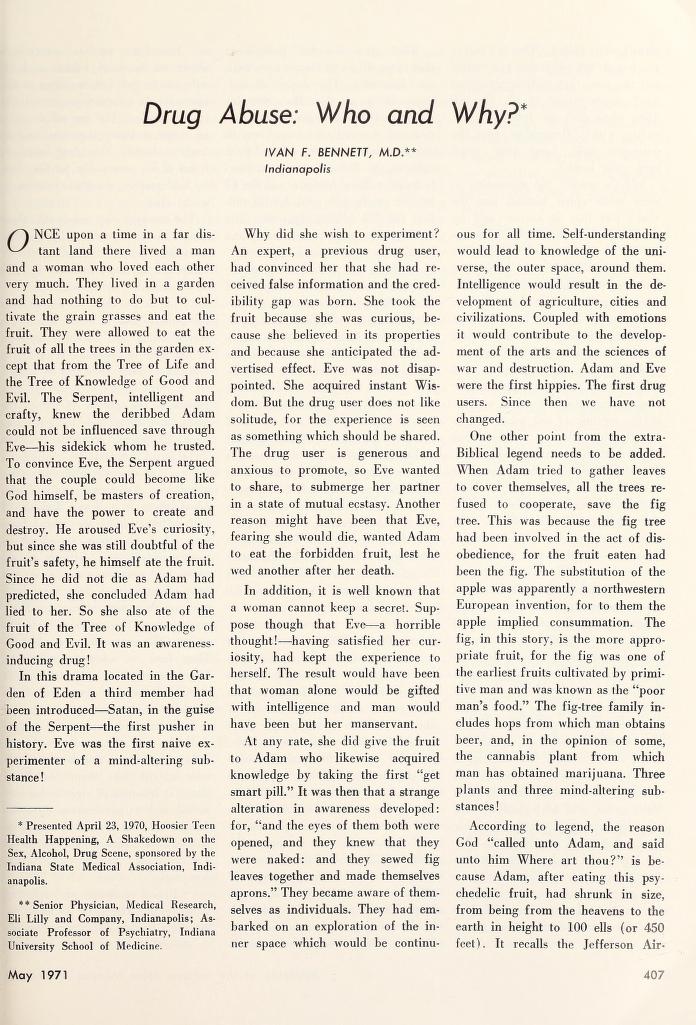
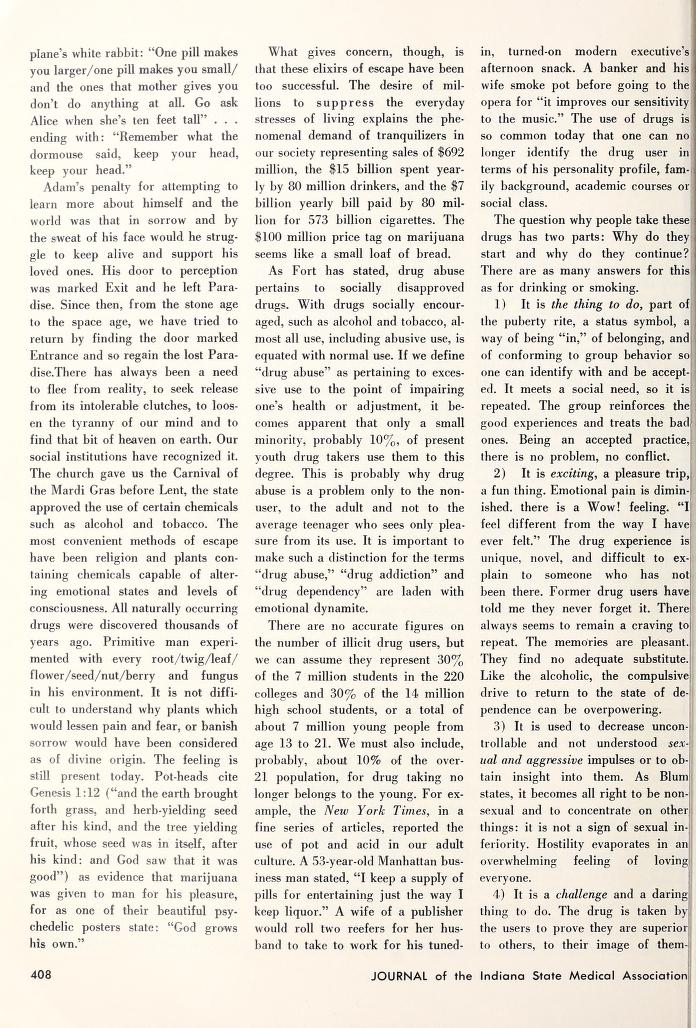
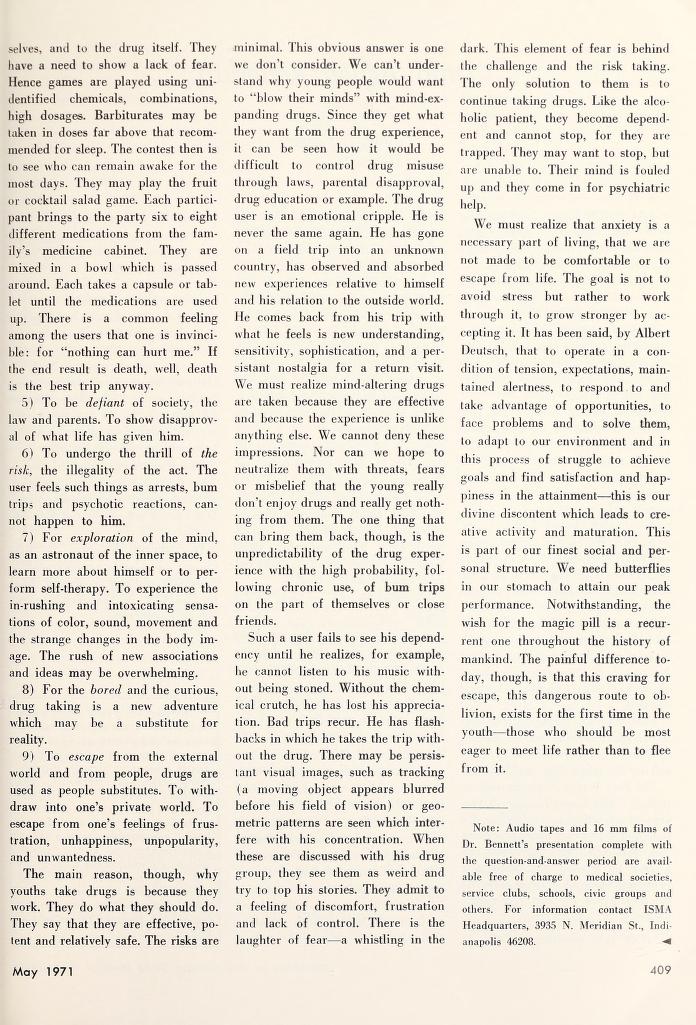
Ivan F. Benet, a physician from Indianapolis, published an article in the 64th issue of the Journal of the Indiana State Medical Association, the first issue of 1971 (between January and June). In this article, perhaps for the first time, he compares the story of original sin to the use of psychedelic drugs. He is not exactly in favor of drug use; rather, he argues that drug users are “emotionally crippled,” succumbing to boredom, curiosity, and their desire to escape the external world and the people around them. “Drugs serve as a substitute for people, allowing users to retreat into their private world and escape feelings of frustration, unhappiness, unpopularity, and rejection.” Users want to “express dissatisfaction with what life has given them” and are unable to set boundaries before their drug use turns into abuse—defined as excessive use to the point of harming one’s health or functioning.
Benet also attempts to downplay or perhaps exaggerate the scope of the issue, presenting statistics—10% of drug use cases lead to abuse. For him, consuming this forbidden fruit equates to original sin, a view typical of the period. However, the reason I came across this article was not because it is anti-drug; rather, the opposite: it is cited as an early source comparing drug use to the sin in the Garden of Eden. It is referenced in the context of the story of Enki and Ninhursag from Sumerian mythology. Scholars see this myth as a source for the story of the Garden of Eden, but in the Sumerian version, the context is broader.
In the Sumerian version, Enki, the god of wisdom, rapes his descendants, who are goddesses of vegetation and fertility. According to Thorkild Jacobsen’s interpretation, there is even a reference to reeds—whether bulrushes or some other kind of reed. Ultimately, the goddess of weaving is born. Raymond C. Van Leeuwen argues that weaving was a ritual act and refers to women’s roles in the temples of fertility goddesses. A similar reference can be found in the Bible. In Exodus 35, it states that “every wise-hearted woman spun with her hands and brought what she had spun.”
In another text, Enki and the World Order, there is a story where Inanna (or more precisely, “Gula”) complains to Ea (Enki) that she has not been given enough powers and responsibilities. She protests that she has been neglected compared to other goddesses. Enki tries to appease her by granting her additional powers and responsibilities, teaching her the secrets of weaving and the healing arts—practical herbalism, or as Jacobsen interprets it, the art of magic. In short: cannabis, which can serve both as fabric and as a medicinal or psychedelic drug. Indeed, Inanna, also known as Ishtar, is said to have had women weaving her kunnabu.
However, that is a separate matter. In the continuation of the story of Enki and Ninhursag, it is described that as a result of the rape of the goddess of weaving, the pains of childbirth were introduced—pains that did not exist before. Consequently, Ninhursag performed an abortion and planted the fetus in the ground, from which eight plants sprouted. Enki, hungry, ate them. Ninhursag became angry and cursed him so that each plant would harm a different part of his body. Enki then suffered in eight parts of his body. The gods sought to reconcile with Ninhursag, and she healed him and removed the curse. As a result, she created an “antidote,” or perhaps she created a healing goddess instead of a curse. Thus, eight different goddesses were born, one of whom is Ninkasi (“Goddess of Potions”), representing the healing related to Enki’s mouth—specifically, healing through the oral ingestion of medicinal herbs, such as beer or another psychedelic drink.
The article that draws the connection between the psychedelic interpretation of the Sumerian Garden of Eden narrative and Bennett’s article is by Ana María Russo from the University of Buenos Aires. It was published in early 2024 in the sixth issue of the journal Qeios.