
תגית: religion
-
Biblical and mesopotamian divination
I have acquired the book Mari Discoveries and the Biblical World, currently available for 25 NIS on the publisher’s website. Originally published 12 years ago, the book explores numerous parallels between the Mari archives and the Bible. Below, I present several examples related to divination and rituals of war and peace: 1. Sacrifice Before War: Shamshi-Addu,…
-
Was the Jerusalem temple originally pagan?
A structure spanning an area of 220 square meters, containing eight rooms, has been uncovered in the Jerusalem Walls National Park. The structure includes an altar, a standing stone (matzeva), and even a wine press. In one of the rooms, a mysterious V-shaped carving was found on the floor. A new article published this week in…
-
Purple in ancient Greek Cult
Purple was a distinct marker of wealth, luxury, and social status in ancient Greece. It symbolized divine and priestly status, with purple garments often signifying the role of priests as intermediaries between gods and humans. For instance, the priests of Demeter in Ephesos wore purple garments as part of their rituals. Similarly, the priests of…
-
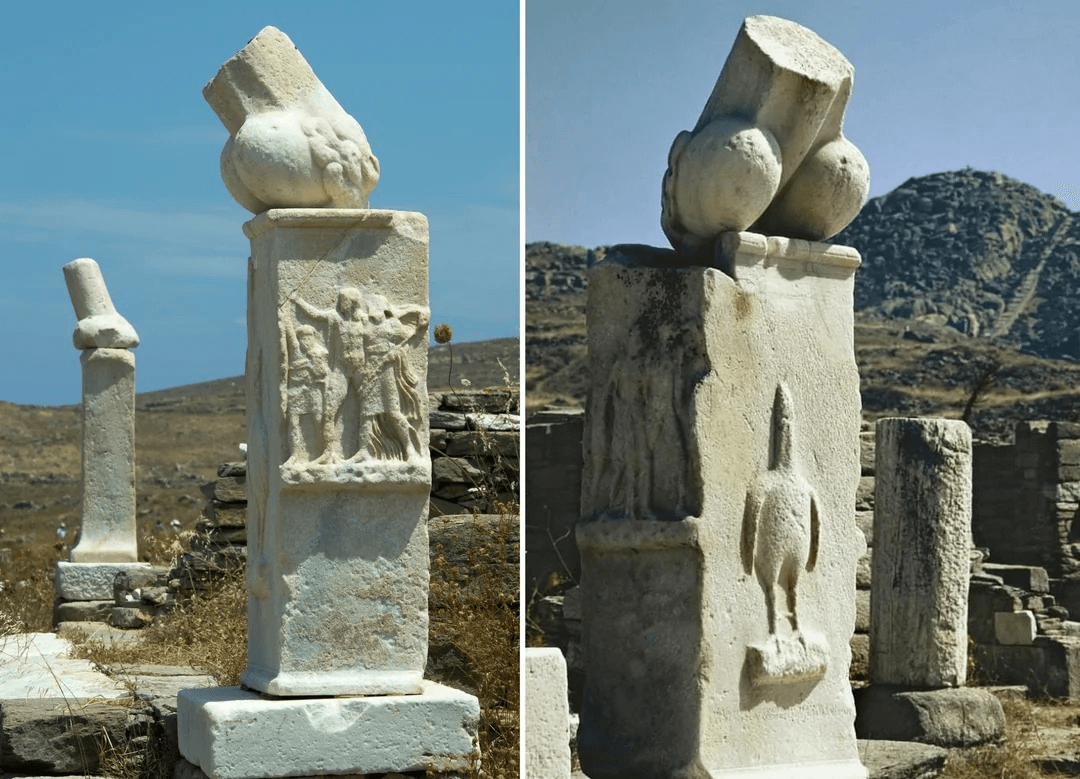
The phallic statues of Stoibedeion
The Stoibedeion is an ancient monument on the island of Delos in Greece, dedicated to the fertility god Dionysus. The Stoibedeion consists of a rectangular platform on which stood a statue of Dionysus, flanked by two figures portraying the Papposilenoi—representations of Silenus, the mentor and tutor of Dionysus (Pappos = like "papa," father). Silenus is…
-
Ancient Christianities and the role of magic
A new book by Paula Fredriksen deals with the first 500 years of Christianity. Chapter 7 focuses on pagan practices within early Christianity and the struggle against them. It describes Christian exorcism rituals that, from the outside, might have appeared similar to pagan ones. This ritual often involved commands directed at demons and healing through…
-
Ancient Phrygian Sacred Sites Uncovered at Midas Castle
During excavations at the Midas Castle in Eskisehir, Turkey, archaeologists uncovered remnants of structures from the Phrygian period, dating back to approximately 800 BCE. The findings include ancient ovens, an open hearth, and rock-carved basins—all serving as evidence that the site was used for ceremonial events, such as ritual feasts and animal sacrifices. Additionally, a…
-

The Evolution of Consciousness: From Primordial Unity to Self-Awareness
Future researcher David Passig has a new book that deals with the evolution of human consciousness, referred to as "qualia". The book describes its stages of development so far and offers directions for its future evolution. Passig explains ancient ideas about humanity’s place in the world, how they developed into religions, and the paths they…
-

The Soma preperation as copper melting simulation
I am currently reading the book "The Copper Revolution" by Nissim Amzallag. It's one of the best and most mind-blowing books I've read. In short, the book argues that the origins of religion lie in humanity's amazement at natural phenomena of heat and wind. Through this form of observation, ancient chemistry was born, enabling humans…