
תגית: religion
-
Primitive Science and Sacred Rituals: The Evolutionary Significance of Food in Human History
The homo-sapiens has two things that are important to them: spreading their seed, according to evolutionary theory, and preserving their life, which is also a kind of evolutionary theory, because if they don't preserve their life, they can't spread their seed. To preserve your life, you need to avoid dangers, but mainly to find food.…
-
Mythology and Malaria
Ancient cultures around the world intertwined mosquito-borne diseases, such as malaria, with mythology. People used gods, demons, and supernatural forces to explain the spread of these diseases. In the second chapter of his book, "The Mosquito," recently translated into Hebrew and originally published in English in 2019, Timothy C. Winegard provides several examples. Mesopotamian texts…
-

the rain cults of the maya people are explained through the geologic phenomenon of the yucatan peninsula, and the holy karst sinkholes that shaped the mayan ancient religion
Chaac is the rain god of the Mayans and was at the center of their worship, probably due to the fact that he rains water from the sky and the Mayans had an issue with water. The Mayans lived in the Yucatan Peninsula. The Yucatan Peninsula is a geological phenomenon. The peninsula consists almost entirely…
-
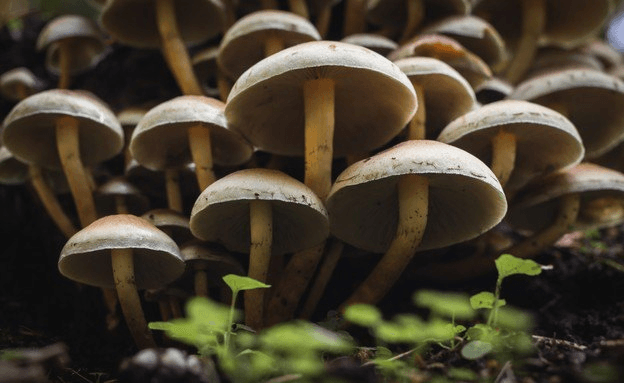
Mushrooms as a fertility symbol
Throughout history mushrooms have symbolized fertility in various cultures due to their rapid growth and reproductive abilities. And they became sacred symbols for various fertility gods. The fact that mushrooms would grow out of nothing made the ancients wonder. They thought that the mushroom, which is a plant, has no seeds and considered the formation…
-
Philistines used hallucinogenic… mushrooms?
We recently received scientific confirmation that the Philistines used hallucinogenic drugs as part of their religious worship. Well, Robert Graves already in 1960 raised his speculation about the worship of the Philistines, as if it was a worship of a psychedelic mushroom. It's not proven at all, but somehow it turns out from the Song…
-
Jesus opposed the temple sex traffic
Was the cleansing of the Temple of Christ actually a protest against sex traffic of minors? Is that why he talked so much about the children's innocence? Was his claims of desecration of the temple for being a "a house of trade" because the anointing oil symbols were used to drug these minors? Were the…
-
Book: magic and religion on the shores of the Mediterranean in antiquity
A new book published in November examines aspects of magic and religion on the shores of the Mediterranean in antiquity, and in particular ways in which religious and mythical ideas, including the knowledge and practice of magic, were transmitted and adapted over time throughout Greco-Roman cultures, the Near East and Egypt through the exchange of…
-
The Mysteries of the Enaree: The Androgynous Shamans of the Scythians
Who were the Anarya – the Scythian shamans who were born male, castrated, behaved as women, abstained from heterosexual sex, underwent initiation through passive anal sex, and engaged in fortune-telling while soaking in a cannabis vapor bath? It is not for nothing that it mentions the Kdeshim in the Asherah temples. The Anarya worshiped the…
-
The psychoactive incense
Since "God" and Garden of Eden" are allegories, they can be interpreted as a code name for the psychedelic space. Once, as it were, man was on an endless trip, but it happened and he was banished to the bottomless abyss of soberness, but there is one fruit that if he eats, he will return…
-
Why Religions Seem to Involve Outlandish Beliefs
Why are the beliefs of religions so irrational and how can smart people believe such things? Neil Van Leeuwen from Georgia State claims in his new book "Religion as Make-Believe: A Theory of Belief, Imagination, and Group Identity" that one must distinguish between two cognitive attitudes that make up religious faith: "mundane belief" and "groupish…