
תגית: archaeology
-
New Neolithic Stone Circles on Dartmoor: Unlocking the Sacred Landscape of Prehistoric Britain
Two new Neolithic stone circles have been discovered on Dartmoor, an area renowned for its prehistoric heritage. One of the circles, named "Metheral," resembles Stonehenge and may have been part of a henge monument. The second circle, located outside the "sacred arc," was found near a collapsed dolmen known as the "Fallen Brother Dolmen." Additionally,…
-

Psychotropic and Symbolic Substances in a 2nd-Century BCE Egyptian Bes Cup
In a study focusing on an ancient Egyptian "Bes" mug from the Ptolemaic period, dated to the 2nd century BCE, researchers successfully uncovered the composition of substances used in religious and magical rituals in ancient Egypt. The research was led by Davide Tanasi, a professor at the University of South Florida, who identified chemical traces…
-
Tracing the Domestication of Opium: From Wild Poppy to Ritual and Trade in Prehistoric Cultures
The story of opium domestication is a complex process that can be traced through changes in the genetics and morphology of its seeds over thousands of years. The poppy began as a wild plant native to the western Mediterranean region, specifically the coasts of Catalonia. Initially, it was harvested by prehistoric cultures as part of a…
-
Copper Mining and Ritual Practices in Timna
The idea of a copper miner cult in the Arava Valley is still considered fringe, discussed mainly by daring biblical scholars and some sensationalist enthusiasts (such as Israel Knohl) or non-mainstream researchers (like Nissim Amzallag). But that may be changing. Professor Erez Ben-Yosef and Dr. Sabina Kleiman from the Department of Archaeology and Ancient Near…
-
earliest ochre mine unveiled
Researchers have uncovered the world’s oldest ochre mine, located in the “Lion Cavern” in Eswatini (formerly Swaziland). The researchers estimate that intensive ochre mining took place at this site approximately 48,000 years ago. This finding provides rare evidence of early human use of ochre pigment, which served religious rituals, burial ceremonies, body adornment, and established…
-
Oldest bread is even earlier than oldest beer, both of the Natufians
Next week, we are going to hear about the world’s oldest beer, discovered around 12,000 years ago at a Natufian site (Raqefet Cave in the Carmel). But it's worth noting another Natufian site where a grain-based product was found, shedding light on Natufian grain usage that predates the domestication of grains. Once we understand this,…
-
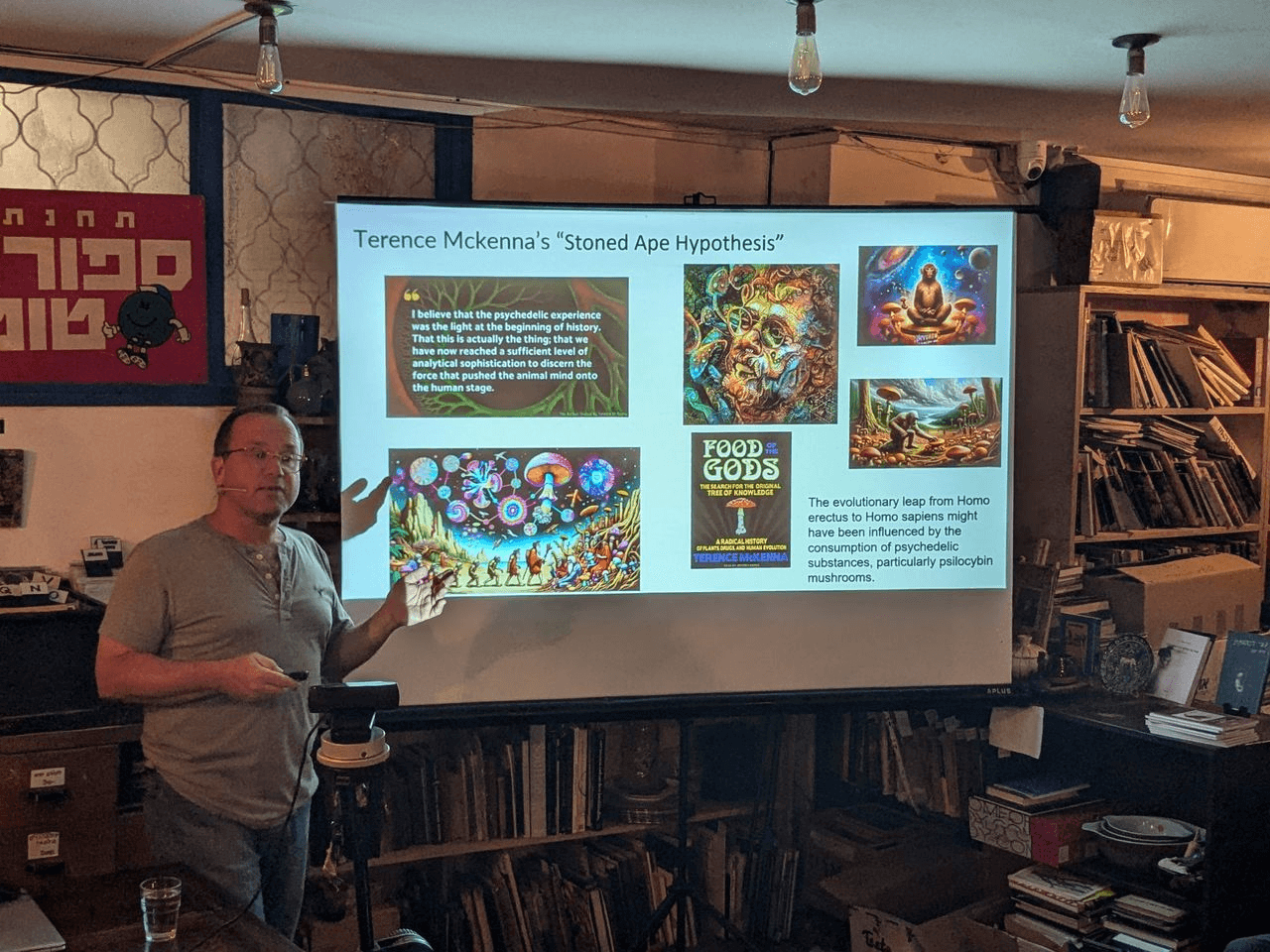
The trigger of the prehistorical man to use drugs
Yesterday, the "Temple of Consciousness" series began with a wonderful lecture by Prof. Ran Barkai from the Department of Archaeology at Tel Aviv University. The lecture discussed psychedelic experiences during the Paleolithic period, focusing on caves as "doors of perception" or "portals" for communicating with the cosmos and the world beyond. It was suggested that…
-
New Study of 'Passover Letter' May Change What We Know About the Birth of Judaism
Haaretz English published an article on Dr. Gad Barnea's research from Haifa University, which explores the potential Zoroastrian origins of the Passover holiday as suggested by the "Passover Letter" from the island of Elephantine. Barnea points out several parallels between the customs described in the Passover Letter and Zoroastrian rituals, especially the "Yasna" sacrifices, the…
-
The caves as the doors of perception
Professor Ran Barkai will open the "Temple of Consciousness" lecture series tomorrow with a talk on the psychedelic experience in caves. Professor Barkai is an archaeologist and will likely focus on material findings that suggest entering a cave was a way for ancient people to experience altered states of consciousness. I doubt he will address…
-
Archaeologists unearth rare serpent carvings depicting ‘powerful snake dynasty’ on ancient Mayan ball court
Archaeologists have uncovered carvings on an ancient Mayan ball court at the Dzibanché site in Quintana Roo, Mexico, depicting rulers of the Kaanu’l dynasty, who were active during the Early Classic period (500–600 AD). The stucco reliefs were found on two platforms near the ball court, which was used for ceremonial activities and ball games…