
תגית: archaeology
-
5,000-year-old settlement shows evidence of early urbanization in Israel
In archaeological excavations at Khirbet Husham near Beit Shemesh, conducted by the Israel Antiquities Authority, a settlement from the Early Bronze Age, approximately 5,000 years old, was uncovered. The site includes a public ritual structure containing around 40 artifacts preserved in their original condition as they were placed before the site was abandoned. These items,…
-
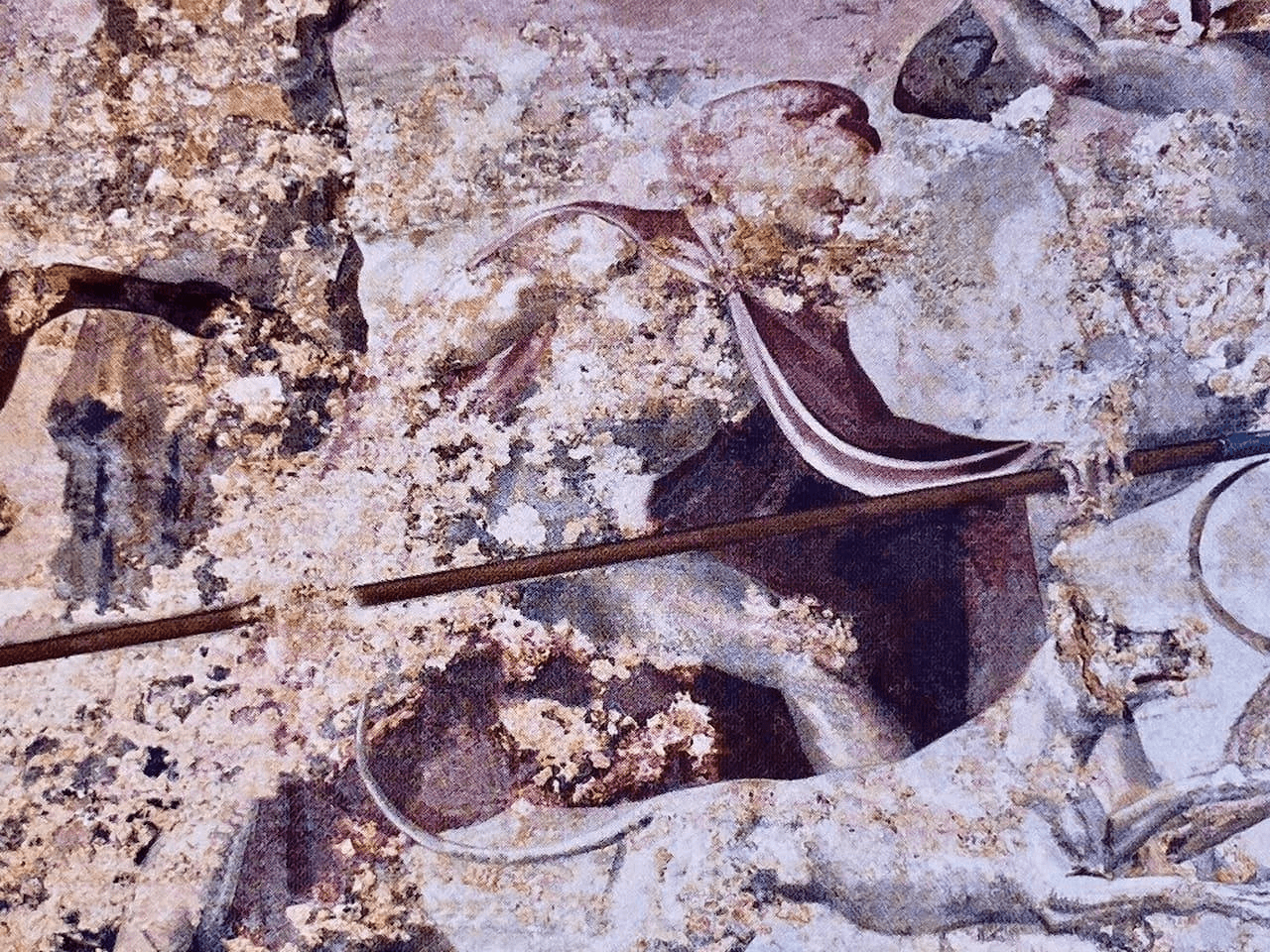
Sacred tunic of Alexander the Great identified
During excavations in Royal Tomb II at Vergina, Macedonia, Greece, archaeologists uncovered several prestigious artifacts, including a purple tunic, a golden oak wreath, and various royal items like a diadem and scepter. The purple tunic is made of cotton and dyed in Tyrian purple, a color associated with royalty. The golden oak wreath was found…
-
Czech bronze Age burial site demonstrates "sacred space"
Archaeologists have discovered two important burial sites near the city of Olomouc in Central Moravia, Czech Republic, during a rescue excavation along the future route of the D35 highway between Křelov and Neředín. The burial sites are linked to Chalcolithic European cultures, such as the Nitra culture and the Corded Ware culture. In the graves…
-
Archaeologists Find Throne and ‘Hall of the Braided Serpents’ in Peru
At the Pañamarca archaeological site in Peru, a throne room and a hall with murals of serpents have been uncovered, associated with the ancient Moche culture. The throne room is adorned with paintings depicting a woman sitting on a similar throne and receiving visitors, along with images of a crown, a crescent moon, sea creatures,…
-
The Lasting Impact of Tobacco on Human Bones
Archaeologists from the University of Leicester examined human remains buried in Britain between the 12th and 19th centuries, revealing the profound impact of tobacco on bones. Tobacco leaves leave traces on the bones of smokers, traces that not only last throughout their lives but also remain for hundreds of years after their death. Now, it…
-
Child slave for the Alcohol industry of late bronze age
In the Early Bronze Age, there was high demand for goblets and pottery in the Kingdom of Ebla, mainly due to feasts where alcohol was consumed. To meet the need for increased production of these vessels, the kingdom began employing children from the age of seven in workshops as a cheap and easily controlled labor…
-
Insights from Raqefet Cave and the Natufian Era
Professor Dani Nadel researched Raqefet Cave for years during the first decade of the 2000s, yielding numerous findings on the burial practices at the site. He published these in a series of articles, the latest of which appeared in 2018 and reports on stone mortars found alongside Natufian graves, bearing signs of beer production. These…
-
Ancient Phrygian Sacred Sites Uncovered at Midas Castle
During excavations at the Midas Castle in Eskisehir, Turkey, archaeologists uncovered remnants of structures from the Phrygian period, dating back to approximately 800 BCE. The findings include ancient ovens, an open hearth, and rock-carved basins—all serving as evidence that the site was used for ceremonial events, such as ritual feasts and animal sacrifices. Additionally, a…
-
Was the coca known in europe more than 200 years before we knew it was?
Traditionally, it was believed that the coca plant first arrived in Europe in the 19th century, brought by explorers and traders who carried samples from North and South America. Spanish colonizers were familiar with the plant as early as the 15th century, but it did not become a significant trade commodity in Europe until the…
-
‘high’ on oxygen deprivation – the debate
Three years ago, a Ph.D. student of Professor Ran Barkai from Tel Aviv University co-published an article with him on a hypothesis suggesting that Stone Age cave paintings were created, at least partially, due to conditions of oxygen deprivation (hypoxia) in the caves. According to the research, low oxygen levels in the caves may have…