
-
Gidi Gur and Nissim Krispil's "Persian Medicine – Ethnobotany on the Silk Road"
Now I'm the the proud owner of "Persian Medicine – Ethnobotany on the Silk Road", a 600+ pages-long book written by Gidi Gur and Nissim Krispil, published last year.
Nissim Krispil is considered one of the fathers of ethnobotany in Israel, and stands behind one of the foundational books in the field, "Yalkut hatzmachim" ("herbs anthology") which was published between the years 1983-1988 in five volumes and published from time to time in new editions due to the great demand. Krispil is an autodidact outsider of academia, but he is respected so much that in 2017, Ben Gurion University of the Negev awarded him a Lifetime Achievement Award. He is an expert in folklore and folk medicine among the Bedouins, the Arabs of Israel as well as in his native Morocco. An interesting and relatively famous trivia item, he spent a year in prison after being convicted of growing cannabis, while the court does not accept his claim that the cultivation is for research purposes. Gidi Gur is a practitioner of Chinese medicine, a specialist in minorities' medicine and the chairman of the Israeli Association for Medicinal Plants and the Israeli Herbalist Association.
The book includes a historical introduction and a broad overview of Persian medicine, and 36 encyclopedic entries on various medicinal plants and their uses in Persian, Uyghur, Indian, Arabic, etc. medicine along with various folk and religious uses, as well as botany, biology, medicine recipes and tutorials.
A brief glance at the Syrian Rue (Paganum Harmala), the Harmal, the Espand, reveals that the ritual of the Sotah woman and the drinking of the bitter water in Numbers 5, fit the descriptions of Harmal poisoning which may cause the pregnant to abort due to the contractions of the uterus, as described in Numbers "She pinched her belly and her thigh fell". Also, in the book of 2 Kings 19:3 it is said, "For sons came to the point of 'crisis' (hebrew: mashber) and there was no strength to give birth", which implies that a decoction of the plant, which his name in hebrew is "shabar", was used to cause an abortion, and the Bedouins testify that this custom is preserved to this day for the purpose of abortion in girls who became pregnant outside of the framework the marriage.
-
Zeev Ben Arye's "through the eyes of the beholder"
Zeev Ben Arie finally got his PhD degree and the doctoral thesis is published as a book called "In the eyes of the beholder" and deals with holy places and the form in which a place contributes to a sense of holiness in one's experience. Congratulations.
Zeev Ben Arie is an Israeli travel guide and author who has published a number of books on various religious sites in the world and their cultural history – including England, Greece, Bulgaria and of course Israel. In his books he deals with esoteric and mystical movements in the three abrahamic religions, and in the context of the group he wrote books on the Neolithic goddess culture, "city cultures" the birth of religions, as well as Orphism and Gnosticism. Unique books of its kind in Hebrew. You can also find materials on these books and topics on his "Tarbuyot Olami" website. He will launch his book on Saturday 20/1.
-
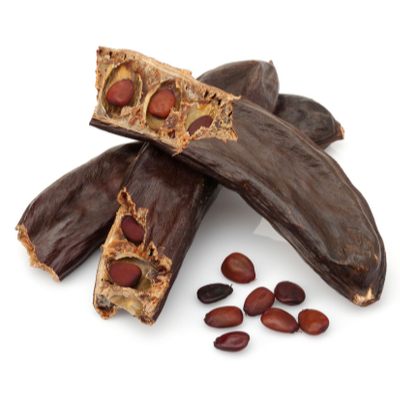
The carob as a symbol of destruction and redemption
The carob appears in quite a few Chazal (i.e jewish sages) legends in the context of destruction and redemption. I believe that the source of the adoration for the carob comes from the Hellenistic culture.
Two legends are known: the first is about the Khoni Hame'agel (John the circle maker) falling asleep for 70 years, which is a time when the carob bears first fruits – 70 years are also the years of destruction, and another version of the legend tells that the time when the Khoni Hame'agel fell asleep was actually the time of exile, he fell asleep when the first temple was built was built and woke up when the second temple was already built. In the meantime, the temple was destructed.
A second legend tells of Rabbi Shimon bar Yochai (aka Rashbi) who hid in a cave for 13 years, feeding only on carobs. After Rashbi came out of the cave, he cleansed Tiberias of the impurity of the dead.
What connects these two legends is an ancient legend that originally comes from the Minoan culture in Crete. Epimenides, who is considered the prophet of Zeus, fell asleep in a cave, which is also known as the Cave of Zeus, for 57 years. After leaving, he cleansed Athens of a plague that broke out in it. Zeus himself hid in this cave (where Epimenides fell asleep, and Pythagoras was also initiated there) in his childhood during the time when he feared the wrath of his father who wanted to kill all his children, because one of his children was supposed to kill him according to the prophecy. During all this time he was fed on honey, which according to some interpretations was none other than carob honey of which identify ambrosia with carob honey.
Epimenides is considered to be the one who, according to the legend, founded the Orphic cult, and who had a special section with the "near death", meaning something that is between a mystical experience, death and resurrection. Reaching this state, which has been a shamanic practice since time immemorial, also made the Orphs a sect that worships this state of life after death. Or more correctly to the meeting point between them, between life and death, what is called "immortality". From there it seeped into Judaism.
A state of destruction was considered a state of death, a state of the building of the Temple was considered a state of life, and this moment when the world went from state A to state B, was considered the moment when the order of the world changed, or as the Gemara calls it, "in these days, the world has changed". Meaning, as soon as the temple was destructed, something "x" happened and as soon as the Messiah comes and builds the temple, something "x inverse" happens.
Well, what is this "x" thing? The Gemara in the Sotah tractate speaks of the fact that from the time the Temple was destroyed "there is not a day without a curse, and the taste of the fruits has gone and some say even the fat of the fruits." What do you mean? Rabbi Yochanan says, "When a child ate carob, a thread of honey is drawn on both his hands". That is to say, the thing that symbolizes that "threshold" is the carob. The one who eats carobs is the one who is able to reach such a state, and the one who lives on carobs diet is the one who was in such a state of platonic ideal perfection.
It is not said what the diet of the Orphs or the Pythagoreans. It is said that they were vegetarians, it is not said what vegetarianism is. This vegetarianism, I suggest, was the same diet of the Rashbi, which also turns out to be the diet of John the Baptist – carob honey, according to the verse in Isaiah "If you desire and hear, you shall eat the good of the land,; and if you won't desire to do it, you shall be eaten by the sword (or: eat the sword)" – and as the Midrash Rabba says sword is actually carob (same letters in hebrew חרב).
P.S In the book "Paralipomena of Jeremiah" or "4 Baruch" there is a similar story about "Abimelech the Ethiopian", aka "Ebed-melech the Kushi", who fell asleep for 66 years while gathering "figs dripping with milk". Rivka Nir (of the Israeli open university) explains that the book is an adaptation of the midrash about the Khoni Hame'agel, which underwent a Christian metamorphosis and the fruit became a fig in order to link it to Jesus' prophecy about the flowering of the fig as an eschatological sign (Mark 13). The purpose of this book is similar, to tap the transition between destruction and redemption, dream sleep and awakening, and the non-destructed situation as a situation where the fruits have a its juicy taste.
-
Follow-up: Why was psilocybin developed?
The molecular structure of psilocybin mimics serotonin and binds strongly to serotonin receptors, especially 5-HT2A, a famous receptor that many psychedelic drugs bind to. When a chemical binds to these receptors in mammals as well as insects and arachnids, they produce unnatural and strange behaviors. Some have suggested that this altered state of mind may directly deter predation. It is also possible that psilocybin functions as a laxative or emetic to disperse spores before they are fully digested.
Everything was known until today. But there is a problem. After all, the appearance of psilocybin is not that frequent, so it is unlikely that animals will learn to recognize mushrooms that contain it and eat them. Therefore, it has been suggested that the mushrooms are intended to target insects, but the problem is that there is too much evidence of healthy and thriving insects that feed on these mushrooms. What then can be said?
It's called the "Gastropod hypothesis". The timing and dates of the psilocybe coincide with the KPg boundary, the geological marker of the asteroid that plunged the Earth into a brutal and prolonged winter and killed 80% of all life. Two life forms that thrived during the darkness and decay were fungi and the family of land snails. Evidence, including the fossil record, shows that snails had a massive diversification and expansion immediately after the asteroid impact, and land snails are known to be heavy predators of fungi. With the study's molecular dating of psilocybin to about 65 million years ago, the toxin psilocybin may have evolved as a snail deterrent. Now all that remains is to prove it!
-
What is the meaning of "Rock of Israel"?
Last week we read in Parashat Shemot, in Exodus chapter 4, how Tzipora took a flint and circumcised her son, after an angel threatened to kill Moses, "And Tzipora took a flint and cut off her son's foreskin and touched his feet and said 'that you are a bridegroom of blood to me'". Also in the book of Joshua it is said that Joshua performed a cirumcision with a flint "At that time God said to Joshua 'make flint swords for you and again circumcise the Israelites, a second time'".
The word "Tzur" in which the bible use for "flint" is important to us because there is a reference here to the same flint, or rock, that Moses struck and water came out of it. This case that is described in Exodus 17 was indeed in a place called "Masa u Meriva", but in verse 6 of this chapter it is said that the flint is in the "horeb" (or more correctly in the spelling: "Cherev", "a sword"), "I stood before you there on the flint with a sword, and you struck the it and water came out of it, and the people drank".
The third place where the word "Tzur" is mentioned in the Book of Exodus also refers to Horeb, when Moses goes up to Mount Sinai a second time after the sin of the golden calf and begs God to forgive the Israelites for their sin. And there it is said that Moses asks God to "show me your glory", God agrees to show only his rear, in the same place "Tzur", "Here is a place with me and you will stand on the flint, and it will be for my glory and I'll put you in the flint gap and I will reveal my hand (literally: spoon) on like you until I pass".
Before we move on, it should be noted that the act in Exodus 17 is an act that repeats 3 times in the Bible, in which the Israelites had no water and they "tested God". For the first time, in chapter 15, it is told about the children of Israel's stay in a place called "Mei Marah", the children of Israel complained that they had no water and then God ordered Moses to take a tree and throw it into the water, and the water became sweet. In this place it is described that God is the one who tested the children of Israel, and immediately after that God promises that if the children of Israel listen to His voice, "I will not put all the sickness that I put in Egypt on you".
The late Dan Merkur in his book "The Mystery of Manna" (2000) built a plenty of conclusions on these two cases. Mainly on the fact that between these two cases there is "the" chapter of the manna, and there is a symmetry between them that before the chapter God tests them and after them they tests him, and also that the third time this case is described in the book of Deuteronomy 20, the smiting of Moses on the rock is abhorred by God, and that there is a wordgame about the word "bitter", in numbers it is about the meaning "the disobedient", "who change the words of God" (literally "Morim"), and in Exodus it is about the meaning of the bitterness of the water ("Marim"). "Bitter cursed water" is considered, as Merkur shows, part of the ritual of the Sotah woman in chapter 5 of the same book, so she brings a grain offering prepared in an unusual way, that is, without oil and Frankincense, and at the same time the priest "mashing" (probably with a stone) talismans curses and gives this woman to drink the same water as a kind of Ordeal, "the judgment of God".
This ceremony, Merkur claims, is actually part of the mystery that later prophets such as Ezekiel (chapter 3) of grinding a scroll and some other substance and swallowing the powder that was created. This "some substance" is nothing but ergot, and immersing it in water is actually neutralizing the toxic substances in it and leaving only the psychedelic substances. The resulting drink is bitter and undrinkable, and in order to make it drinkable, some herbs are added to enhance its taste, such as mint or thyme. This can be seen as the same recipe as the one used to prepare the kykeon in Eleusis, and what is actually described in the tales of Moses, the rock and the water are nothing but a description of the ceremony of preparing the same kykeon, which he claims is at the center of Jewish worship. The third story in which this ceremony is coded and rejected, tries to say in general that participation in this ceremony and drinking the water is allowed only for a few, only for a closed group of priests, but there was an earlier version of scriptures in which the participation of the general public was allowed, by the same writer who recorded his participation of King David in such a ceremony during his stay with Ahimelech the Gilonite in the city of the priests Nov (1 Samuel 21).
Let's get back to our point: Tzoe is the same stone used for grinding or crushing any material into powder, for seasoning with water and making a drink. This drink is later consumed in ritual circumstances, and one reaches the same spiritual place one supposedly reaches after performing a circumcision. Probably because the male penis is able to bring the participant to a material orgasm, and drinking the drink is able to bring him to a spiritual orgasm.
Another chapter that supposedly describes the same ceremony and focuses on the stone is Isaiah 28. In this chapter Isaiah describes the "drunks of Ephraim" who perform at the top of a place called "Valley of Oils" some kind of ceremony of swallowing the tip of a wilted (or dried) leaf with a spoon, "That fading flower, his glorious beauty, set on the head of a the valley of oils as a firstfruit of fig before made when he sees it while he swallowed it with his spoon". The ceremony goes wrong and instead of these people prophesying, they start vomiting everywhere and getting crazy from the wine, that is, a very bad experience ("Bela" like "Belial", literally), "And those also got wrong with the wine and in the reward went astray, saw the wrong thing and muttered meaningless things ('paku pelileia'), because every table filled with vomit went out without a place"
Presumably, this case should be seen as the consumption of inaccurate doses or some kind of disruption in "set and settings". The way this drink is prepared, the fruit of the "summer" (that is, dried fruit), is a precise cut – "rule upon rule, line upon line, line upon line, Here a little, there a little." But the fools, who along with the cutting itself, also use all the other manners of the prophets, to pretend to be experts, they fail. This is also the meaning of "paku pelileia" – "pelileia" is for prayer, the spells that the pagan witch-doctors mutter as they prepare the concoction. Alternatively, the mutterings that those entering a trance mutter. Those charlatans got a bad trip and nightmares. These are visions and hallucinations just as the wine caused. But while the effect of the wine was positive, the effect they experienced was negative, obviously because they were unskilled bartenders, in contrast to Isaiah himself the expert one who received the exact recipe from God himself. "paku" is a temporary paralysis or convulsions, just as the prophet Daniel describes. In the book of Samuel (1 Samuel 25:31), the root is mentioned in the same subjunctive with "a hindrance", "and you shall not have it as a brake or a hindrance of the heart".
The word "line", which God promises to give in return, "and I put judgment to the line and justice to the weight" (Isaiah 28:17), is explained by the wrong way in which, according to Isaiah, they prepared the drug for consumption, "line to line". The wrong way caused them to have nightmares, and what Isaiah is saying is that God is the one who will teach them (using his worship) how to prepare it. He uses the image of the stone, because a stone was used for two things, both to be a stone of justice on the "scales of justice", and also to be a stone with which the fruits are threshed or ground and the drink prepared from them.
When talking about "scales of justice", we are mainly talking about weights with which they weighted goods in the market, and the sellers usually cheated and charged much more than the weight itself (Leviticus 19:5, Deuteronomy 25:13, 15). So what God will teach is not only how to prepare the drug in the right measure, but of course, as the usual interpretation claims, and as Isaiah himself claims in chapter 11, the role of the one who will teach the aforementioned divine psychedelic knowledge, aka the Messiah, is to instill justice, "and justice was his waist and faith in was his loins" (remember, loins are for the circumcision).
But as mentioned, first and foremost, the stone is the same stone with which the fruits/leaves are ground (say, like tobacco). In Gemara Pesachim 87, it is said that the name of Hosea's wife was "Gomer the daughter of Davlaim" (Divlaim is pair of dried figs) because "everyone ground her like dried figs are handled". These fruits were ground with a flint. Or rather, a tool called a "wooden threshing board" was used, on the underside of which blades made of flint are embedded. Probably to separate the seeds from the flesh of the fruit, either to consume the seeds themselves, or to consume the fruit without consuming the seeds. It is worth noting that in the nightshades family and especially in mandrake, the seeds are the ones that are considered particularly toxic (and Solanine toxin makes people vomit. But I'm not trying to identify the fruit now).
The word "Tzur" repeats in the Haazinu poetry ( Song of Moses, Deuteronomy 32) many times: ״He is the Rock, his works are perfect, and all his ways are just.״"They abandoned the God who made them and rejected the Rock their Savior", "You deserted the Rock, who fathered you; you forgot the God who gave you birth" and especially "For their rock is not like our Rock, as even our enemies concede". The word "concede" literally is "pelilim" in Hebrew, and is a reference to Isaiah above. "pelilim" are the mutterings of a person who is in a hallucinatory state – this is what happens to those who prophesy in general, and if those who prophesy, worship the wrong ("lying prophets"), they eventually vomit or die.
Song of Moses is talking actually about the Solanum, whose fruits resemble grapes and taste bitter. I'll mention it again, what happens to those who received solanine poisoning is what was described above, or what is described in Isaiah, "All tables were filled with vomit and feces without a place." In the Song of Moses, it is written "Their vine comes from the vine of Sodom and from the fields of Gomorrah. Their grapes are vines of poison, and their clusters with bitterness". Literally, the poison mentioned is "Rosh", a general name for a poisonous plant that tastes bitter. Solanine tastes bitter, and young and unripe fruits are rich in solanine. The more the plant ripens, the more the dose of solanine decreases in it, and therefore to consume these plants for the purpose of mind altering, you must choose the most appropriate time with the exact dose. This knowledge is that of expert gatheres, and it is very easy to get it wrong. What the Song of Moses says is also what Isaiah said, only the expert bartender who received the measured recipe from God himself has the ability to brew a "fruitful" cocktail. And that it is written "Have I not kept this in reserve and sealed it in my vaults" (ibid. 34).
The prophets held such ceremonies where they brewed nightshade grapes into a kind of salad, or mash, in a pot, which they would wipe with bread or lick with a finger or a stick (or a spoon). Such a ceremony is described in 2 Kings, chapter 4, and what is described there is a failed ceremony: "And a man went out into the field to gather 'Orot' and found a wild vine and gathered from it a tubers (literally: 'Pakuot') full of his clothes and came and poured into the pot of the soup because he did not know it. And they poured it out for the people to eat and it happened that they ate from the soup and then did they shout and said, 'Death in a pot, the man of God,' and they could not eat. And he said, 'And take some flour,' and he threw it into the pot, and he said, 'Pour it for the people, and let them eat,' and there was nothing bad in the pot".
What Elisha did is to sweeten this bitter by mixing this mash with flour. Whether it is regular flour that will absorb the toxic liquids, or whether it is ergot flour that is considered sweet. Again we see what Merkur tried to explain, what is described several times in the books of Psalms and also in Song of Moses itself: "He nourished him with honey from the rock, and with oil from the flinty crag" (i.e Tzur).
In summary: the "Tzur" is an instrument with which the "transcendence" that leads to an orgasm, is performed in the ceremony (both of intercourse and in drug intoxication). And even God himself is called Tzur (rock) in many of the psalms of the Bible: "There is no one holy like the LORD; there is no one besides you; there is no Rock like our God", "For who is God besides the Lord and who is the Rock except our God", "The Lord lives, blessed be my Rock, let God be exalted, the rock of my salvation", "The God of Israel spoke, the Rock of Israel said to me", "Trust the god forever, for the lord himself, is the rock eternal", "Your singing will be like that on the night of a holy festival, and your heart will rejoice like one who walks to the music of a flute, going up to the mountain of the Lord, to the Rock of Israel".
-
Yamnaya rewrote northern Europeans’ genetic story
The Yamnaya culture that invaded Europe 5000 years ago and more or less destroyed all its Neolithic heritage religiously and culturally, it also destroyed it genetically, in the sense that genes of the members of this culture are present in the European population from that day until today. But at the same time the genetic defects of Yamnaya are also present in their genes. And as an example you can see the tendency to multiple sclerosis among Northern Europeans. In Eastern Europe, on the other hand, where the Yamnaya were not took over but assimilated into the population, there is the presence of genes from the earlier population and therefore there is a greater tendency to Alzheimer's disease.
The more interesting thing for our group is the ethnozoology. According to a study published yesterday in the Nature journal, multiple sclerosis gene variants helped people survive in the past by boosting the immune defenses of Yemenite herders against diseases transmitted by their domesticated animals. The Yamnaya were the first to domesticate horses, and used them as beasts of burden and even drank their milk (and they also saw them as holy and crazy animals, as happens to those who constantly drink mead, a drink they prepared for the first time). They traveled long distances using ox carts, along with their sheep and cattle. This closeness, which was the first of its kind in history, made the Yamnaya the first ever instance of what is called an "autoimmune disorder", that is, those who managed to survive the diseases transmitted by animals following some genetic mutation that developed in them, had to absorb the side effects of those mutations – hereditary diseases…
-
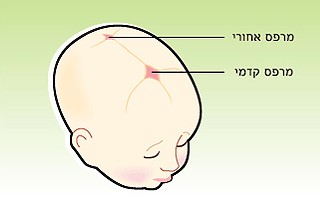
Is wearing tefillin a kind of ancient osteopathy ritual?
Is wearing tefillin a kind of ancient osteopathy ritual?
The origin of the word "pe'ah" is Akkadian (pâtu- side, corner) and is also suitable as 'forehead'. therefore when it is written in the book of numbers (24:17) "A star will come out of Jacob; a scepter will rise out of Israel. He will crush the foreheads ("paatei") of Moab, the skulls of all the people ("karkar") of Sheth" it's literally means some Israeli who uses a baseball bat and smashes the skulls of his enemies with it . when they write "a star", since it is "kochav", it may be "kavkav" perhaps referring to a wooden bat, or even a clog with which he steps on the enemies and crush them. however, we must remember that the Septuagint translates the original hebrew word as "karkar" and not "kodkod" as the Samaritan text does. the Septuagint translates it to "leaders" ἀρχηγοὺς.
This Israeli batter is likened to a lion that eats his enemies, and breaks their skulls, then lies down to rest ("Like a lion he crouches and lies down, like a lioness—who dares to rouse him?", Genesis 49:9). To break skull and tear arms is the role of a lion anyway, "lives there like a lion, tearing at arm or head" (Deutronomy, 33:20). lion is the mascot of the Messiah.
The idea with the forehead is obviously that behind the forehead is the brain. If you hit someone in the head, you shock their brain. And if you crush his head or cut him off, you are just refutes his words.
. In the Jewish exegesis, this verse of "tearing at arm or head" is a reference to the tefillin, something that is placed on both the arm and the head. It is said that the place to touch the head is the Fonticuli cranii where the bones of his skull are not yet fully connected when infant, so the bone can't protect the brain from shock. If you hit someone with their forehead open, it's even easier to shock their brain, so it's easier to refute his words of falsehood, influence him and finally convert him or teach him the truth.
. In the New Testament it is mentioned many times that people "put a mark on their foreheads" – whether they are worshipers of the beast or the righteous at the moment of revelation. What they are trying to say there is that what is on the forehead is actually the same thought that is beyond the bone of the forehead. The one who puts a mark on his forehead on his own initiative, is the one who declares that he thinks something specific.
According to this analogy, it can be understood that placing a tefillin and setting the mark on the forehead are actually intended for the purpose of exerting moderate pressure on the forehead and "splitting" it, or alternatively, "crushing" the head for the purpose of assimilating something. In the case of the Jews the word of God. The tefillin is a kind of massage on the brain, intended to be part of a setting and a set of tools for use in some kind of meditative ceremony.
Is ancient times there was a medical-religious custom of drilling into the skull, trepanation. There were those who believed that mental illnesses could be cured through this, even today medicine claims that this is a way to release intracranial pressure and therefore helps prevent migraines, for example. The drilling of the skull was done in order to reopen the same opening that closed when the infant matured, meaning that his skull was open and the drilling was intended to open it back up. Amanda Fielding, a consciousness researcher who supports such a skull drilling and also performed a drilling on herself, is quoted in an interview with the Guardian that this operation "improves the level of blood flow around the brain, and brings it to the same state as it was in childhood."
"When a baby is born, the top of the skull is very soft and flexible. The closure of the skull inhibits the effect of the heartbeat and causes a change in the ratio between the two fluids in the brain: blood and spinal fluid. It is the blood that feeds the brain cells with what they need, such as glucose and oxygen. The spinal fluid removes some of the toxic molecules. When blood flow becomes slow, fluids may accumulate and this can contribute to the onset of diseases such as dementia and Alzheimer's. As soon as you drill into the skull, you get more blood to the brain with each heartbeat, and this also washes away the toxins. There are probably other ways to achieve this, such as yogic breathing or cranial osteopathy, but the trepanation (drilling) is permanent."
Fielding believes that the tonsure of the Christian monks is supposed to be a remnant of the custom of drilling a skull for the same spiritual practice, and that it is essentially the same mark on the forehead. Is wearing tefillin also intended for the same need?
-
Psychedelic mushrooms existed even before the dinosaurs went extinct, and long before humanity appeared
Did you know Psychedelic mushrooms existed even before the dinosaurs went extinct, and long before humanity appeared.
The psilocybin mushrooms first developed the enzymes required for the biosynthesis that converts the amino acid tryptophan into psilocybin about 70 million years ago, back in the Cretaceous-Paleogene era. Based on the researchers' analyses, psilocybin first appeared in decaying mushroom species, but was later transferred to fungi that grow in soil and animal dung.
If it appeared before humanity appeared, the ecological function of psilocybin obviously has nothing to do with humans, so why then did it evolve? Since there is not much evidence about animals consuming the mushrooms, it appears that psilocybin was never intended for large critters. So who is it for? Are small ones, and if so then to whom, insects? The same ones that lay their eggs on the mushrooms and eat them regularly? And does this mean that the insects have developed immunity to this poison? Or actually against whom did the mushrooms intend to use their poisons?
-
The Cyperus as Kaneh Bosem
The Cyperus (hebrew: "Gomeh") usually grows in water reservoirs with a weak flow or stagnant water, i.e. in swamps. Such places where the scope of the Cyperus was large, were called "forest" (yaar, in hebrew) in ancient levant. We see in the Onkelos Targum of Exodus 2:5, which translates "within the Suf (Typha)", "bego yaara" (aramaic). Targum Jonathan in the same place translates "Bego Gomiya" (i.e within the cyperus), and also in Isaiah 19:6 where it says "kaneh va suf" it translates "Kanei and Goma" i.e "Typha and cyperus". The Arab geographer Al Moqdisi, born in the 11th century AD, called the Hula Lake (which is mostly swamps and reeds) "Al Ghaba" (اﻟﻐﺎﺑﺔ،), which means "the forest of reeds".
Elhanan ben Yaari, one of David's heroes (or David himself) who killed Goliath (or his brother, Lachmi), was called "Ben Yaari Orgim" (literally, son of forest's weavers), and "the tree of his spear was like a weaver's loom". Cyperus was used in ancient times (and even today in Africa) for the purpose of weaving mats. What they are trying to imply is that Elhanan's sword was made of cyperus reed, that is, a disposable sword made of flexible bamboo-like reeds, with which he won a man armed with a sword and metal armor.
As mentioned, the gomeh was actually a "kaneh". They built Moses' ark from cyperus and covered it with tar and clay. On the other hand, the ark of Noah's was built with reeds and was covered with "Kofer" which is actually tar. And the reason I mention that cyperus is a kaneh is because this cyperus is also one of the candidates to be used as a "kaneh bosem" – Schoenus. Schoenus in Greek is literally "reed", because it was used as a "reed of scale", meaning a rope woven from reeds that was used as a unit of measurement and area in ancient Egypt.
What earned the cyperus to be made into incense? The root of the cyperus is fragrant and is used to make perfumes, oils and spices. The rhizome of the Cyperus rotundus tuber is called the "cyperus' purple nut" and in India a fragrant oil called Cypriol or Nagarmotha is made from it. The tubers of Cyperus rotundus are bitter, but there is another Cyperus called "Cyperus longus" and its tubers have a sweet taste. For this reason, the translations, at least in the book of Isaiah, also call him "sweet cane".
note that the identification of the Kaneh Bosem is questionable, but some scholars and traditional commentators claim it is the Cyperus
-
Is the frog sacred because it is immune to poison?
Scientists have identified a protein called ABG that is produced in the liver of poison dart frogs that removes toxins and transports them from the blood and intestines to the skin. The poison is used as a chemical defense mechanism against predators, and originates from the frogs' insect diet, in which they feed on over 500 alkaloids. The researchers are trying to mimic the mechanism of this protein to treat poisonings and overdoses in humans and mammals in general.
I have already suggested that a frog was considered sacred not necessarily because it symbolized fertility, but because it was symbolized the ability to resist poisons. Like the Egyptian goddess Heqet. The Greek Hecate (which is an development of Heqet) is considered to be the goddess of witchcraft and poisonous herbs, which are considered to be related to her. Hecate is also considered the parent of Medea and Circe.