
-
Is Shaatnez forbidden in the Torah because it creates a layer of static electricity on top of the wool?
Is Shaatnez ("wool and linen together", Leviticus 19:19, Deuteronomy 22:11) forbidden in the Torah because it creates a layer of static electricity on top of the wool?
Ancient peoples were fascinated by electricity and magnetism: In the Babylonian Talmud (Sota 47a), it is said that the sin of Gehazi, Elisha's assistant was because he set, "a stone of gravity that was hung for Jeroboam's golden calves, and he placed it on air as it float between heaven and earth" – that is, Gehazi hung a magnetic stone and encouraged people to believe that the calves are a miracle. another funny opinion is that Gehazi wrote the explicit name of god on the calf's mouth and it began to recite the Ten Commandments as if it was karaoke speaker.
-
it seems to me that clothing was invented when private property was invented
it seems to me that clothing was invented when private property was invented.
I wrote yesterday about the evolutionary change that species go through when they get rid of the need to reproduce through sex. I think this thing also has to do with clothing and private property. As soon as one need to have ownership of any woman, he also need to have a place where you can safely mate with her. The moment that humanity educated itself that in order to reproduce it needs a safe and private place this is where it realized that sexual desire prevents one from having exclusivity over his "property" and therefore one needs to reduce this desire by covering the organs that arouse it. women started to cover themselves, either by forcing or by protecting their organs that enable them to reproduce. men started to cover themselves too, in order to protect themselves for the same reasons.
But when you don't have to protect your organs because you don't need the sex in order to reproduce, you don't need private property, you don't need to be shy at anything, because no one will steal your property and you don't even need clothes. Additionally, when there is no sex: a. The women will not be forced to invest 9 months of their lives for each offspring they wish to have; b. There will be no significant difference between a man and a woman, because the mating function will lose its meaning. People will reproduce by clones ; c. When there is no private property, the luxury of the garment has no meaning either, and the entire textile industry will lose its meaning, which will also lead to environmental improvement and not just an economic revolution.
The taboo around engaging in sex is because of the denial of the need for it. That is, on the one hand humanity wants to reproduce but on the other hand it feels ashamed that the only way it can do it is through that. As soon as humanity discovers that there are other ways to reproduce, even theoretically (which arouses in it the desire to develop the alternative option), the taboo surrounding sex gradually fades away. Or rather, the shame of engaging in it weakens, and the need to engage in it privately also weakens. That is, there is a direct connection between shame, privacy and mating.
(I adapted a text I wrote in 2010, from my review to the hebrew version of "Adam's Curse: A Future Without Men" by Bryan Sykes)
-
etymological origin of Ketem
The Bible equates gold with something called a "ketem". This is how in the Bible ketem became synonymous with gold. In the language of the Mishna, on the other hand, a "ketem" became an adjective that is more familiar to us today, a stain, as spot of blood, or some kind of dirt of a different color than the color of the fabric on which it is found. It can be assumed that the meaning of the word "ketem" is the name of the orange shade, because then a blood spot would be red-orange. On the other hand, it turns out that "Kitim" was the name of the people of the islands, Crete or Cyprus. Cyprus is named after the copper that was produced there, which is reddish/orange, so the "ketem" can be seen as the color of the copper. Cypress also grew in Cyprus, the color of which and its pine cones are reddish brown. Cyprus was named after Kition, which in Latin was Kitium. Therefore, it is understandable how the name "ketem" came about.
-
flowers are forced to convert the method of sexual reproduction to vegetative reproduction
Due to the decrease of the bee population, flowers are forced to convert the method of sexual reproduction to vegetative reproduction which makes them more exposed to pathogens and therefore in danger of extinction – according to a study. Or, alternatively, according to William Donald Hamilton's theory, such a thing may move those plants to the next stage in their evolution and become other plants, probably by developing substances (or toxins) that are supposed to protect them from these pathogens.
Something that reminds me I once read a book by Brian Sykes who argued that the human need for sex is what made human society patriarchal, because when men saw that the fact they did not have two Y chromosomes, this led them to the realization that they were barren without the women and therefore men fought over women, in order to win in their egg cells because that's the only way they can reproduce. And basically from the moment medicine defeats the diseases, there will be no justification for male power and that is what explains feminism. And technically a world without men is a sustainable world if humanity can clone itself, because then there is no justification for the existence of the male species.
-
Book: magic and religion on the shores of the Mediterranean in antiquity
A new book published in November examines aspects of magic and religion on the shores of the Mediterranean in antiquity, and in particular ways in which religious and mythical ideas, including the knowledge and practice of magic, were transmitted and adapted over time throughout Greco-Roman cultures, the Near East and Egypt through the exchange of ideas between cultures.
-
Welsh cemetery was discovered, which dates back to the beginning of the Middle Ages
In Fonmon Castle in the Vale of Glamorgan, in South Wales, near Cardiff Airport, a cemetery was discovered, which dates back to the beginning of the Middle Ages (1100-400 AD), i.e. the Celtic period, but after the arrival of Christianity in the area. Many fragments of animal bones were also found on the site, some of which showed evidence of slaughter and cooking, as well as metalworking waste and fragments of imported glass vessels (possibly from France) that were intended for drinking and were considered rare of their kind. Also the fact that dozens of bodies were found in a careful and identical position on their side (18 graves were excavated out of 70 in total. Most of the bodies were women), may be evidence of a certain burial ceremony that was carried out in those years. There is no finding to indicate that those people lived near the site, so the evidence of cooking and drinking suggests some level of ritual feasting.
-
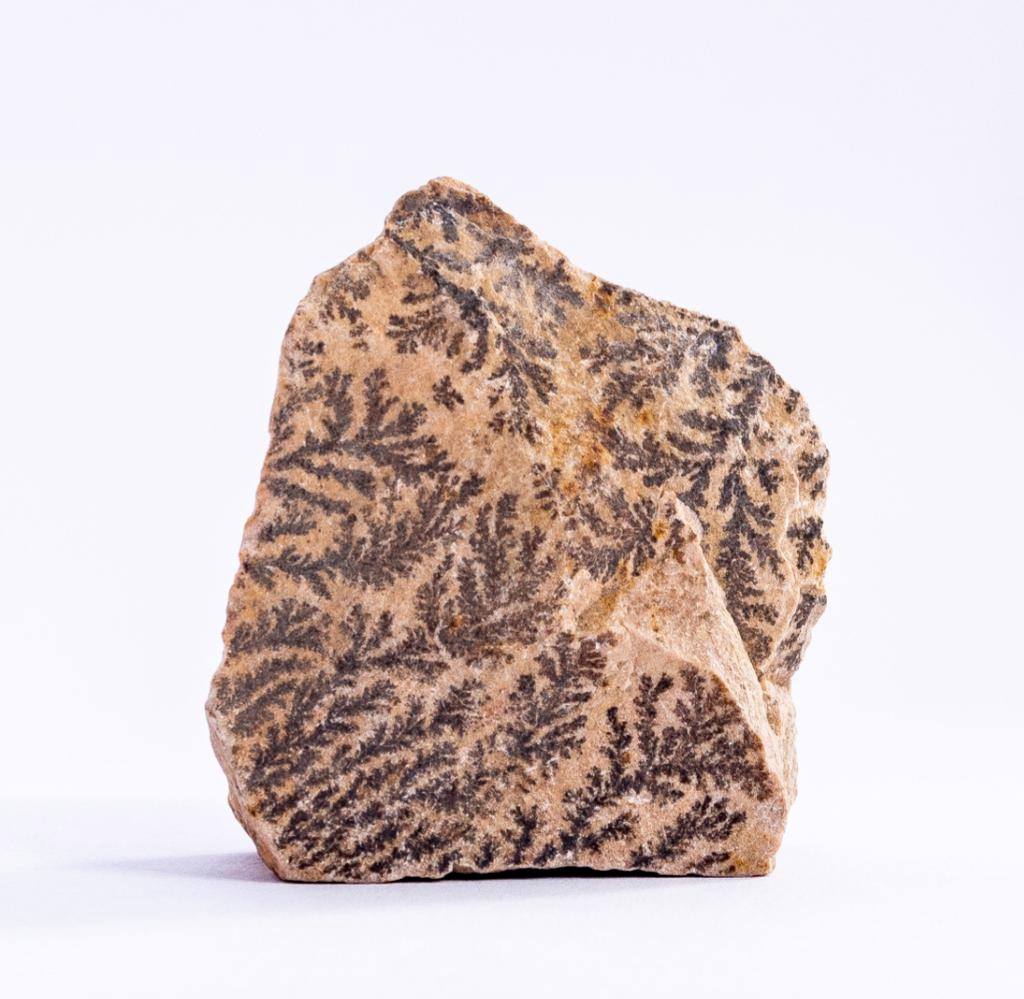
Sneh is Sinai
Rabbi Yaakov Emden writes in Migdal Oz, “The stones of Mount Sinai have on them an image of the sneh; therefore this mountain is called Sinai because of the sneh in which God revealed himself to Moses. One of the distinguished members of Barcelona brought to me some of these stones and I saw on them the sneh in perfect detail. This is a Heavenly phenomenon, for when I broke the stone in pieces I found the image of the sneh on every side and inner part of the stone, and I marveled at this".
Similarly, the kabbalistic work Arvei Nachal (Parshat Shemot) notes, “It is known that the image of this sneh appears on all the stones of Mount Sinai, and it is a wondrous sign that this is so, since when any such stone is broken into fragments, each will have an image of the sneh. Indeed these stones from Mount Sinai are a segula for the revelation of the Torah. (sources)
the hebrew version of this post includes also quotes from Pirke Derabbi Eliezer (41), Ibn Ezra (Exodus 3:2), Hizkuni (Exodus 3:1), Rabenu Bhaye (Exodus 3:1), Megale Amukot (portion
Shemot), the Yabetz and Rabbi Moshe Feinstein about the etymology of Sinai through the Sneh, plus a Midrash stating that the Sneh has 5 leaves, just as the figure on the stone.
Bonus suggestion: since Sinai and Sneh are connected it could mean Sinai is "the Wilderness of the Acacias", which is plausible a lot. The desert strip in southern Israel and the peninsula is full of acacias indeed
-
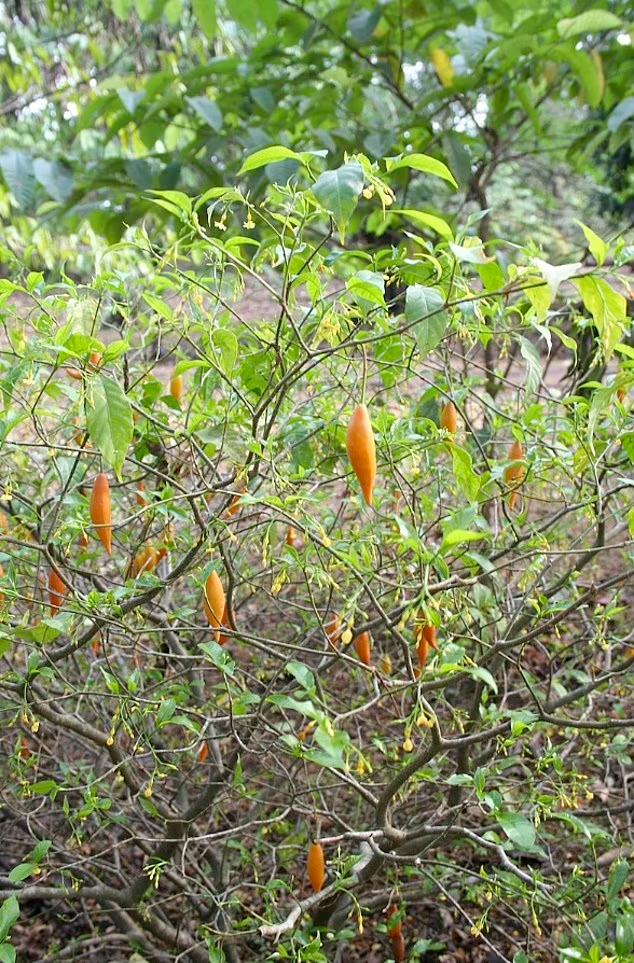
remarkable improvements in people with combat stress and PTSD who were treated with ibogaine
The biggest item of the news this weekend is that a Stanford study reports remarkable improvements in people with combat stress and PTSD who were treated with ibogaine. Ibogaine showed even better results than those of MDMA and psilocybin, in several respects: A. It is able to affect several systems in the body at the same time, also in traumatic brain injuries, also in situations of anxiety, also in cognitive functions. B. Unlike MDMA and psilocybin, which require an integrative treatment that incorporates psychotherapy during the treatment itself, the protocol with ibogaine does not include psychotherapy during the experience but only before and after.
Ibogaine has already been included in addiction rehab experiments, and its use may lead to a risk of death following heart rhythm disturbances, and they found that magnesium is able to moderate this phenomenon. Unlike MDMA and psilocybin, which are already in advanced stages of the trial, ibogaine is in the early stages and the researchers face quite a few challenges like the one mentioned in the previous line, before it is approved for treatment.
-
The Kaneh in the Messianic Myth
The "kaneh" is considered a "mascot" of the Messiah. The Messiah of course is an alegory of the highest state of consciousness, the prophecy. Kaneh has several meanings in Hebrew, and this name can also be called a stick, a rod (literally: a tribe), a staff, a branch, and an arm. The role of the kaneh in the hand of the Messiah is to be both a walking rod, and a staff with which he leads his animal and beats it as needed to direct its path (see psalms 23:4). The kaneh is also the tool with which God strikes the people of Israel for the same need. In advanced stages this rod becomes the sword of Messiah with which he defeats the bad guys, and in some cases he doesn't even need a sword because he uses his bare hands and the strength of his arm (as if he was Chuck Norris or MacGuyver)
In Jewish symbolism it is a staff that passes from the first man to the Messiah through all kinds of important junctions and mythical figures in history. The staff is the same Aaron's staff with which they brought the plagues on Egypt, with which they parted the sea, with which they placed and coiled a copper snake and so on. Moses himself, while the staff was "in exile" with Jethro, pulled it out of the rock like King Arthur.
The staff is a kind of stick ("baton") in the relay race and of course will also be used as the stick on which the "flag of the Messiah" will be hoisted (flag literally also means "miracle" in hebrew – "nes"). We see that such staff was used by each of the tribes in the desert and the symbol was painted on it as a flag. Kaneh is also the branch of Jesse. Kaneh is from the same linguistic root of the action with which god created the world, "the one who bought of heaven and earth" (buy = kanah)
The apochrypal books, "The Life of Adam and Eve" (vita adae et evae), claims that Cain was also named after this Kaneh, because it was the first thing he possessed and brought to Adam and Eve (verse 21), Kaneh (branch) is for the menorah, Kaneh is for the measurements of the temple in Ezekiel (chapter 40), and the Kaneh, or rather Aaron's staff, which turns into a snake (and an almond), is also described in Ezekiel as "the idol that provokes to jealousy stood" (phonetically: semel hakinah hamakneh).
One of the tribes who were merged into the people of Israel is the Kenites, the sons of Jethro. "Yeter" (of "Jether", one of his names) means the tip of a branch. In Arabic, Jethro's name is "Shu'aib" because "Sha'ab" also means the tip of a branch. The meaning of his name according to the Quran is because he was a monotheistic prophet among the polytheistic Midianites, and he preached to them to follow Allah. The people of Midian were idolaters and were called "askhabu l-aykah" (أَصْحَابُ ٱلْأَيْكَة), which means "a tree with branches". I don't want to question of whether or not this is the Asherah ritual, because what is important in our case is that a priest of Midian was also named after the same branches, which are but another name for the "Kaneh", and therefore their tribe was called "Keni".
The Kenites were metalsmiths. In Aramaic and Syriac "qyny" means a metal worker or silver and goldsmith, and in Arabic the meaning of the word "qayna" is a craftsman who shapes a material. In 1 Chronicles, chapter 4, it is said that the family members of Othniel ben Kenaz, aka Jabez, were experts in copper plowing for the design of temple vessels. In the Midrash Rabbah Ruth, they try to read these complicated and incomprehensible genealogies in this chapter and link between a verse describing the unclear genealogies of sons of Shelah Ben Yehuda and the book of Ruth, through a Midrash that links her descendants to the sons of Rahab, who was also a convert gentile and decided to join the people of Israel and this reward she won all kinds of things. It is understood that they are trying to talk about the Kenites. Through this link, the portray the qualities and skills of the Messiah and other giants of spirit as various craftsmen of art that were used in the temple – weavers of the veil, metalsmith for the temple vessels, farmers who grow fregrance trees for use in the temple worship, etc. That is, metalworking was considered a sacred craft related to worship. Thus it is understood how Bezalel ben Uri, supposedly the son of Hur ben Caleb, from the family of Othniel ben Kenaz, was a metalsmith. In the book of Genesis it is said that there were ten nations in Canaan, the well-known seven and also "Kenites, Kenizzites and Kadmonites" who, according to the Midrash, left before the conquest of Canaan, and therefore the commandment to fight the seven nations is only for the other seven – which explains that the descendants of Kenaz are actually converts who joined Israel like the Kenites.
Tubal-Cain, son of Lamech, who himself was a descendant of Cain, son of Adam, was "forged all kinds of tools out of bronze and iron", so it is clear what the origin of his name is, qyny – a metalsmith. According to the Book of Enoch, the art of iron plows was something that humans learned from the "watchers", fallen angels or demons who taught them all kinds of secrets and sciences related to the devil, including gemology, metallurgy, botany etc. This is how they try to connect the spoiled and cursed race of the children of Cain, and the sins of the flood generation, as if the use of metal and technology in general are a sin. I don't want to stray from the subject I'm writing about, but I'm just trying to show how "kaneh", on the one hand, is related to tree branches and hence, obviously, to sacred plants, and on the other hand, is related to alchemy and medicine. And I didn't even talk about the fact that the theriac, the ancient wonder drug, also contained plants, gems and salts of sulfur and copper, as well as snake venom. The names of the snake are repeated many times in the genealogy books in the Chronicles book among the sons of Caleb, Kenaz and the family of King David. Like for example the members of Hur's family, or Ashhur, who are said to have been metalsmith people "and the clans of scribes who lived at Jabez: the Tirathites, Shimeathites and Sucathites. These are the Kenites who came from Hammath, the father of the Rekabites".
However, while most researchers claimed that the origin of the name Keni is the metal factory, the late Israeli scholar Chaim Rabin, on the other hand, claimed that the meaning of the name is from the word "to know clearly". In Hellenistic Egypt, both knowledge and the underworld as source of metals were tied together in the cult of Hermes-Thoth through the Hermetic Corpus, a mixture of mysticism and alchemy. We have no choice but to conclude that even in the Bible, the whole motivation of dealing with the metals and gems, is hermetic. In other words, metallurgical knowledge is knowledge that God used to establish world orders. God is the original "qyny", who is on the one hand jealous (literally "el kanah") and on the other hand "bought heaven and earth" (buy = kanah).
The action of ownership and purchasing was the action with which God created the world, "The lord begot (literally: bought) me, the beginning of his works" And purchasing is also the way to achieve "Gnosis": "Wisdom is the principal thing; therefore get wisdom: and with all thy getting get understanding" (literally: the first step in wisdom is to acquire it, if you acquire it, all you will acquire later will be the intellect". Wisdom is Sophia), "Buy truth, and do not sell it; buy wisdom, instruction, and understanding".
By pouring metal castings into each other, one becomes the other through transformation/transition – when the same reversal is the emphasis in religious worship, whether it is a turning of the heart and repentance, or whether it is a transition to other levels of consciousness. It turns out that in Greek mythology too, Dionysus is considered the god of transformation, but also the god of wine, which grows on the metal-rich Terra Rossa soil, red as copper. In Aramaic and Arabic, the wine is called "Khamra", as if to refer to that "material in the hand of the creator" (material is literally "chomer", and remember: "qayna" is shaping materials), that is, the process of blacksmithing in which metal is heated to a temperature where it becomes liquid and from this liquid is poured into any shape you want.
In conclusion: through different interpretations of the root K.N.H, we connect altering states of consciousness, alchemy and gnostics. This is probably why all entheogens are named after the kaneh.
-

Jewish antinomianism
Although not directly related to the topic of the group, but since the entire Bible consists of stories containing symbols and attributes, each of which is an archetype in the great story of the higher consciousness, symbolized through Messiah and redemption – this brings us back to the topic of the group. It is enough for us to remember that the Messiah comes "riding on a donkey" and that "a moment before Messiah will come, the face of the generation will be like the face of a dog", in order to perceive the subject of this post as relevant. You should look for these images and you will find them in abundance in the Jewish sources, it is really not difficult – including the absurd comparison between the "Arod", the wild ass, and the snake, that is to say, between the ancient serpent and the same animal that symbolizes sin.
In Judaism there is a distinction between an "animal" and a "beast" (i.e between "Behema" and "Chaya"). An animal (Behema) is considered a domesticated animal that is used for household purposes. From this point of view, even animals that taxonomically are not considered "Ungulata", i.e. do not have hooves. A dog and a cat are also considered animals, because they are domesticated and serve in the household. Animals that are easily domesticated are considered worthier in Judaism, and animals that are difficult to domesticate or animals whose discipline is problematic despite being domesticated are considered inferior. Among these animals can be named the dog, the donkey and the pig. Such animals are called "bad animals", because they are violent, because they are disobedient and above all because they do not recognize the boundaries of the farm where they live, and try to escape.
The inferior animals therefore, which are characterized by this feature that they are not easily domesticated and still behave wildly, are a donkey and a dog. The people of Israel is likened to an animal and the main claims against it when it sins, is that it does not behave as expected of a domesticated animal: Jeshurun grew fat and kicked; filled with food, they became״ heavy and sleek. They abandoned the God who made them and rejected the Rock their Savior" (Deuteronomy 32:15) "The ox knows its master, the donkey its owner’s manger, but Israel does not know, my people do not understand" (Isaiah 1:3)
The relationship between the people of Israel and God is described as a relationship between abductor and abductee, for whom the captive demands a "ransom for life" (as Exodus 30:12). Only when the captive is redeemed will he be free. Alternatively, as a relationship between a lender and a borrower, who has spread his loan into countless payments, and only when he repays the loan, will he be redeemed. We see in Leviticus 27 that indeed any property redeemed from the Sanctification is called a "redeemed" property (hebrew: Geula). And this is the essence of redemption (hebrew: Geula) – redemption from the Sanctification. When a person is captive and when an animal is domesticated, they are sanctified. When man is redeemed and when an animal is set free back into the wild, they are redeeme (i.e redempted).
This thing contains a sharp antinomian message. According to this, the commandments (Mitzvoth) are actually a deposit that the people of Israel deposited with God, for the sake of the "covenant" (or: "testament") with them. As soon as the covenant is fulfilled, and the deposit is redeemed, Israel is exempt from the commandments. And this is why it is said "mitzvoth are cancelled for the future to come".
I can point out that the Orthodox establishment denies this, and insists that "there is nothing between this world and the days of the Messiah but the enslavement of kingdoms only." However, this argument can also be understood allegorically, that the only difference between a state of redemption and a state of non-redemption, is the same enslavement. And hence: as soon as you were freed, you were redeemed. Namely: the commandments are not necessarily a collection of meditation techniques on the way to enlightenment, but the opposite, the commandments are the finger rule that a person has to understand that he is not yet redeemed. Want to prove to yourself that you are redeemed? Go over them. This is actually the approach of Tantra.
Flavius Josephus at the jewish wars book 7:6:3 tells a story of plucking up mandrakes, that is considered to be dangerous, because the mandrake is screaming (such like in harry potter). however, "It may also be taken another way, without danger: which is this. They dig a trench quite round about it, till the hidden part of the root be very small. They then tie a dog to it: and when the dog tries hard to follow him that tied him, this root is easily plucked up; but the dog dies immediately: as if it were instead of the man that would take the plant away. Nor after this need any one be afraid of taking it into their hands"
the same story is told in. the midrash, but with a donkey instead the dog: "Issachar is a rawboned donkey. "rawboned" is written the same as "caused" so you need to read this as Issachar caused by the donkey, because when Reuben was walking in the field and found mandrakes, and he didn't know what they were, he went and tied his donkey to the mandrakes and went away. What did the donkey do? He wanted to run away, and the mandrakes were dislodged and shouted a great cry, and the donkey died, because it was the way of the mandrakes. And when Reuben came at his donkey and saw him dead, he realized that there were mandrakes, and he took them and gave them to his mother Leah, and Issachar was born, and the same donkey that the mandrakes brought out gave rise to Issachar who was born…"
This story is an explicit entheogenic reference, because the mandrakes are actually "the Jewish entheogen", and the birth of Issachar made Leah" the mother of the Messiah", Jacob's seventh son, instead of Joseph. The Messianic saga is actually a long conflict between the Messiah from the seed of Joseph and the Messiah from the seed of Leah, that is Judah.