
-
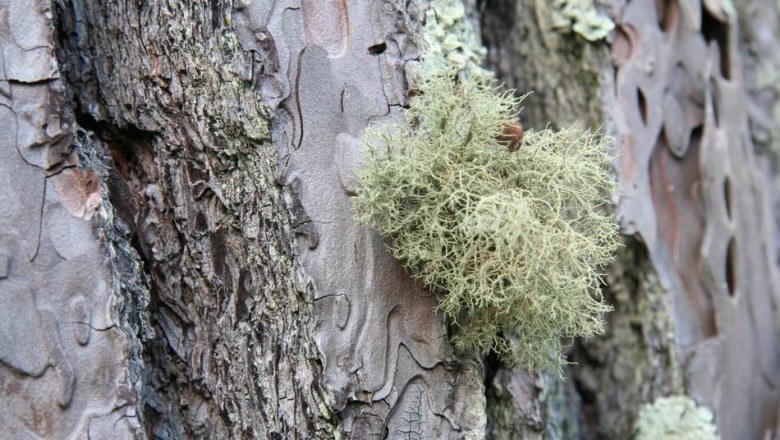
Laozi's lichen
The lichen Usnea diffracta looks like the long beard of an old man, which is also reflected in its common name. In Chinese folklore, it is called "Laozi's Beard," named after the Taoist sage who is said to have been born as a 62-year-old man with a long beard and large earlobes—both symbols of longevity and wisdom. According to the legend, he remained in his mother's womb and thus developed to such dimensions. He emerged from her womb only after she gazed at the stars and saw a falling star.
-
Haredis recognize the Spiritual and Medicinal Value of Cannabis
Blessings of fragrance are a group of blessings that belong to the category of "blessings of enjoyment" in Judaism. These are blessings that must be recited before or after experiencing various sensory pleasures. In religion, there is an analogy between sensory pleasure and aesthetic value, relating to spiritual levels—similarly to Neoplatonism, where everything that looks good, smells good, sounds good, etc., has a divine aspect. Therefore, a pleasant smell is a spiritual pleasure just as it is a physical pleasure. Part of the religious dichotomy is that something inherently bad cannot be positive; hence, if there is positivity in something, even if it has negative aspects, it is a "divine messenger", meaning it possesses inherent holiness. Thus, cannabis (who were officially considered as negative in 1973 by Rabbi Moshe feinstein) is also worthy of the fragrance blessing.
In this video, Rabbi Chaim Kanievsky, who until his death about two years ago was the leader of the Lithuanian Haredi community, blesses the plant in 2016. The plant was brought to him by his brother-in-law, Rabbi Yitzchak Zilberstein, who is considered an expert in medical halacha and a member of the rabbinical committee of the Haredi hospital "Ma'ayanei HaYeshua" in Bnei Brak, who declared cannabis as "a miraculous herb that came from the highest paradise." Rabbi Zilberstein was particularly impressed by cannabis due to its ability to alleviate the pain of terminally ill patients.
-
A sacred 13,000-year-old tree faces off with a California real-estate development
The Jurupa Oak, located in Riverside County, California, is an ancient organism estimated to be between 13,000 and 18,000 years old. The tree is actually a cluster of shrubs connected underground, and it manages to survive in harsh conditions by regenerating after wildfires. The tree grows in an area outside its normal growth range, which adds to its mystery and significance. The tree is sacred to local Native American tribes, such as the Kizh (also known as Tongva).
Now, the tribes and environmental activists are concerned about the tree's fate following the announcement of a massive residential and industrial development project in the area. Richland Communities, the company developing the project, has promised to preserve the tree and contribute to its conservation, but opponents argue that the proposed measures are insufficient to ensure the tree's longevity.
The project is expected to be built only 70 meters (approximately 250 feet) from the tree. The proximity of the project to the tree's roots could harm it and disrupt the unique water supply that has allowed the tree to survive for so many years. According to opponents, the heat generated from the concrete foundations of the new buildings could raise local temperatures, potentially "cooking" the tree and its surroundings.
-
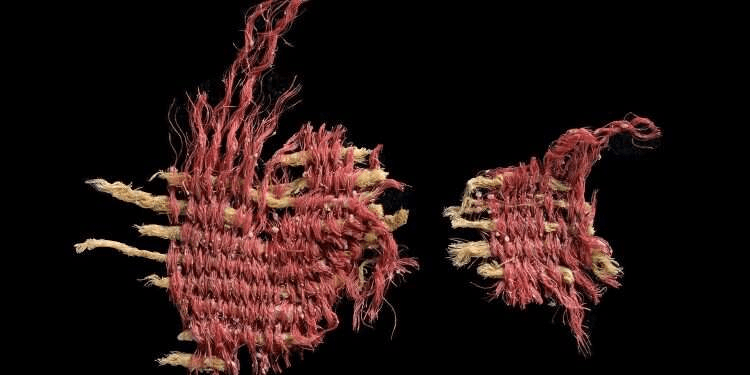
3,800-year-old fabric piece, found in caves in the Judean Desert, was colored using dye from oak scale insects, which researchers believe to be the "scarlet worm" mentioned in biblical texts.
A fabric discovered in a cave in the Judean Desert was dyed purple using dye derived from the kermes insect, which researchers identify with the biblical "scarlet worm". In the new study, published in the Journal of Archaeological Science: Reports, researchers from the Israel Antiquities Authority, Bar-Ilan University, and the Hebrew University participated. According to the researchers, this is the earliest evidence of fabric dyed red using kermes insects.
The find is dated to the Middle Bronze Age, a period during which evidence of the use of cochineal dyes began to appear in the Levantine region. The discovery bridges the gap between archaic literary evidence and archaeological finds, indicating the use of these dyes as early as this period. The findings mentioned in the article provide solid evidence for the early use of cochineal dyes for textile dyeing, linking the textual evidence in the Bible with archaeological findings, highlighting the importance of colors in religious rituals and social status in the ancient Levant.
In 2005, Zohar Amar and David Iluz from Bar-Ilan University published an article identifying the scarlet mentioned in ancient texts as the Kermes dye and argued that the source of the scarlet dye was in Israel. Therefore, the insect and this dye are referred to as "Biblical Kermes" (Kermes palestinensis).
The website "Daf Yomi" writes: "For years, researchers failed to locate an insect suitable for producing dye in Israel. Due to the failure of their research, most researchers concluded that the scarlet dye was imported from abroad. However, in the year 2000, Professor Z. Amar identified a large concentration of insects in Nahal Hazor in the Upper Galilee, which, upon contact, stained the hands red. This insect was defined as a species of Kermes (Kermes echinatus) that is common in Israel. Further research revealed that this species is indeed suitable for dyeing, and the color obtained from it in textile dyeing is a bright orange".
My approach is that our ancestors were ancient scientists, and every color used in sacred rituals was considered holy due to some association with an unexplained phenomenon or because it could reliably imitate something linked to such a phenomenon. In the context of Kermes of the Oak, it seems obvious that it became sacred due to its connection with the oak tree and the fact that it produces a color close to purple. The oak was sacred in various shamanistic religions, and in the Bible, we also see reverence for it, sometimes under the name "Elah" (Pistacia. Another tree that Scale insect or aphids cling to and the galls that form are red in color). Both names come from the same root as the word "God" (El), implying strength due to their thick trunks. The prophet Hosea (4:13) mentions that the worship of Asherah took place under the oak tree's shadow. Sometimes, oaths were also sworn under these trees, which is why the Hebrew word for oath (and also for curse) is "Alah". There are parallels to such practices among both the Greeks and the Celts.
-
Australia's dingo debate is heating up as traditional owners call for protections of 'sacred' animal
The Aboriginal people regard the dingo, the wild dog, as a sacred animal. Although they arrived in Australia long before the dingo, it has been integrated into their mythology as part of the Dreamtime stories. The dingo is considered a totem that protects against evil spirits and, generally, as a companion that protects women and children. The Aboriginals used to adopt dingoes and eventually release them back into the wild. They held special burial ceremonies for dingoes, often as part of ceremonial shell mounds known as middens.
The meat industry in Australia has a problem with dingoes because, despite their cute appearance, they are wild and harmful to the industry. Europeans saw dingoes as harmful predators, especially as it became clear that dingoes were not afraid of humans and there were several documented cases of attacks and even predation on humans. They began poisoning and hunting them.
Against this backdrop, the Aboriginal people perceived these European practices as damaging to their culture and religion. The harm is not only because the dingo holds a place in their culture but also because the dingo is part of a whole ecological system. It is considered a type of apex predator that regulates biodiversity; harming the dingo means harming the entire system.
In September 2023, the first National First Nations Dingo Forum was held, where more than 20 Indigenous groups signed a national declaration calling for an end to the killing of dingoes and recognizing their cultural and ecological importance. The Victorian government has banned the killing of dingoes in certain areas due to their near-extinction status.
-
Lion Man: The oldest known evidence of religious belief in the world
The Lion Man statuette, discovered in 1939 in a German cave, is an ivory figure approximately 31 cm tall, combining human and lion features. Dating back around 40,000 years, the statuette is considered highly significant due to the intricate craftsmanship involved in its creation, which is estimated to have taken about 400 hours using ice age tools. The creation of the statuette under the harsh conditions of that time suggests a ceremonial purpose, with wear patterns on the statuette indicating that it was passed among many hands. The statuette is regarded as a milestone in human cultural development, providing insights into early religious beliefs and rituals. The ability to conceptualize supernatural and imaginary beings is a central aspect of religious thought.
Although this statuette was previously considered the oldest known representation of a therianthrope (a hybrid creature of human and animal), new findings in Indonesia have led to the understanding that such symbolic representations are even older, dating back to around 51,200 years ago. Additional items found in the cave, such as perforated arctic fox teeth and reindeer antlers, support the theory that the site was used for ritualistic activities.
-
On Anointing
In the past, we have discussed how ancient people viewed skin diseases as a curse from the gods and medicinal plants with therapeutic effects on skin issues as sacred, especially if they were also psychoactive (example, example, example). Skin diseases were considered to result from dirt, hence the ancients had a healthy obsession with cleanliness, associating cleanliness with holiness and dirt with impurity. Bathhouses probably served as temples, perhaps because they included special smoke saunas with healing steam, which if made from a psychoactive substance, would also cause a mild high.
Indeed, we see such use not only among the Romans and Celts, and we have already seen such use with henbane. The Scythians also had such an obsession, which was tied to religious rituals, and the plant used was none other than cannabis. Herodotus reports that the Scythians used a reed tent as a steam bath, where they stored hot stones onto which they threw cannabis seeds. Inside the tent, a hot-box effect was created, but it is said that the Scythian warriors entered it primarily to cleanse themselves, not necessarily to feel euphoric. Cannabis was used to relax and relieve pain caused by the harsh daily life, arthritis, and battle wounds.
Plutarch (or rather Pseudo-Plutarch) mentions in his treatise "On Rivers" that the Amazons would bathe in the icy river waters (the Don, the Amazon River) to cleanse themselves, even though it was difficult because the cold was extreme. For this purpose, they and other warriors used various ointments, some to treat frostbite and others to induce a sensation of warmth. He writes: "There is a plant called halinda, similar to cabbage. Bruising this plant and anointing their bodies with its juice made the Amazons more resistant to the extreme cold".
According to research, this plant is black mustard, known as "wild cabbage", Brassica Nigra. This plant contains mustard oil that includes "glucosinolates", a sulfurous substance that provides protection against various microorganisms, stimulating enzymes that neutralize the activity of cell destroyers. Today, this property is used for cancer treatment, which is why broccoli is said to help prevent cancer; broccoli is a descendant of wild cabbage. These substances, especially a substance called allyl isothiocyanate, are also used to stimulate mucous tissues and increase blood flow, causing the TRPV1 heat receptors to be activated. These are the same receptors that also detect the active ingredient in hot peppers. This supposedly allowed the Amazons to bathe more comfortably in icy waters.
It turns out that cannabidiol (CBD) also affects these receptors, and its stimulation has pain-relieving, anti-cancer, and primarily anxiety-reducing effects. The Amazons used beauty masks made from a paste of cypress, cedar, and frankincense, used for skin care, cleansing, and scar smoothing (it is known that CBD has positive effects on acne treatment).
The Amazons washed their hair with shampoo made from tallow. It turns out that tallow contains linoleic acids that have moisturizing properties, strengthening hair and healing wounds. They also applied this tallow on their skin to protect themselves from frostbite caused by cold baths. Today, moisturizing creams made from tallow are commonly used (for those who allow it). Some of them are also enriched with CBD.
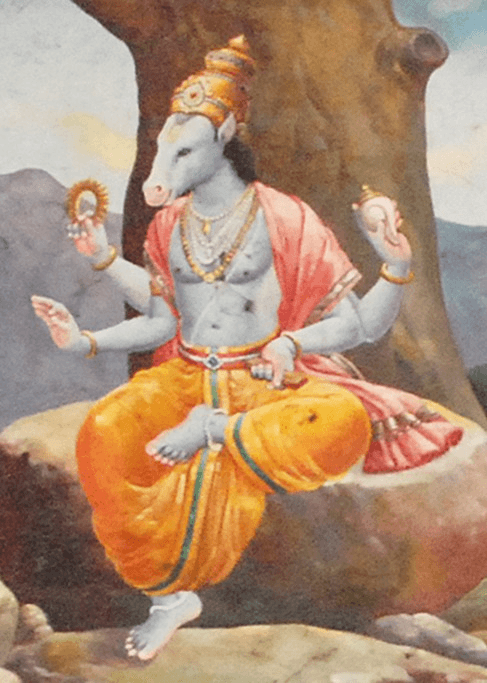
A wonderful thing I discovered is the use of a medicinal ointment in Chinese medicine called "horse ointment". The origin of this ointment is ancient, over 4,000 years old. It is believed that the Scythians lived in the Xinjiang region and controlled the Silk Road. Through the Scythians, the Chinese discovered cannabis, and perhaps also horse ointment. The use of the ointment is documented in ancient books for treating eczema, burns, and promoting hair growth. The ointment is made from horse fat, proving that in ancient times, animal fat, particularly from animals considered symbols of fertility, was used. In India and Iran, these were cows, but among the Asian steppe peoples, they were horses. Despite this, both Indians and Iranians also revered horses. Among Indians, there was a custom of sending a horse across the empire with bodyguards to see if anyone could capture the horse. If everyone failed, it proved that the king was an undisputed ruler. Upon the horse's return, it was sacrificed in a grand ceremony. It is believed that Vedic religion developed from the rejection of this ritual and animal sacrifices in general. In any case, in Hindu religion, there are several avatars of Vishnu as a horse, Hayagriva, the first being a white horse pulling the sun chariot, which later evolved into the worship of Helios and the sun chariot. Additionally, the Hindu messiah "Kalki" is supposed to arrive on a white horse, or perhaps he is the white horse himself, and transition the world from the Iron Age to the Golden Age where humans will live in harmony.
Among Indo-Europeans, horses were revered. Horses were sacrificed, buried with their owners, and considered divine messengers who accompanied the dead to the afterlife. The chief god and his consort were horse deities. As a fertility goddess, she was depicted as the goddess of animals or the horse goddess. Among the Celts, this was preserved in the worship of the goddess Epona, but as we showed, Potnia was also such a goddess of animals and Poseidon's consort, who was actually a horse god long before he became the god of the sea. Potnia bequeathed pastoralism and the connection with animals and horses to Artemis, and it turns out that those considered to have founded the worship of Artemis in the temple at Ephesus were the Amazons. Because war was conducted using mounted archers, the Amazons were symbolized by Artemis, depicted as a huntress, presumably because hunters used the same tools. The bow was made from horse tendons or alternatively from twisted cannabis fibers. The meeting of the bow made from female symbols and the arrow, a phallic symbol, represents the sacred union. The arrow was also the symbol of the god of war, and we see that war gods are depicted as those who shoot their lightning bolts with a bow and arrow, and the etymology of most of them is also from the word for "arrow", which actually has multiple meanings, including arrow, lightning, sunbeam, or god. *Tîwaz / *Dyēus.
-
The Complexity of Intelligence: Beyond Brain Size and Body Ratio
Brain size is not the sole measure of intelligence, nor is the ratio between brain size and body size. What determines intelligence is not a single factor like meat consumption or social group size, but rather a more complex interplay of social, technological, and evolutionary parameters. The takeaway is: next time someone tells you that early humans had small brains and therefore couldn't develop a rich religious world, don't believe it. Small-brained hominins lived alongside larger-brained hominins and exhibited complex behaviors and tool-making skills.
-
Chris Bennett Critique: Dan McClellan's Misinterpretation of 'Kaneh Bosem' and 'Christ'
Chris Bennett publishes a 60-page response to Dan McClellan on the question of identifying "kaneh bosem" as cannabis and accepting the archaeological evidence from Tel Arad, indicating that cannabis was included in Judaic worship as part of the sacred incense and anointing oil.
McClellan's argument is based on the premise that there is insufficient evidence to support Sula Benet's theory regarding the linguistic connection between the word "cannabis" and the biblical "kaneh bosem" and that the academic consensus holds that "kaneh" refers to a different plant, calamus. The fact that cannabis remains were found at Tel Arad does not constitute sufficient evidence that cannabis was regularly used in worship, and linguistic parallels in the ancient Near East do not prove anything.
Chris Bennett's main argument is that McClellan's decisiveness overlooks a multitude of evidence that is conveniently ignored. Benet's claim is not based solely on linguistic similarity but also on reconstructing the worship practices described throughout the Bible, which align with textual and archaeological evidence indicating the common worship practices in the ancient Near East. This reconstruction, and the connections drawn between the various cultures to which the findings are attributed, allows for mapping the cultural and linguistic transmission of cannabis worship over centuries. McClellan's dismissal of Benet's theory essentially proves that he either does not fully understand it or prefers to ignore it for the sake of conservatism, considering only the single mention of the "kaneh" in Exodus 30:23 and not the other references in Isaiah, Jeremiah, Ezekiel, and the Song of Songs.
Bennett argues that the primary takeaway from Sula Benet's work, which McClellan blatantly ignores, is that the findings at Tel Arad illustrate how cannabis worship was rejected by Judaism due to its pagan connotations. This rejection implies that up until the time when the Tel Arad temple was abolished, and its altars desecrated and buried, such practices were accepted in Judah under foreign influence. Bennett argues that although this worship was rejected, it did not entirely disappear but underwent a process of occultation. This is evident in early Christianity and subsequently further rejected and defined as heresy in Gnosticism. At this point, Bennett mentions another theory, also dismissed by McClellan, that even the meaning of the term "Messiah" ("Christos") in the New Testament, and in ancient Greek generally, suggests the use of a psychoactive substance, meaning that anointing was essentially the use of an entheogen, proving that "kaneh" was such a substance.
The debate continues…