
-
"What Western medicine can learn from the ancient history of psychedelics"
Dr. David Cox, a PhD in neuroscience from Cambridge University, writes in the BBC about why he believes that Western society is doing an injustice to both indigenous communities, traditional psychedelic use, and psychedelics themselves. Here’s what he writes:
Ancient societies, especially indigenous communities, used psychedelics not only for medical purposes but also as tools to foster community bonds, connect with nature, and communicate with spiritual realms. While Western medicine today mainly focuses on individual mental health treatment using psychedelics like psilocybin, MDMA, and LSD, ancient societies regarded these substances as spiritual medicines intended to maintain balance between humans and the natural and social worlds.
Western society often treats psychedelics as a product that can be converted into a pill or therapy to be sold and consumed individually. This approach tends to ignore the collective and spiritual aspects that psychedelics played in ancient cultures, thereby risking causing harm rather than benefit. Furthermore, there are claims of cultural exploitation within the growing psychedelic industry, where indigenous communities who hold historical knowledge receive little compensation or proper recognition.
Ancient civilizations, such as the Aztecs, Maya, and ancient Greeks, used psychedelics for ceremonial, health, and spiritual purposes. Examples include the use of psychoactive mushrooms in religious ceremonies in Central America, the use of the peyote cactus by indigenous communities in Mexico and Peru, and the use of kykeon by the ancient Greeks and Romans in seasonal rituals.
The knowledge of psychedelic use in ancient societies is based on archaeological findings, historical writings, and accounts from early researchers like Bernardino de Sahagún, who documented Aztec traditions. Discoveries like the shaman’s leather bag found in Bolivia, containing remnants of psychoactive substances, offer a glimpse into the cultural and religious use of these substances throughout history.
To remedy the situation, Western society must acknowledge the spiritual and communal aspects of psychedelics and not limit their use to individual therapeutic tools. We should learn from ancient societies how to integrate psychedelics within a social context and respect indigenous traditions and knowledge, offering fair credit and compensation to these communities. This shift may help create more integrated psychedelic experiences that benefit both the community and the individual, rather than solely addressing individual mental health issues.
-
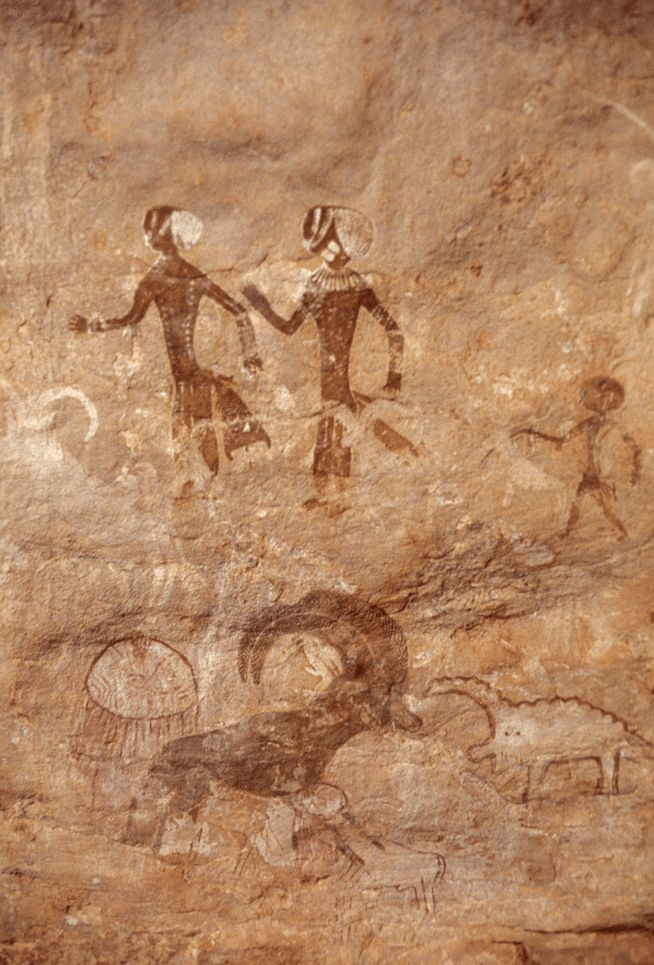
Because of poo fungi the ancient man worshiped horses
The veneration of horses among early shamanic societies likely arose because horses produce a significant amount of manure, and certain mushrooms, known as "coprophilous" fungi, attach to their dung to reproduce. These fungi are called coprophilous because they rely on their hosts to excrete them in manure, which acts as fertilizer, thus spreading their spores. The fungi, known as Panaeolus, include species that contain psychoactive alkaloids like psilocybin. Worship rituals for sacred animals were not due to the animals themselves but rather because they "produced" sacred mushrooms through their dung. This is an extrapolation of Terence McKenna's original "stoned ape" theory.
To be more precise, the distribution of psilocybin mushrooms does not completely overlap with that of horses, at least not in Eurasia. The original theory suggests that the original sacred animals were cloven-hoofed animals, such as reindeer, rather than equine single-hoofed animals like horses. The supposed evidence of psilocybin mushrooms comes from rock paintings in the Sahara, which was then, allegedly, a savannah rather than a desert. However, Africa is not lacking in equines. There is the donkey, and one doesn't need to go as far as the zebra. At that time, the donkey was domesticated from the wild ass in roughly the same geographical regions. Donkeys produce manure just like horses, and of course, more than sheep and cattle.
Equines (Equidae, horse-like) sometimes rummage through their own dung. It is likely that early shamans observed them eating dung and wanted to do the same. A similar claim has been made about shamans who observed reindeer digging through their own urine, which was supposedly psychoactive after consuming Amanita mushrooms. All of these studies are, of course, speculative but make a lot of sense.
In the Hebrew Wikipedia article on "Coprophagy," it is written: "Large animals leave behind undigested food in their feces, a common trait among herbivores, leaving a relatively large amount of food for dung-eaters." In their 1991 paper "Coprophagy in Animals," Soave and Brand noted: "It has been reported that foals of thoroughbred horses eat feces in response to the mare's pheromone. A foal will consume some of the mother's feces about half the time she defecates. This behavior occurs between the second and fifth week after the foal's birth. Coprophagy also occurs in adult horses on a low-protein diet." A similar behavior is described by Haupt and Crowell-Davis (1985).
Savannah plants tend to have low protein content, so equines in the savannah often need to consume large amounts of food to meet their required protein and mineral intake. One of the ways they enrich themselves, it seems, is by eating their own dung…
-
The history of cannabis
This following video from the Nutty History channel describes the history of cannabis over thousands of years and its impact on human culture. It begins by mentioning the diverse uses of the plant throughout history: medicine, agriculture, and spiritual rituals. Below, I will outline a bit of its ancient history:
Cannabis was widespread in ancient China and contributed to the development of Chinese medicine under Emperor Shen Nong. Shen Nong lived around 5,000 years ago and is considered the first person to discover the benefits of the cannabis plant. He recognized the plant's fast-growing ability and its usefulness for both the textile industry and grain production, as well as for medicinal purposes. Based on his discoveries, cannabis was used to treat various ailments, and records of these diseases and the plant's medicinal properties were documented in the ancient medical text "Pen Cao Ching."
Cannabis spread outside of China along the Silk Road, where it was traded alongside other famous goods like silk. The mere presence of cannabis along these routes helped its spread across Asia and Europe.
Archaeological discoveries show that cannabis was used as early as thousands of years BCE. One such discovery is the Jirzankal Cemetery in the Pamir Mountains (in modern Central Asia). Researchers uncovered graves from around 500 BCE, where wooden burners used for burning cannabis seeds were found. Archaeologists hypothesized that participants in burial ceremonies used cannabis to create smoke during mourning rituals and when visiting the dead, likely for spiritual purposes and to communicate with the spirits of the deceased.
The Greek historian Herodotus documented his encounter with the Scythian tribes in 440 BCE, who were known for their nomadic lifestyle in Central Asia. Herodotus described how the Scythians used cannabis in unique sauna ceremonies, where they added cannabis smoke to the steam, which led to emotional ecstasy. His accounts suggest that the Scythians were among the first to create a natural 'hot box' in their sauna systems.
During the Crusades, there are historical theories that the Hashishin, an Isma'ili Nizari Islamic sect from the 11th century, used hashish (a concentrated form of cannabis) before carrying out assassinations against their rivals. The use of cannabis in these rituals was intended to calm them and prepare them for military actions, similar to the Scythian tribes' use of cannabis smoke.
In this context, I will mention the words of Professor Meir M. Bar-Asher from his book "Islam": "The chroniclers of the Crusaders and European travelers from the 12th century onward called the Nizaris 'Assassins,' which is a corruption of the term Hashishin. However, in their view, the meaning of the term was literal — 'those who use hashish.' According to European legend, before their assassination missions, in which they usually met their death, the Nizari warriors were given hashish to imagine the paradise awaiting them after their death. Apparently, this legend has no basis in historical reality: the Nizari warriors' determination stemmed from deep belief in the righteousness of their path, not from the use of hashish."
According to Professor Bar-Asher, the meaning of the word Hashishin or "Hashishiyya" is rabble or a mixed multitude. This interpretation refers to what the Fatimid Imam Al-Amir bi-Ahkam Allah wrote to his followers in Damascus in 1123: “Nafr min Jama'at al-Hashishiyya,” meaning a group of lawbreakers. This can also be found in Bernard Lewis's book The Assassins, edited by Bar-Asher in 2000.
Cannabis also played a central role in India, where it was (and still is) part of the religious rituals of Hinduism. Cannabis is consumed in milk-based drinks during the Holi Festival and the birthday of the god Shiva (Maha Shivratri). During these ceremonies, people drink a beverage called Thandai, which contains a mixture of cannabis and various spices.
Cannabis was brought to America with the arrival of European settlers in the 16th century and became a key source for producing hemp used for ropes and other products.
The decline in the image of cannabis began around the 13th century when various rulers around the world started banning its use. One of the first rulers to do so was the Emir of Joneima in the Arabian Peninsula, Soudoun Sheikouni, who in 1378 banned the use of hashish in his domain. Later, other rulers followed this trend.
In the 18th and 19th centuries, authorities in different regions, including Jamaica (1787), the French Empire under Napoleon Bonaparte, and the city council of Rio de Janeiro, began passing laws that restricted the use of cannabis. Other colonial states such as Mauritius, Guyana, South Africa, and British India followed suit.
In the United States, cannabis began to lose its legitimacy at the beginning of the 20th century, when the Harrison Narcotics Act (1914) prohibited the distribution of narcotics without a prescription. Following this, laws that restricted the use of cannabis were enacted. The most significant prohibitions came with the "Reefer Madness" campaign, which began in 1936. This campaign included films and propaganda that depicted cannabis as a cause of violent and immoral behavior. In 1937, the Marijuana Tax Act was enacted, imposing heavy taxes on the import, sale, and distribution of cannabis, leading to a significant decline in its use in the United States.
The U.S. government used cannabis as a tool in the fight against social movements in the 1970s and 1980s, branding it as part of the "war on drugs." The propaganda during this period focused on portraying cannabis as a dangerous drug that led to moral corruption and criminal behavior. This narrative led to its inclusion in the list of the most dangerous substances under the Controlled Substances Act. The law classified cannabis as a Schedule 1 drug, alongside hard substances like heroin and cocaine, arguing that it had no medical value and posed a high risk of abuse.
During the 1980s, under President Ronald Reagan, efforts to combat cannabis use intensified. Reagan boosted the budget of the Drug Enforcement Administration (DEA) and passed the Anti-Drug Abuse Act of 1986, which increased penalties for drug offenses, including the use and possession of cannabis. The law also established mandatory minimum sentences for drug-related offenses, leading to a sharp rise in arrests and convictions related to cannabis.
Additionally, Reagan’s wife, Nancy Reagan, launched the "Just Say No" campaign in the 1980s, which focused on educating young people about the dangers of drug use, including cannabis. This campaign became well-known and included TV commercials and school programs that emphasized the message that cannabis use was dangerous and led to criminal behavior.
One of the most famous propaganda commercials from this period was the "This is your brain on drugs" ad, where an egg was shown frying in a pan as a symbol of a brain deteriorating under the influence of drugs.
At some point, cannabis began to regain legitimacy, starting in the 1990s with the recognition of its medical benefits. In 1996, California became the first U.S. state to pass a law permitting medical cannabis under the Compassionate Use Act (Proposition 215). This was a significant milestone in promoting cannabis in the U.S. after decades of demonization. Following that, other states in the U.S. and countries around the world began recognizing the medical uses of cannabis and enacting similar laws.
In 1964, the Israeli scientist Raphael Mechoulam succeeded in isolating the active compound in cannabis, THC (tetrahydrocannabinol), which is responsible for the psychoactive effects of the plant. This discovery opened the door for further research on other cannabis compounds, such as CBD, which is non-psychoactive but offers many medical benefits.
In the early 2000s, countries like the Netherlands (2000) and Canada (2001) followed California's lead and began allowing medical cannabis. Over time, many other countries, such as Austria, Uruguay, Italy, Romania, and more, passed laws allowing the medical use of cannabis. In 2012, the states of Colorado and Washington became the first in the U.S. to fully legalize cannabis for recreational use. In 2013, Uruguay followed suit. Later, other countries such as Georgia, South Africa, Canada, Mexico, Malta, Thailand, and Luxembourg joined what the text calls the "International Cannabis Haven Club," legalizing cannabis for medical or recreational use.
In 2014, the U.S. Congress passed the Rohrabacher-Farr Amendment, which prohibited federal prosecution of individuals complying with state medical cannabis laws. This amendment was considered an important step in protecting patients and caregivers using medical cannabis in states where it was legal.
In 2022, the U.S. government pledged to pardon individuals convicted of past cannabis offenses, although this has not yet been fully implemented but is still anticipated. -
oldest known eclipse reference in the Rig Veda
The Rig Veda is among the oldest known texts, and it is itself a written version of a text that was orally transmitted many years earlier. It is dated to around 1500 BCE, preserving memories of events that occurred long before its time. How long before? Astronomers who analyzed a passage within it, based on clues provided in the text, attempted to reconcile it with known findings and calculations that reconstruct past events. They concluded that it documents a total solar eclipse that occurred over 6,000 years ago.
Various sections of the Rig Veda mention the location of the rising sun during the vernal equinox. One passage describes the vernal equinox as occurring in Orion, while another describes it in the Pleiades. In general, the vernal equinox marks the beginning of spring in the Northern Hemisphere, based on the sun’s crossing of the celestial equator. Given that the Earth rotates on its axis, the location of the vernal equinox changes over time. By analyzing the current position of the vernal equinox, it is possible to estimate when it was located in different places—specifically, in this case, in Orion and the Pleiades. Thus, it is understood that it was in Orion around 4500 BCE and in the Pleiades around 2230 BCE.
The text, in a free translation, tells the story of a solar eclipse where the Asura Svarbhanu covered the sun in darkness, causing confusion among living creatures. Indra, with the help of the sage Atri, was able to remove Svarbhanu's spells and restore the sun to its function. The sun turns to Atri, asking for his help so that it would not be swallowed by Svarbhanu out of jealousy and fear. Atri, with his sacred power, restored the "eye of the sun" in the sky and dispelled Svarbhanu's magic. Only Atri succeeded in this task, where others were unable.
-
God is purple
A new book from Brill by Ephraim Ayil from Hillsdale College is available for free download: Identifying the Stones of Classical Hebrew. Why do we need another book on the identification of gemstones in the Bible after Zohar Amar's book, "The Charm of the Stone"? Ephraim Ayil responds, "This Hebrew book is a priceless resource for the opinions of various commentators and academics over time, but the author disregards cognates, ancient texts, and linguistics. Amar is an expert in Levantine realia, and quite knowledgeable in medieval languages. But because few ancient lithonyms survived into the Medieval period, his background is most applicable to the stones the ancient translators had in mind"
As I glanced through it for the first time, I looked for the word "purple" and found myself on page 159. There, they claim that the amethyst was called ḫašmānu in Akkadian, and from it the Hebrew word "ḥashmal" (Ezekiel 1) was derived. In Ugaritic, however, there is a stone called pḥm, which in some texts is identified with amethyst (i.e., with ḫašmānu), but according to Latin, where garnet is referred to as Carbunculus—meaning "glowing coal" —it seems that the reference is actually to garnet. On page 99, Eyal notes that in ancient times there was a tendency to confuse the two stones, and Pliny the Elder provides an example of this. Moreover, it is likely that the Greek word ἀμέθυστος did not specifically describe the mineral we now call amethyst, and it seems more likely that it referred to a purple variety of a stone with various appearances, which aligns more with garnet, a popular gemstone in antiquity.
The common opinion is that ḥashmal refers to amber, which is orange in color, seemingly derived from the Akkadian word elmēšu, meaning stone. Ayil dismisses this, arguing that ḥashmal is never described as a stone in the Bible, though ḥalamish (flint) is. Regarding Josephus and the Septuagint’s identification of amethyst as akhlama, Ayil argues that, according to the Egyptian language, ḫnmt should be a red stone, and therefore it is likely that the stone in question is jasper, which is typically identified as "yashfeh".
Whatever the identification of amethyst may be, it seems that the intended reference is to a purple stone. If ḥashmal is indeed amethyst, the important point is that the description of the appearance of God, or the "glory of the Lord"—which is not exactly God but more of an entity mediating between God and the world—is purple.
-
The role of shamans in mongol history
Throughout their expansion across Eurasia, the Mongols adopted many religions from the conquered peoples, but they always maintained their roots in their original animist faith, led by shamans. Both male and female shamans served as spiritual guides for the Khans, engaging in fortune-telling, performing rituals, and even participating in military decisions. They advised the Khans before military campaigns, bolstering the warriors' confidence in victory.
Shamans held an important position in traditional Mongol society, but they were not the main clergy or religious leaders. Their role was primarily advisory, and they acted as spiritual specialists called upon to address specific issues such as healing, predicting natural phenomena, and dealing with ancestral spirits. Male shamans were called Böge, while female shamans were referred to as Idugan. Although both genders could serve as shamans, some roles were gender-specific. For example, male shamans (Böge) were often responsible for political and military matters, such as predicting the outcomes of military campaigns or advising the Khans on important decisions. Female shamans (Idugan) tended to focus more on healing and family rituals, including working with ancestral spirits and dealing with health matters within the home and community.
One of the practices shamans used for divination was Scapulimancy — the burning of animal shoulder bones, usually from sheep. Shamans would burn or heat the bones and analyze the resulting cracks. Based on the patterns, they "predicted" the outcomes of battles and advised the leaders on what actions to take. The shamans' authority in this matter came from their perceived ability to communicate with the supernatural world and interpret the cracks' significance.
One of the most well-known shamans who used this method was Teb Tenggeri, a powerful shaman from the 13th century who played a key role in the life of Genghis Khan. Teb Tenggeri was believed to possess mystical powers and was involved in Genghis Khan's coronation in 1206, and he likely foretold some of Genghis Khan's future successes. However, as Teb Tenggeri gained too much political influence and started interfering in non-spiritual matters, he fell out of favor with Genghis Khan's family, and Genghis' brother eventually killed him.
Shamans also sometimes had political involvement. These politically active shamans were known as Beki, like Khaduka Beki, who was initially allied by marriage to Genghis Khan's family but later joined his enemies. Khaduka Beki attempted to use his spiritual power to control the weather during a battle in 1202. He did this by using a magical stone called Jada or Yad to summon a rainstorm intended to disrupt Genghis Khan's army. Instead, the storm turned against Khaduka and his allies, leading to their defeat in battle.
False prophecies were not uncommon, and sometimes these mistakes led to the shamans falling out of favor with the Khans, or at least losing credibility. While the Khans valued shamans and often listened to them, when the prophecies did not align with their expectations, the Khans would sometimes retaliate. For example, Genghis Khan's grandson, Möngke Khan, admired and followed the shamans who correctly predicted his success in the European campaign. However, when the shamans foretold a great future for one of Möngke Khan's sons, who later fell ill and died, their influence began to wane.
The decline of the shamans' influence began during the 13th century, coinciding with the rise of other organized religions in Mongol-controlled territories. Although shamans still held important roles in Mongol society, their political and spiritual influence started to diminish over time. With the spread of Buddhism in Mongolia around the 16th century, promoted by leaders like Altan Khan, the shamans' influence decreased even further. Buddhism became the central religion in Mongolia, and the shamans lost their prominent status as spiritual and political leaders. Although they did not disappear entirely, and their influence persisted in some nomadic communities, they no longer held the significant roles they once did during the early days of the Mongol Empire.
-
Near-Death Experiences and Psychedelic Trips Are Scientifically Similar
A recent study found similarities and differences between the experiences of people who have had near-death experiences and those who have used psychedelic substances. The similarities are phenomenological and psychological, while the differences lie in sensory perception and the sense of reality experienced by the individual. Given these similarities, psychedelics may serve as a model for studying near-death experiences.
Some of the similarities include: in both experiences, there is a sense of connection to the world and the universe, changes in the perception of time, a feeling of wholeness or inner peace, and lasting changes in consciousness. The differences include: near-death experiences are considered more "real" compared to psychedelic experiences, with stronger visual hallucinations in psychedelic experiences, and near-death experiences are more closely related to the feeling of death or detachment from the body.
The study was conducted by a team of researchers including Charlotte Martial, a neurologist from the University of Liège in Belgium; Christopher Timmermann, from the Centre for Psychedelic Research at Imperial College London; and Robin Carhart-Harris, a psychopharmacologist from the University of California, San Francisco. The research was published in the academic journal Neuroscience of Consciousness, by Oxford Academic.
The researchers recruited 31 participants who had both near-death and psychedelic experiences and conducted an online survey that included questionnaires assessing characteristics such as ego dissolution, psychological insight, memory intensity, and the impact on the participants' lives. The analysis of the data was done using various statistical tools to identify overlaps and differences between the experiences.
-
Shipibo-Conibo Leaders Sound the Alarm About the Extinction of Ayahuasca
Shamans from the Shipibo-Conibo tribe in Peru express deep concern about the continued existence of the sacred ayahuasca plants in the Amazon rainforest and their traditional medicinal knowledge, which is under constant threat. Plants like Banisteriopsis caapi and Psychotria viridis, essential for preparing ayahuasca, are being depleted due to high demand from spiritual tourists and Western pharmaceutical companies seeking to extract medicinal compounds. The shamans report severe environmental damage and emphasize that the profits from the commercialization of ayahuasca do not reach the indigenous communities but are instead directed to foreign-owned retreats that exploit local knowledge while paying healers low wages without social benefits.
The shamans also criticize the lack of support from the Peruvian government, which enacts laws that harm the Amazon rainforest and indigenous culture, while favoring wealthy corporations. In their desperation, they have established local guards to protect their lands and resources, as they cannot rely on the local police for assistance.
The shamans are calling for international recognition of their work and traditional knowledge, alongside fair compensation for the use of their cultural heritage. They seek labor justice and the establishment of internal regulations to ensure that their healers receive appropriate compensation so that their ancient knowledge and sacred plants can continue to exist for future generations, while preserving the environment and the culture of the Amazonian tribes.
-
Megalithic structure found in Kazakhstan was probably a place of worship for miners in the Bronze Age
Turkish and Kazakh researchers believe that findings from a megalithic structure named Taskamal (literally: "Stone Fortress"), located in the Burabay district of the Akmola region in northern Kazakhstan, were associated with gold mining activities in the area and that it may have served as a place of worship for miners during the Late Bronze Age.