
-
Traditional uses of magic mushrooms in Mexico
The English-language news site Mexico Daily News has a series on psilocybin and its traditional and modern uses. Behind the articles is the features editor of the site who is also the editor-in-chief of the Spanish version of Newsweek. Her name: Camila Sánchez Bolaño. As far as I understand, this is the fourth article out of five published so far. Subject: The traditional uses of psilocybin.
-
origin of the jewish Etrog
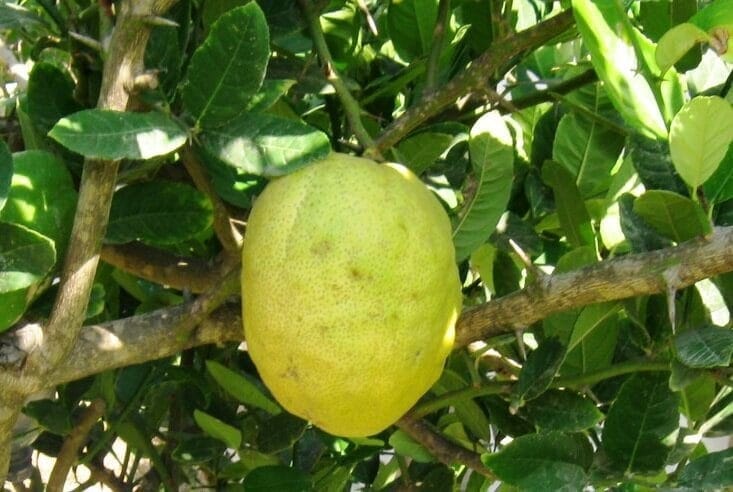
In Greek mythology there was an garden where a tree was planted from a branch given to Hera and Zeus on their wedding day, the garden was the only place in the world where the tree grew, whose fruits were golden apples that whoever eats them gets eternal life. The garden was located on the outskirts of the west (Zeus and Hera's marriage was between the evenings), and Hera gave the nymphs called the "Hesprides" to guard it. But after she found out that they were secretly eating from it, she put another guard – the dragon.
Of course, this story echoes the story of Garden of Eden, but in Judaism Heaven is located on the outskirts of the East and in mythology it is located on the outskirts of the West. It is said that one of Hercules' tasks was to steal apples from this garden. It is commonly assumed that these golden apples are etrogs (citrus). Indeed, in Genesis Rabbah there are those who claim that the fruit of the tree of knowledge is the etrog.
It can be assumed that Chazal (Jewish sages) who identified the "fruit of the splendid trees" with the etrog did so because in their time the Hellenists identified these golden apples with the citrus.
-
fasting as health benefit for magico-healers
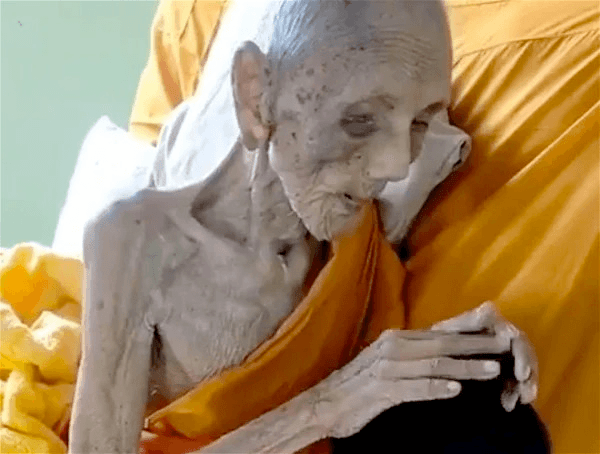
Apparently the religions began to support fasting as a spiritual practice following the trial and error of recluse monks who put themselves through an "incubation" process, and encountered the beneficial properties of fasting. I'm reading a book on hormonal imbalance that claims that "the long-term benefits of intermittent fasting, especially when combined with regular exercise, include improved mental and physical functioning, strengthening the gut bacterial population, weight loss, reduced inflammation, and better resistance to disease".
Presumably these monks felt that the atmosphere of seclusion, relaxation and avoiding greedy consumption of foods, improved their cognitive function, when it was this clarity of mind that they were looking for. But it is the nature of rules of thumb to become laws and the nature of laws to become obsessions. Such phenomena of ascetics retiring to "incubation" were common in all religions.
The author adds in this context: "The religious customs helped to better understand the benefits that fasting may bring. Studies conducted among Muslims who fasted during the month of Ramadan (a month in which believers fast from dawn to sunset) found that fasting improved the immune system and heart health of the participants and even reduced their risk of diabetes".
-
Jewish techniques for locating a lucid dream
One of the techniques to find out if you are in a lucid dream or not, is to do a "reality check" as soon as you wake up. If you had a false awakening, from a dream within a dream, you can realize that you are still asleep and in a dream. In a lucid dream you are actually aware that you are asleep and your experience is that you are both awake and asleep at the same time. Feeling awake, while you know you are sleeping. This way, out of awareness, you can control what you do in the dream and you actually steer the plot in the dream.
Techniques of reality testing can be found in Tractate Berakhot 95b: "Rabbi Yochanan said three dreams come true: a dream in the morning, and a dream that his friend dreamed, and a dream that is resolved within a dream. and some say even a dream that comes again and again". What Rabbi Yochanan describes are 4 explanations for a dream within a dream, that people tend to dream that they are waking up but then they discover that they are not really awake but still asleep. That is, "a dream that his friend dreamed" means a dream that dreams another dream, as well as "a dream that is resolved within a dream" and "a dream that comes again and again". In all these cases you discover while dreaming that you are still sleeping, you realize that you are in a dream, and that you actually have no ability to distinguish between a dream and reality.
Another reality check technique is to make a "dream journal". In the Book of Zohar (I, 199b) it is said in a free translation, "One must remember and then it will come true. But if the dream is forgotten from the heart of man, so it will be forgotten above". If you have a dream memory, you have the possibility to identify the space of the dream according to the motifs that repeat in it. If you record your dreams, then you remember what is in them and they come true. The intention is not that they will come true, the intention is only that with the help of this technique you will be able to reach a level of reality of a lucid dream.
Such a level of reality is described by the Maimonides as a "prophetic dream" in The Guide for the Perplexed 2:36 (Friedländer): "If there be among you a prophet, I, the Lord, will make myself known unto him in a vision, in a dream will I speak to him" (Num. xii. 6). Here the Lord tells us what the real essence of prophecy is, that it is a perfection acquired in a dream or in a vision (the original mareh is a noun derived from the verb raah): the imaginative faculty acquires such an efficiency in its action that it sees the thing as if it came from without, and perceives it as if through the medium of bodily senses. These two modes of prophecy, vision and dream, include all its different degrees"
-
Detroit ‘psychedelic church’ raided by police
Even in America there are criminals who wear cap. But their cap is not a skullcap (kippah) but a psychedelic mushroom cap… Only two days after a cover story in a Detroit newspaper about a church that holds psychedelic sacraments, the city police raided the place and closed it down. The head of the church believes he is a religious leader and that the raid violates religious freedom. On the other hand, revelations about his criminal past cause question marks as to his intentions. Although he insists "that's no longer who I am. It's a spiritual context. this is our indigenous practice."
Update: About a month after the raid. The authorities in Detroit have finally closed this church. I'm not familiar with the laws and this story specifically, but I tend to believe the police that this is a criminal who wanted to hide under the cloak of religion. As mentioned, I don't know.
-
Ancient Greek Oracles vs Jewish Prophets
What is the difference between Israelite prophets and Greek oracles and soothsayers? It turns out that in terms of external characteristics they do pretty much the same thing. Is there still a difference? You can twist and find a difference, like how this article does: a difference in how each person perceived themselves and how the environment perceived them. Among the Israelites, the prophets enjoyed a divine status as if they were from God themselves. For the Greeks, the interpretation was the responsibility of the listener, and for the Israelites, it was the responsibility of the speaker. The soothsayers perceived themselves as professionals, in the sense that the clues they found came as a result of expertise. The Israelis did not perceive themselves as active but as passive.
-
Sukkot and Shavuot as an imitation of the Eleusis Mysteries
In the Mysteries of Eleusis there were actually two ceremonies: a great mystery in the fall and a small mystery in the spring. The Small Mystery was considered a preparation for the Great Mystery. In the Small Mystery they sowed the wheat field, and in the Great Mysteria they gathered the barley that grew there and brought them to Eleusis. Anyone could participate in the mystery, and the only requirement from the participants, beyond knowledge of the Greek language, was the price of the sacrifice (pig) and a salary for the guides plus the expenses of the stay in Athens. The great mystery was actually a pilgrimage to Eleusis, a 14km long procession along the holy road that leaves Athens and crosses a narrow and swampy land bridge. Usually on the banks of the marsh they were awaited by masked men (gephyrismoi, Γεφυρισμός) who stood and ritually mocked them. This bottleneck, passing through a narrow and swampy place in the atmosphere of humiliation, is considered symbolically as an entrance to a siege and a straitness and deliverance from them.
Months of learning and rituals preceded the revelation on the night of mystery, with every action planned in great detail. The process included study, ritual bathing in the sea, refraining from forbidden foods and various drinks, sacrificing pigs, and finally the march which included the dangerous crossing of the last part of the water before reaching the gates of Eleusis. At this point there was a big celebration that included dancing, theater shows, etc. Later there was another day of preparation that included purification and a fast that was only broken by drinking the kikaon in a hall called "Telesterion". Not much is known about this non-public part of the mystery, it appears that it was an ergot beer, but it is not relevant to our case what it was beyond the fact that it was considered a once in a lifetime experience, and a kind of rebirth.
In summary, the elements we find in the Mysteries are:
1. Long preparation that includes purification and fasting
2. Pilgrimage.
3. Offering sacrifices.
4. Crossing a source of water (or a water ritual)
5. A procession ending in a festival
6. A long and difficult road that ends in success and relief
7. The end is commemorated in a moment of spiritual and ritual climaxIn Judaism:
In the Torah there are two holidays called Atzeret (assembly). The first is Shavuot, the second is Shmini Atzeret. The first closes the cycle of Pesach (7*7), the second closes the cycle of Sukkot (1*7). The symmetry between the holidays is also related to the fact that both have food taboos, sacrifice and rejoicing related to water. On the Sukkot holiday it is about Yom Kippur which is a kind of preparation for the Holy Week which is an event that marks the sacrifice of 70 bulls, during which there is the rejoicing of Beit Hashoevah and at the end of it "Atzeret", a celebration that lasts the whole eighth day. Shavuot is about not eating chametz on Pesach and the offering of a sacrifice, the Exodus from Egypt and the tearing of the Red Sea (which is observed on the seventh of Pesach) and ultimately the "congregation" which in itself is limited to the "three days of restriction" and at the end a celebration related to a large procession to the city of Jerusalem and the bringing of the first fruits.We also see this series of events in the Exodus. Immediately after the exodus, the Israelites crossed the Red Sea, starved for food, and God gave them manna while forbidding them to gather it on Shabbat and ultimately commanding them to limit themselves 3 days before they receive the Torah on Shavuot. Also in the description of Joshua's entry into the land (which is based on the same literary structure of the Exodus and Mount Sinai) we see that at the same time as the Passover celebration, the Israelites passed through a dangerous water crossing (the Jordan), and immediately ate the grain of the land while the manna from the sky ceased.
Is this just a case?
Well, I'm teeding up. For those who have read the late Dan Merkur's book "The Mystery of the Manna". Also in Eleusis and according to Merkur also in Pesach, the worship was based on ergot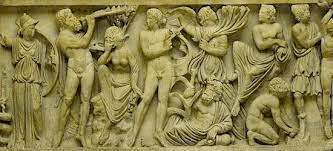
-
cup of Ikarin as acacia
Something about Benny Shanon and root medicine. As I recall, Benny Shannon claims that a cocktail of syrian rue (harmal) and acacia bark constitutes an mixture with a similar effect to ayahuasca. I recently wrote here about the early talismans that were described in the Gemara as a "talisman of Ikarin", which means a talisman of roots, and that roots is generally a name for herbs. It turns out that there is a bit more focus on what is "Ikarin".
Rashi interprets in Genesis (based on Genesis Rabbah 23:3), that a "cup of Ikarin" was a potion to prevent pregnancy: "Thus was the way of the generation of Noah's flood, one for fertility and reproduction and one for sexual use, the one to drink a cup of Ikarin in order to abort". In the Tosefta to Yavamot 8:2, it is said: "A man is not allowed to drink a cupe of Ikarin that will not give birth, and a woman is allowed to drink this drink so that she does not give birth." In Babylonian tractate Shabbat 110b, it is said: "And a cup of Ikarin – what is it? Rabbi Yochanan said: one would bring quantities of Kommos of Alexandria, Alum and Crocus and they will put together. For a woman whose body flows, she will drink these species in wine and she will be cured of the leprosy and will not abort"; Rashi about "Kommos of Alexandria": "Resin of the trees of Alexandria". Kommos, meaning κόμμι, the Greek word for gum arabic, the resin of the acacia tree. What is special about the plant is that its trunk is very low and the branches come out very close to the ground, and sometimes they even extend over the ground. This is why they called "roots".
Nissim Crispil says that the Bedouins still use a syrian rue (harmal) to cause abortions for those who have conceived outside of marriage, and that this thing is somewhat similar to the ordeal of the bitter water in the book in the numbers (because the rue is bitter). So according to this, the "root of Ikarin" may also be the syrian rue. The syrian and fringed rues were used against demons, and they also used to hang them as a talisman around the neck. And so because it is about magic and exorcism, this is probably also the reason why the use of the syrian rue is called "Ikarin". Even in the case of a rue, the phenomenon is similar, a bush whose branches come out very close to the ground and in some of its instances, especially after the green leaves dry up, it looks like a root at all (see photo)

-
The Mystery of the Dream-Inducing Plants of Ancient Iran
The syrian rue, by its Arabic name "Harmal" and by its Persian name "Espand", is a dream generator, or a substance that produces or improves dream states of consciousness, which is known as a "oneirogen". Shauheen Etminan, an Iranian-Canadian chemical engineer, ethno-pharmacology researcher and biotechnology entrepreneur, believes that it was the main component of the "Haoma", and calls the ancient Zoroastrian text "Ardā Wīrāz-nāmag", which praises it, "the oldest trip report in the world". In his company "Magi Ancestral Supplements" he develops nutritional supplements that enhance dreams based on the beta-carboline alkaloids of the Syrian rue.
-
the occulted meaning of "root cuttings" in the book of Enoch
In the book of Enoch, the transmission of magical knowledge is attributed to humans, to the fallen angels, led by Samyaza, "and they began to go in unto them and to defile themselves with them, and they taught them charms and enchantments, and the cutting of roots, and made them acquainted with plants" (Enoch I, 7:1). In Kabbalah, Samael's name is interpreted as the one who brought the elixir (in hebrew "sam") of death into the world. In the Gemara in tractate Shabbat, they talk about healing talismans, one of the types is a "talisman of Ikarin", and they interpret that the meaning of "Ikarin" is roots, meaning tie some roots and hang it around your neck. In Josephus, in the Jewish Wars, they speak of magic with roots (Jewish Wars 7, 6, 3). But Yitzchak Julius Preuss is precisely saying that "root" is a general name for plants. Therefore "root medicine" is nothing but herbalism, and "root talisman" is nothing but magical medicine. And hence: the angels taught humans nothing more than the use of medicinal plants, or herbs, or various kinds of resins. Or simply medicine, also magical medicine.