-
Why did the people of two pre-Columbian cultures in Puerto Rico eat cotton fibers and tobacco?
Why did the people of two pre-Columbian cultures in Puerto Rico eat cotton fibers and tobacco?Plant DNA taken from a piece of fossilized feces (coprolite) 1500 years old, brings up surprising findings, and the researchers suggest two possibilities:
- Women who traditionally wove cotton would spin the cotton using their mouths and casually swallow cotton. Or they used cotton as a food additive, although this is not the most likely, because cottonseed oil is bitter.
- Since no evidence of tobacco chewing was found, it appears that these cultures inhaled crushed tobacco powder as part of a cocktail of various herbs. For what purpose was tobacco branched? Probably for hallucinatory purposes. and not for food.
In general, the study shows that the diet of these pre-Columbian Caribbean cultures was more similar to the diet of hunter-gatherers than to the diet of farmers. The study also shows that the diet also included plants that are not found on the islands and imply an active trade between the islands and the mainland.
-
A review of historical and chemical aspects of Cannabis
Two Brazilian researchers from the University of Minas Gerais publish an article in the "European Journal for Chemistry" on historical and chemical aspects of cannabis and its various uses for food, soap production, ropes, clothes, paper and even as fish bait. Of course, also in medicine and religion, especially in India. Cannabis has been used as a miracle drug for pain relief, appetite stimulation, antibiotics and of course an aphrodisiac. And probably in community, agricultural and religious festivals. In fact, the study says, "It is understood that marijuana is as significant and respected for these people as communion wine or sacred host is for Christians"
-
Mircea Eliade on use of narcotic substances
"Narcotic substances are only a folk substitute for 'pure' trance. We have already had occasion to notice this fact among some Siberian peoples ; the use of narcotic substances is an innovation of recent times, and it indicates a deterioration of the conservative technique. The narcotic intoxication attempts to create an imitation of a state of which the shaman is unable yet to reach it in another way" (Mircea Eliade, Shamanism: Archaic Techniques of Ecstasy, 1951)
Ancient people used techniques like dancing, fasting, meditation and gatherings. Eliade wrote this before Gordon Wasson's discovery of the mushroom cult so today it is an unpopular opinion. Mircea Eliade claims that many of the shamans were sick as children and met the spirits of ancestors, and that shamanism is something that runs in the family. It is likely that the meeting with the spirits is a near-death experience steeped in culture-dependent imagery.
-
Book report on The Immortality Key that I published on 7/8/2021
In antiquity, at the beginning of Christianity, Christians were accused of being cannibals, haters of the human race (odium generis humani) and having incest. The accusations were probably due to a misinterpretation of the essence of the Eucharist ceremony, in which they eat the flesh of Jesus and drink his blood. At least that's what we're taught at university, and this without referring to Euripides' play "The Bacchae" which attributes the same acts to the worshipers of Dionysus, in which they murdered a man and ate him. One of them is the mother of that person. The accusation was because of the identity between the Eucharist, the drinking of the wine, and the Dionysian rites. Dionysus is the god of wine.
This claim comes up again and again in Brian C. Muraresku book, "The Immortality Key". He claims that the ancient Christian religion was nothing less than a monotheistic variation of the Mysteries of Dionysus – not necessarily in the ceremonial pagan sense but more in the idea of "eating the god in order to unite with the god". The women in Euripides' tragedy are described as those who by drinking the wine got drunk and did the will of Dionysus, the murderous will. Through the assimilation of Dionysus in their body they united with him and his will. Just as the Gospel according to John claims about the Eucharist. He claims that the Gospel according to John was written for a target audience in the city of Ephesus, where Dionysus worship was popular (and in Ionia in general).
The Romans looked at the Dionysian rituals with a bad eye and even in 186 BC banned it and executed its participants due to its masses. They only enabled it in a controlled way by the authorities and not in a pirated way. The reason was because they could not tolerate a situation where the classes are mixed and even more so not a situation where the women are the ones who brilliantly manage the ceremony. The persecutions against the Christians were therefore not only because the Christians did not participate in the worship of the kingdom and offered a sacrifice in honor of the emperor, but because traditionally the Mysteries of Dionysus pushed the envelope, and were sometimes persecuted, because they undermined the social order. The Romans tended to get confused between these mysteries, which in Rome were called "Bacchanalia". Christianity, for its part, tried to imitate the worship of Dionysus in order to convert people who were thirsty for an ecstatic spiritual experience. Undermining the social order, as the Christians would be accused, was blasphemous in the eyes of a society in which there are castes such as patricians, plebes, mobs and barbarians. If the Mysteries of Apollo were open only to Greek-speaking Hellenists, the Mysteries of Dionysus were open to all. The Romans gave them only to the patricians and nobles, and called him Bacchus, while the masses of the people called him Liber, a worship that was less and did not count. Before Christianity, the piratical bacchanals were done in remote places, the Christians took the rituals underground but allowed them to be more available, inside the houses. The availability and temptation to obtain such a spiritual experience was a magnet for people in a land where it was the religious praxis. Ionia
The chauvinism smell or misogyny tone that excluded women from the religious space, on the grounds that they are tend to be unrestrained and frivolous, was reeked from the play of Euripides but also from the established church that expelled them from the ranks of the clergy, and refined the Eucharist from the bath of the blood of the grapes, a state in which people lose their image to Christ, to a state in which people drink a weakened placebo in a technical way, if at all is drunk. Because in the Middle Ages the practice began where only the priests drank, and sometimes not in front of the audience but behind a cover. In fact, as Norman Cohen recounts, most of the popular rebellions against the Catholic establishment, including the Protestant Reformation, stemmed from a protest against the way the Eucharist was administered, which is considered the beating heart of Christianity.
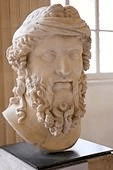
Muraresku goes even further and shows that the concept of "lamb of god" is also taken from the Dionysian lexicon. The practice of tearing the meat into pieces and eating it roughly, especially goat meat, was part of the ecstasy that accompanied the rituals. The god Pan was a satyr, a goat-man who lived in the desolate places where the rites of Dionysus took place, and the word panic symbolized the panic that gripped people who visited these remote places, or in contrast of frightened flocks of sheep. In addition, Dionysus was born to the father of the gods in a virgin birth, according to the Orphic myth. Date of birth: December 25. Later he was murdered by the Titans and only his heart was crushed, Zeus swallowed him and gave birth to him again. The date: March 25, the Feast of the Annunciation. Christ's suffering is explained by the suffering of another satyr, Marsyas, who was punished by Apollo after he had a contest with him and won. Marsyas is depicted in art in the same position as Christ on the cross. The portrait of Jesus as Jim Morrison, bearded and full of hair, is also based on portraits of Dionysus like this one. see attached image.
Dionysus in his Orphic edition, Zagreus, was the son of Persephone. Persephone is th one who stood at the center of the mysteries of Demeter, her mother. She is considered to be resurrected once a year, when she rises from the underworld. In the Orphic myth, Orpheus is the one who ascends from the underworld, to which he descended after intoxicating Cerberus, the guardian of Hades, with his music. Intoxication is also the effect of those who drank the kykeon in the mysteries of Demeter. Both the kykeon and the wine were seasoned at that time with flavoring agents such as henbane, mandrake and various morning glories. This is what made the wine so strong at that time, many times more than normal wine based on the fermentation of vines. According to Muraresku, the identity of the intoxicating drink was not important, and the worship of Dionysus became a wine worship just because the Greeks saw that the beer was used by other peoples. Beer was indeed used ritually in the Eastern, Mesopotamian and Egyptian cultures (and it turns out also among the barbarians in Europe). The Dionysia and Bacchanalia were Hellenistic versions of rites that were popular in the East such as the Canaanite Marzeach, which itself was a Semitic variation of an Osiris worship ritual recorded in ancient Egypt. Osiris is also considered to have descended into the underworld and risen from it. Drunkenness is traditionally considered the way to communicate with the world of the dead, drinking is the descent into it and sobriety is the ascent from there. Drunkenness is the experience of the near death, a state in which you experience death while living, and in fact upon your return to sobriety you are reborn, just as Ra defeats Apophis every morning anew, when the sun rises and comes from the underworld.
-
British university offers master’s degree in magic and the occult
Starting in september 2024, an interdisciplinary master's degree course in the sciences of witchcraft and the occult will be opened at the University of Exeter in england. The degree will rely on courses in history, literature, philosophy, archaeology, sociology, psychology, drama and religion and will explore the role of witchcraft and magic in the various cultures of the East and West.
"The MA will reexamine the assumption that the West is the place of rationalism and science, while the rest of the world is a place of magic and superstition. It will examine the place of witchcraft as the basis of Western culture as well as its relationship with the natural world. There is a growing acknowledgment in academia that texts dealing with magic or the occult have been systematically neglected by research in medieval and modern history, literature and religion, as well as in the history of science and philosophy".
Yes, and also a special course on therapeutic work with psychoactive drugs substances although this is not yet licensed for treatment in the UK.
-
Sealed wine jugs from 5000 years ago were discovered inside a tomb in the necropolis of Abydos
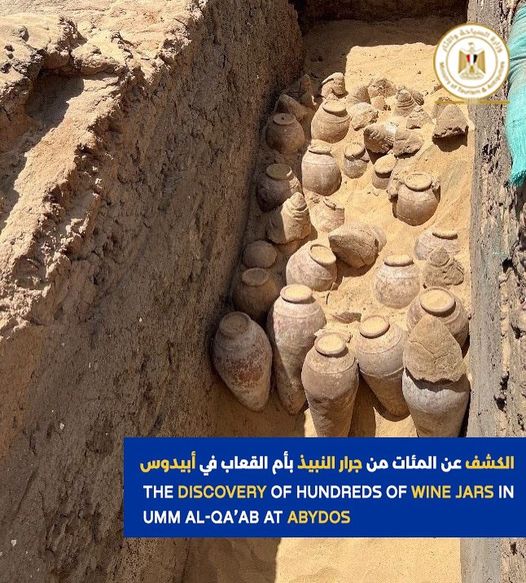
Sealed wine jugs from 5000 years ago were discovered inside a tomb in the necropolis of Abydos, where kings from the first dynasty of the pharaohs are buried. The tombs are not built in pyramidal structures but in structures called mastaba, a kind of low trapezoidal pyramids. The tombs are all of male kings, but this particular tomb appears to be that of a woman, whose name is Merneith, and who was probably a regent while her son was too young to rule. Which raises the possibility that the role of women already in this period was higher than known. For some reason this queen was forgotten in history, to the point where it was not clear if she really existed. But the objects found that contain her name and role prove otherwise. As mentioned, one of the findings is wine, a drink that was then considered a status symbol compared to the beer that was used by the common people. Wine was also used for worship, and especially in the period in question, which is actually the first years in which the knowledge of wine production was brought to Egypt. The analysis of the remains may also better explain how wine was made back then and from what.
-
Yom Kippur and the Manna cult
Speaking about pine cones… Danny Nemu enlightened me to an recent article published in the magazine "Sefaria", claiming that Jonah's castor (kikayon) was actually a kykeon, which according to Rashi is an abbreviation of "Greek kik", meaning "manna the Greek" (kik is manna in Greek). And after all, manna is Ergot. Therefore, the priest consumed LSD when he got into the holy of holies, and therefore saw the face of God.
Peniel is itself an abbreviation for the "the face of god", "pnei el", and a reference for the Greek name of the pine cone (pinus), and especially for the pineal gland which the Greeks already understood that is the place where the soul (pneuma) is. So wherever it is written "Peniel" it is a revelation or a state of mind in which secrets are revealed. The connection to Yom Kippur and ergot is the midrash about Tsofnat Bat Peniel, who "everyone watched her beauty" and was actually the daughter of a high priest who entered the holy of holies, which is in Hebrew "the inner place inside", "lifnai ve lifnim", do you notice the wordplay with the root p.n.e or f.n.e?
This Peniel thing is clearly discussed in Danny's excellent "Neuro Apocalypse". Watch out for it.
-
"The Immortality Key" is re-released
It turns out that the instant classic "The Immortality Key" is being re-released in a new paperback edition, with a new additional preface by Michael Pollan (originally there was only an introduction by Graham Hancock) and a new bonus chapter that did not appear in the original edition.
-
Psychedelic Sukkot
Samuel Tolkovski is considered one of the fathers of Citrus Orchard growing in Israel and the one who turned the citrus industry into one of the largest export sources of the Jewish settlement in the Land of Israel during the British Mandate period and in the early days of the state. Beyond that, he was also an agronomist and a journalist, and in his later years he published a book on the cultural history of the etrog and in fact founded the academic study of the etrog. The book is called "Fruit of the citrus tree: its history in the culture of the nations, in literature, in art and folklore, from ancient times to the present" and was published by Bialik about a year after his death in 1966.
According to Tolkovski, until the Hasmonean times, the cedar cone was one of the "four species" and not the etrog. Tolkovski points out that the cedar tree was sacred to a multitude of cultures, and he finds the origin of the worship of the tree in the European Indian religion: 'The meaning of the expression "fruit of the citrus tree" is the fruit of the tree called "Dar" [ . . . ] "Dar" is a Sanskrit word, which is made up of a root. This word comes from the name of the most sacred Indian tree, the giant cedar of the Himalayas, known to botanists as cedrus deodara, from the Sanskrit divadaro, which means "tree of God". Is it possible that this is the origin of the Dar mentioning in Esther 1:6?' (p. 50 in the book)
The cedar cone was sacred in cultures that worshiped trees and forests, and in the Levant the cedar forests were considered the abode of the gods and the source of their power. The peoples of the area worshiped them, and made use of them and their products. Accordingly, they also used them in their rituals, starting with the Sumerians and Egyptians and ending with the Assyrians and, of course, the Phoenicians. Lebanon was abundant in cedar forests, and it can be considered that the Phoenicians' use of these cedars made them a power in ancient times – the trees were used to build their ships, and the product that was in demand made them an important trading force. Over the years, excessive cutting of the trees almost exterminated them from Lebanon, but efforts are being made to preserve them. In Lebanon today there is a world heritage site called "The Grove of the Cedars of God" according to its Sanskrit name, so to speak. We also see a remnant of this in Psalms 104, "The trees of the lord are well watered, the cedars of Lebanon that he planted".
Among the constant customers of the Phoenicians were the Greeks, who used the cedar cones and placed them at the top of the thyrsos. The thyrsos was a kind of ivy-decorated vine girdle used in Dionysian processions. The Hasmoneans wanted to differentiate themselves from the Greeks, he claims. The cone was converted into a ethrog. the fringe of the vine was converted to be the palm branch known as "Lulav". However, according to the Book of Nehemiah, the Sukkot procession included myrtle and palm branches anyway, so that nothing else had to be replaced: "olive leaves and olive leaves and myrtle leaves and date leaves and thick tree leaves." In any case, Arnold Ehrlich (as well as the Karaite Aharon ben Eliyahu of Nicomedia 500 years before him) commented that a fruit may actually mean a branch, from the word "porot", so that actually when they say "fruit of a splendid tree" they mean a branch from a cedar tree.
Remember, the ancient Jewish religion worshiped trees and forests. From the cedar and the cypresses they built the Temple, King David is known as "Elhanan ben Yaari" (Yaar = forest) because according to the midrash the whole temple is called a forest. The so-called "cedar tree and hyssop and scarlet worms" symbolizes the cedar and the red mushrooms growing at its bottom and so on. Sukkot is a holiday with psychedelic connotations, first of all. Happy holiday.
(Pictured: The Four Species, 150 BC edition, the Thyrsos)
-
what was the substance the barbarians used to tattoo themselves?
The origin of the name Britannia is in the report of the Greek traveler Pytheas of Massalia about the inhabitants of the area, whom he called "Pretanoi". Pitheos heard the name from their neighbors, who described them with the Celtic word meaning "the painted people" after the tattoos and body paintings of the people there. Later, the word was "Latinized" from the Greek name "Prettanike" and was called "Brettaniai", or simply "Britain". Further north from there in Scotland lived the Picts. It is not known what the origin of the word is and it is also not known if they themselves called themselves that, but the assumption is that the word "picts" means "the painted ones", while painting has the same meaning as the word picture.
These barbarians tattooed themselves, but everything from here on is conjecture. Maybe for religious reasons, maybe for aesthetic reasons, maybe for political reasons. It has been hypothesized that the ink with which they tattooed themselves was a psychoactive substance that put them into a frenzy of war, they fought for their country and we see evidence of human sacrifices that were sacrificed only in contexts of distress, so it is possible that the warriors also tattooed themselves only for the needs of war. And maybe this is also the religious context, the barbarians saw war and especially self-sacrifice in war as a religious value. Maybe the tattoo was something ritualistic, maybe only a tattooed and naked warrior is a warrior who fights the proper way. It is not clear.
The references are only textual, and in them it seems that the ink was an indigo color tending to purple, but it is not clear what color. Some assumed it was an woad (Isatis tinctoria), but it turns out that for tattooing it is bad, it burns and leaves a lot of scars, and of course it is not psychoactive. Bad candidate. Some talked about metals that were used as ink, which are indeed psychoactive, but more than that, they are toxic and their mental effect is mainly a mood disorder in a depressive direction, not something that will incite people to war frenzy.
In short, a mystery. It is worth noting again that the identification with the woad is probably wrong and revolves around an inaccurate translation of the writings of Julius Caesar who testified that the people of the British Isles use "vitrum" (glass…)