
-
using drugs as Jihad
The essence of religion is an attempt to discover the truth through the veil of reality. Using certain tactics it can be done, the religious commandments are a set of such tactics. Reality presents the believer with difficulties, and the believer must fight against them and remove them in order to be able to fulfill his goal of a direct relationship with God. He imagines reality as an enemy and against it he wages war. This is how the idea of jihad, the holy war, was born. This interpretation of religion is a mystical-gnostic interpretation. Within Islam this interpretation was used by the Sufi tradition. The Sufis called this struggle the "Great Jihad", because in their opinion it is a much more difficult struggle than the physical war, the "Little Jihad".
Within Islam, around the 11th century, a major crisis arose over the question, because some Sufis claimed that since they had reached the highest level of union with God, the commandments did not apply to them. The disdain for the commandments and the door it opened to an interpretation that was perceived as heretical, made the Sufis persecuted and some of them, like Al Khalaj, were executed. The internal Islamic struggle, which dealt with the question of the essence of Jihad, provoked the fundamentalist movement that insisted that Islam should be returned to the original and simple meaning of the term "Jihad".
One of the things that the Sufis supposedly underestimated is Islam's attitude to mind-altering substances. In the Quran it is written that it is forbidden to drink wine, but it is not written that it is forbidden to use mind-altering substances, and the question was very much alive in the tenth century, when on the one hand there were interpretations that followed the path of the "generalization" and forbade mind-altering substances as if wine were forbidden, and on the other hand there were those who said that since only wine was forbidden, Muslims were not allowed to prohibit what the Prophet did not expressly prohibited. The Sufis found in mind-altering substances a tool for the realization of Jihad. What all the permissives had in common, it turns out, is that they came from the eastern regions of the Muslim Empire, places where there was a historical Zoroastrian influence that was positive towards two minds. In those areas, it turns out, was also born the sect of Order of Assassins, which was said to have used mind-altering substances in order to carry out Jihad.
One of the prominent figures in Muslim theology is the figure of al-Khaḍir, a servant of God who is considered to be even more knowledgeable than Moses, and is considered to have succeeded in his great wisdom in finding justifications even for actions that common sense fails to describe as appropriate or just. al-Khaḍir is so holy that he is considered immortal. Some identify al-Khaḍir with Elijah the prophet, and because of this he is considered an example of a religious zealot, who is jealous of God and wages a stubborn struggle against those who violate his word. al-Khaḍir literally means "the green", or "the plants" – a connotation for mind-altering stbstances.
As mentioned, in Islam there were two extremes in relation to the use of mind altering substances as a tool to implement jihad and reach a high spiritual level that fulfills God's will, spiritual jihad and practical jihad. This explains why today's fundamentalist movements specialize in the production and distribution of drugs – starting with the Taliban in the supply of opium, through Hezbollah in the supply of hashish, and ending with the Syrian government that is responsible for the new Bon-Ton, amphetamines called "Captagon" (Fenethylline). ISIS is already known for drugging their soldiers in the Assassins style before going on murderous operations. Now, it turns out that among the weapons of the Hamas terrorists were also found such Captagon pills that drugged them and helped them to obscure their empathy and to be uninhibited.
* Berserker, drugging soldiers before going into battle, was a well-known tactic among the Indo-Europeans ("Aryans"). Zarathustra supposedly founded his religion out of a protest reaction to the Persians' obscene use of the "Haoma". In Vedic mythology, Agni, the god of fire, was the twin of Indra, the god of war, and sometimes both are considered the same being with two faces. Both are considered patrons of the soma and those who liked to drink it.
-
RIP Roland Griffiths
RIP Roland Griffiths, the pioneer of psychedelic research, professor of neuroscience, psychiatry, and behavioral science who was the director of the Center for Psychedelic and Consciousness Research at Johns Hopkins University Hospital and who can be credited with the psychedelic renaissance after the publication of his research on the medical benefits of psilocybin in 2006 – died at the age 77.


-
Ex-Tesla Director Antonio Gracias Is Bringing Psychedelics Studies Back to Harvard
More than 50 years after psychedelic research was kicked out of Harvard, it's back in, and through the front door, courtesy of a $16 million donation from the foundation of Antonio Garcias (Tesla director from 2007-2021).
-
Many of today’s unhealthy foods were brought to you by Big Tobacco
A new article appearing in the magazine "Addiction" claims that the tobacco companies, having already specialized in causing addiction in smokers, moved in the 1980s to the field of "hyper delicious" and "super processed" foods high in fat, sodium and sugar, in order to get people addicted to them precisely from the same motivation: money. The study found that in the decades when the tobacco giants owned the world's leading food companies, the brands they served to the public contained more carbohydrates and fat than their competitors. 80% of the products they served were high in carbohydrates and 29% high in fat.
And of course you can go on and on. And here are my words: the main idea here is that this tactic of creating dependence in the consumers in order to control them is a tactic that was also used by the West in the 18th and 19th centuries in the Far East when the Dutch East India Company and the British Empire created a dependence in the Chinese on opium that was imported from Southeast Asia and was basically a machine Money and a way to exploit the residents of the colonies. In fact, as argued in Pierre Caquet's book "The Opium Orphans", the entire fight against drugs and their outlawing was actually a defensive move by those powers against what came back to them as a boomerang, when the Westerners also started to get addicted to these drugs. And in the 20th century, the Westerners used the blackening of the eastern immigrants, and blamed them for causing this addiction when they essentially disclaim their responsibility for it – the sin of colonialism.
Also, we all remember Terrence McKenna speaking out against the western sugar drug. So that's it.
-
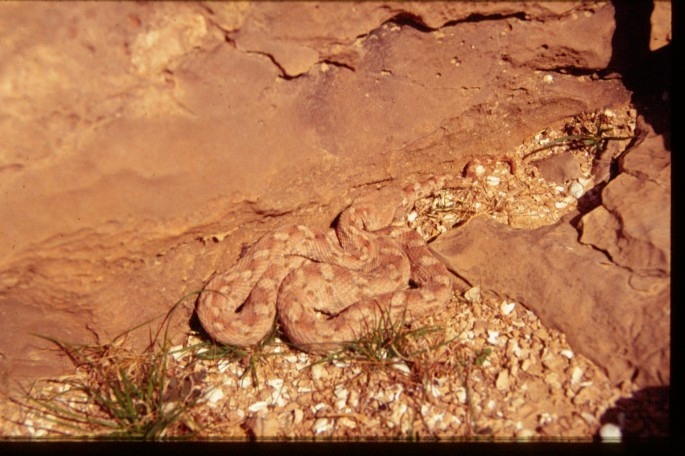
the theriac as the origin of Judaic mystical medicine
The northern Dead Sea was at the center of the theriac industry through the middle ages. The theriac was a panacea against poisons in general, and snake venom in particular. What was special about the Dead Sea, apart from the unique minerals and herbs that were used as ingredients in this concoction, was the invention of the saw-scaled viper, whose venom and its meat would make the most effective versions of the healing elixir.
The viper is considered one of the most venomous snakes. The scientific name of the snake is Echis, in Greek ἔχις, a word that describes a poisonous snake as opposed to ὄφις that describes a snake in general.
The similarity to the word "Achan" or "Achsan" (hebrew snake names) makes me wonder if it is a Greek word that entered the Bible and how, many names from the ancestry of King David and the tribe of Judah in general are called the names of snakes starting with Nahshon and ending with the inhabitants of Jabez
The fact that the Essenes are called Ἐσσηνοί, "Essenoi", makes me assume that the origin of their name, or rather the N in their name is a derivative of the word "Achsan". Which is a word play if you drop the N and stay with the well-known association with them being healers.
That makes me assume that they had knowledge of the composition of theriac and since then the recipe of this theriac was preserved until the middle ages. What strengthens my opinion is the reddish-brown color of this viper, which may resemble copper. Thus, the making of moses' copper serpent may be an ancient clue to the existence of theriac around the Dead Sea.
In 2 Kings it is written that Hezekiah cut off the copper snake, and in the Gemara it is written that one of the things the sages "thanked" him for, was that he put away the "Book of Medicines". In the Rambam (Maimonides) Mishna Commentary to the Tractate Avoda Zarah, Maimonides believes that the Book of Medicines was a book of spells i.e magical medicine that were whispered over snakebites (in hebrew both spell and snake are "nachash").
Because this thing was about to be sorocery and witchcraft, or what is called divination (in hebrew also "nachash" or "nichush", literally "guessing"), and degraded the Israelites into sin, he shelved this composition. Maimonides claims that this form of healing was accompanied by amulets, "talsam" (i.e talisman), and in them formulas said in a spell.
There is also evidence of this from the Bible. Jeremiah testifies that in his time the cure for a snake bite was a whisper, and there were snakes so venomous that no spell helped against them. "Because I am sending among you viper snakes that have no spell and will bite you". Psalms 18 also testifies, "Their poison is like the poison of a serpent, they are like the deaf cobra that stops its ear, which will not heed the voice of whisperers, whisper ever so skillfully".
The Mishna in Rosh Hashanah Tractate 3 may explain what the role of the Essenes was: "Would a snake kills or a makes alive? Rather, while Israel looks up and enslaves their hearts to their Father in heaven, they would be healed, and if not they would be excused'. What the Essenes actually did was to cure snakebites with a special theriac accompanied by a spell through the expression of sacred names. Just as it was customary to do in the idolatory, but mixed with a monotheistic twist (something along the lines of "I am the Lord your healer". That is, the holy name is the name of Jehovah).
We see that these methods were accepted later also during the period of the Mishna and the Gemara. For example, Jacob of Sachnin was known as the one who healed the snakebites by saying the name of Jesus. In Bamidbar Rabba (20:14) there is a parable about, "a healer who comes to heal with his spell the snake bite".
Some also claim that the Essenes used snake terminology. They called sinful people "brood of vipers" and through baptism sought to purify them. John the Baptist also has such a usage. If we consider that they were using theriac, we could describe their mission as providing "anti-viper medicine".
-
11,000-year-old statue of giant man clutching penis unearthed in Turkey
An 11,000-year-old statue of a giant clutching a penis was discovered in Karahan Tepe, Turkey. A slightly more "new" statue of a wild boar is found in the nearby Gobekli Tepe. This is a pair of sites that are considered to be the earliest temples in the world. In Gobekli Tepe, as is known, the oldest beer in the world was found.
What is the meaning of a 2.3m (7'5") tall giant holding his penis? "Any interpretation of the statue is conjecture at this point," but perhaps it is a statue depicting a dead man, an important ancestor associated with the building in which it is found. The fact that the figure is holding a penis is also consistent with the interpretation, in that images of a penis are considered to be a symbol of the father of a dynasty (like For example, in the Bible, "The offspring of Jacob's thigh", "And I put your seed as the dust of the earth")
-
Seaweed was common food in Europe for thousands of years, researchers find
Not religion, but important to know. In the journal Nature Communications, an article by researchers from the University of Glasgow was published, that claims that seaweed was also used for food in Europe for thousands of years, from the Neolithic period (6400 BC) and at least until the 12th century AD. That is, if until now it was believed that the remains found were used for fuel or fertilizer, now the researchers claim that this is evidence that they were also eaten. The researchers analyzed samples of dental tartar from the remains of 74 individuals from 28 archaeological sites across Europe, from southern Spain to northern Scotland, and argue that seaweed was as common a food as shellfish and mushrooms, until their popularity declined. For some reason.
-
Can personality traits affect the psychedelic experience?
Can personality traits affect the psychedelic experience?
Researchers have found that your response to a psilocybin mushroom trip can depend on the personality structure. A study published in the Journal of Psychoactive Drugs found a correlation between 5 personality traits and people's response to a trip of psilocybin mushrooms. The 5 traits are: extroversion (versus introversion), agreeableness, openness to experiences, conscientiousness and neuroticism, or the ability to maintain emotional stability while experiencing negative emotions.
The researchers discovered that people with openness are more likely to experience love, inner visions and contact with transcendent entities and forces, this is in contrast to highly extroverted people who met the less entities and connected more deeply with others. It has been found that neurotics report more bad trips.
Were the prophets of wrath simply neurotic and anti-social? Is this the proof that there are two Isaiahs? One bad tempered and the other hippy?
-
Cannibalism and burial in the late Upper Palaeolithic
Once upon a time 14000 years ago, until 19000 years ago, a culture called "the Magdalenian culture" lived in Europe. Another prehistorical culture called the Epigravettians culture expelled it, and took its place. What distinguished the Epigravettians culture was that its cult of the dead included burial. What set the Magdalenian culture apart, it turns out, was that its cult of the dead included cannibalism. Bite remains were found on some of the bones. And the larger bones were used as spoons to eat from the bowls of the skull. This is according to an article published in the November issue of the journal Quaternary Science Reviews.
By the way, it should be mentioned that skulls with holes were also found. And the question is whether they were pierced as part of the same ritual, or out of the same motivation, to draw the power of the dead or to receive protection from his spirit. In contrast, the 19th century Frenchman Paul Broca, one of the pioneers of what is now called brain science, claimed that the holes in the skull were the result of trepanation – while the dead people were alive. People who underwent trepanation were considered saints, and if we follow Amanda Fielding's thesis, then also intellectually superior. Broca claimed that the parts removed from the skull made guardian amulets. Probably also from the other parts that were smashed.
-
The WILDEST Party In Ancient Egypt
On Hathor's drunken festival which originates from the myth of the Egyptian flood. God Ra saw that the wickedness of man was great in the and the earth was filled with violence and sent his daughter Hathor to make a new order. But the order she made was an uncontrolled rampage and Ra felt he had to restrain her. So he gave her a mixture of red beer (mixed with iron ore, so to speak) and scattered it on the ground. Hathor thought it was blood, drank and got drunk, and humanity was saved.