-
Tripping on Utopia: Margaret Mead, the Cold War, and the Troubled Birth of Psychedelic Science
The still untold chapter in the history of psychedelics (at least not in Ido Hartogsohn's or Michael Pollan's books) is the involvement of the anthropologist Margaret Mead, perhaps the most senior scientist of the period of the 1940s and 1950s who dealt with the matter. Mead already had an elite status among consciousness researchers, in the 1930s she did fieldwork with the Omaha people in Nebraska in the 1930s, praising their ritual use of peyote to promote social cohesion, have enlightenment, and respond to social pressures. Later she studied together with her third husband Gregory Bateson, the trance states of dancers who stab themselves on the island of Bali in Indonesia, research that is now considered groundbreaking.
As part of the Allied war effort during World War II, the two participated in a team that researched hypnosis, and that's how they discovered LSD. Their enthusiasm for it was great and they saw it as the drug that would be "a cure for all fears." They thought that the drug could save the world from falling into the abyss it was in after the war, and believed that it had the power to reshape humanity through the expansion of consciousness. They proselytize LSD into the establishment, each one separately because they just divorced in the meantime. Bateson, for example, gave Allen Ginsberg his first taste of psychedelics, and also participated in a study that tried to teach dolphins to speak using LSD. Of course Mead was also an enthusiastic preacher in favor of the drug, and even participated in the first studies of MKUltra and made connections in the CIA as well. She stated that she intended to use it but what took her off the hook was the moment she realized it was being used as a truth serum, she discovered the true intentions of the American establishment.
This is what turned her down and caused her great distress. She stayed away from the field, and maybe also because in those days she had a lesbian affair even though she was afraid to come out and in the end she didn't. But she was afraid. At that time she was still busy mourning her crush, her mentor, Ruth Benedict. Bateson also got away, and was disappointed that the counterculture led to the field into contempt, and that people find in LSD nothing more than "shortcuts to wisdom".
By the way of homosexuality, in 1961 Mead believed that findings from her research in New Guinea prove that homosexuality and transgenderism are not unnatural, and that they are simply part of the "rich diversity of human potential". Timothy Leary, on the other hand, claimed that LSD was able to cure people of these deviations, and he also claimed that he was able to convert Allen Ginsberg's orientation…
In short, the author Benjamin Breen claims: the era of psychedelic drug experiments did not begin in the 1960s but in the 1930s. If anything, the 1960s marked the end, not the beginning.
-
indigenous Tamil Nadu sacred forests
AP: Many sacred forests have restrictions that allow activity and access only to members of specific communities. Hunting, gathering, picking, cutting and other activities may be strictly prohibited in these spaces. In many sacred forests, even breaking a branch or plucking a leaf or flower is not acceptable. For example, in the Banagudi Shola forest in the state of Tamil Nadu in India. Members of the indigenous Kurumba tribe allow only the men of the tribe who perform the rituals and take care of the temples to enter the forest, and only barefoot. The "equipment" in their religious ceremonies is only allowed from things that grow in the forest and this includes dressing the gods, which they use only from what can be found in the forest. In the sacrifices they make, only the resin of the forest trees is used.
In a nearby place lives another indigenous tribe called "Toda", and it also has a sacred grove called Muttunad Mund. In this grassland, the tribe built its temple, a conical hut built from a multitude of canes and grasses that grow in the grove. The members of the tribe worship the buffalo, and on their holidays they hold feasts that include white rice mixed with buffalo milk and butter.
The tribesmen are afraid of "commercializing" the existence of these groves and the worshipers in them, for fear that tourists will harm them. However, because of their small number, a few thousand, they also fear that traditions will disappear, so they have some interest in publicizing the matter.
-
tuberculosis in late Neanderthal skeletons
It is common to understand that Neanderthal man disappeared at the same time as Homo-sapiens appeared, and that there is probably a connection between the two. It is commonly thought that this was due to the takeover by the migrating modern man of the living area of the local Neanderthals, and perhaps even active extermination in the form of war. The hypothesis that a plague killed the Neanderthals was not taken into account since no evidence was found. Up to now. And now, there is a suggestion that tuberculosis is the one that contributed to the extinction of the Neanderthals, while the modern man developed some kind of resistance to it (and maybe by luck).
Neanderthals probably contracted tuberculosis from the wild animals they hunted. Evidence of tuberculosis has been found in bison and other large animals. Aren't Homo-sapiens also infected with the disease? Maybe. Here it is no longer part of the research, but it is known that tuberculosis is sometimes dormant and not always active. A person who has tuberculosis does not infect those around him, compared to a person who has an active disease who infects through coughing or sneezing. Did the genetics of modern man contribute to delaying the active phase of the disease? Alternatively, did the Neanderthal's genetics contribute to the inability of his body's immune system to deal with the bacteria?
And another crazy hypothesis: in traditional medicine, eating poppy seeds prevented coughing, and according to Assaf the Jew, applying balsam prevented tuberculosis infection. Did the opium and the various balsamic resins (such as frankincense, persimon, acacia etc.) become sacred because of this?
-
Osun-Osogbo festival origins
Osun-Osogbo is a grove located on the banks of the Osun River, which is considered to be the river sacred to the Yoruba goddess of fertility, Osun. On the shores of Osun, a kingdom called Osogbo was established by refugees who arrived in following a great famine that hit the area. The leader of these refugees found this grove, and while he was trying to cut down a tree for the purpose of building the city, a voice called out from the river (identified with Osun) and cried out for nut to uproot the tree. All the trees of the forest answered her, "Spirit of the plant, we love you". The leader immediately stopped and decided to make an pact with Osun, we will not uproot your grove and we will respect the spirits of the plants and in return you will bless us on a material and spiritual level. And so the new city that was built nearby was named after that plant spirit, in the local language "Oso-Igbo", and in short "Oshogbo". To be more precise, the first people of the place lived right on the edge of the forest, but migrated to the current city in Nigeria after the place was too narrow to contain the community.
Since then the locals have adored the grove and the river, and a local festival has been taking place there for over 500 (and maybe 700) years. The locals do not touch the trees of the grove or the animals in it. They don't fish, they don't hunt and of course they don't build their houses there. As Osun is the goddess of fertility and healing, the river water is considered to have healing properties. It turns out that there is a small problem with this, because the river is considered to be polluted at such a level that contact with its water is dangerous, let alone drinking it, due to the abundance of heavy metals in it. The small revenge of the river goddess was that about two years ago, during the huge floods in Nigeria, the river overflowed and claimed many lives…
The grove was originally a much larger rainforest but industrialization caused not only the pollution of the river water but also the displacement of many of the surrounding forest trees, uncontrolled fishing and hunting and almost the destruction of the cult. Only following the activities of the Austrian artist Suzanne Wenger, the place was restored and later even became a world heritage site. The revitalization of the place and the festival is part of the anti-colonialist animist renaissance that has been taking place in Nigeria in recent decades.
-
An Early Neolithic Dolmen with Early Megalithic Tombs on Sweden
A dolmen from 5000 years ago is found in Sweden and is considered the oldest found in Scandinavia. What indicates its antiquity is the fact that it differs from the form of burial common in the Neolithic era in the same area, the so-called "passage grave". In the dolmen, 12 human remains were found, all without injuries, from the analysis of the findings it appears that they are farmers who ate also dairy products. And what is even more special and even turns the whole thing into a real mystery: most of the skeletons found are missing large bones such as hips and skulls (which there is evidence that they were taken out of the grave), compared to hands, feet, teeth and ribs that were found there in at least one copy for each skeleton. The researchers wonder if this indicates some religious practice
-
Mount Hermon and the Origin of the Giants
Speaking of Mount Hermon as a sacred mountain and a type of Olympus, it is worth talking about the Olympian gods who dwelt on the mountain immediately after Zeus defeated the Titans and freed them from their confinement in the belly of their father Kronos. The Titans were a type of ancient giants, who ruled the world before Zeus. Most of them were sent by Zeus after his victory to Tartarus, one of the worst sections of the underworld, or the equivalent of Hell (hebrew: Gehenom/Gehenna). And I use this word mainly because at this point I am returning to the Canaanite myth – there is also a theomachy, a war of gods, and there is also the king of the gods who won the war and settled on the holy mountain while his brother is ruling the underworld.
What was on the holy mountain before that is not really told, but what is told are fragments of stories throughout the Bible and the apocryphal books. In the book of Genesis 6 (and the completion in the book of Enoch 6), Deuteronomy 2, Joshua 11, etc. From these parts it is possible to assemble more or less an interesting puzzle story about some giants who lived in some mountain until a certain moment when they were killed and "destroyed" (hebrew: Herem. translated to sanctified and confiscated). These giants are called Nephilim in Genesis or alternatively Rephaim. In the book of Enoch they are called Watchers, and they are sons of God or a type of titans who maintained some kind of oath (hebrew: Herem) on the top of Mount Hermon. They used to live in the eastern Jordan until at some point they were destroyed. But the refugees from them survived time and time again in this way or another, and each time there was a hero who cut off their heads and somehow they grew back like he was a Gorgon. Throughout the generations, those who are described as having destroyed them, were Moses, Joshua and especially Caleb, and his descendants, the most important of whom is King David through his heroes. What is important is that every time it is described that they are destroyed, the scripture makes sure to announce one thing, that the hero took them into what is called in hebrew "herem" until he killed them all "by the sword".
I could talk a lot more about the meanings of these phrases and the contradictions and complementarities in these stories, but that would make me go out of focus. It is important to concentrate on one place: what becomes clear to us here is that there are actually two narratives that each identify the holy mountain and the home of these giants in a different place:
a. One version identifies the Holy Mountain in the Judean mountain and specifically Mount Zion (one of the peaks), and the seat of the giants he identifies in the early version in Mount Hebron, and in the later version it identifies the place in the "Valley of Rephaim" or in the "Gey Ben Hinnom" Valley, which is simply an abyss that lies next to Mount Zion, from this place comes a stream that turns out to be the Kidron river that goes down and down into the desert and eventually spills into the Dead Sea which is perceived as a kind of Tartarus.
b. The second version identifies the holy mountain in the Hermon mountain, where the giants also abode. These giants are destroyed by a water source into which a stream drains from the mountain. The source of this water is not specific, and in the early versions it is relatively close to the mountain, but in the other versions it goes with the Jordan to the lowest place it can flow – the Dead Sea.
We see here two narratives that are known to us from research as the southern Judaic narrative and the northern narrative. Apparently they are contradictory and competing, and so the research claims that over the years the Judaians sought to reform and "move" the location of the central places in the myth south towards their territory. However, I think it can be explained differently as a folk religion trying to establish its places of worship in the local landscape, and the reason they moved it from north to south was technical, they just didn't control the later period in the northern land and so they moved it to a place they could physically reach and pilgrimate. At this stage it is less important what we say about it and how the second option looks more plausible because that is what can be understood from the books of Chronicles and Judges.
What is important for me to say is that, as we all know, on the slopes of Hermon in the Neve Ativ area there is a Crusader fortress called "Nimrod Fortress". Researchers disagree on the question of when this castle was built and some date it to the Ayyubid period. Some even predate it to the Byzantine period. But since it is clear that this is a structure built in several layers, and the earlier layers consist of huge stones that are more reminiscent of megaliths, it is believed that this is a much earlier structure. One of the suggestions is that the only ones capable of lifting these stones are giants, which may be interpreted as evidence of the correctness of the story in the Book of Enoch. Supposedly this megalith is the monument that the Nephilim built while swearing their oath…
-
Was the "parting of the sea of suf" was actually in the Hula Lake and the revelation of Mount Sinai was actually in Mount Hermon?
Was the "parting of the sea of reeds" was actually in the Hula Lake and the revelation of Mount Sinai was actually in Mount Hermon?
In the last week's torah portion "Beshalach" it is said that the starting point of the Israelites on their journey in the desert was at a place called "Sukkot" (Exodus 13:20). Later they made a detour and camped "in front of the mouth of Hirot between Migdoll and the sea before Baal Tzafon" (ibid 14:2, Tzafon = North). There was the parting of the Red Sea (Yam Suf = sea of reeds), where God put the sea into a "barren place", and they passed through the sea.
The names of these places are supposed to refer us to several other places where places named "Sukkot", "North" and "barren place" are mentioned. First of all, the station where Jacob crossed the Jordan on his way from Haran to the land of Canaan is called Sukkot (Genesis 33:17). This was near his crossing of the Jordan at the Yabok crossing, near a place called Mahanaim (Hebrew for "camps" or "parkings"), and one stop before he reached Shechem. The question is where this place is.
If we follow the book of Joshua, in chapter 13 it is said that all these places were in the possession of the children of Gad. "And their border shall be Jazer, and all the cities of Gilead, and half the land of the children of Ammon, as far as Aroer, which is on the entry for their main city (i.e Amman), and from Heshbon to Ramath Mizpah and Betonim, andfrom Mahanaim to the border of Devir, and in the valley of house of the Highlands, and Beit Nimra, and Sukkot, and the north rest of the the kingdom of Sihon, king of Heshbon of the Jordan, and the border to the end of the Sea of Galilee beyond the Jordan eastward"
It may be possible to understand where this place is exactly, east of the Jordan, but the exact identification is very confusing because it is not clear where exactly the Bashan is located, which was the border between the half-Mansheh allotment and the Gad allotment – with is identified in verse 3 to be the border between the two tribes settlments.
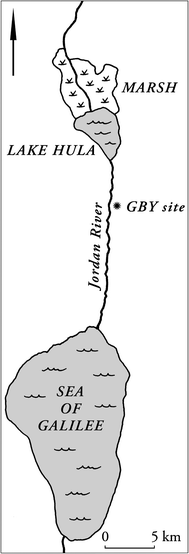
Since according to cross-referenced information from the book of 1 Chronicles, chapter 5, it can be understood that the children of Gad lived right up to the slopes of Hermon, a place where there was a temple to Baal, called in one place "Baal Gad" and in another place "Baal Hermon", it is impossible to know clearly where all the places are these. You can point to two possible places: the present day's Jiftlik area on the "road of the sunrise" from the back of the mountain in the direction of Nablus, or alternatively the "Bridge of the Daughters of Jacob" i.e Jisr Benat Ya'kub (see map: GBY), on the road going up to Hazor or Safed.
The Bridge is indeed identified in Crusader and Arab traditions as the place where Jacob crossed the Yabok river. The place is called "Vadum Jacob" and is probably based on ancient Galilean traditions. We see from Elhanan Rayner's research that the entire Galilee was considered at the time to be "historical" places where the ancestors walked, and the local people tried to locate all kinds of places listed in the Bible at sites in the area. Reiner claims that the Galilean tradition centers on Yehoshua ben Nun in his war in Hazor. In Joshua 11, the enemies against whom the Israelites fought are listed, and by chance these are the same peoples that are also listed in the book of Judges 3, the peoples who dwelt among the Israelites at "Baal Hermon", and were an obstacle to the Israelites. The war was in a place called "Mei Marom" (hebrew: waters of the heights), and the dramatic scene in which the enemies came out was written as follows: "And they went out and all their camp with them, many as the sand flakes on the seashore, and many horses withcvery large chariots and vehicles, and all these kings were appointed and they came and camped together at the Mei Marom to fight with Israel." .
It should be noted the scene in which Pharaoh's army sieges on the Israelites in order to parallel the vehicles of the army, and the fact that in both cases the buildings are described that are related to the term "camps" ("maahanaim") – "hania" and "mahane": "And the Egyptians pursued them and overtook them camped on the sea, all Pharaoh horses and his horsemen rode and fought on the mpouth of the Hirot just before Baal of the north" (Exodus 14:9)
In addition to this, it should be noted that Yavin King of Hazor and his coalition from the book of Joshua included the "kings from the north", and they fought "under Hermon in the Land of Mitzpah". We can understand from this that either from a topographical point of view they looked out towards a certain valley, Mitzpeh is an observation viewpoint located on the slopes of a mountain, or alternatively that their kingdoms are located in some land called "Ramat Mitzpah", i.e highlands of the north. And now the question is what is "mitzpah", what is "north" actually?
I want to fast-forward a little. Mount Hermon is considered a sacred mountain, like the Olympus. Its name suggests that it was a holy place, "haram". We see in the Book of Enoch, Chapter 6, that Samyaza and the other "watchers" or fallen angels decided to swear an oath together and bind each other to a taboo that its translation in hebrew is a "heram", and then mate with the daughters of men. The place where they called for this taboo, and to which they descended, was the top of Mount Hermon and there it is said "And they called it Mount Hermon because there they swore and had a taboo among themselves". In Ugaritic writings it is said that Baal built his palace in "Merom Zaphon". Although some identify it with Jabal al-Aqra in Syria, a place to which the road passes through a town called Hamath – this place can easily be presented as Mount Hermon. After all, it is said in the book of numbers 34 "And this shall be your northern border from the great sea; you shall set the mountain over the mountain ("hor haar"), from the mountain over the mountain you shall set toward Hamath and move along to the border by its side. And the border continues to move to Zifron until the court of Einan, this will be your northern border".
In Ezekiel 47-48, when the border of the land is specified, it is explicitly stated: "And this is the border of the land to the north end of the Great Sea, the way is Hatlon to come to its side" "Hamath, Berothah, Sibraim, which is between the border of Damascus and the border of Hamath of the Middle Court, which is to the border of Hauran." "And these are the names of the tribes from the corner of the north to the hand the road of Hatlon, towards Hamath, the court of Einan, the border of Damascus, north to hand of Hamath, and they had one Dan's side eastwards". Meaning: the places that are at the corner of the north and are called "Hatlon", "court of Einan", "Hamath", etc. are in the Damascus area, meaning near Hermon to the east. Hamath itself is on the Hauran border, east of the Golan (is it Hamath Gader, Emmatha, al Hamma?).
In the Song of Solomon it is said "My bride with me from the Lebanon, my bride with me, you'll come, you'll come from the top of the Amanah river, from the top of Snir and Hermon, from the home of the lions and from the mountains of tigers". Aramaic general Naaman said to Elisha that there are two rivers in Damascus, Amanah and Parpar. In the Babylonian Talmud, Hor Hahar is identified with mountains of Amnon, and the Yonatan Targum also identifies it with "Toros Amanos". All we have to do is to identify Hor Hahar with the higher peaks of the Anti-Lebanon, the place from which the Amanah (Barada river) flows, perhaps the remains of the Roman temples located at the highest point in Hermon, Qasr Habib or Qasr Antar (it should be noted that the Rambam wrote that in his opinion Hor Hahar is near a place called "Banias" but most often identify this one with the Syrian city near Latakia).
Since we identify the place with the Hermon and with the borders of the Promised Land, we also have to put the emphasis on another place that is nearby and where the covenant was made between God and Abraham and his seed promising him the land (Genesis 15) – a covenant between of the pieces, and Mount of pieces (Betarim, مشهد الطير الإبراهيمي, Mashhad A-Tir al-Ibrahim) which is in the area, on the border of the city of Banias.
In his prophecy, Isaiah (32:15) states that "a mountain will become Carmel and Carmel will be considered a forest." Jeremiah calls the whole of Land of Israel "the land of Carmel". The prophets usually mention Carmel in the context of Transjordan, "Carmel and Bashan and Mount Ephraim and Gilead" etc. So it is true that when we talk about the borders of the Land of Israel, we talk about the "border of Carmel toward the sea" (Joshua 19) but there is also a sea in the Jordan Valley, aka the Sea of Hula. The Hula lake was known for the reeds that grow around it and sometimes literally within it ("Heilat" means a kind of reed plant, and also in Arabic the lake was called "Buhayrat al Hula", بحيرة الحولة because of this). And the reason the reeds are growing within it is because the level of the Hula Lake would change with the seasons, by the nature of a swamp. Since a thicket of reeds grew in it, it was also called in ancient hebrew "a forest". And what we can actually understand from Isaiah's prophecy is that in this area there are 3 types of land: swampy land called "forest", green land called "carmel", and from some point when the climate conditions do not allow this the land becomes desolate and devoid of vegetation, this place is called "mountain", or simply "barren place" (Horava, Horeb). Since this place is "bald", it is sometimes also called "Desert" (hebrew: Land of Zia), and since one of the names of Hermon is "Sion" it is possible to understand what the word means – a desolate place empty of vegetation. Alternatively, a high place, "Sion" from the word "Si".
Since the place was a holy place for Baal, it is understandable what the prophet Elijah was looking for in that place. "Carmel" is a green area, and the temple was in the city of Banias, which is the edge of the green area and from there onwards the area begins to become bald. This place is called in the language of the Bible "Shoulder" ("katef"), and indeed we see many places along the Jordan Valley that are called that, such as "Shoulder of Jericho", "Shoulder of the Jebus" – places intended to mark the periphery of a settlement and of lands suitable for cultivation, which are found in the edge of the Desert .
Immediately after killing the prophets of Baal he found his way to Horeb. He didn't have to go that far, because all he had to do was go up the mountain. The mountain itself is restricted and access to it is allowed only to the people of God, as happens in holy mountains (what is called in the language of the Sages: hidden to the righteous "tzafun latzadikim". Tzafun is from hidden, so literally North as Tzafon is a hidden place, like in Joshua 2, Exodus 2, Psalms 27, Psalms 31. The mountain is called "North" because there is a threshold from which only the gods and holy people are allowed to enter, and everything that is beyond the threshold is hidden)
Since Moses also ascended to Horeb, it can also be said that Mount Sinai itself is Mount Hermon. Indeed, in the book of Psalms 68 it is about "the mountain of God, the mountain of Bashan, the mountain of cheese, the mountain of Bashan… Why did you watch out and raise, you cheese mountains, the mountain wanted God to dwell in, even God will dwell in it forever". Obviously, Mount Bashan, the mountain whose peaks look like cheese (indeed, the name of the mountain in Arabic is "the old mountain", or "snow mountain" after its white peaks), is the mountain that God chose for his name to dwell there. Do you remember that the holy mountain was called Zion? We have no choice but to see the land of Zia, and "Sion", as additional names for that holy mountain.
Panias, or Caesarea Philippi, is where Jesus visited when he asked the people who they thought the Son of Man was. Some also see the place where the transfiguration of Jesus took place as Mount Hermon, not Mount Tabor. The fact that two figures appear in the ceremony of Jesus' transfiguration, Moses and Elijah, indicates that both are somehow related to the place, which strengthens the hypothesis. We see that according to Elhanan Rainer Mount Tabor, which is supposedly the place where the transfiguration took place, in the Galilean tradition was in the Upper Galilee, either in Meron or even in Hermon.
And if we are talking about Tabor, which was the place where another war took place between Yavin, King of Hazor, then it is easy to link the place to this war as well. The place of the water in which Sisera's troops were drowned, who also had an iron chariot, is the same place, the water from Merom or the Sea of Hula, and after all, this war is told about (Judges 4) in exactly the same words as it is told about Pharaoh's troops in the Red Sea, "and the Lord shocked them… and all the vehicle and the whole camp hit by the sword" (cf. Exodus 14:24).
Israel Knohl in his book Hashem attributes another war to the place, with the Egyptians. The warrior king was the pharaoh Merneptah and it existed around 1200 BC. He claims that as a result of this war, the song of Deborah and psalm 68 were written as an epic poem of praise. According to him, the war was a rebellion against the Egyptian tax collectors, who burdened the taxes. And this is the origin of slavery to Egypt, when "Joseph" is the collective name for Jeroboam's tribe. That is, the memory of slavery to Egypt of the tribes of Joseph, is nothing but a memory of slavery without going down to Egypt, but slavery to Egyptian rule only, in the Land of Israel. The tradition about a war in which the Israelites went up "armed", about the "armies of God", "infantry corps" going out etc. – is a war of a local army against an occupying army, which was drowned as part of a ruse by the locals when they took them to an unfamiliar muddy area.
The arguement that seals this post is also related to Knohl. According to him, the proof that Mount Hermon is Mount Sinai is found in the double mention of the name Sinai in Psalms 68, "The land shook and the heavens dripped from the presence of God, this is Sinai, from the presence of God, the God of Israel" as well as "the chariot of God, dozens of thousands of servant angel warriors, my Lord in Sinai in the holy place". The fact that the name Sinai is mentioned twice here is a reference to the union of the pantheons that the Israelites had when they arrived from Haran, and their foundation in the worship of the calf. The calf, or bull, is an animal that, on the one hand, according to Ugarit writings, was considered a symbol of strength and fertility and was attributed to the Baal or El, but on the other hand, it was also an attribute of Sin god the lunar bull god who hanged the moon between its horns. The temple in question at Banias (Hermon), is the temple that Jeroboam built in Dan and in it was a golden calf and this is also the nature of the worship that was associated with Mount Sinai and with Aaron the priest, who is buried in Hor Hahar. Jeroboam, is considered in Israeli myth both as the founder of the cult and as the great redeemer from slavery, and slavery was, according to Knohl, the same "suffering" that King Solomon caused when he built his temple from the cedars of Lebanon and gave a tax in the cities in order to build "workers cities, chariots and horsemen", among other things the Horon (remember Hirot, or Hor hahar…), Baalat and Tadmor/Palmira (so to speak, when they talk about the promised land extending to the great river Euphrates, this is how we see from our analysis first about the essence of the boundaries, and also according to what is written in the books of 1 Chronicles 5, it seems that they are talking about the fact that the sons of Reuben, Gad and half of the Manasseh, They will spread from Hauran eastward to the edge of the desert in the Syrian desert, "And to the east he will dwell until he comes to the desert where the river Euphrates comes from, because their descendants are numerous in the land of Gilead" – i.e. Tadmor)
-
anemone in the bible as Adonis cult and the anti-pork campaign
The anemone is mentioned in the Bible, when Isaiah calls it "Naaman" in chapter 17, "You have forgotten God your Savior; you have not remembered the Rock, your fortress. Therefore, though you set out the Naamanim and plant vines of strangers". In Arabic, the flower is also called "Shakayik al Nuaman" شقائق النُعمان, and this preserves the worship of Adonis called "Naaman" in Phoenicia, the anemones supposedly grew from his blood after he was killed by a wild boar. While he was being led to his beloved Ashtoreth, his blood that dripped all the way became these flowers. The meaning of the flower's name in Greek is ἀνεμώνη, also alluding to the form in which the story found its way into the Greek mythology. The meaning of the name is "Daughter of the Wind," and it is named after the way the anemone seeds are blown by the wind. In Ovid's Metamorphoses, it is said that the anemones grew after Aphrodite sprinkled nectar on the drops of Adonis' blood that dripped on the floor after he bled to death in her hands as a result, also, of being gored by a wild boar. Lucian of Samosata says that the Syrians avoided eating pork and sacrificed it as part of the cult of Atargatis (the Hellenistic version of Ashtoreth). The Scythians are also described by Herodotus as abstaining from eating pork, and the worship of their goddess Artimpasa was parallel to that of Ashtoreth. Plutarch also names one of the characters in the "Symposiacs" (§671c-d) has such an argument for the Jews, who supposedly worship Dionysus (whom they identify with Adonis), who was killed by a wild boar
Bonus: Herodotus says that the Egyptians also would not eat pork (on days other than a full moon, History, book 2, chapter 47). In Egyptian mythology it is known that Seth killed Osiris using his animal, Typhon. It is not clear what the animal is, but some speculate that it is a wild boar. And since the cults of Osiris, Tammuz/Dumuzid, and basically any loved one of the goddess of love who died and she mourns him, are similar, then winter, which is considered the time of year when the god resurrected and returned to the earth, is the time when anemones bloom.
-
J.H Chayes' "The Kabbalistic Tree"
This week, the Jewish holiday of the "New Year of the Tree", the 15th of Shevat, was celebrated. On the occasion of the holiday, the popular hebrew podcast "Big History, in Brief" is dedicating its recent episode to the book "The Kabbalistic Tree" by Prof. J. H. Yossi Chajes from the Department of History of Israel at the University of Haifa. Chajes specializes in the study of the interface between Kabbalah, magic and science, and his new book indeed deals with that specific interface of the "tree diagrams", a field that began in science, or rather in "natural philosophy" and was borrowed by mystics to draw diagrams of a religious nature – starting with genealogical trees (including the genealogy of Jesus), go through the diagrams of the tree of life and end up with the divine structure in the form of a tree. The Kabbalistic genre was later called "Ilanot" after those Kabbalistic Trees ("Ilan" = tree in hebrew), and Chajes himself is also a participant in an international digital academic project called "The Ilanot Project", which deals with the study of those Ilanots. One of Chajes' previous books "Between Worlds: Dybbuks, Exorcists and Early Modern Judaism" from 2003, was considered one of the most important books in its field in a list published by the Wall Street Journal at the time. The new book "The Kabbalistic Tree" was called in one of the reviews "monumental achievement that will be valuable to scholars and general readers interested in Judaism, religion, and art history"
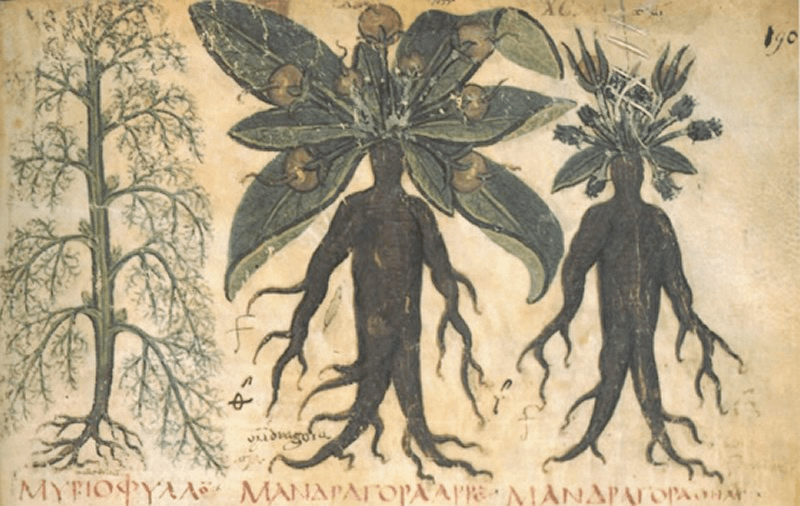
It should be noted that I have not read the book. I guess that it also deals with the Gnostic or Neoplatonic conception of the devine structure, as a complete system of delegations and emanations. But in Gnosis this tree develops downwards and not upwards. In Neoplatonism such trees were known that were drawn by students of Plotinus who tried to visually demonstrate his teachings, such as Porphyry's tree. We talk a lot here about the "kaneh" and the "branch of jesse", I think that these images of a fallen tree that grows and blooms as part of its resurrection have a connection to the divine structure, or at least to the analogy or symmetry between the history of the world and the entity called the "Knesset of Israel", and God himself. Likewise, on the similarity of "Humans are like trees", in the Gnosis, and also in the ancient juwish mysticism "Shiur Koma", descriptions of the divine structure as a body with organs of enormous dimensions were known. It is likely that part of this human-tree analogy developed into drawings of trees with a human-like appearance (such links that made plants sacred are known of course, as for example in the root of the Mandrake)