
-
Mysterious Pattern in a Cave Is Oldest Rock Art Found in Patagonia
In a cave in Patagonia, 900 wall paintings were found, dating back approximately 8,200 years. Until recently, archaeologists assumed that the rock art at this site, known as Cueva Huenul 1, was created within the past few thousand years. But it turns out that it happened much earlier. One of the more important things in this discovery is the occurrence of what they call a "comb", a recurring motif characterized by parallel lines interspersed with small vertical lines drawn with black pigment. Since this comb with exactly the same pigment appears in a number of paintings in the area from a period of thousands of years later, when at that time there is almost no evidence of other human activity at the site, it indicates that it is probably a sacred symbol. Or maybe not sacred, but just a symbol that can be passed on between generations for the purpose of preserving history over thousands of years. Perhaps information related to the climate changes that have occurred in the area over the years. Anyway, a mystery.
-
Vittrup Man, a human sacrifice in Denmark
A preserved body of a human sacrifice from the Neolithic period from 5300 years ago was found in a bog in Denmark. According to dna analysis and according to the analysis of the enamel in his teeth, it seems that the man was an immigrant from a fishing community from northern Scandinavia who joined the farmers in Denmark. This is because he seems to have changed his diet in his adulthood from fishing and hunting to eating farm animals. On the other hand, it is possible that he was not an immigrant but simply a captive. Chosen to be a human sacrifice and sacrificed to the fertility gods. But the hypothesis that this is the sacrifice of a captive is not binding, because it is assumed that in some cases of human sacrifice, the victim accepted his fate willingly and chose to give his life and pass to the next world in order to help the people of his tribe to prosper. This particular man was beaten to death, his skull was crushed and his body was thrown into the swamp, next to him were found some ceramic vessels, cattle bones and a wooden club, which was probably used to kill him. The manner in which he was killed and the findings found next to him suggest that he was a human sacrifice.
-
circle dance as fertility worship in the bible
The Hebrew liguistic root H.L.L means empty or hollowed volume. From the space ("khalal", in hebrew) as an empty place there is also the khol (profane). Holy is something that is separated and surrounded by some imaginary fence. Profane is breaking through that fence, and making what is inside accessible to everyone. The word "beginning" ("hat'khala") is also from this root. When breaking the bread ("challah" or "khallah") is actually reveling its inside. The challah itself has that name because what inside is airy. A disease ("makhallah") is called like that because it describes something that is inside the body. Also in Latin languages, "cor" means inside or heart, in Greek kardia καρδία. This has also become a sign of the whole body and especially the inside of the body, so for example a body and everything inside is a "corpus". The etymology of the root H.L.L is through the exchange of R with L, which we see in the Mishna period quite a bit between Greek and Hebrew. Like for example a kernel, in Greek "karyon" (κάρυον), and in Hebrew "Gal'in". Phonetically, the consonants k (kaf) and kh (khet) are identical and frequently alternate.
Who influenced whom? The Indo-Europeans on the Semites or the opposite, and when was the encounter? It is not clear. Over the years there have been quite a few encounters between cultures, whether it is a meeting in Mesopotamia between the Akkadians and the Hittites, or later between the Phoenicians and the Greeks. Asia Minor and the Mediterranean were a constant meeting place between cultures, and this is evident not only in the language, but in the subject I would like to discuss, the dance.
The dance is also called "Makhol" or "khula" in ancient hebrew, because there is a space inside the circle. Apparently, the word "Makhol" is derived from the Greek word "choreia" (χορεία) which means dancing in circles. The choreia is considered a classic in Greek culture. The Muses are described as dancing in circles. Musike (μουσική) was considered anything that has unity and harmony, divine order, the universal language of nature. The dance is meant to unite with them. In ancient Greece the circular motion is the perfect motion, and the heavenly bodies moved in such motions. Pythagoras proposed that each celestial object emits its own unique hum based on its orbit, and the tone of these sounds is reflected in life on Earth. That is, there is some kind of cosmic dance in which the celestial object influence what happens on earth. This concept was also preserved by Plato in the dialogue "Timaeus", where it is claimed that the universe was created so that the planets and the stars will serve as living and visible gods who have an important role in influencing humanity and regulating its moral life. And the movement that the Demiurge set for them is so that they move around in circles as in a dance.
This cosmic dance is also repeated in the Bible in all kinds of variations, and sometimes as a dance not of the celestial objects but rather of the forces of nature. Why is these forces? A plausible explanation is because the muses were goddesses of mountains and rivers, and in fact what the biblical descriptions try to present is indeed the dance of the muses. As for example in Psalms 114: "The sea saw it, and fled: Jordan was driven back, The mountains skipped like rams, and the little hills like lambs. What ailed thee, O thou sea, that thou fleddest? thou Jordan, that thou wast driven back?Ye mountains, that ye skipped like rams; and ye little hills, like lambs? Tremble, thou earth, at the presence of the Lord, at the presence of the God of Jacob".
In Greek mythology, we see connections between Phoenicia and the Muses, such as the nymph Beróē, who was the nymph of the Phoenician city of Berytus, known as Beirut. Beróē is the daughter of Aphrodite and Adonis, the god who came to Greek mythology from Phoenicia. Aphrodite is a variation of the Middle Eastern earth goddesses including Inanna, Ashtoreth and Asherah. The circle dance was also included in the worship of these goddesses. And one of the dances that is claimed to have been used in these fertility rituals is the debka, which is the Levantine equivalent of the choreia, the circle dance.
The Caprinae (sheep/goats etc.) flocks, especially the doe, were a symbol of fertility. Artemis was also considered a fertility goddess, before she became the goddess of the hunt, and was considered a patroness of childbirth. When a woman gives birth, she takes something out of her, and during the birth she trembles and vibrates. Therefore, the words "khil" and "khalkhala" are called like that in Hebrew because they describe trembling. Trembling is a quality described in the Book of Psalms in women giving birth, "Trembling took hold of them as of a woman in travail", but such trembling is also the movement of the dance. The ancient fertility dances were actually a simulation of birth, and in pagan societies they would dance as part of fertility rituals and simulate births, that is, shaking dances that simulate childbirth. The origin of belly dancing, for example, is in such dances.
The flocks were considered a symbol of fertility probably because they also walk in a way that looks like a tap dance or debka. A kind of tremor. In this dance they stomp and shake. We see that in Psalm 23, when talking about a flock of sheep, they are talking about a circle, "My soul will be moved in circles of righteousness for his name's sake." The verse "Tremble, thou earth, at the presence of the Lord", the Septuagint translation translates as σαλεύω which does indeed mean to shake and tremble but also just to move and sway. When Isaiah (24:19) speaks of an earthquake, he speaks of the sway of the earth, and the Septuagint uses this verb again. And so also in the book of Psalms (17:5), "My steps have held to your circles; my feet have not stumbled", We see that the word circle is accepted as the verb "to collapse" or "to sway". In the book of Shmuel, the word circle is accepted for the word "khayil" ("army"), "He reached the circle as the army was going out to its battle positions, shouting the war cry" (1 Samuel 17:20). What we understand is that moving in a circle to noisy cheers (or war cry) is considered a "makhol". For example, in another psalm it is told about the dance of the forces of nature, "And they danced like a calf, Lebanon and Sirion like a son of the buffalo". And who knows if a calf is not called like that in hebrew, "egel", because it also moves and shake in a movement that looks like a dance ("makhol"is a circle, in hebrew "maagal"). A cow was also considered a symbol of fertility, and was a symbol of the goddess, like Hathor.
p.s in 1 Samuel 10:5 and Isiah 30:29, flute ("khalil") was an instrument they used to play in their festival ("chag" = "maagal") where they walked in circled and danced
-
Escohotado's "Confesiones de un opiófilo"
Antonio Escohotado is a Spanish philosopher and jurist who has become over the years the prominent voice of the anti-prohibition policy in Spain. As an opponent of Franco, he settled in Ibiza where it was the focus of the resistance, and in 1976 he founded the Amnesia nightclub there. He later went to prison, on charges of drug trafficking and being the head of the "hippie mafia" criminal organization. He used his time in prison to write the 1,542-page book, "The General History of Drugs" ("Historia general de las drogas").
Throughout this period and after, he polemicized the establishment and championed libertine libertarianism, which says that as long as you don't hurt anyone, nothing should stop you from doing whatever you want with consent. He compared the criminalization of the drug trade to the witch hunt and the crusades, and showed how every medicinal plant that broke the social order by being a kind of miracle cure became in time, through the mediation of the establishment, a satanic infernal potion that goes against morality – whether it is opium, coffee or even wine. He argued that if the establishment had invested the same vigor it has in pursuing drugs, improving their quality and perfecting them, the gain would have been double because they would have both reduced crime and made the drug useful. Meanwhile the establishment prefers to fight, when the battle is already lost and instead of succeeding, it makes the thing it is fighting against more deadly and more cruel.
Everything could have been different. It is possible to sustain the drugs even in a functioning society. The greatest ones used drugs and functioned well, from emperors and statesmen to scientists and poets. In fact, Escohotado himself used heroin every day – according to his son, who edited his diaries and recently published them as a book, two years after his death. According to his son, Escohotado did not dare to say these things in his life, because he knew what the public reaction would be.
The book is called "Confessions of an opiophile" ("Confesiones de un opiófilo") and in it Escohotado tells how he is convinced that opium and other drugs are useful for living a healthier life. As long as you do it in a controlled manner and under medical supervision, you can get the best out of it. The ancient doctors also advised to use these things. Opium in low doses affects the metabolism, it slows it down by lowering the heart rate by 20% and reducing breathing, it suppresses the appetite and increases sleep, it decreases the desire to have sex, which, like digestion, actually wears our body down a lot. Greediness is a bad thing, it is a product of capitalism. Capitalism makes us feel that we lack, want more and more and eat more and more, until we become fat and lazy.
As part of the anti-capitalist approach, Escohotado supported the non-prohibition of drugs precisely at a time when the drug epidemic was at its peak, such as the opioid epidemic. He knew that it would not be wise to preach in favor of opium, because there would be those who knew how to interpret it incorrectly, and that is of course the establishment. He insisted that you can use drugs without being a drug addict. In fact, he argued that you become a drug addict because that's what capitalism wants. The prescriptions that the establishment offers you are actually a recipe for addiction, because addiction is a desirable thing, but only when the filter that supplies you with the drugs is the establishment. When you are addicted but not through the establishment filter, you are a criminal, and still the goal is to make you as addicted and greedy as possible.
-
The elder in anglo saxon folklore
In the Middle Ages, inspired by Anglo-Saxon and Scandinavian folk beliefs, it was believed that the elder tree was guarded by a type of nymph called Hyldemoer, meaning "elder mother". The elder mother held an earth magic that protected the tree from harm, and anyone who harmed the tree or cut it would be punished. If they wanted to trim the tree, they would have to ask her for special permission. Since it was believed that witches could turn themselves into trees, this led to the fact that in Britain they attributed the tree on which Judas Iscariot hanged himself to the elder. On the other hand, not in all cases the elder was treated as a cursed tree, quite the opposite. In some cases, the tree is considered a good sign, and protects against witchcraft, the evil eye and lightning. In some cases, it was believed that an elder tree that grows over a person's grave brings him pleasure. The reason for this is because the cross of Christ was carved from an elder tree.
The origin of the name in English is from the Anglo-saxon word for fire æled, because they used the hollow stems of the tree as windpipes used to blow on a fire. The Romans would use it not as windpipes but as flutes, and this is also the source of the tree's Latin name "Sambucus".
-
Mongolian nomads sustain the millenia-old way of life and traditions
GlobalVoices: About 30% of the population in Mongolia are nomads or semi-nomads. Mongolian culture, characterized by the cultivation of horses and nomadic life, has been preserved even among modern society and is applied in a unique way. According to local belief, it is forbidden to dig the earth and whoever digs is expected to be unlucky, so few Mongolians are farmers, and instead they prefer the herding. Almost 80 percent of the country's land is used for herding. Mongolia has 18 times more grazing animals than people. In order to herd, the nomads need to wander, and so it turns out that a nomadic family changes its place of residence at least four times a year. Often the residence is hundreds of kilometers away from the nearest permanently inhabited place. Because many of the inhabitants do not have a permanent place of residence, there are no addresses in Mongolia. If you want to send mail to someone, you simply send it to the mailbox id, or rather to what is called "mobile post office".
The nomads live in yurts, like 2000 years ago. Although there are already all kinds of improvements such as the cover of the yurt which is a rain-resistant tarp (plus solar panels, satellite dish and generator). There are people who live in the city, even in Ulaanbaatar, and still live in a yurt. In fact, living in a yurt and wandering in general is a right enshrined in the local constitution. You don't have to have a permanent address and can live anywhere, you don't need land ownership to put a yurt on it. Some of the permanent residents decide at some point to leave life in a permanent settlement and start wandering in order to feel "real Mongolians"
If once the horses were the main means of transportation for the Mongols, now the Mongols move around in vans. But the horses as previously mentioned still occupy an important part in the local culture, every child learns to learn about a horse from a young age, and a horse is a traditional gift to a child on his third birthday. Another animal that has a deep connection with the Mongolian culture is the golden eagle, the Mongolians usually hunt with the eagles, mainly under the influence of the Kazakh refugees who settled in Western Mongolia, in the Altai Mountains.
-
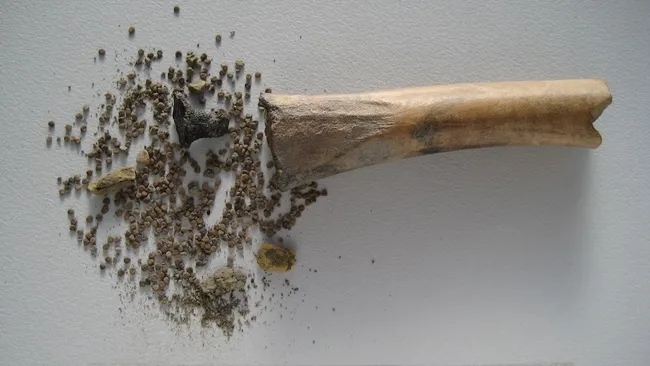
Evidence of the intentional use of henbane in the Roman Netherlands
Archaeologists have discovered the first conclusive evidence that the henbane was used in the Roman world (Hyoscyamus niger). Before this discovery in 2017, there was no physical evidence of this plant being used by people in the Roman Empire. Hundreds of the plant's seeds were found in a 7 cm long hollow bone of a sheep or goat in a rural Roman settlement called Houten-Castellum in present-day Holland. The henbane grows in Europe like a wild plant, but why put it inside a hollow bone? At first it was thought that the hollow bone might have been used for smoking, but then it was discovered that it was clogged with a cork made from the blackened bark of a birch tree, so the researchers came to the conclusion that the seeds were used deliberately, for the purpose of carrying them – the question is for what, was it really for narcotic purposes, and if so, for medical purposes? religiosity? recreational? Researchers have dated the find to between 70 and 100 AD, based on the styles of pottery and wire brooch found nearby.
-
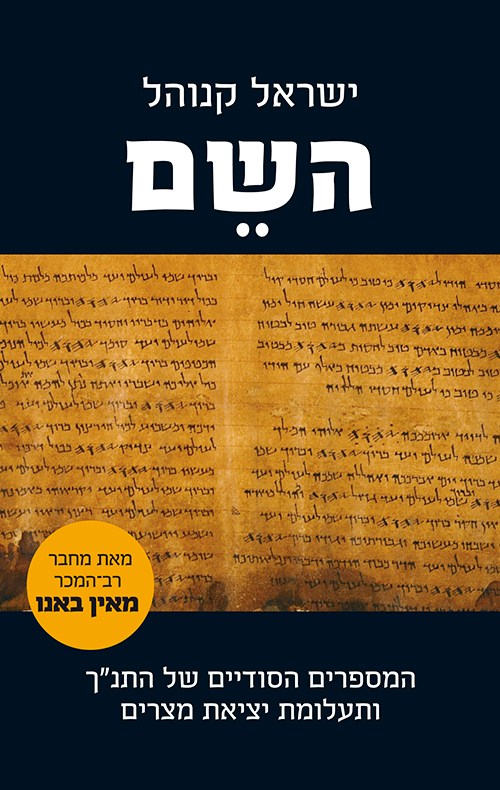
were the levites escort boys?
Israel Knohl claims in his book "Hashem" (2012) that the meaning of the verse "When you ascended on high, you took many captives; you received gifts from people, even from the disobedients — that you, Lord God, might dwell there" in Psalms 68:19, is that there was a war in Hermon between the Israelites and the Egyptians, and that the Israelites took the "disobedients" captive and consecrated them to be used in worship – these became Levites.
That is to say, "gifts from people" refers to the Levites, about whom it is said in the Book of Numbers 8 that they are "given wholly as a gift to God" (Numbers 8:16). Their captivity means that they were actually prisoners of war who were given over to work in the temple as slaves, and this thing is called "herem" which means dedicating things to worship. Slavery in the temple was a common thing in ancient times and in Egypt people apparently had the option of offering themselves for eternal slavery in the temple instead of temporary slavery in forced labor.
It is also possible to understand the institution of sacred prostitution, the hierodules, as temple slavery. In Egypt people would volunteeringly dedicate themselves to this thing. The fact that the sanctified prostitution was called "Kedesh" (or: "Kadesh") in Canaan, and that one of the cities of the Levites was called Kadesh (Issachar), and the city of Barak ben Abinoam was also called Kadesh, and is located near Hermon – is worth rethinking. As well as the fact that the goddess equivalent to Asherah in Egypt was called Kadesh or Qetesh and is usually described as wearing the same hat as Hathor, only that instead of the sun she has a moon disk trapped between her horns, the same symbol as Sin, the mesopotamin god of the moon (which his name derived into Sinai, who thought by Knohl to be the Hermon).
Another reference is the command "Consecrate to me every firstborn male", which is a literal translation of "Kadesh li" in hebrew). In Numbers 8 it is said that the Levites were given to god, in exchange to these firstborns. it was a common cult in ancient times to dedicates a woman's virginity in honor of a goddess as a once-in-a-lifetime prostitution along with a priest in the temple. were the Levites a substitute for this custom? i.e instead of having sex with the virgin, have sex with a sacred prostitute?
-
Jesus opposed the temple sex traffic
Was the cleansing of the Temple of Christ actually a protest against sex traffic of minors? Is that why he talked so much about the children's innocence? Was his claims of desecration of the temple for being a "a house of trade" because the anointing oil symbols were used to drug these minors? Were the naked boy who ran away when Jesus was arrested, and also Mary Magdalene actually prostitutes from the temple that Jesus redeemed?
-
New anthology on 'magical' texts published
About 100 years ago, the papyriologist Karl Prisendanz published a collection of "Greek" spells and magic texts, Papyri Graecae Magicae, which, despite the name, were mostly Egyptian in the Greek language. Later, the study also published a collection of texts in the Demotic writing Papyri Demoticae Magicae. Now, a team of researchers from the University of Würzburg is publishing another set, in the Coptic language and script – Papyri Copticae Magicae. So far few texts have been formed, the rest of the texts were for specialists only. Now they are famous. So far in the first volume, but at least seven are planned, and the second volume is already in preparation.
The texts were written on papyrus, parchment, paper and many ostracas, at the end of the Roman period and at the beginning of the Arab period. The earliest of them is from the fourth century and the later from the 12th century. And it includes a variety of spells in areas such as protection against death or demons, reconciliation of enemies, fulfillment of wishes, love spells and those who were made to ensure that married couples will be separated, medicine spells and various talismans. Since at some point Egypt converted to Christianity, requests from certain gods became prayers to angels and saints.