
-

Philistines used hallucinogenic… mushrooms?
We recently received scientific confirmation that the Philistines used hallucinogenic drugs as part of their religious worship. Well, Robert Graves already in 1960 raised his speculation about the worship of the Philistines, as if it was a worship of a psychedelic mushroom. It's not proven at all, but somehow it turns out from the Song of Songs that there might be some hint.
In 1 Samuel 6 it is said that after the Ark of the Covenant was captured by the Philistines, it was placed in Ashdod. Then a plague broke out of "hemorrhoids" (Techorim), or more correctly of "Afolim", it is not clear what it is but it discouraged the Philistines and they realized that the plagues came to them because they provoked God. So they decided to return it to Judah, and put the ark on an ox cart along with a "guilt offering", which was "five golden hemorrhoids and five golden mice". Five, probably because there were five lords for the Philistines, and all of them were hurts by the hemorrhoids. But why hemorrhoids and mice? The scholars answer, it was a custom among the idolaters, a custom preserved in Christianity, that after being healed, a thank offering was made in the form of the illness you had. But why mice? And what exactly are hemorrhoids?
The scholars answered to themselves that the epidemic that broke out among the Philistines was probably the "bubonic" disease, the same disease that ruined Europe during the Black Death, and its characteristics correspond to the characteristics described in this case, of subcutaneous lesions and high mortality. The animals that transmit the diseases are mice and rats. The plague that broke out in Sennacherib's camp and forced him to retreat was also a bubonic plague (i.e, "Dever", in hebrew), and Herodotus claims that the plague broke out due to mice. A nice explanation.
Robert Graves, argued otherwise. In his book "Food for Centaurs" he gave credit to his friend, the Hebrew language researcher Joshua Podro for the following claim: "Afloim" is from the word "ofel", cloud. The Philistines came from the Aegean Sea and spoke a dialect similar to Aeolian Greek. Mice in Greek is mus while flies in Greek is muos. Baal Zebub (i.e Baal of the flies) was part of the Philistine cult, according to Elijah's rebuke of Ahab's son. As the Philistines were Agaeans, their worship was the worship of a god such as Dionysus, and they imagined that YHWH was his likeness. Or rather they united him with the storm god, who in mythology is Zeus and in Canaan is Baal. The gifts they sent were an attempt to please the same God, when they realized that taking captive of the Ark of the Covenant was the cause of their plagues.
Then, Graves describes Podro's conceptual acrobatics: If you compare the accusations against Tantalus with the accusations against the Maenads worship of Dionysus you can reach an interesting conclusion. Tantalus is described as having stolen the ambrosia from the gods and then cooked his son and served it to the gods. In Euripides' "Bacchae", the Maenads are described as turning into cannibals in the Dionysian craze. Ambrosia, it is said, was the sister of Dionysus. Lycurgus, king of Thrace, forbade the worship of Dionysus and attacked the group of people celebrating the worship of Dionysus. Among them was Ambrosia, who turned herself into a vine to hide. As punishment, Dionysus drove him crazy and made him accidentally kill his son and then commit suicide out of grief.
What can be understood from this is that the worship of Dionysus was once the worship of the fly agaric, and at some stage in order to curb a little of the insanity of those who take it, his worship was converted into wine. Among the Norse, it is customary that the amanita mushroom was used by warriors who sought to obtain the frenzy of war, the berzerker (until it was, by the way, outlawed by Erik Hakonsson, "Erik Jarl"). Apparently one of the side effects of the amanita is a sudden urge to kill and violence. Scholars disagree on this, but Gordon Wasson, himself disagreeing with his own arguments on this subject, brought an example from the Koryak tribes in Kamchatka who still practice this way.
Another reference to this Berzerker, and its connection to the cult of Dionysus we can see in another myth: Ixion is described as the prototype of Cain, the first murderer of his family member. Although he immediately regretted his actions, and sought forgiveness, no one wanted to perform an atonement ceremony for him, and so he was left alone and wandering. Zeus saw this and took pity on him, he agreed to give him shelter and host him on Olympus. But what did Ixion do? Instead of saying thank you, he started flirting with Zeus's wife, Hera. Angry Zeus decided to trick him and created a cloud in the form of a woman. The horny Ixion was tempted and when he saw that Hera didn't like him, he decided to sleep with the woman of the cloud. From the mating were born the centaurs, worshipers of Dionysus who in their drunkenness chased after women and threatened to rape them. Ixion's punishment was to be chained to the sun and be burned, and was placed next to Tantalus in the lowest section of the underworld. These two stories show us that a psychedelic trip can indeed bring a person to enlightenment but can also bring him down in agony and grief.
Anyway, asks Graves, were the golden hemorrhoids actually figurines of a psychedelic mushroom, and the golden mice actually figurines of clouds of flies flying around it? Graves answers himself, what he claims he also answered to Prof. Podro, "Give me a little more solid facts and less speculation." John Marco Allegro, on the other hand, saw this as solid proof…
However, Graves theorize also in the book, that the Song of Solomon 2 alludes to a psychedelic mushroom when it talks about deer, moose, and foxes – all of their brown color are the colors of Amanita mushrooms (the appearance of the mushroom and its cousins in the Middle East is orange or brown, not red). In all cases there is evidence that these animals eat amanita for needs that we could define as a kind of religious ritual. In the picture you can also see a fox doing this. Was the Song of Solomon trying to say something?
-
Ancient Nicotine Use Unearthed in Guatemala
Researchers have uncovered pottery near the Guatemalan town of Santa Lucía Cotzumalguapa that contains nicotine residue, challenging previously held beliefs about the history of tobacco. Out of seven vases tested, three were found to contain traces of nicotine. The vessels were excavated near the acropolis of the el-Baúl archaeological site, and their discovery suggests that there was a ritual use of liquid tobacco infusions for vaporization in sweat baths, which may be interpreted as purification and mind-altering rituals. The discoveries are from 650 to 950 AD, and it appears from this that the history of the ritual use of tobacco is earlier than thought. Keep in mind, however, that according to a 2021 study based on charred seeds from the Utah desert, tobacco smoking itself (regardless of ritual use) dates back at least 12,000 years.
-
The Horns of Moses?
In this week's portion "Ki Tisa" it is said 3 times that when Moses came down from the mountain with the Tablets of the Covenant, after being there for forty days and forty nights, during which he came to some kind of revelation, which also included great spiritual preparation such as fasting – the skin of his face went to be "horny". This startled the Israelites and Aaron, and so that they would not be startled when he spoke to them, he put a disguise. Many good people have tried to explain what startled them so much and what is actually "the horn of his face" – did he have horns? Did his face glow?
"Keren" is a Hebrew term for a solid thing. Usually the horn in the ram's forehead. In the book of Joshua it is called the "horn of the Jubilee", when Jubilee according to Jonathan's Targum" is a ram. Shofar is the other name for the same horn, where sappāru in Akkadian is a mountain goat or stag. Meaning: the musical instrument is named after the ram, and maybe not after the ram but after the horns on his forehead. But a horn is used in the Bible for something else: in Zadok and Samuel it is said that they took the horn of oil to anoint Kings Solomon and David accordingly. That is, the horn was the container in which the anointing oil was placed.
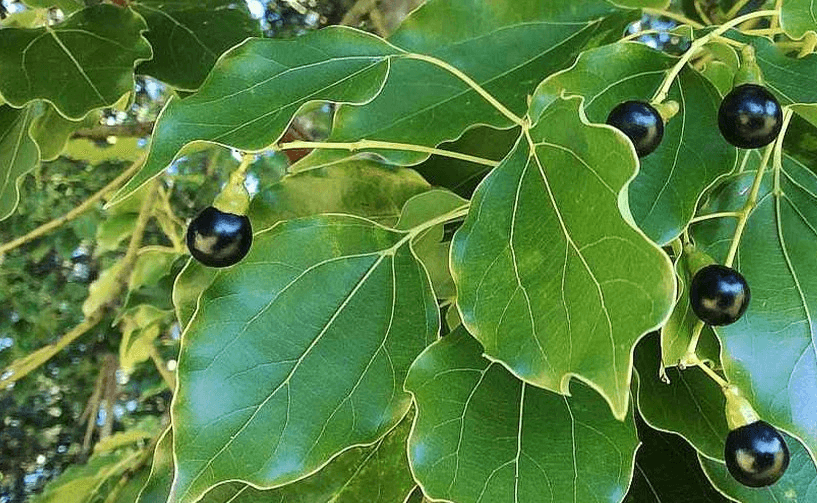
I ignore for a moment the assumption that the anointing oil is psychoactive. This is surprisingly irrelevant. The pine tree is known in the bible as an "oil" tree, after the name of its resin, which in Aramaic is called "mashcha". Rosin and turpentine are made from the resin. These substances, like many other strong terpene substances, cause sensitivity and redness in the skin. Strong terpenes were used in religious worship, such as camphor, which is still used in Hinduism as an ingredient in puja incense and symbolizes purification and pleasing the gods. Also in the temple they sacrificed such sacrifices with incense, and this is what is called "Isheh", which causes God to have comfort of smelling "perfumed smell" (Leviticus 1:9, for example). In the Koran it is said that the righteous will drink from cups mixed with "kafur", which is the Persian name for camphor. It is likely that this is also the source of the "Kofer" plant in the Song of Solomon, which is mentioned alongside the nard and myrrh – and hence the camphor was also used in the incense offering. Doesn't that mean Moses took some kind of overdose of this stuff and his skin turned red and burned? (In medicine this is called Allergic contact dermatitis)
It should be noted an opinion that was rejected by Ibn Ezra in his commentary on the Torah, by Hiwi al-Balkhi who claims that Moses's face became ugly because of the process that happened on mount Sinai. Is this true or not? Ibn Ezra says no. I do not pretend to disagree with the hebrew sages, but if I am right it certainly seems that what startled Aaron and the Israelites was the red-skinned and wounded appearance of Moses.
-
Medieval Japanese healing: from fortunetelling and exorcism to herbal medicines
In medieval Japan, court physicians used medicinal plants in conjunction with ritual and religious practices, techniques brought by Buddhist monks beginning in the seventh century from the Korean peninsula and China. That is, not only independent monks were healers with these religious methods, but also institutionalized doctors. As for example, the doctors called onmyoji (陰陽師) who were experts in yin and yang, and apart from medicine that strengthens yin or yang, also used divination, astrology, etc. Part of the interest of divination was to find out the causes of the disease, whether it has an internal or external cause, ghosts or entities that have taken over the body or so-called "kami" (神). If they did attack the patient, they would be expelled through an expulsion ceremony called genja (驗者). In addition, they would use a treatment called moxa or kanji (蓬), which is basically dried wormwood that they would put on the body and burn it. These rituals in Japan would consider which day it should be done and schedule it for "blessed" days only. This practice is called "hemerology", meaning timing for the exact day, time or place. This method was also used for childbirth. Since childbirth cannot be timed, and since childbirth was considered a source of impurity (probably not only in Japanese culture), a special place had to be allocated for this "rite" and for this purpose talismans were written in red ink, and the area where it would take place was "leased", usually having found it in this divination form. As mentioned, all of these were in institutionalized medicine and not only in independent mystical medicine.
-

Rice as a living entity
In Indonesia there is an island called Sumbawa where a people called the Bimanese live, which is divided into several groups. Historically, the groups living in the coastal lowlands converted to Islam and became fervent adherent Sunni Muslims, but the groups living in the mountains are more conservative in their folk traditions. The British anthropologist Peter Just studied the mountain tribesmen, called Dou Donggo, as part of fieldwork. In the book he wrote as part of the "Very Short Introductions" series of Oxford, he tries to demonstrate all kinds of anthropological methodologies on the members of the tribe and, among other things, he tells about the members of the tribe's concept of "personality", and claims that they extend this concept to non-human beings, such as for example The rice – a grain they depend on and is used by them in every basic meal.
The Dou Donggo peoples treat rice as a living being. Rice has both an everyday name and a secret name by which it can be conjured up. Before the rice harvest, they serve this entity an offering that includes rice wine, and say a prayer for the rice. They apologize to it and explain that they have no choice but to harvest it for their livelihood. During the harvest, they dress in nice clothes, and it is important for them to harvest the rice in a certain way, and in a certain place on the surface of the stalk. They do this so as not to unduly alarm the rice too much. They store the rice in a special way, and carefully separate the chaff. They try to treat rice with affection and respect as they would treat a guest. They believe that if they treat the rice this way, the rice will regenerate. Even when they started trading rice, and processing the rice in a commercial way, as much as you can call it that, they feel that it is not acceptable to treat the rice in such a "violent" and "brutal" way. And they fear that such an attitude will lead to revenge on the part of the rice. The information and image are taken from the book, which originally appeared in 2000.
-
Biblical Hi-Tech manifest
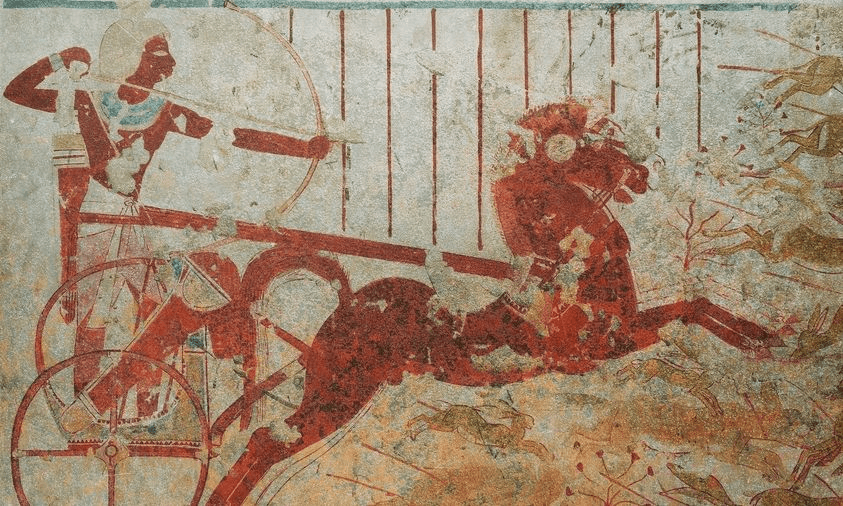
High-tech worship appears to have been in the Bible among the Israelites towards the philistines' technology. In the Bible, the Israelites are often described as a technologically backward nation after their enemies. The Gentiles come from cultures where blacksmithing were widespread and developed, and the tools of war were chariots with metal wheels and horses. Among the Israelites, on the other hand, in order to fight, they cut their secateurs into brittle spears and fight with wooden and bone tools. And it is clear – the Gentiles are fighting in the name of idols of wood and stone and arrogance, and the Israelites are fighting with God's blessing, when in fact they are not winning, because they are technologically inferior. The one who fights and wins is God, the Almighty, who by his will presents miraculous victory to the Israelites, and by his will, without ritual cooperation on the part of the Israelites, they will be absolutely destroyed.
The Book of Judges speaks of Sisera in particular and the Canaanites who generally live in the valleys as having an iron chariot: "they could not drive out the people who were living in the valley because those people had iron chariots" (Judges 1:19). 1 Samuel in chapter 13, and of course in many other places claims that the origin of the art of blacksmithing is with the Philistines: "Not a blacksmith could be found in the whole land of Israel, because the Philistines had said, Otherwise the Hebrews will make swords or spears" etc. In fact the Israelites had to bring reinforcements from outside when they wanted to blacksmith metals, through the Kenites who were said to be excellent iron potters. Oholiab, son of Ahisamakh, also knew this art, but it is known about the Danites that they were in mutual relations with the Philistines (Samson) and according to Yigael Yadin they were sea peoples themselves. Yael, the wife of the Kenite Chever, was friends with Sisera because the Kenites were colleagues or because they learned the art of blacksmithing from their Canaanite neighbors. Or, the Philistines. Adam Zertal claims that Sisera was a mercenary from the Shardana tribe, the Sea Peoples.
Most scholars claimed that the origin of the name Kenites is from "Kana", a metal factory. Chaim Rabin, on the other hand, claimed that the meaning of the name is from the phrase "to know clearly". In Hellenistic Egypt these two things, technology and wisdom, were tied together in the cult of Hermes-Thoth through the Hermetic Corpus, a mixture of mysticism and alchemy. Likewise in the Bible, the whole motivation of dealing with the types of weapons and the fact that the metal is assigned only to the worship of God, is hermetic. In other words, the metallurgical knowledge is knowledge that God used to establish world orders and create. God is the original Kana, who is on the one hand "God is jealous" (Exodus 20:4), and on the other hand, "he created heaven and earth" (Genesis 14:19). The action of the "kana" (hebrew: kinian, ownership) was the action with which God created the world, "The Lord owned me as the first of his works, before his deeds of old" (Proverbs 8:22) And "kana" is also the way to achieve "Gnosis" i.e Wisdom of Sophia: "The beginning of wisdom is this: Get] wisdom. Though it cost all you have, get understanding" (Proverbs 4:7)
By pouring metal castings into each other, one becomes the other through a transformation/transition – when the same transformation is the emphasis in religious worship, whether it is a turning of the heart and repentance, or whether it is a transition to other levels of consciousness. Dionysus in ancient Greece is considered the god of transformation, when in his worship the wine symbolizes the spiritual transformation of the mind, the wine that grows on the land of Terra Rossa saturated with metals, red as copper.
The Philistines come from the Aegean culture, and were Indo-Europeans who were known for their metal tools and the massive use of horses. Their religion included myths related to death and resurrection, where the background to death is the incorrect use of technology, that is: the god of war covets the tools produced by the god of wisdom, and uses them unwisely which ultimately causes unwanted killing (the victim is usually love and human harmony). Killing is rectified through resurrection and the cyclical order in which the undead make rounds between the world of the dead and the world of the living. Technology is a double-edged sword and has the power to create worlds and destroy them, technology is the "Logos".
This myth about the wise use of technology is what underpins religions. In the twentieth century, it is embodied in the form of the so-called "philosophy of technology", meaning the moral implications of science. Hans Jonas, for example, is a philosopher who came from practicing religions that sanctified the right way to use knowledge in ancient times (Gnostics), to the same practice in modern times. When the biblical theologian consistently refers to the metal as a reproach except if it is related to the worship of God (then, the metal is a noble thing: Rish Lakish said: The world was not fit to use gold. And why was it created? For the Temple. Genesis Rabbah 16:2), he tries to claim that only he has the right solution to use technology morally.
P.S: Since trade in the Mediterranean flowed eastward, it was brought the new metal tools from the west. Independent and powerful enough kingdoms, which lay on the coast, could enjoy this luxury. Internal and weak kingdoms, like Israel, and probably barbarian kingdoms deep in Europe, not. They saw these tools as giving a tremendous advantage on the battlefield, a magical thing, or at least a blessing given by the god of war for the enemy. A kind of cargo cult
P.S: Since "Kana" and "Kaneh" are basically of the same liguistic root, that is to say the cannabis (the so to speak "kaneh bosem") or any other psychoactive Kaneh are "technology of the mind"
-
Iron Age and Roman times artefacts have been found in a boggy field thought to once have been a sacred spring
Artifacts from the Iron Age and the later Roman period have been discovered in a boggy field on the Isle of Anglesey in Wales. According to the location where the objects were found and considering the geographical area, it is assumed that this was a temple built around a spring sacred to the Celtic Druids who lived in the area. And the fact that the finds are from two different periods, suggests that the Roman colonialists tried to integrate into the cult. The objects found include chariot accessories and a ram's head, which are believed to have decorated a chariot, and therefore scholars wonder if there was a chariot cult, or a "high tech" cult. Mainly due to the fact that there was a copper ingot weighing more than 20 kg, and lead vessels. It should be noted that the same museum that displays these findings now in Wales, Oriel Môn, also last year presented an exhibition of coins from that period that were found on the island, and were used as gifts given as part of making alliances. The style of the coins was familiar from the cult of Apollo, and included depictions of horses and chariots. Which explains, perhaps, the mysterious connection between the two cultures.
-
Plant-related Philistine ritual practices at biblical Gath
Through research on plants found in Philistine temples at Tell eṣ-Ṣâfī, which is identified as the Biblical Gath, researchers from Bar-Ilan University have gained insights into Philistine ritual rituals and beliefs, the food ingredients of their temple, the timing of the rituals and plants for decorating the temples.
Among other things, ritual uses of some very common plants in the Mediterranean flora, such as chaste tree and crown daisy, have been identified. The presence of these plants show a connection to early Greek cults and mythology, such as the cults of Hera, Artemis, Demeter and Asclepius. For example, psychoactive medicinal plants such as Lolium used in the cult of Demeter, loom weights which are a common feature in the cult of Hera, etc. This reinforces the Aegean origin of the Philistines.
In a previous study by the same researchers (from 2015) they found the presence of opium seeds in Ashkelon of the late Bronze Age as well as the presence of other "immigrant" plants that seem to have arrived proactively at the same time that the Philistines arrived in the land of Canaan. Some of the plants seem to have been imported for food, some for worship or industrial cultivation (such as opium) and some are not clear whether they were brought intentionally or as "hidden passengers", so that they became invasive weeds, such as the henbane. However, in the case of the henbane it is not at all clear that it did not also have another use.
-
Tziporen is Saffron and derived etymologically from the birds' claw and feathers
One of the symbols of incense is the tziporen and the question arises as to what it is of course, and why it is called that. Tziporen is thought to be clove, probably because its buds are sharp and resemble fingernails. But for me it doesn't make sense. Let me explain.
At this point, it is more important to me to know why it is called that, since the teaching of the "tziporen" in the Bible is not like a plant, but like a sharp thing in general – whether it is a nail as we call it today, probably what a female prisoner of war or like the sages call her a "yefat toar" is supposed to do before one wants to marry her, as stated in the book of Deuteronomy 21:12, or it is a quill or a pen with which one writes, which is notched like "shamir"* (i.e a very sharp stone) as it is written in Jeremiah 17:1. If so, why did sages call what is referred to according to the Torah as an "ovum" (shchelet) as a clove? The original verse is "Take unto thee sweet spices, stacte, and onycha, and galbanum; these sweet spices with pure frankincense", as they refer shchelet as onycha – but this is according to later interpretation, according to the septuagint it is an onyx gem…
So first of all it is important to note that together with these perfumes, frankincense is also mentioned in the Pentateuch, while in the Song of Solomon the scripture adds more names and one of them is the Crocus (hebrew: Carcom). Crocus is also mentioned in the Braita of making the incense (Babylonian Talmud Keritot, Jerusalem Talmud Yoma) as one of the symbols of the incense, so it is actually quite clear that the list was influenced by what was written in the Song of Solomon, certainly if you look at the Song of Solomon as an allegorical poem with references to worship in the Temple.
At this point let me examine the etymology of the word Tziporen. In Hebrew, the word "Tziporen" means the tip of the finger with the hard sheath that protects the skin there. In general, it means the protective cover against anything. We see that in Aramaic the nail is called "tofra" (like what is a claw in hebrew), in Arabic "tsifar" ظِفْرٌ, in Akkadian ṣupru – in all cases the meaning is either to the talons of a bird, i.e. claws, or to the nails of a person and especially uncut nails or nails in the process of cutting. But if we mentioned a bird, it should be taken into account that the bird is named after a claw. In Hebrew, it is named after this root sˤ.f.r, which also recurs in all the Semitic languages: Asfour in Arabic عُصْفُور, Tsanfar or Tsafra in Aramaic, etc. The word for "morning" is also derived from the sound of birds chirping at dawn and is onomatopoeic, Tsafra in Aramaic. One can only conclude from the fact that the nail or claw is named after the bird and not the other way around, and from the derivation of the word bird in the morning it can be assumed that there are a number of words borrowed from the root sˤ.f.r because of their connection to the bird, such as for example…hair.
In biblical Hebrew, an animal with dense fur was called a tsefir, so the description for feathers is probably also derived from the bird. In Arabic the Sufis or more correctly "ṣūfiyya" are described as those who wear wool, the young goats in Daniel is so called because goats have fur – wasn't the ancient Adam described in Jonathan's Targum of the book of Exodus, in Genesis Rabbah and in the chapters of Rabbi Eliezer as one who was surrounded by nails before the original sin of the Tree of Knowledge and then "was stripped" from it, covered not with what is known keratin tissue but simply covered in fur like a prehistoric ape or hominid?
At this point we can conclude that a tziporen does not necessarily describe the same keratin tissue at the tips of the hand, but something else made of keratin – hair. And if so, when the female prisoner of war needs to shave her head and "make her nails", she needs no more than a haircut**. Or maybe the spice "clove" is also nothing but a spice with "hairs"? This means…. saffron. Why should one go so far, when the etymology of saffron is completely consistent with that of tziporen?
Saffron is prepared from Crocus. Crocus is a bulbous geophyte that after it flowers has three red "hairs" that come out, and are surrounded by styles or yellow "ovules"***. There are several finish levels of saffron, some include only the red, some are mixed with the yellow, some include only the yellow. The spice is also named after the yellow, which is called "asfar" (أَصْفَر)… In other words, another word derived from the root sˤ.f.r is also the color yellow, and the fact that it is not called that in all languages just hints that probably in geographical areas where saffron was not found or It was not local, the yellow color was named after other things that resembled it, such as gold, and not the Crocus product.
In the Braita, on the making of the incense, it is written "The Tzori and the Tziporen…. Nard and Crocus, Borit Karshina which the Tziporen is being sharpened so that it is beautiful, Cypriot wine in which the Tziporen is being held so that they are strong. And if he doesn't have Cypriot wine, he brings ancient white wine", That is to say, although it is not clear what the Tziporen is, it is clear that it must be soaked in an alcoholic substance in order to preserve it and prevent it from spoiling (or melting), and it must also be processed in some way to its final form. The fact that it is written that you should take both Tziporen and Crocus, and in different doses, does not mean that these are two different plants. It may be the same plant but in its two forms, one red and the other yellow. We see that Crocus is grown very carefully, because some of its parts are very sensitive. Separate its parts very carefully, process it even more carefully, styling it, that is, it is often dissolved in another substance so that it takes its shape, in the Middle Ages they would put it in oil or animal fat, store it in alcohol so that it does not melt, the attached video can tell you exactly how it is made.
In summary: I have not yet found support in the research for this, but it seems to me that, as in most cases where they go round and round in order not to "force themself on the scriptures", in the case of the identification of the Tziporen they went that way as well. The commentators are not even sure that it is a plant, like the Ramban who claims that it originates from the sea and perhaps it should be identified with the Hexaplex trunculus snail which produces scarlet dye… But if you have already decided that it is red, why not go straight to the point?
PS: Just noting that in the biblical terminology "symbols of the incense" are basically the incense ingridients. in hebrew: "samemanim", probably derived from the words "siman" (symbol) but also from "samim" (drugs) as the incense is said to be incense of drugs
* If in the sixth century BC a feather was used for ink as a writing instrument, as in legends, this may be used as a "proof" that a nail is a feather
** It turned out that the biblical "nails" are for uncombed hair knots like Bob Marley's dreadlocks.
*** In Onkelus' Targum of Exodus 2 it is said about Moses, because from I took him from the waters, "shachaltiye", In Berachot 8a it is said about the painless death that it is so delicate it is like taking out a piece of hair from milk, "ke mishchal binita". We see that we associate the verb šḫl with hair. The "hairs" of the saffron are gently pulled from the saffron flower, it must be done manually because of the delicate way in which it is done.