
חודש: ינואר 2024
-
marriage as private property, and free-sex as communist ideal
Kind of off-topic, in an earlier group discussion we had about the attitude towards nudity and I told about the assumption that nudity became something to be ashamed of as soon as the first cities were founded and the idea of social (including religious) hierarchy was created, because the idea of private property was born.…
-
The acacia and the kudu among the Khoekhoe in Namibia
The Khoekhoe are members of a tribe that lives in Botswana and Namibia, which the Afrikaners would call them by the name we know them, the Hottentots, because the sound of this word sounds like the language of the clicks they speak. The Khoekhoe live in deserts and are shepherds, and therefore they have dozens…
-
2,800-Year-Old Thracian “Pharmaceutical” Center Unearthed at Heraion Teikhos, Turkey
In the archaeological site of the city of Heraion Tychos (Ἡραῖον τεῖχος) or Heraeum in Thrace, the European part of Turkey today, an ancient temple was discovered in 2021 that was destroyed in a fire in 2 BC and in which were found ancient remains of figurines of Cybele, Eros and Aphrodite as well as…
-
Mysterious fruit shown to be the oldest-known fossils of the Frankincense and Myrrh family
Researchers have solved a paleobotanical mystery from the 1970s by identifying small bead-like fossils in India as the best-known fossils of the Burseraceae family, cousins of frankincense and myrrh. The extinct plant species, named Enigmocarpon, was identified through three-dimensional reconstructions by paleobotanist Stephen Manchester. These fossils, it turns out, predate the dinosaur extinction event, indicating…
-
Gidi Gur and Nissim Krispil's "Persian Medicine – Ethnobotany on the Silk Road"
Now I'm the the proud owner of "Persian Medicine – Ethnobotany on the Silk Road", a 600+ pages-long book written by Gidi Gur and Nissim Krispil, published last year. Nissim Krispil is considered one of the fathers of ethnobotany in Israel, and stands behind one of the foundational books in the field, "Yalkut hatzmachim" ("herbs…
-
Zeev Ben Arye's "through the eyes of the beholder"
Zeev Ben Arie finally got his PhD degree and the doctoral thesis is published as a book called "In the eyes of the beholder" and deals with holy places and the form in which a place contributes to a sense of holiness in one's experience. Congratulations. Zeev Ben Arie is an Israeli travel guide and…
-
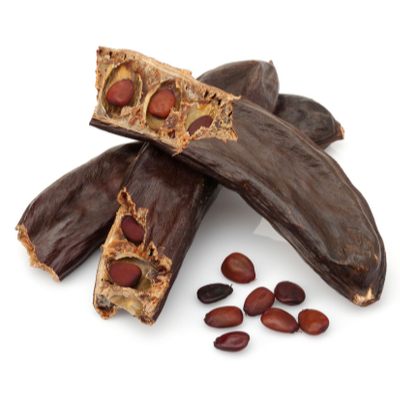
The carob as a symbol of destruction and redemption
The carob appears in quite a few Chazal (i.e jewish sages) legends in the context of destruction and redemption. I believe that the source of the adoration for the carob comes from the Hellenistic culture. Two legends are known: the first is about the Khoni Hame'agel (John the circle maker) falling asleep for 70 years,…
-
Follow-up: Why was psilocybin developed?
The molecular structure of psilocybin mimics serotonin and binds strongly to serotonin receptors, especially 5-HT2A, a famous receptor that many psychedelic drugs bind to. When a chemical binds to these receptors in mammals as well as insects and arachnids, they produce unnatural and strange behaviors. Some have suggested that this altered state of mind may…
-
What is the meaning of "Rock of Israel"?
Last week we read in Parashat Shemot, in Exodus chapter 4, how Tzipora took a flint and circumcised her son, after an angel threatened to kill Moses, "And Tzipora took a flint and cut off her son's foreskin and touched his feet and said 'that you are a bridegroom of blood to me'". Also in…
-
Yamnaya rewrote northern Europeans’ genetic story
The Yamnaya culture that invaded Europe 5000 years ago and more or less destroyed all its Neolithic heritage religiously and culturally, it also destroyed it genetically, in the sense that genes of the members of this culture are present in the European population from that day until today. But at the same time the genetic…