
תגית: Shamanism
-
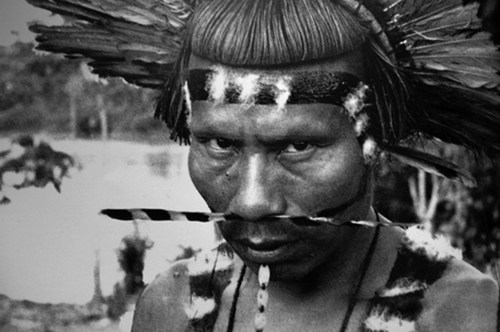
The Role of Disability in Shamanism: Claude Lévi-Strauss’s Perspective
In The Effectiveness of Symbols, Claude Lévi-Strauss discusses the "deviation" or physical disability associated with shamans, presenting it as a social function that plays a crucial role within the community. According to Lévi-Strauss, ritual interactions with the shaman provide individuals and the community a means to confront anxiety, frustration, and suffering. Through these rituals, the…
-
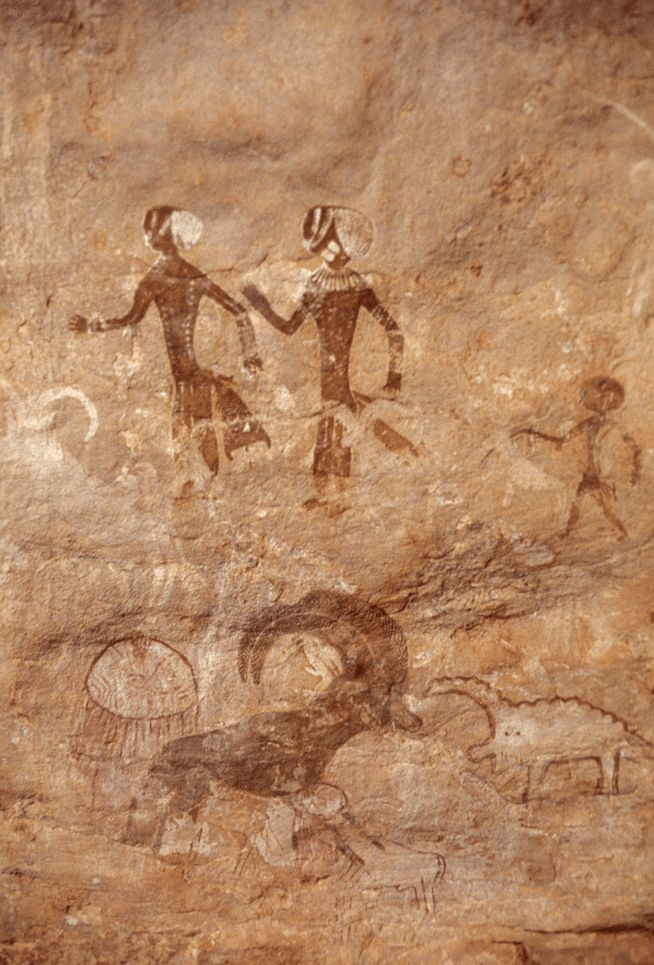
Because of poo fungi the ancient man worshiped horses
The veneration of horses among early shamanic societies likely arose because horses produce a significant amount of manure, and certain mushrooms, known as "coprophilous" fungi, attach to their dung to reproduce. These fungi are called coprophilous because they rely on their hosts to excrete them in manure, which acts as fertilizer, thus spreading their spores.…
-
The role of shamans in mongol history
Throughout their expansion across Eurasia, the Mongols adopted many religions from the conquered peoples, but they always maintained their roots in their original animist faith, led by shamans. Both male and female shamans served as spiritual guides for the Khans, engaging in fortune-telling, performing rituals, and even participating in military decisions. They advised the Khans…
-
Caves as Doors of Perception #2
Once again, Professor Ran Barkai presents, this time with a more concise and comprehensive lecture, where he expands slightly on the logic behind his theory: According to the worldview of indigenous cultures, caves were considered liminal spaces, gateways to the underworld, from which abundance flows. In these cultures, shamans could enter altered states of consciousness…
-
Trance, posture, and tobacco in the Casas Grandes shamanic tradition
In the Paquimé culture of Casas Grandes in Chihuahua, Mexico, tobacco was smoked in a posture known as the "Tennessee Diviner" (TD posture), to achieve altered states of consciousness depicted in the unique iconography found at the site. This posture is not unique to the Casas Grandes culture but is part of a broader ritual…
-
Newly found 12,000-year-old burial may belong to a female ‘shaman’
In Çemka Höyük, located in southeastern Turkey near the Tigris River, a 12,000-year-old burial site of a 25-year-old woman was discovered. The grave was covered with a stone slab, and along with her were found remains of animals, including the skull of an aurochs, leg of a marten and a partridge wing. These findings suggest…
-
Is Ayahuasca Tourism Cultural Appropriation?
Is Ayahuasca Tourism Cultural Appropriation? With the rise in popularity of ayahuasca use, claims have surfaced that mass consumption dilutes the spiritual and cultural significance of the rituals in the eyes of the Indigenous people and is perceived as disrespectful towards them. Tourists do not respect the boundaries set by the shamans, and this behavior…
-
Primitive Science and Sacred Rituals: The Evolutionary Significance of Food in Human History
The homo-sapiens has two things that are important to them: spreading their seed, according to evolutionary theory, and preserving their life, which is also a kind of evolutionary theory, because if they don't preserve their life, they can't spread their seed. To preserve your life, you need to avoid dangers, but mainly to find food.…
-
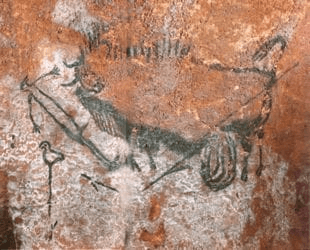
The shaman's "dream erection"
"A 15,000-year-old dreamer and the appearance revealed in his dream. A wall painting from the Lascaux cave in France apparently depicts a shaman, with a bird at his side, attacking his prey with spiritual weapons. One should pay attention to the shaman's erection, a characteristic phenomenon of a dream-sleep" From: Dreaming, Julia and Derek Parker.…